
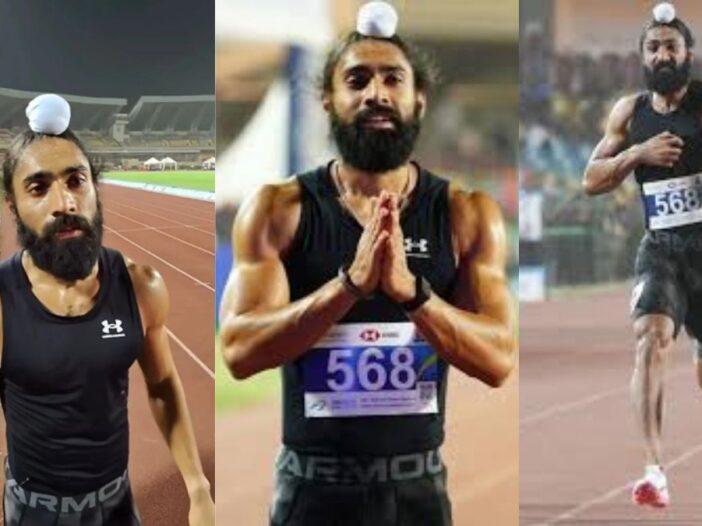
Gurindervir Singh did not just run 100 metres on May 24, 2026. He ran straight into history.
A 25-year-old from a small Punjab village stood on a Ranchi track and did what no Indian sprinter had ever done before — he shattered the 10.10-second wall that had haunted Indian athletics for decades.
The crowd held its breath. The stopwatch read 10.09 seconds.
In that single, electric moment, everything changed. Years of sacrifice, early mornings, and relentless grinding finally exploded into one unstoppable sprint.
India’s fastest man had arrived — and he was just getting started.
India finally has its fastest man — and he just rewrote history in Ranchi.
On May 24, 2026, Punjab sprinter Gurindervir Singh delivered one of the most electrifying performances in Indian athletics history. Clocking a sensational 10.09 seconds in the men’s 100m final, the 25-year-old became the first Indian athlete ever to break the 10.10-second barrier. The record-shattering run unfolded at Birsa Munda Athletics Stadium during the 29th National Senior Athletics Federation Cup Championships — and it has left the entire country stunned.
A Champion Born in a Small Village
Gurindervir hails from Patial village, near Bhogpur town in Jalandhar, Punjab. His journey from a small-town athlete to India’s fastest sprinter is a story of relentless discipline and burning ambition. Former coach Sarabjit Singh Happy from Jalandhar, who closely watched his development, described the achievement as a proud moment for both Punjab and the nation.
However, what makes this victory even more remarkable is the intense rivalry that built up to it.
Two Records in Two Days — A Sprint Battle for the Ages
Most of India was watching the IPL. Meanwhile, Gurindervir was quietly rewriting athletic history.
Just 24 hours before the final, he clocked 10.17 seconds in the semifinal — already a new national record. Within minutes, however, Odisha sprinter Animesh Kujur responded with a stunning 10.15 seconds, snatching the record right back. The rivalry instantly became one of the most thrilling sprint duels Indian athletics had ever witnessed.
Then came Saturday’s final. With all eyes on the track, Gurindervir delivered the race of his life. His 10.09-second run didn’t just reclaim the record — it demolished the psychological barrier that Indian sprinters had chased for decades. Additionally, the performance secured his qualification for both the upcoming Commonwealth Games and the Asian Games, while ranking as the second-fastest 100m time in Asia this season.
The Handwritten Note That Said Everything
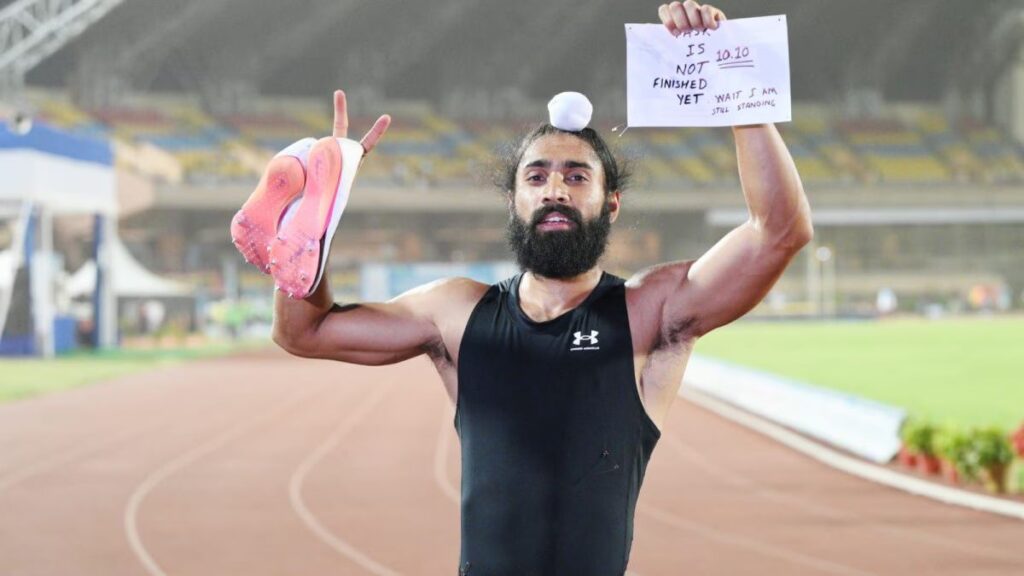
After crossing the finish line, Gurindervir held up a handwritten note that read:
“Task is not finished yet. 10.10 seconds? Wait, I am still standing.”
The gesture captured everything — the confidence, the hunger, and the mindset of an athlete who refuses to settle. It wasn’t just a celebration; it was a declaration.
Recognition from the Highest Quarters
Jathedar of Sri Akal Takht Sahib, Giani Kuldip Singh Gargaj, personally congratulated the young sprinter. He praised Gurindervir as a source of inspiration for Sikh youth worldwide and expressed immense pride in his achievement as a Sabat Soorat Sikh athlete. Furthermore, the Jathedar urged young people to draw motivation from his success and remain committed to education, sports, honest work, and service — while staying completely away from drugs.
Celebrations have since erupted across Punjab, with coaches, athletes, and sports lovers calling this a landmark moment for Indian track and field.
Why This Achievement Matters for Indian Athletics
For years, the 10.10-second mark stood as an invisible wall for Indian sprinters. Therefore, breaching it carries enormous symbolic weight. Gurindervir’s performance signals that India’s sprint scene is entering a genuinely new era — one driven by fierce domestic competition, elite-level training, and athletes willing to push beyond what was previously thought possible.
His timing also places him firmly on the global radar ahead of two major international events.
The Journey Is Far From Over
Gurindervir Singh has already rewritten the record books. However, if that handwritten note means anything at all, he is just getting started. India’s fastest man is hungry — and the world is now watching.
From Patial village to the national record books, this is only the beginning of a truly historic sprint story.
Frequently Asked Questions About Gurindervir Singh
Who is Gurindervir Singh and why is everyone talking about him right now?
Gurindervir Singh is a 25-year-old sprinter from Patial village near Bhogpur town in Jalandhar, Punjab. He became the most talked-about athlete in India after clocking 10.09 seconds in the men’s 100m final at the Federation Cup in Ranchi on May 24, 2026. That single run made him the fastest Indian man in recorded history and the first Indian sprinter ever to break the 10.10-second barrier. While millions of Indians were watching IPL, Gurindervir was quietly rewriting the history of Indian athletics on a track in Jharkhand.
What exactly did Gurindervir Singh achieve at the 2026 Federation Cup in Ranchi?
Gurindervir Singh set a new national record in the men’s 100m sprint by clocking 10.09 seconds in the final of the 29th National Senior Athletics Federation Cup Championships held at Birsa Munda Athletics Stadium in Ranchi. That timing broke the previous national record, made him the first Indian athlete to go below 10.10 seconds, secured his qualification for the Commonwealth Games and the Asian Games, and placed him among the fastest sprinters in Asia this season. In one race, he accomplished what no Indian sprinter had ever done before.
How did Gurindervir Singh break the national record twice in just 24 hours?
This is the part of the story that reads like a sports film. In the semifinal on Friday, Gurindervir clocked 10.17 seconds, which itself was a new national record at that moment. However, within minutes, Odisha sprinter Animesh Kujur responded with 10.15 seconds and reclaimed the record almost immediately. That fierce back-and-forth created enormous pressure heading into Saturday’s final. Rather than buckling under that pressure, Gurindervir produced the race of his life and delivered a stunning 10.09 seconds, breaking the record again and this time making it untouchable with the first sub-10.10 run in Indian history.
What was the meaning behind the handwritten note Gurindervir Singh held up after the race?
After crossing the finish line in 10.09 seconds, Gurindervir Singh held up a handwritten note that read, “Task is not finished yet. 10.10 seconds? Wait, I am still standing.” Those words carried far more weight than a simple post-race celebration. They reflected the mindset of an athlete who had been chasing a barrier that Indian sprinters had failed to break for decades. The note told the world that he was not satisfied, not done, and not finished pushing. It was a declaration from a champion who sees this record not as the destination but as the starting point of something much bigger.
Where is Gurindervir Singh from and what is his background before becoming India’s fastest man?
Gurindervir Singh comes from Patial village, located near Bhogpur town in Jalandhar district, Punjab. He grew up far from the spotlight of major cities or elite athletic academies. His rise to becoming India’s fastest man is built on years of hard work, strict discipline, and the guidance of coaches who believed in his potential. Former coach Sarabjit Singh Happy from Jalandhar played a meaningful role in his athletic development and has described this achievement as a proud moment for Punjab and for India. Gurindervir’s story proves that elite sprinting talent can emerge from the most modest of beginnings.
Why does Gurindervir Singh’s 10.09 seconds matter so much for Indian athletics as a whole?
The 10.10-second barrier had stood as an invisible psychological wall in Indian sprinting for many years. Every time an Indian athlete came close, the barrier held. When Gurindervir Singh crossed the line in 10.09 seconds, he did not just break a number. He broke a belief that this milestone was somehow out of India’s reach. His performance signals that Indian athletics is entering a genuinely new phase, one driven by fierce domestic competition, improving training standards, and athletes with the mental strength to perform under extreme pressure. The rivalry with Animesh Kujur alone showed that India now has sprint depth, not just individual talent.
Has Gurindervir Singh qualified for the Commonwealth Games and what can India expect from him internationally?
Yes, Gurindervir Singh’s 10.09-second run at the Federation Cup officially secured his qualification for the Commonwealth Games. The performance also confirmed his place for the Asian Games. His timing is additionally ranked as the second-fastest 100m run in all of Asia this season, which means he enters both competitions as a genuine medal contender rather than simply a participant. If he continues to push his limits the way his post-race note suggested, Indian athletics fans have very strong reasons to watch his international appearances with real excitement and genuine expectation.
What did religious and community leaders say about Gurindervir Singh’s historic achievement?
The recognition extended well beyond the athletics community. Jathedar of Sri Akal Takht Sahib, Giani Kuldip Singh Gargaj, personally congratulated Gurindervir Singh and called his achievement a source of inspiration for Sikh youth across the world. He expressed deep pride in Gurindervir as a Sabat Soorat Sikh athlete and urged young people everywhere to draw motivation from his success. He also appealed to Punjab’s youth to stay committed to education, sports, honest work, and service while staying completely away from drugs. The fact that a religious leader of such stature spoke so warmly about Gurindervir reflects just how deeply this achievement has resonated across Punjab and beyond.
How does Gurindervir Singh’s performance compare to the fastest sprinters in Asia this season?
Gurindervir Singh’s 10.09 seconds places him as the second-fastest sprinter in Asia during the current season. That is a remarkable position for an Indian athlete to occupy in a discipline historically dominated by sprinters from China, Japan, and other Asian powerhouses. The fact that he achieved this timing at a domestic competition rather than an international meet makes it even more significant. With the Commonwealth Games and Asian Games ahead, there is genuine belief that Gurindervir could push even closer to the 10-second mark under the pressure of international competition, where elite rivals often bring out the best in a champion-level athlete.
What should young athletes in India learn from the story of Gurindervir Singh?
Gurindervir Singh’s journey carries lessons that go far beyond the track. He grew up in a small village in Punjab, far from the resources and attention that athletes in larger cities often enjoy. Yet through consistent discipline, coaching, and an unshakeable belief in his own potential, he achieved something no Indian had ever done before. His handwritten note after the race said the task is not finished, and that attitude is perhaps the most important lesson of all. Young athletes in India should understand that talent opens the door, but it is hunger, patience, and the refusal to stop after one victory that separates good athletes from historic ones. Gurindervir Singh is now both.






Leave a Reply