
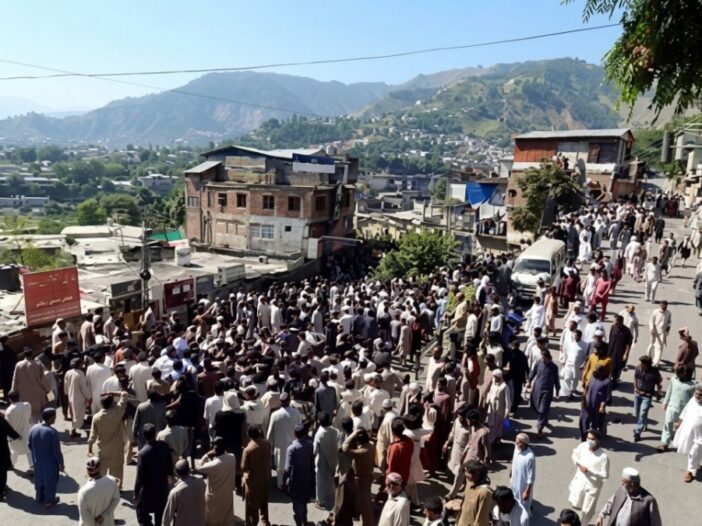
India condemns police brutality in PoK — but will anyone listen before more lives are lost?
Over 30 people are dead. Hundreds bleed in the streets. Families grieve in silence behind internet blackouts. This is not a distant conflict — this is a humanitarian crisis unfolding in real time.
Pakistan didn’t just crack down on protesters. It banned their voice, labeled their movement terrorism, and cut off their communication. Meanwhile, the world watches.
India is demanding accountability. The question is — who else will stand up?
Pakistan’s crackdown on protesters in Pakistan Occupied Kashmir has sparked international outrage — and India is demanding accountability.
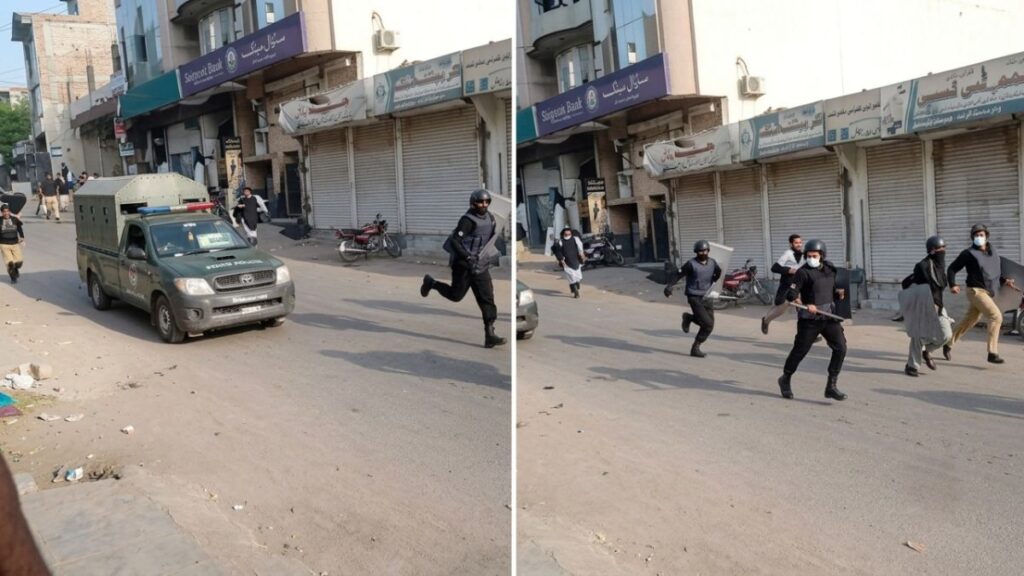
India’s Ministry of External Affairs strongly condemned the violence on Tuesday, calling it “severe police brutality.” Spokesperson Randhir Jaiswal urged the global community to act. “We hope the international community will hold Pakistan accountable for its misdeeds and abuses,” he stated.
What Sparked the Crisis in PoK?
The unrest centers on the Joint Awami Action Committee (JAAC), a powerful grassroots alliance founded in 2023. The group has long mobilized residents around economic grievances — electricity tariffs, wheat subsidies, inflation, unemployment, and political marginalization.
Tensions exploded after a local trader died, allegedly shot during a confrontation with law enforcement on a Friday night in Rawalakot. Clashes erupted the following Sunday, quickly spiraling out of control.
The death toll has climbed to over 30 protesters killed. At least 200 others sustained injuries.
Pakistan Bans JAAC, Labels It a Terror Group
Rather than engaging in dialogue, Pakistani authorities took a harder line. Officials outlawed the JAAC last week, citing public order concerns. The government then designated the organization a terrorist group — a move JAAC leaders rejected as “oppression.”
Activists insist they are peacefully demanding legitimate economic and political rights. The organization had planned a major demonstration to protest the reservation of 12 legislative seats for refugees ahead of July 27 elections — out of 45 total seats — a decision many in PoK see as politically motivated disenfranchisement.
Internet blackouts accompanied the crackdown, further isolating the region.
India Calls It a Cover-Up
New Delhi framed Pakistan’s response as deliberate deflection. “It is a desperate attempt by Pakistan to cover up its own failings and deflect attention away from its human rights abuses,” MEA Spokesperson Jaiswal said.
India’s sharp reaction reflects the broader strategic and humanitarian dimensions of the PoK issue. For decades, India has maintained that the region is illegally occupied by Pakistan. The latest violence adds fresh urgency to that position.
Even Pakistan’s Own Rights Body Speaks Out
Notably, the Human Rights Commission of Pakistan (HRCP) broke ranks with the government. In a statement on Monday, the HRCP strongly condemned the use of excessive force, the deaths of both civilians and law enforcers, and the communication blackouts.
“While dialogue is essential, it cannot be meaningful amid the continued political disenfranchisement of the region’s people,” the HRCP stated. “The right to peaceful protest must be upheld, and grievances addressed transparently.”
That a domestic Pakistani institution issued such pointed criticism signals how serious the situation has become — even within Pakistan itself.
A Region With Deep, Unresolved Grievances
The current unrest did not emerge overnight. For nearly two decades, simmering tensions over identity, representation, and the region’s uneasy relationship with Pakistan’s political center have shaped life in PoK.
Residents have repeatedly raised concerns about resource exploitation, inadequate governance, and being politically sidelined by Islamabad. The JAAC emerged as a vehicle for those frustrations, gaining significant popular support precisely because it addressed everyday hardships — power shortages, food subsidies, economic instability.
Banning it has not silenced the movement. Instead, the crackdown appears to have deepened resentment.
Key Takeaways
- India officially condemned Pakistan’s crackdown and called for international accountability
- Over 30 protesters have been killed; at least 200 injured in PoK violence
- Pakistan banned the JAAC and designated it a terror organization
- The JAAC protests linked to electoral seat reservations and longstanding economic grievances
- Even Pakistan’s Human Rights Commission condemned the government’s excessive force
- India called the crackdown a “desperate cover-up” of Pakistan’s human rights failures
The international community now faces pressure to respond — and the situation in PoK shows no signs of de-escalating.
Frequently Asked Questions
Q1. Why Has India Condemns Police Brutality in PoK and What Does It Mean for Regional Peace?
India’s condemnation carries significant weight beyond diplomatic language. When the Ministry of External Affairs publicly calls out “severe police brutality” in Pakistan Occupied Kashmir, it signals that New Delhi views the crisis as more than an internal Pakistani matter. The killing of over 30 protesters and injuries to at least 200 civilians represent a serious human rights breakdown. For regional peace, this condemnation raises the stakes considerably. It invites international scrutiny on Pakistan at a time when Islamabad can least afford it. The message from India is clear — silence is no longer an option when civilians are dying on the streets of PoK.
Q2. What Triggered the Protests That Led India to Condemns Police Brutality in PoK So Strongly?
The spark was the death of a local trader, allegedly shot during a confrontation with law enforcement in Rawalakot. However, the deeper fuel had been building for years. Residents of PoK have long suffered electricity shortages, rising inflation, unemployment, alleged resource exploitation, and political marginalization. The Joint Awami Action Committee had organized peaceful demonstrations against the reservation of 12 legislative seats for refugees ahead of July 27 elections. When Pakistan responded with force, internet blackouts, and a terrorism label against the JAAC, the situation transformed from protest into crisis — and India responded with its strongest public condemnation in recent memory.
Q3. Who Is the JAAC and Why Does India Condemns Police Brutality in PoK Revolve Around This Organization?
The Joint Awami Action Committee is the heart of this entire movement. Founded in 2023, the JAAC rapidly became the most credible grassroots voice in PoK, mobilizing ordinary residents around real, everyday struggles — unaffordable electricity, inadequate wheat subsidies, broken governance, and political exclusion. Rather than engage constructively, Pakistani authorities banned the JAAC, declared it a terrorist organization, and detained its supporters. That decision transformed a civil society group into a symbol of resistance. India’s condemnation specifically highlights how Pakistan criminalized legitimate dissent, turning economic grievances into a full-blown human rights emergency.
Q4. How Serious Is the Situation That India Condemns Police Brutality in PoK and Demands Global Accountability?
Extremely serious — and the numbers tell a devastating story. Over 30 protesters have been killed. At least 200 people sustained injuries. Pakistani authorities imposed internet blackouts, cutting the region off from the outside world. Even Pakistan’s own Human Rights Commission condemned the government’s excessive force, calling for transparent dialogue and upholding the right to peaceful protest. When a country’s domestic rights body breaks ranks with its own government, the situation has crossed a critical threshold. India’s call for the international community to hold Pakistan accountable reflects genuine urgency, not routine diplomatic posturing.
Q5. What Does India Condemns Police Brutality in PoK Tell Us About the Larger Human Rights Crisis Unfolding There?
It reveals a pattern that stretches back decades. The people of PoK have consistently raised concerns about political disenfranchisement, resource exploitation, and being governed by a distant power with little regard for local needs. The JAAC did not emerge from nowhere — it grew because ordinary residents had nowhere else to turn. India’s condemnation shines a spotlight on what many observers have described as systematic suppression of civil and political rights in the region. Banning a peaceful organization, labeling protesters terrorists, and shooting demonstrators dead does not resolve grievances. It deepens them, and the world is now watching.
Q6. What Should the International Community Do Now That India Condemns Police Brutality in PoK and Calls for Accountability?
India has placed the ball firmly in the international community’s court. The demand for accountability is not empty rhetoric — it is a call for multilateral bodies, human rights organizations, and democratic governments to examine what is happening in PoK with clear eyes. The Human Rights Commission of Pakistan itself acknowledged that meaningful dialogue cannot happen alongside political disenfranchisement and violent suppression. The international community must press Pakistan to lift restrictions, release detained activists, restore internet access, and engage the JAAC through legitimate dialogue. The people of PoK deserve protection, representation, and a voice — and the world has a responsibility to ensure they receive all three.




Leave a Reply