
Summary
India is gearing up for another giant leap in space technology as the countdown begins for the launch of ISRO’s heaviest communication satellite CMS-03. Scheduled for liftoff at 5:26 p.m. on November 2, 2025, from the Satish Dhawan Space Centre in Sriharikota, this mission marks a major milestone for India’s space capabilities. The CMS-03 satellite, weighing 4,410 kg, will ride on the LVM3-M5 rocket — proudly dubbed ‘Bahubali’ for its heavy-lift power.
Countdown to Launch: India’s Heaviest Satellite Ready to Go
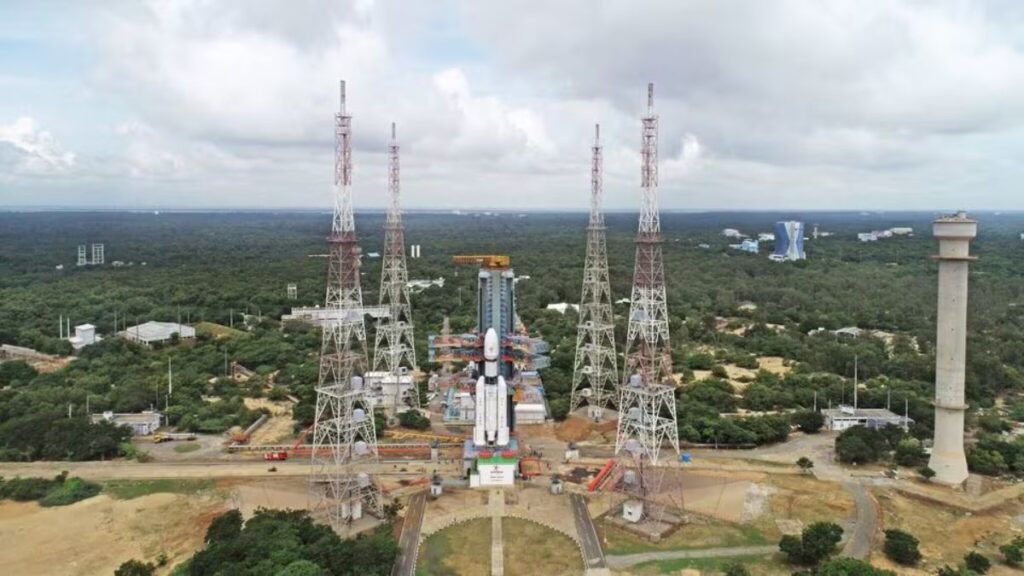
The countdown for this big launch started on Saturday, November 1, according to ISRO. They said the LVM3-M5 rocket is all put together with the CMS-03 satellite and has been moved to the launch pad at Sriharikota for the final checks.
ISRO posted on social media:
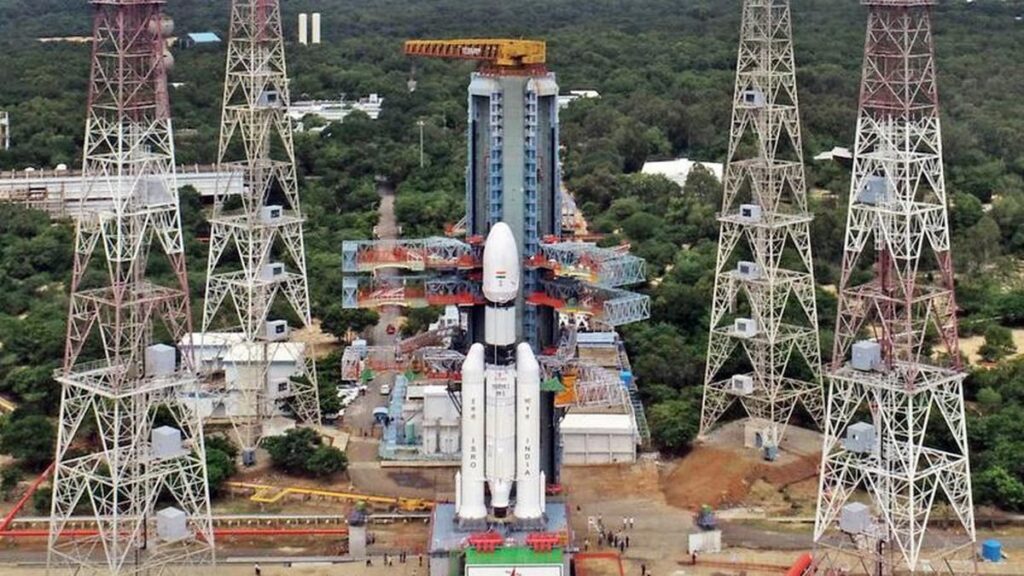
“The countdown is on! All set, and the LVM3-M5 mission countdown has officially started at Sriharikota. all systems are OK.
This shows how sure ISRO is getting at pulling off tricky space missions using technology made right here in India.
‘Bahubali’: India’s Most Powerful Rocket
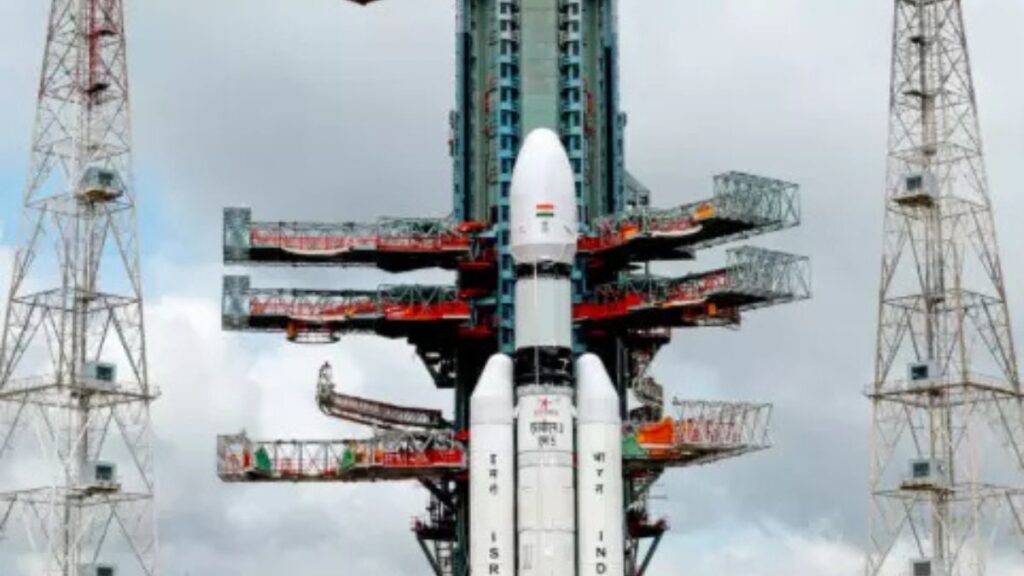
The LVM3-M5, also known as GSLV MkIII, is India’s biggest and strongest rocket. It’s 43.5 meters tall and can carry up to 4,000 kg to Geosynchronous Transfer Orbit (GTO) and 8,000 kg to Low Earth Orbit (LEO). That makes it India’s main rocket for big communication satellites and trips to other planets.
The LVM3 rocket has three parts:
- Two S200 solid rocket boosters, made at Vikram Sarabhai Space Centre (VSSC), Thiruvananthapuram.
- A strong L110 liquid core stage with two Vikas engines made by the Liquid Propulsion Systems Centre (LPSC).
- A C25 cryogenic upper stage, built with Indian technology, that gives the final push to put the satellite where it needs to be.
This rocket has done well so far, including the Chandrayaan-3 mission.
CMS-03: Better Communication for India
The CMS-03 satellite will use different frequencies to make telecommunication, broadcasting, and secure data better across India and nearby oceans. It’s made for military and important uses, which will help India’s defense communication and watching the seas.
This mission is another step toward India being able to do everything in space on its own, after the GSAT series. GSAT-11, which weighed 5,854 kg, was launched in 2018 from French Guiana using an Ariane-5 rocket. But CMS-03 will be the heaviest satellite launched completely from India.
Ready for Future Missions — Including Gaganyaan
If the LVM3-M5 does well, it will show that the rocket is good enough for future missions with people on board. ISRO has already made a Human Rated LVM3 (HRLV) for the Gaganyaan mission, which wants to send Indian astronauts into space.
With CMS-03, ISRO continues to push its technology forward, making sure India can handle its own communication and be a leader in space.
In Conclusion
The launch of CMS-03 on the LVM3-M5 ‘Bahubali’ rocket isn’t just another mission. It’s a sign of India’s scientific strength, and plan for the future. As the countdown gets closer, the country is waiting for another great moment.
Note: All information and images used in this content are sourced from Google. They are used here for informational and illustrative purposes only.
Frequently Asked Questions (FAQs) About ISRO’s CMS-03 Satellite Launch
What is ISRO’s CMS-03 satellite?
ISRO’s CMS-03 is a multi-band communication satellite designed to enhance secure communication and data transmission for India’s military and strategic purposes.
When will the CMS-03 satellite be launched?
The CMS-03 satellite is scheduled for liftoff at 5:26 p.m. on November 2, 2025, from the Satish Dhawan Space Centre, Sriharikota.
What is the weight of the CMS-03 satellite?
The CMS-03 satellite weighs approximately 4,410 kg, making it the heaviest satellite ever launched from Indian soil.
Which rocket will carry the CMS-03 satellite?
The CMS-03 satellite will be launched onboard the LVM3-M5 rocket, also known as ‘Bahubali’, due to its heavy-lift capability.
What does LVM3-M5 stand for?
LVM3 stands for Launch Vehicle Mark-3, and M5 indicates the fifth operational mission of this powerful rocket.
Why is the LVM3-M5 rocket nicknamed ‘Bahubali’?
The rocket is nicknamed ‘Bahubali’ because of its immense strength and ability to lift payloads of up to 4,000 kg into Geosynchronous Transfer Orbit (GTO) and 8,000 kg into Low Earth Orbit (LEO).
Where has the rocket been moved for final preparations?
The fully assembled LVM3-M5 rocket has been moved to the second launch pad at Sriharikota for final pre-launch operations.
What did ISRO announce about the countdown?
ISRO announced that the 24-hour countdown commenced on November 1, 2025, confirming that all systems are GO for the liftoff.
What are the main stages of the LVM3-M5 rocket?
The rocket has three stages — two S200 solid boosters, one L110 liquid core stage, and a C25 cryogenic upper stage, all developed using indigenous technology.
Which centers developed the major components of LVM3?
The S200 boosters were developed at Vikram Sarabhai Space Centre (VSSC) in Thiruvananthapuram, while the Vikas engines for the L110 stage were designed at the Liquid Propulsion Systems Centre (LPSC).
What is the primary objective of the CMS-03 mission?
The main goal of CMS-03 is to provide advanced communication services across the Indian landmass and nearby oceanic regions, supporting both civilian and defense communication networks.
How does CMS-03 differ from previous satellites?
Unlike previous missions launched from foreign bases, CMS-03 will be launched entirely from Indian soil, marking a major step toward self-reliance in heavy satellite launches.
How does this mission contribute to India’s defense communication?
The CMS-03 satellite will strengthen military-grade secure communication, enhance maritime coverage, and improve national security infrastructure.
What is the track record of the LVM3 rocket?
The LVM3 rocket has an unbroken record of successful missions, including the landmark Chandrayaan-3 lunar landing mission in 2023.
What is the link between LVM3 and the Gaganyaan mission?
ISRO plans to use a Human Rated version of LVM3 (HRLV) for its upcoming Gaganyaan mission, which will carry Indian astronauts into space.
What was ISRO’s previous heaviest satellite before CMS-03?
ISRO’s GSAT-11, weighing 5,854 kg, was the heaviest satellite ever built by India, launched from French Guiana in 2018 using an Ariane-5 rocket.
What is special about the CMS-03 launch for India?
This launch showcases India’s technological advancement, indigenous development capability, and growing global stature in space technology.
How tall is the LVM3-M5 rocket?
The LVM3-M5 rocket stands 43.5 metres tall, making it one of the most powerful and sophisticated rockets developed by ISRO.
How does the CMS-03 launch strengthen India’s space goals?
The CMS-03 mission reinforces India’s commitment to self-reliance, defense readiness, and global leadership in space exploration and communication technology.