
India’s stock markets started Samvat 2082 well, which is a good sign for investors and traders. During the special Muhurat Trading session 2025, both the NSE and BSE did well, showing that investors are feeling good about the market. This suggests the market might go up in the next few months. The Sensex and Nifty both closed higher for the fifth time in a row because people expect good returns, plenty of money coming in, and things getting better with tariffs. Experts think this good start could mean a successful year for Indian stocks.
A Meaningful Start: What Happened at Muhurat Trading 2025
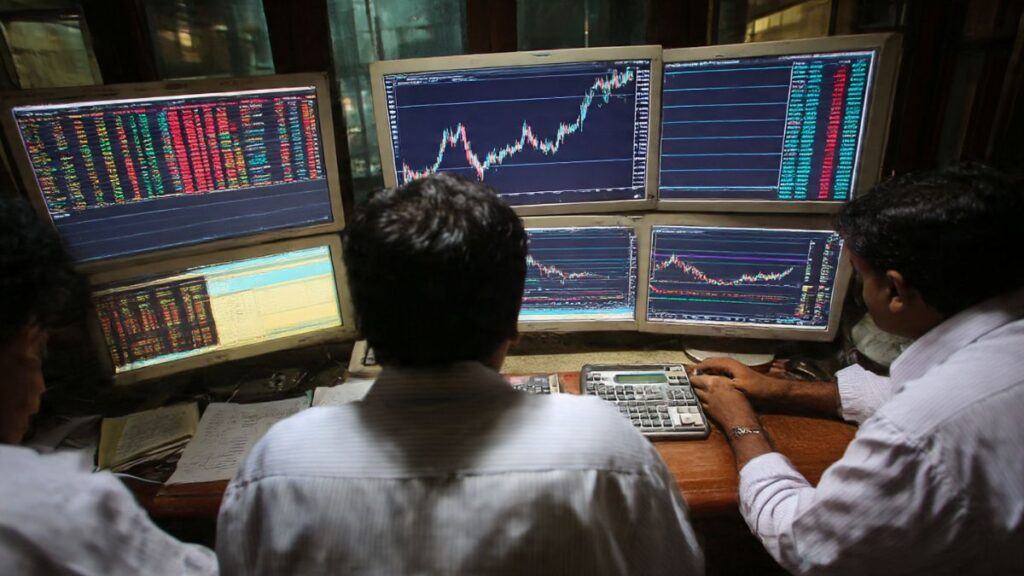
The one-hour Muhurat Trading session on October 21, 2025, kicked off Samvat 2082. The BSE Sensex finished at 84,426.34, which was up 62.97 points (0.07%), and the NSE Nifty 50 ended at 25,868.60, up 25.45 points (0.10%). Even though the gains weren’t huge, investors seemed confident, especially since the market had been doing well for the four days before.
The BSE Midcap index went up 0.3%, and the Smallcap index jumped 1%, which means the smaller companies are doing well, too. The Nifty winners were Cipla, Bajaj Finserv, Axis Bank, Infosys, and Mahindra & Mahindra, while Kotak Mahindra Bank, ICICI Bank, Bharti Airtel, Max Healthcare, and Asian Paints went down a little.
In terms of sectors, Nifty Media, Metal, and Pharma did the best, while PSU Banks and Realty didn’t do as well. Most sectors ended up doing well overall, which shows there’s a good balance in the market.
A Day Off: Markets Closed for Bali Pratipada
After the Muhurat trading, the Indian stock markets were closed on October 22, 2025, for the Bali Pratipada festival. Trading went back to normal on Thursday, October 23, 2025.
If you’re a trader or investor, it’s important to know when the market is closed so you can plan your trades.
2025 Market Holiday List: NSE & BSE

In 2025, the Indian stock market will be closed for 14 holidays, not counting weekends. April and October both have three holidays, and March and August have two. Here’s a quick look at the key holidays:
Maha Shivratri – February 26 (Wednesday)
Holi – March 14 (Friday)
Id-ul-Fitr – March 31 (Monday)
Mahavir Jayanti – April 10 (Thursday)
Dr. Ambedkar Jayanti – April 14 (Monday)
Good Friday – April 18 (Friday)
Maharashtra Day – May 1 (Thursday)
Independence Day – August 15 (Friday)
Ganesh Chaturthi – August 27 (Wednesday)
Dusshera / Gandhi Jayanti – October 2 (Thursday)
Diwali-Laxmi Pujan – October 21 (Tuesday)
Diwali-Balipratipada – October 22 (Wednesday)
Guru Nanak Jayanti – November 5 (Wednesday)
Christmas – December 25 (Thursday)
Some holidays fall on weekends, like Republic Day (January 26), Ram Navami (April 6), Eid-ul-Adha (June 7), and Muharram (July 6).
What’s Happening Around the World?
While Indian markets were closed, Asian markets were a mixed bag. Japan’s Nikkei 225 went down 0.4%, Singapore’s Straits Times went up 0.25%, Hong Kong’s Hang Seng dropped 0.82%, Taiwan’s Weighted Index fell 0.53%, and South Korea’s KOSPI rose 0.23%.
Even with changes around the world, experts think India’s strong economy and investments will keep things moving in Samvat 2082.
Global Stock Market Holiday Breakdown: A Bullish Samvat 2082

| Region / Market | Exchange Name | Key Holidays (2025) | Bullish Samvat 2082 Market Insight | Expected Impact on Global Trading |
|---|---|---|---|---|
| United States | New York Stock Exchange (NYSE) / NASDAQ | New Year’s Day (Jan 1), Good Friday (Apr 18), Independence Day (Jul 4), Thanksgiving (Nov 27), Christmas (Dec 25) | Bullish Samvat 2082 global outlook sees strong investor optimism in U.S. markets due to resilient tech and energy sectors. | Trading volumes may dip slightly during long weekends, but post-holiday rallies are expected. |
| United Kingdom | London Stock Exchange (LSE) | New Year’s Day (Jan 1), Good Friday (Apr 18), Early May Bank Holiday (May 5), Summer Bank Holiday (Aug 25), Christmas (Dec 25–26) | Bullish Samvat 2082 perspective highlights the UK’s steady recovery driven by financial services and green energy investment. | Market liquidity could tighten around bank holidays, influencing short-term global flows. |
| Japan | Tokyo Stock Exchange (TSE) | Coming of Age Day (Jan 13), Vernal Equinox (Mar 20), Showa Day (Apr 29), Golden Week (May 3–6), Culture Day (Nov 3) | Bullish Samvat 2082 analysis notes Japan’s focus on manufacturing recovery and yen stability may boost Asian trade confidence. | Asian markets often slow during Golden Week, affecting cross-border trading with India and Singapore. |
| China | Shanghai Stock Exchange (SSE) | Chinese New Year (Jan 29–Feb 4), Qingming Festival (Apr 4), National Day (Oct 1–7), Mid-Autumn Festival (Sep 7) | Bullish Samvat 2082 outlook emphasizes China’s renewed industrial activity and stimulus-driven consumer demand. | Extended Chinese holidays may reduce regional liquidity, influencing commodity and forex markets. |
| Hong Kong | Hong Kong Stock Exchange (HKEX) | Lunar New Year (Jan 29–Feb 3), Good Friday (Apr 18), National Day (Oct 1), Christmas (Dec 25–26) | Bullish Samvat 2082 sentiment sees Hong Kong benefitting from mainland investments and financial reforms. | Trading may be volatile before long closures, followed by quick rebounds post-holiday. |
| Singapore | Singapore Exchange (SGX) | Chinese New Year (Jan 29–30), Good Friday (Apr 18), National Day (Aug 9), Christmas (Dec 25) | Bullish Samvat 2082 forecast underlines Singapore’s stability as a regional trading hub with strong fintech performance. | Cross-border activity with India and Japan remains consistent despite short closures. |
| Australia | Australian Securities Exchange (ASX) | Australia Day (Jan 27), Good Friday (Apr 18), Anzac Day (Apr 25), Christmas (Dec 25–26) | Bullish Samvat 2082 projection highlights growth in mining, tech, and sustainable energy sectors in Australia. | Holidays overlap with Asian markets, mildly reducing liquidity in Pacific trade windows. |
| Germany | Frankfurt Stock Exchange (FWB) | Bullish Samvat 2082 sentiment sees Hong Kong benefiting from mainland investments and financial reforms. | Bullish Samvat 2082 view sees Germany as a pillar of EU manufacturing and green transition momentum. | Shorter trading weeks can cause brief volatility in European indices. |
| Canada | Toronto Stock Exchange (TSX) | New Year’s Day (Jan 1), Good Friday (Apr 18), Labor Day (May 1), Christmas (Dec 24–26) | Bullish Samvat 2082 commentary points to Canada’s resource and banking sectors as strong global performers. | Market pauses align with U.S. holidays, affecting North American liquidity. |
| Middle East | Saudi Exchange (Tadawul) | Eid-ul-Fitr (Mar 31–Apr 3), Eid-ul-Adha (Jun 7–10), Saudi National Day (Sep 23) | Bullish Samvat 2082 insight indicates stable oil revenues and infrastructure investments will strengthen Gulf equities. | Regional holidays coincide with global summer breaks, causing limited cross-border trading. |
| India (for comparison) | NSE / BSE | Diwali-Laxmi Pujan (Oct 21), Bali Pratipada (Oct 22), Independence Day (Aug 15), Holi (Mar 14) | Bullish Samvat 2082 perspective shows India’s festive trading sentiment fueling positive market momentum. | New Year’s Day (Jan 1), Good Friday (Apr 18), Canada Day (Jul 1), Labor Day (Sep 1), Christmas (Dec 25) |
Bullish Samvat 2082 Global Takeaway
Bullish Samvat 2082 market trends indicate that while global stock exchanges experience periodic pauses due to local festivals and observances, these breaks also act as reset points for investors worldwide. Historically, markets often rally post-holiday, benefiting from renewed liquidity and investor enthusiasm.
- Bullish Samvat 2082 signals resilience, with India positioned as a key performer among emerging markets.
- Bullish Samvat 2082 global dynamics suggest synchronized optimism across Asia, Europe, and North America.
- Bullish Samvat 2082 investor takeaway: plan trades around major holidays, anticipate volatility, and use quieter sessions to identify long-term opportunities.
What to Expect: Will Bullish Samvat 2082 Be a Good Year?
Analysts think the good feeling from Muhurat trading, along with people buying things, good policies, and companies doing well, could mean stocks will have good returns in Samvat 2082. If things get better with global tariffs and foreign investments keep coming in, India’s markets should keep going up.
Now is a good time for investors to check their portfolios, spread out their investments, and put money into areas that will grow over time, like banking, infrastructure, healthcare, and technology.
In Short: A Good Year for Investors Coming Up
The Muhurat Trading 2025 session was a positive start to Samvat 2082. As trading starts again, things should stay strong because investors feel good, there’s plenty of money around, and the economy is doing well.
If investors pay attention to what’s happening in India and around the world, they can expect a good Samvat 2082, with chances for growth and success in the stock markets.
Note: All information and images used in this content are sourced from Google. They are used here for informational and illustrative purposes only.
FAQ About Muhurat Trading 2025 and Bullish Samvat 2082 Market Outlook
1. What is Muhurat Trading and why is it important?
Muhurat Trading is a special one-hour trading session held by the BSE and NSE on Diwali, marking the beginning of the Hindu financial new year – Samvat 2082. It’s considered an auspicious time for making new investments, as traders believe it brings prosperity and good luck. This tradition has both symbolic and financial importance, often setting the tone for market sentiment in the coming year.
2. How did the Indian stock markets perform during Muhurat Trading 2025?
During Muhurat Trading 2025 on October 21, both indices performed positively.
- BSE Sensex closed at 84,426.34, up 62.97 points (0.07%).
- NSE Nifty 50 finished at 25,868.60, up 25.45 points (0.10%).
This was the fifth straight session of gains, reflecting investor confidence and optimism about double-digit returns in the upcoming months.
3. Which stocks and sectors performed best during Muhurat Trading 2025?
The top gainers were Cipla, Bajaj Finserv, Axis Bank, Infosys, and Mahindra & Mahindra.
On the other hand, Kotak Mahindra Bank, ICICI Bank, Bharti Airtel, Max Healthcare, and Asian Paints saw mild declines.
Sector-wise, Media, Metal, and Pharma led the gains, while PSU Banks and Realty showed slight weakness. The overall trend was positive across most sectors, indicating broad-based market strength.
4. Why were markets closed after Muhurat Trading 2025?
The markets were closed on October 22, 2025, for the Bali Pratipada festival, which celebrates Lord Vishnu’s victory as Vamana over King Bali—a symbol of humility and devotion.
Trading resumed normally on October 23, 2025, as per the NSE and BSE holiday schedule.
5. What are the official stock market holidays in 2025?
In 2025, Indian stock markets will have 14 trading holidays (excluding weekends). Key holidays include:
- Holi (March 14)
- Good Friday (April 18)
- Independence Day (August 15)
- Diwali-Laxmi Pujan (October 21)
- Diwali-Balipratipada (October 22)
- Christmas (December 25)
April and October will have the most holidays (three each), while some holidays like Republic Day and Eid-ul-Adha fall on weekends.
6. How did other Asian markets perform during this period?
While India was closed for the festival, Asian markets showed mixed trends:
- Japan’s Nikkei 225 fell by 0.4%,
- Singapore’s Straits Times rose 0.25%,
- Hong Kong’s Hang Seng declined 0.82%,
- Taiwan’s Weighted Index slipped 0.53%,
- South Korea’s KOSPI gained 0.23%.
Despite the global volatility, India’s domestic liquidity and economic resilience are expected to keep its market momentum strong in Samvat 2082.
7. Will Samvat 2082 be a good year for investors?
Market experts predict Samvat 2082 will be bullish and rewarding. Factors like:
- Rising consumption,
- Strong corporate earnings,
- Government reforms, and
- Steady foreign investment inflows
are likely to push Indian markets upward. Many analysts expect double-digit returns in the coming year if the current economic conditions persist.
8. Which sectors should investors focus on in Samvat 2082?
Experts recommend looking at growth-driven sectors such as:
- Banking and Financial Services
- Infrastructure and Capital Goods
- Healthcare and Pharmaceuticals
- Technology and Digital Services
These sectors are expected to benefit from policy support, consumption growth, and innovation, making them ideal for long-term investment.
9. What can traders learn from Muhurat Trading 2025?
The session’s performance highlighted that market optimism remains intact, even amid global uncertainty. It also showed strong participation from retail and institutional investors, signaling confidence in India’s economic growth story. For traders, it’s a reminder to stay diversified, keep an eye on sectoral rotation, and make informed decisions based on fundamentals rather than short-term sentiment.
10. How can investors prepare for the year ahead?
Investors should:
- Track economic indicators and policy developments regularly.
- Diversify portfolios to balance risk.
- Focus on quality stocks with strong earnings visibility.
- Take advantage of market dips for long-term buying opportunities.
With steady GDP growth, high liquidity, and improving global trade sentiment, Samvat 2082 looks set to be a prosperous year for investors in India’s stock markets.






Leave a Reply