
RCB’s Stunning $1.97 Billion Sale is more than just a business headline—it feels like a moment that could redefine the soul of modern cricket. For millions of passionate fans, Royal Challengers Bengaluru has never been just a franchise; it has been emotion, loyalty, heartbreak, and hope wrapped into one iconic team. So, when news broke that Diageo’s United Spirits would sell RCB in a jaw-dropping ₹16,660 crore deal, it instantly sparked excitement, curiosity, and disbelief. Why was one of IPL’s most beloved teams sold now? More importantly, what does this historic move mean for RCB, the IPL, and cricket’s future?
RCB Sold in a Record-Breaking Deal
Few sports stories shake both the business world and cricket fans at the same time. However, this one absolutely does.
In a blockbuster development, Diageo PLC’s Indian subsidiary, United Spirits Limited, has agreed to sell its entire 100% stake in Royal Challengers Sports Private Limited (RCSPL) for an eye-popping ₹16,660 crore ($1.97 billion).
That number alone tells a huge story.
More importantly, this is not just a team sale. Instead, it is a powerful signal that Indian Premier League franchises are now among the most valuable sports assets in the world.
Even more dramatically, this announcement arrives just before IPL 2026, which instantly raises the emotional stakes for millions of Royal Challengers Bengaluru (RCB) fans.
As a result, one question is dominating the cricket world right now: Why was RCB sold, and what happens next?
Who Bought Royal Challengers Bengaluru?
RCB will now move into the hands of a high-profile buying consortium that combines corporate power, media influence, and deep investment muscle.
The new RCB owners include:
- Aditya Birla Group
- The Times of India Group
- Bolt Ventures
- Blackstone’s perpetual private equity strategy, BXPE
Together, this consortium will acquire Royal Challengers Sports Private Limited, the company that owns and operates:
- Royal Challengers Bengaluru (IPL)
- Royal Challengers Bengaluru Women (WPL)
Therefore, the buyers are not simply purchasing a cricket team. They are taking over a premium sports entertainment brand with enormous commercial potential.
That makes this one of the most significant franchise acquisitions in Indian sports history.
Why Did Diageo and United Spirits Sell RCB?
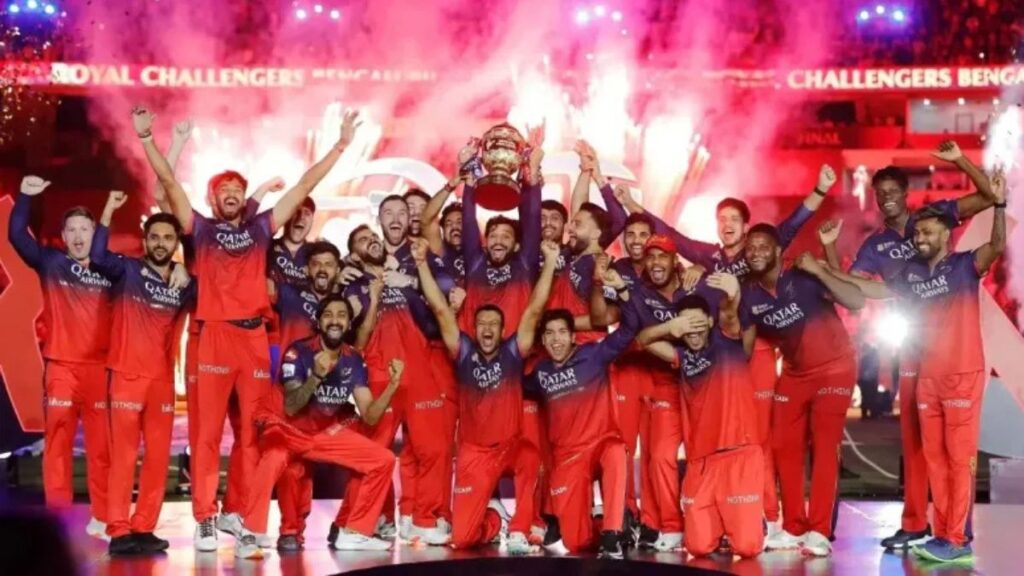
At first, many fans felt surprised. After all, RCB is one of the most recognized and emotionally followed teams in cricket.
However, from a corporate strategy standpoint, the decision becomes much easier to understand.
Back in November 2025, United Spirits announced a strategic review of its stake in Royal Challengers Sports Private Limited. The reason was straightforward: RCB was considered a non-core asset compared to the company’s main alcohol and beverage business.
In simple terms, Diageo and United Spirits decided to focus on what they do best—and monetize an asset whose market value had exploded.
Why the timing made sense
The IPL ecosystem has grown rapidly because of:
- Massive media rights deals
- Surging sponsorship income
- Strong digital and social media fan engagement
- Growing investor appetite for sports franchises
As a result, franchise values have climbed sharply. Therefore, selling RCB at nearly $2 billion gave Diageo a rare opportunity to unlock exceptional value.
From a business lens, it was a smart, well-timed exit.
What Does the RCB Sale Include?
This deal is not partial. Instead, it covers the full 100% equity stake in Royal Challengers Sports Private Limited.
That means the new owners will take control of:
- RCB’s IPL franchise rights
- RCB’s Women’s Premier League franchise rights
- The broader business, branding, and commercial future of the RCB ecosystem
However, the transaction still needs to clear a few important hurdles before it officially closes.
Approvals still required
The sale remains subject to:
- Board of Control for Cricket in India (BCCI) approval
- Competition Commission of India (CCI) approval
- Other standard legal, regulatory, and closing conditions
So, while the agreement is definitive, the final transition will happen only after those approvals are complete.
Who Advised the Deal?
A deal of this size does not happen quietly. Unsurprisingly, it involved some of the biggest names in banking and law.
Advisors for United Spirits and Diageo
- Citigroup – Lead financial advisor to United Spirits Limited
- AZB & Partners – Legal counsel to United Spirits
- Deutsche Bank – Strategic financial advisor to Diageo PLC
- Slaughter and May – Legal counsel to Diageo
- Touchstone Partners – Additional legal counsel
Advisors for the buying consortium
- Khaitan & Co – Legal advisor to the acquiring consortium
- Morgan Lewis – Counsel for Bolt Ventures
Additionally, multiple specialist teams handled:
- Branding and intellectual property
- Labour law
- Data privacy
- Litigation analysis
- Antitrust and competition issues
That level of legal support shows just how complex and high-value this transaction really is.
Why This RCB Deal Matters for IPL and Indian Cricket
This is where the story becomes even bigger.
The sale of RCB is not just about one franchise changing hands. Instead, it confirms something the sports business world has been watching closely for years:
IPL teams are now billion-dollar power brands
That changes everything.
What this could mean next
Because of this deal, we may soon see:
- More IPL teams attract global investors
- Private equity firms increase interest in cricket
- Women’s cricket franchise values rise faster
- Indian sports become a hotter long-term investment space
Moreover, this deal comes alongside reports of another major franchise valuation event involving Rajasthan Royals, which further highlights how aggressively the IPL market is expanding.
So, in many ways, this sale may mark the beginning of a new ownership era in Indian cricket.
Paul van Meekeren’s Viral Reaction Explained
While investors and legal firms dominated the business headlines, one cricketer delivered the most emotionally powerful reaction.
Netherlands fast bowler Paul van Meekeren responded to the RCB sale by saying that just 0.5% of the transfer value could significantly help Dutch cricket close the gap with full-member nations.
That comment quickly went viral—and for good reason.
His message touched a much deeper issue: the widening financial gap between elite franchise cricket and associate nations.
In other words, while the top of the sport keeps getting richer, many emerging cricket nations still struggle for resources, fixtures, and development support.
Therefore, this RCB deal is not only a business milestone. It has also reignited an important debate about the future of global cricket.
What This Means for RCB Fans
For RCB supporters, this news brings both excitement and uncertainty.
On one hand, a powerful new ownership group could bring:
- Bigger commercial expansion
- Stronger long-term investment
- More global brand growth
- Fresh energy around both IPL and WPL operations
On the other hand, fans will naturally wonder whether the soul of the franchise stays intact.
That emotional connection matters.
RCB is not just a balance-sheet asset. It is a team built on years of loyalty, heartbreak, hope, and belief. Therefore, the new owners will need to do more than manage a business—they will need to protect a fan identity that means everything to Bengaluru and millions beyond it.
Key Takeaways
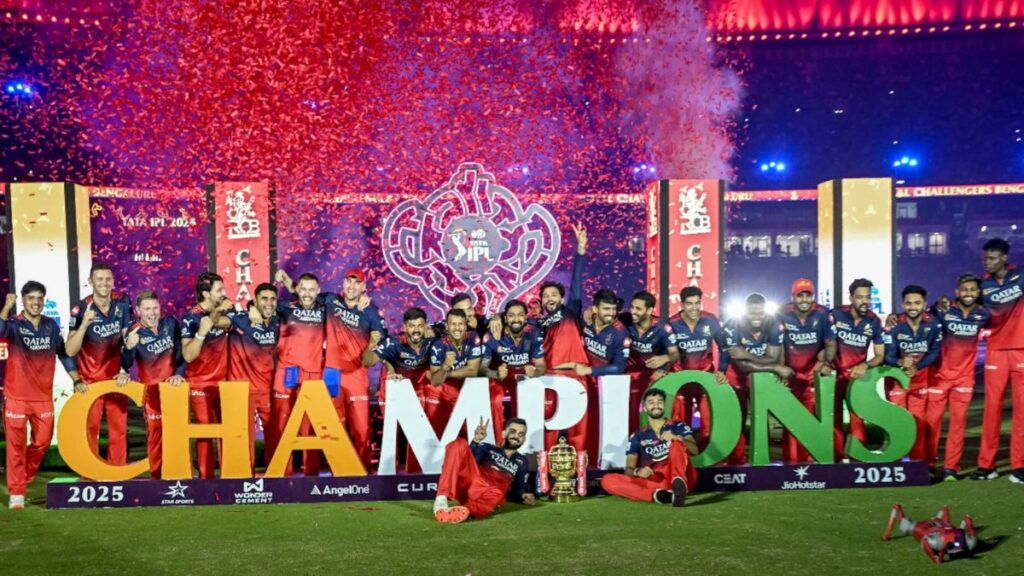
- United Spirits Limited has agreed to sell 100% of RCB for ₹16,660 crore ($1.97 billion)
- The buyers include Aditya Birla Group, Times Group, Bolt Ventures, and Blackstone BXPE
- The deal includes both IPL and WPL franchise ownership rights
- Diageo sold RCB after classifying it as a non-core business asset
- The transaction still requires BCCI and CCI approvals
- This sale reinforces the massive global value of IPL franchises
- Paul van Meekeren’s reaction sparked a wider conversation about cricket’s financial imbalance
Final Verdict
RCB’s sale is not just big news. It is a defining moment in the business of cricket.
On one side, it proves that IPL franchise investment has reached astonishing new heights. On the other, it forces the cricket world to think harder about ownership, money, fan identity, and the future direction of the game.
One thing, however, is already clear:
RCB has entered a bold new era—and cricket may never look the same again.
FAQs
Why is RCB’s Stunning $1.97 Billion Sale being called one of the biggest moments in IPL history?
RCB’s Stunning $1.97 Billion Sale is being seen as a historic IPL moment because it reflects how massively cricket franchise values have grown in India. This is not just a routine ownership transfer. Instead, it shows that IPL teams are now viewed as premium global sports assets with long-term commercial power, media value, and brand influence.
For fans, investors, and the wider cricket world, this sale feels like a turning point. It proves that cricket is no longer only about runs, wickets, and trophies. It is also about business, brand expansion, and billion-dollar sports ownership.
Who bought RCB in RCB’s Stunning $1.97 Billion Sale, and why does that matter so much?
In RCB’s Stunning $1.97 Billion Sale, the franchise was acquired by a powerful consortium that includes Aditya Birla Group, The Times of India Group, Bolt Ventures, and Blackstone’s BXPE strategy.
This matters because the new ownership group brings a unique mix of financial strength, media influence, investment experience, and long-term business vision. In simple terms, RCB is not moving into uncertain hands. Instead, it is entering a new phase backed by organizations with the ability to scale the brand even further.
That gives fans a reason to feel hopeful, curious, and excited about what comes next.
Why did Diageo and United Spirits agree to RCB’s Stunning $1.97 Billion Sale?
Diageo and its Indian subsidiary, United Spirits Limited, agreed to RCB’s Stunning $1.97 Billion Sale because the franchise was seen as a non-core asset within their broader alcohol and beverage business.
While RCB is emotionally priceless to fans, companies often make decisions based on strategic fit and financial timing. In this case, the IPL market had reached a level where selling the team could unlock extraordinary value.
So, although the move may feel emotional to supporters, it was also a smart corporate decision driven by timing, valuation, and long-term business priorities.
What exactly is included in RCB’s Stunning $1.97 Billion Sale?
RCB’s Stunning $1.97 Billion Sale includes the entire 100% equity stake in Royal Challengers Sports Private Limited (RCSPL).
That means the deal covers:
- Royal Challengers Bengaluru’s IPL franchise
- Royal Challengers Bengaluru’s Women’s Premier League franchise
- The broader business rights connected to the team’s ownership and operations
In other words, this is not a partial or symbolic sale. It is a full transfer of control over one of the most commercially powerful brands in Indian cricket.
Does RCB’s Stunning $1.97 Billion Sale include the women’s team too?
Yes, RCB’s Stunning $1.97 Billion Sale also includes the Women’s Premier League franchise, which is a very important part of the overall deal.
That makes this transaction even more significant because it is not only about men’s cricket. It also reflects the rising value and future potential of women’s franchise cricket in India.
As a result, this sale could play a major role in strengthening investment and visibility in the women’s game as well.
Is RCB’s Stunning $1.97 Billion Sale officially complete right now?
Not entirely yet. While RCB’s Stunning $1.97 Billion Sale has been agreed through definitive agreements, the transaction still needs a few final approvals before it can fully close.
These include:
- Board of Control for Cricket in India (BCCI) approval
- Competition Commission of India (CCI) approval
- Other legal and regulatory clearances
So yes, the deal is very real and very serious. However, a few final steps still need to happen before the handover becomes official.
Why is RCB’s Stunning $1.97 Billion Sale such a huge signal for the future of IPL franchises?
RCB’s Stunning $1.97 Billion Sale sends a very clear message: IPL franchises are now among the most valuable properties in world sport.
That matters because it could lead to:
- More billion-dollar team valuations
- Greater global investor interest
- Stronger private equity involvement in cricket
- Bigger commercial growth across Indian sports
Put simply, this is not just about RCB. It is also about where the IPL business is heading next.
And right now, that future looks bigger than ever.
How could RCB’s Stunning $1.97 Billion Sale impact RCB fans emotionally and practically?
For fans, RCB’s Stunning $1.97 Billion Sale brings two emotions at once: hope and uncertainty.
On one side, new ownership can bring fresh energy, stronger investment, improved brand growth, and bigger long-term ambitions. On the other side, fans naturally worry about identity, culture, and whether the emotional soul of the team will remain untouched.
That emotional tension is completely understandable.
After all, RCB is not just a franchise. It is a loyalty-driven community built on years of passion, belief, heartbreak, and unforgettable moments. Therefore, fans will watch this transition very closely.
What does Paul van Meekeren’s reaction to RCB’s Stunning $1.97 Billion Sale reveal about world cricket?
Paul van Meekeren’s reaction to RCB’s Stunning $1.97 Billion Sale opened a much deeper conversation than many expected.
When he said that just 0.5% of the deal value could help transform Dutch cricket, he highlighted the growing financial gap between top-tier franchise cricket and associate nations.
That comment resonated because it touched a real issue in global cricket: while the top of the sport keeps becoming richer, many smaller nations still struggle for support, funding, and regular opportunities.
So, beyond the money, this sale has also sparked a meaningful debate about how cricket should grow worldwide.
Why are business experts paying such close attention to RCB’s Stunning $1.97 Billion Sale?
Business experts are closely watching RCB’s Stunning $1.97 Billion Sale because it is a major case study in sports valuation, brand monetization, and franchise investment strategy.
This deal combines:
- A globally recognized sports brand
- High-value media and sponsorship potential
- Deep investor confidence in cricket
- Strong long-term monetization opportunities
In many ways, this is not just a sports headline. It is also a serious business story that could influence future investments across cricket, entertainment, and Indian sports.
Could RCB’s Stunning $1.97 Billion Sale change the value of other IPL teams too?
Yes, RCB’s Stunning $1.97 Billion Sale could absolutely influence the valuation of other IPL franchises.
Whenever a team sells at such a massive price, it reshapes how investors, analysts, and owners think about the rest of the league. It creates a new benchmark.
As a result, teams with strong fan bases, media visibility, and commercial appeal may now command even higher valuations in future deals.
That is why this sale is being watched far beyond Bengaluru.
What should readers and fans understand most about RCB’s Stunning $1.97 Billion Sale?
The biggest thing readers should understand about RCB’s Stunning $1.97 Billion Sale is this: it is not only a sale, it is a statement.
It says that cricket has entered a new commercial era.
It says that fan-driven sports brands now hold enormous financial power.
And perhaps most importantly, it says that the future of cricket will be shaped not only on the field—but also in boardrooms, investment meetings, and billion-dollar decisions.
That is exactly why this story feels so much bigger than one transaction.