
Summary
Constitution Day 2025, also known as Samvidhan Diwas, is being celebrated across India with great enthusiasm and national pride. The main event is taking place in the Central Hall of the old Parliament building, where President Droupadi Murmu is presiding over the national ceremony.
This year’s celebrations highlight India’s democratic journey, constitutional values, and the nation’s confidence in achieving the goal of a Developed India (Viksit Bharat).
President Murmu: “The resolve of a developed India will certainly be fulfilled.”
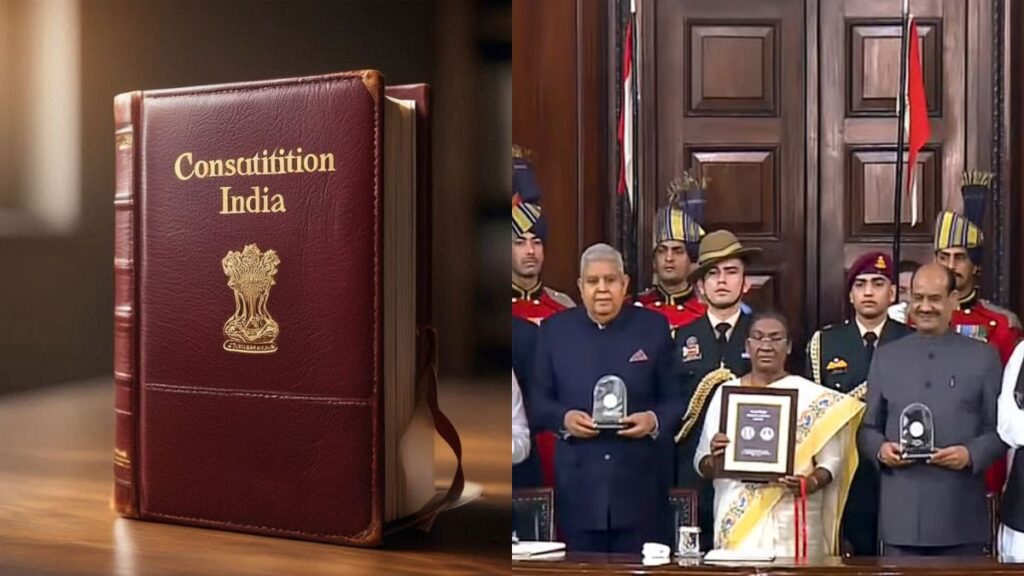
During her address, President Droupadi Murmu expressed strong confidence in India’s rapid progress:
“I am confident that the resolve to make India a developed nation will definitely be achieved. Our nation is moving toward becoming the world’s third-largest economy.”
She added that in the future, when nations study democracies and constitutions across the world, India’s democracy will be written in golden letters.
Constitution Released in Nine Indian Languages
A key highlight of the ceremony was the digital release of the Constitution of India in nine additional Indian languages:
- Malayalam
- Marathi
- Nepali
- Punjabi
- Bodo
- Kashmiri
- Telugu
- Odia
- Assamese
These translations aim to make the Constitution more accessible to citizens across the country.
President Leads MPs in Reading the Preamble
In a powerful moment symbolizing unity and constitutional commitment, President Murmu led all Members of Parliament in reading the Preamble. The ceremony concluded with the singing of the national anthem.
Key Leaders Present at the National Ceremony
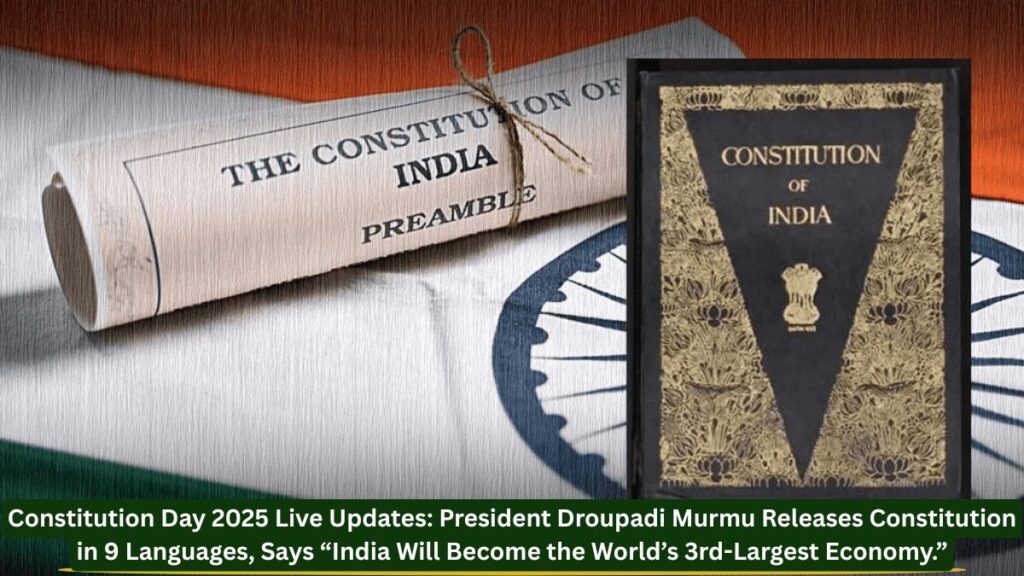
The event saw the presence of top constitutional office holders and national leaders, including:
- Vice President & Rajya Sabha Chairman C.P. Radhakrishnan
- Prime Minister Narendra Modi
- Lok Sabha Speaker Om Birla
- Union Ministers
- Members of both Houses of Parliament
- Leaders of major political parties, including Rahul Gandhi
According to the Ministry of Parliamentary Affairs, the Vice President and Lok Sabha Speaker addressed the gathering before the President’s speech.
“25 Crore People Have Come Out of Poverty” – President Murmu
Highlighting India’s development achievements, the President said:
“In the past decade, 25 crore people have come out of poverty.”
She added that reforms and welfare efforts continue to uplift millions of families.
President Murmu Praises Parliament for Abolishing Triple Talaq
Calling it a major step for gender justice, the President said:
“By abolishing the social evil of triple talaq, Parliament has ensured justice for women and daughters.”
India’s Democracy: A Global Example
President Murmu emphasized that India, the world’s largest democracy, stands as an example for the world. She praised the contributions of Members of both Houses, saying they have strengthened democratic traditions and national development.
Vice President’s Message on Constitution Day
The Vice President paid tribute to the makers of the Constitution:
- He highlighted the wisdom, sacrifice and collective vision of the Constituent Assembly.
- He said the Constitution reflects the aspirations and dreams of millions who fought for India’s freedom.
- He reaffirmed that India is one, and will always remain one.
Nationwide Celebrations From Panchayats to Parliament
Constitution Day 2025 is being celebrated as a national festival of constitutional values, with events happening across India and among Indian communities worldwide.
Activities include:
- Reading of the Preamble on MyGov.in and constitution75.com
- Participation certificates for citizens
- National online quiz, blog & essay competitions on “Our Constitution – Our Pride”
- Cultural programs, debates, seminars, short films, exhibitions
- Poster/painting and rangoli competitions
- Events across schools, colleges, state governments, UTs and local bodies
A Commemorative Hindi Calligraphy Booklet Released
A special Hindi booklet on calligraphy in the Indian Constitution, prepared by the Ministry of Culture, was also launched during the event.
Why is Constitution Day Celebrated
- 26 November 1949 – The Constituent Assembly adopted the Constitution of India.
- 26 January 1950 – The Constitution came into effect (celebrated as Republic Day).
Thus, 26 November is observed annually as Constitution Day to honor the nation’s founding principles.
Historic Echo in the Central Hall
President Murmu recalled:
“On this very day in 1949, in this same Central Hall, the Constitution was adopted by ‘We, the People of India.’”
Conclusion: A Day of National Pride and Constitutional Commitment
Constitution Day 2025 is not just a commemoration—it is a reminder of India’s democratic strength, unity, and the nation’s determination to achieve the vision of a Developed India.
From Parliament to Panchayats, millions of citizens are participating in activities that celebrate justice, liberty, equality and fraternity—the core values of the Indian Constitution.
Note: All information and images used in this content are sourced from Google. They are used here for informational and illustrative purposes only.
FAQs About Constitution Day 2025
1. What is Constitution Day 2025 and why is it celebrated in India?
Constitution Day 2025 marks the anniversary of the day the Constituent Assembly adopted the Constitution of India on 26 November 1949. It is celebrated every year on 26 November to honor the nation’s constitutional values, democratic spirit, and the vision of the framers of the Constitution. Constitution Day 2025 commemorates this historic milestone through nationwide activities, programs, and ceremonies.
2. What were the key highlights of President Droupadi Murmu’s address on Constitution Day 2025?
In her Constitution Day 2025 address, President Droupadi Murmu expressed confidence that India will soon become the world’s third-largest economy and emphasized that the nation’s democratic and constitutional legacy will be written “in golden letters.” She also highlighted achievements such as 25 crore people rising out of poverty and praised Parliament for abolishing triple talaq, ensuring justice for women.
3. How was the Constitution made more accessible to citizens on Constitution Day 2025?
A major highlight of Constitution Day 2025 was the digital release of the Constitution in nine Indian languages: Malayalam, Marathi, Nepali, Punjabi, Bodo, Kashmiri, Telugu, Odia and Assamese. This initiative aims to ensure that citizens across diverse linguistic backgrounds can easily understand and engage with the Constitution.
4. Who were the prominent leaders attending the national ceremony on Constitution Day 2025?
The Constitution Day 2025 national ceremony in the Central Hall witnessed the presence of major national leaders including President Droupadi Murmu, Prime Minister Narendra Modi, Vice President C.P. Radhakrishnan, Lok Sabha Speaker Om Birla, Union Ministers, Members of Parliament, and leaders of major political parties such as Rahul Gandhi.
5. What activities were organized across India to celebrate Constitution Day 2025?
Constitution Day 2025 was celebrated nationwide with activities such as reading the Preamble online, national quizzes, blog and essay competitions on “Our Constitution – Our Pride,” cultural programs, exhibitions, debates, seminars, poster and rangoli competitions, and events in schools, colleges, ministries, states, UTs, and local bodies.
6. How did members of Parliament participate in Constitution Day 2025?
During Constitution Day 2025, Members of Parliament joined President Murmu in a collective reading of the Preamble, symbolizing unity and reaffirming commitment to justice, liberty, equality, and fraternity. This was followed by the singing of the national anthem inside the Central Hall.
7. What message did the Vice President convey on Constitution Day 2025?
The Vice President highlighted the wisdom, sacrifice, and collective vision of the leaders of the Constituent Assembly. During his Constitution Day 2025 message, he emphasized that the Constitution represents the aspirations of millions who fought for freedom and reaffirmed that India is one and will always remain one.
8. What new publications or releases took place on Constitution Day 2025?
Apart from releasing nine new language editions of the Constitution, Constitution Day 2025 included the launch of a special Hindi calligraphy booklet on the Indian Constitution prepared by the Ministry of Culture. This booklet celebrates the artistic heritage embedded in the original handwritten Constitution.
9. How does Constitution Day 2025 contribute to promoting constitutional values among citizens?
Constitution Day 2025 promotes constitutional values by engaging citizens in activities that deepen awareness of fundamental rights, duties, and democratic principles. Initiatives like public reading of the Preamble, educational programs, quizzes, cultural events, and government-led outreach help strengthen civic responsibility and national unity.
10. What makes Constitution Day 2025 significant for India’s vision of a Developed Nation?
Constitution Day 2025 reflects India’s collective resolve to become a Developed India (Viksit Bharat). The President emphasized the country’s rapid economic rise, empowerment of millions out of poverty, gender justice reforms like the abolition of triple talaq, and the strengthening of democratic institutions—all essential pillars of a developed nation.