
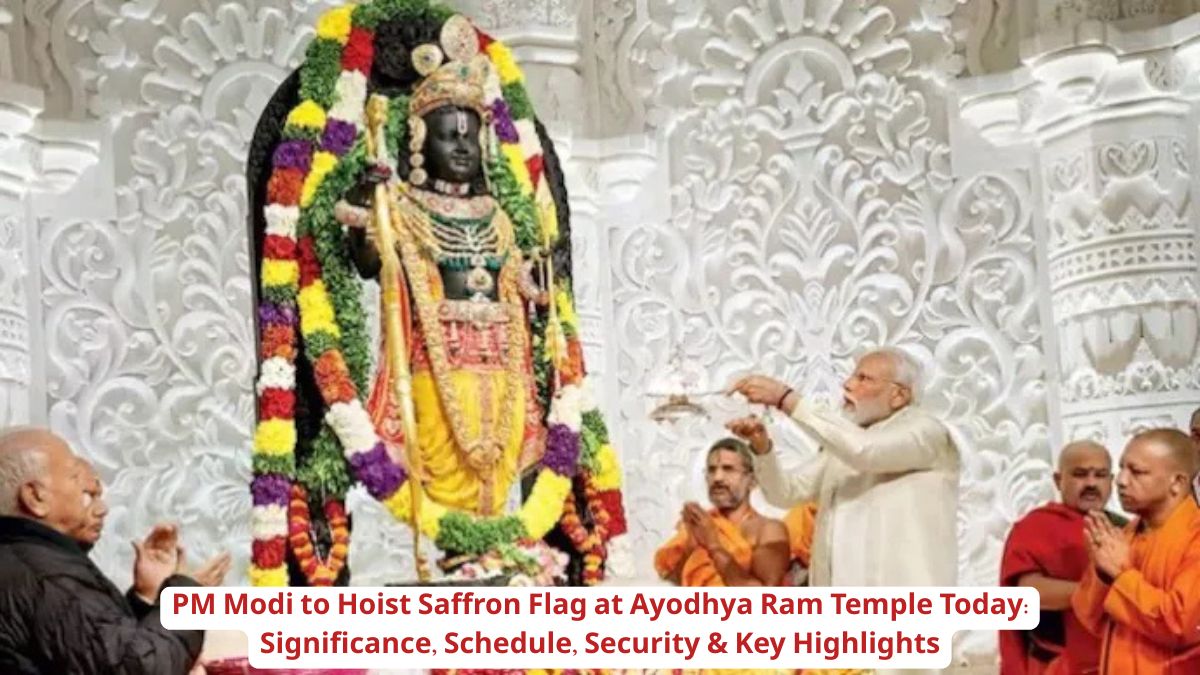
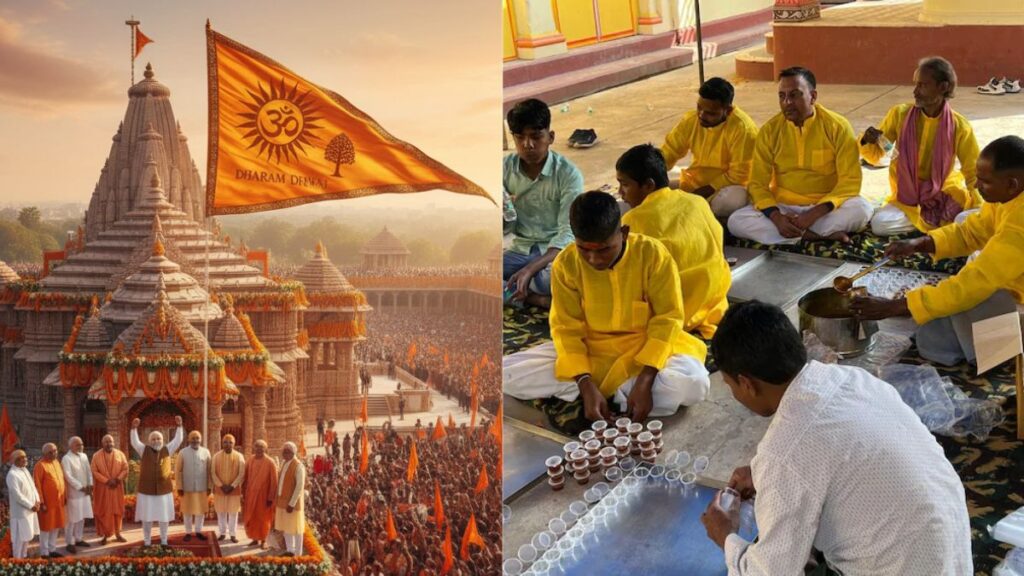
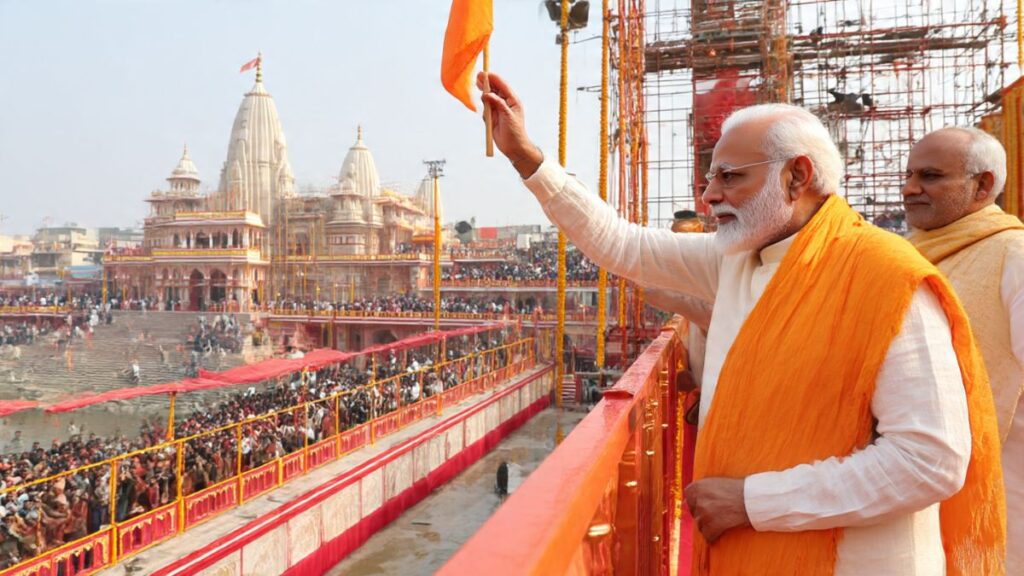
Ayodhya is set for a historic day as Prime Minister Narendra Modi visits the newly constructed Ram Janmabhoomi Temple to hoist a saffron flag (Dharam Dhwaj) atop the temple’s shikhar. The ceremony marks the symbolic completion of the grand Ram Mandir, following the consecration of Ram Lalla in January 2024.
The event is being referred to by many as the “second pran pratishtha”, signifying a new spiritual chapter for Ayodhya and millions of devotees worldwide.
Why the Saffron Flag Hoisting at Ram Temple Matters
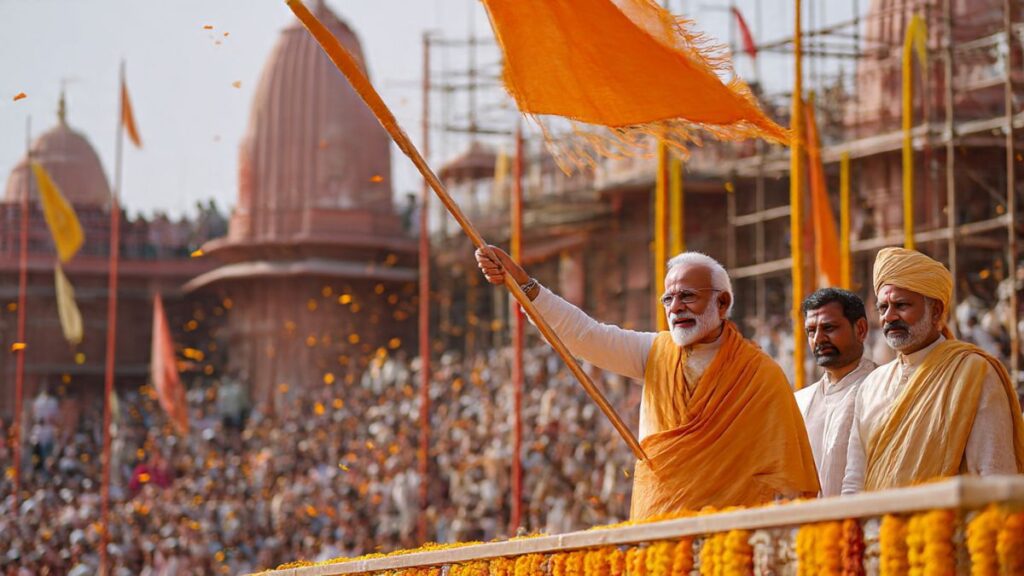
The right-angled triangular saffron flag represents:
- Dignity and unity
- Cultural continuity
- Ideals of Ram Rajya
- A radiant Sun symbol, signifying Lord Rama’s brilliance and valour
- An ‘Om’ inscription along with the sacred Kovidara tree
The hoisting officially declares the completion of the Ram Mandir, built in majestic Nagara architectural style and surrounded by an 800-metre Parkota displaying diverse temple craftsmanship.
PM Modi’s Ayodhya Visit: Full Schedule
Here is the complete itinerary for the Prime Minister during the Ayodhya event:
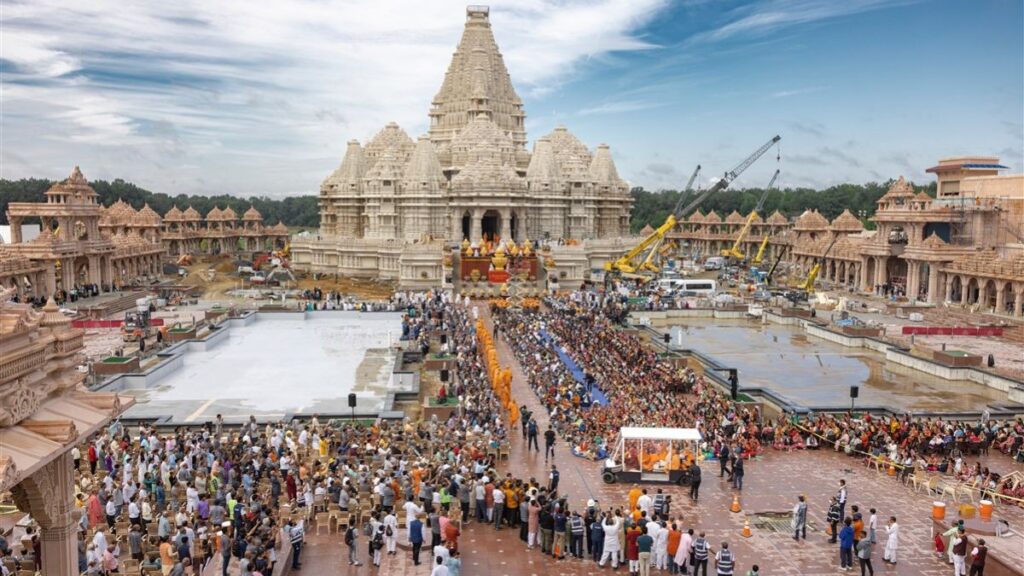
10:00 AM – Visit to Saptmandir
PM Modi will visit the sacred Saptmandir complex that includes temples dedicated to:
- Maharshi Vashishtha
- Maharshi Vishwamitra
- Maharshi Agastya
- Maharshi Valmiki
- Devi Ahilya
- Nishadraj Guha
- Mata Shabari
11:00 AM – Visit to Sheshavtar Mandir & Mata Annapurna Mandir
The PM will offer darshan and pooja at these revered sites before heading to the Ram Darbar Garbh Grah.
12:00 PM – Flag Hoisting at Ram Temple
The main ceremony will take place at 12 noon, where PM Modi will hoist the massive 10-ft by 20-ft saffron flag on the temple’s top shikhar.
Following the ceremony, the Prime Minister is expected to address the gathering.
Ayodhya Transforms for the Grand Ceremony
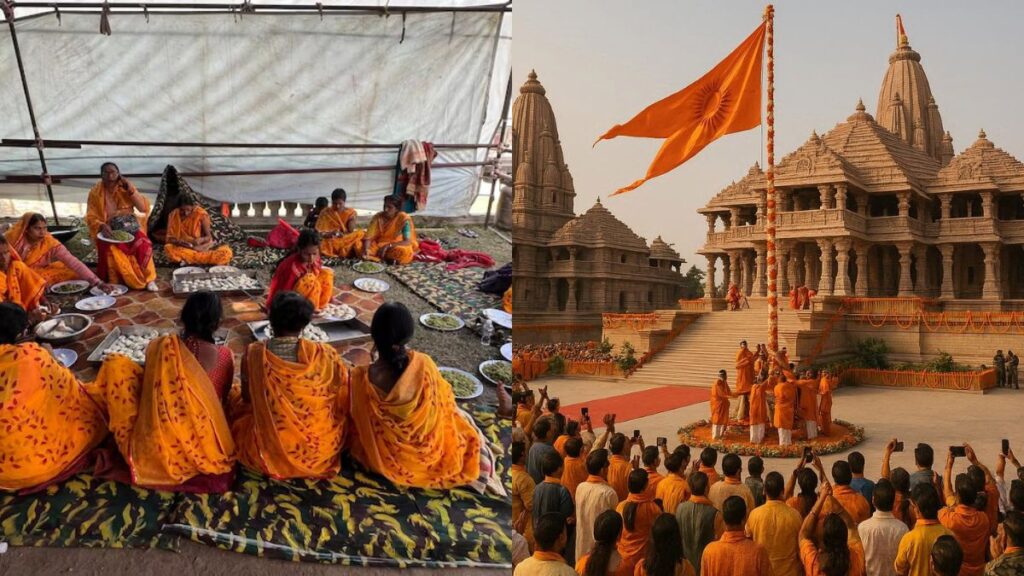
The holy city is witnessing unprecedented decorations and preparations:
- 100 tons of flowers used across the temple and streets
- Massive footfall of domestic and international devotees
- Traditional décor showcasing India’s spiritual heritage
- Streets illuminated and adorned for the sacred occasion
The Uttar Pradesh government describes the event as a “new era for Ayodhya”, supported by the Ayodhya Master Plan 2031 and Vision 2047. The aim is to transform Ayodhya into a global spiritual hub through advanced infrastructure, enhanced tourism, smart city initiatives, and sustainable development.
Unprecedented Security in Ayodhya
With massive crowds expected, security has been tightened across the city.
Deployed personnel include:
- 6,970 security officers
- ATS commandos
- NSG snipers
- Cyber experts
- Technical surveillance teams
Ayodhya has been converted into a high-security zone to ensure smooth conduct of the ceremony.
Why November 25 Is Auspicious
The date was selected based on Hindu mythology.
- It is the Panchami (fifth day) of the Shukla Paksha in Margashirsha
- The same day when Lord Rama and Goddess Sita were married in Treta Yuga
- It also marks the martyrdom day of Guru Tegh Bahadur, the 9th Sikh Guru, who meditated in Ayodhya for 48 hours in the 17th century.
Ayodhya’s Spiritual Journey: Key Milestones
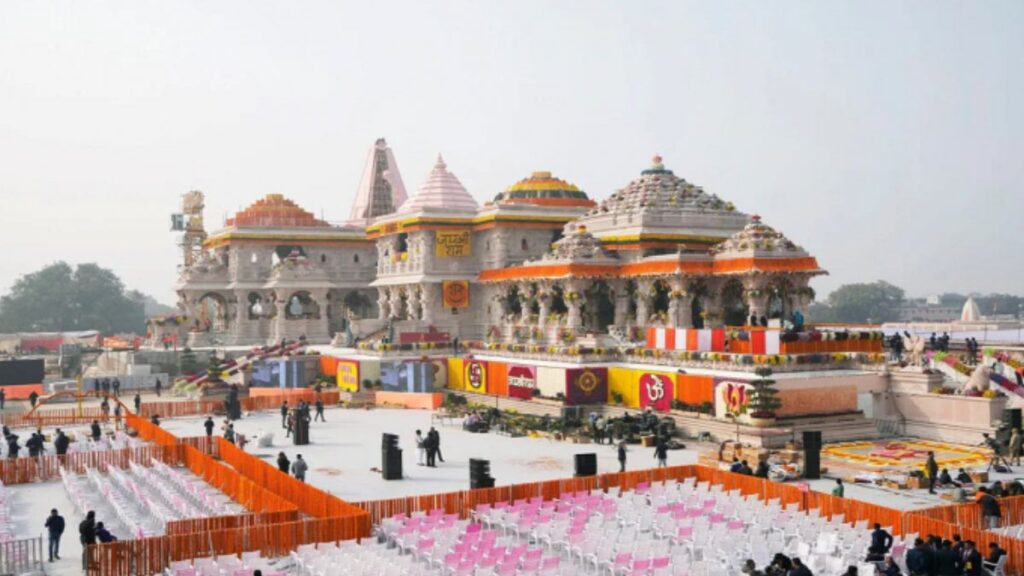
- August 5, 2020 – PM Modi performed the Bhoomi Pujan
- January 22, 2024 – The Pran Pratishtha of Ram Lalla took place
- November 25, 2025 – Saffron flag hoisting marks the symbolic completion of the temple
Uttar Pradesh CM Yogi Adityanath said the day will be “written in golden letters in Ayodhya’s history”, reflecting the combined essence of heritage, faith, and modern development.
Final Words on the Dharam Dhwaj Ceremony at Ayodhya Ram Mandir
The Dharam Dhwaj ceremony at Ayodhya Ram Temple is not just a religious event—it is a monumental cultural moment for India. With massive preparations, heightened security, and global attention, Ayodhya is ready to witness a day that blends devotion, tradition, architecture, and national pride.
Note: All information and images used in this content are sourced from Google. They are used here for informational and illustrative purposes only.
FAQs on the Dharam Dhwaj Ceremony at Ayodhya Ram Mandir
1. What is the significance of the Dharam Dhwaj ceremony at Ayodhya Ram Mandir?
The Dharam Dhwaj ceremony at Ayodhya Ram Mandir symbolizes the formal completion of the temple’s construction and the establishment of Ram Rajya’s ideals. The saffron flag represents dignity, cultural continuity, unity, and divine energy associated with Lord Rama.
2. Why is PM Modi’s participation important in the Dharam Dhwaj ceremony at Ayodhya Ram Mandir?
PM Modi’s participation in the Dharam Dhwaj ceremony at Ayodhya Ram Mandir adds national importance to the event. His presence highlights the cultural, historical, and spiritual significance of the Ram Temple and reinforces its prominence as a global spiritual landmark.
3. What does the saffron flag represent during the Dharam Dhwaj ceremony at Ayodhya Ram Mandir?
The saffron flag used in the Dharam Dhwaj ceremony at Ayodhya Ram Mandir includes a radiant Sun symbol, an Om inscription, and the sacred Kovidara tree. It stands for valour, spiritual radiance, and the timeless principles of Sanatan Dharma.
4. Why was November 25 chosen for the Dharam Dhwaj ceremony at Ayodhya Ram Mandir?
November 25 is the Panchami of the Shukla Paksha in Margashirsha, the same auspicious day when Lord Rama and Maa Sita were married in Treta Yuga. This spiritual alignment makes the date ideal for the Dharam Dhwaj ceremony at Ayodhya Ram Mandir.
5. How does the Dharam Dhwaj ceremony at Ayodhya Ram Mandir reflect India’s heritage?
The Dharam Dhwaj ceremony at Ayodhya Ram Mandir showcases India’s civilizational heritage through the Nagara-style architecture, traditional rituals, ancient symbolism, and cultural vibrancy. The event reinforces the spiritual roots that connect millions of devotees across generations.
6. What preparations were made for the Dharam Dhwaj ceremony at Ayodhya Ram Mandir?
Ahead of the Dharam Dhwaj ceremony at Ayodhya Ram Mandir, the city was decorated with 100 tons of flowers, traditional lighting, and intricate designs. Massive crowds, upgraded infrastructure and security arrangements transformed Ayodhya into a large spiritual destination.
7. What security measures were taken for the Dharam Dhwaj ceremony at Ayodhya Ram Mandir?
Security for the Dharam Dhwaj ceremony at Ayodhya Ram Mandir included the deployment of 6,970 personnel, NSG snipers, ATS commandos, cyber teams, and technical surveillance units. These measures ensured seamless movement and safety for devotees and dignitaries.
8. What is the schedule of PM Modi during the Dharam Dhwaj ceremony at Ayodhya Ram Mandir?
For the Dharam Dhwaj ceremony at Ayodhya Ram Mandir, PM Modi begins the day with a visit to the Saptmandir, followed by darshan at Sheshavtar Mandir and Mata Annapurna Mandir. The saffron flag hoisting at 12 noon marks the central event of the ceremony.
9. How does the Dharam Dhwaj ceremony at Ayodhya Ram Mandir connect with Ram Lalla’s Pran Pratishtha?
The Dharam Dhwaj ceremony at Ayodhya Ram Mandir is seen as a symbolic continuation of the Pran Pratishtha of Ram Lalla held in January 2024. Together, both ceremonies represent the spiritual revival and the completion of the temple’s sacred journey.
10. What impact will the Dharam Dhwaj ceremony at Ayodhya Ram Mandir have on Ayodhya’s future?
The Dharam Dhwaj ceremony at Ayodhya Ram Mandir is expected to boost Ayodhya’s status as a global spiritual hub, supporting large-scale tourism, infrastructure growth, cultural preservation, and sustainable urban development under the Ayodhya Master Plan 2031 and Vision 2047.




Leave a Reply