
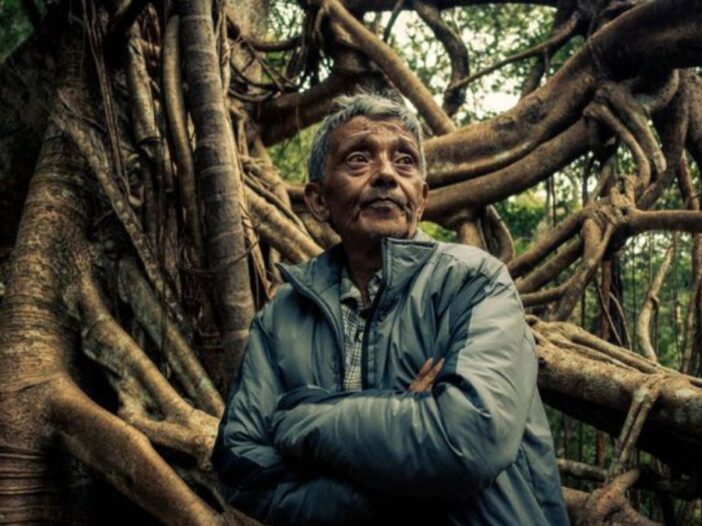
Hally War’s story begins deep in the rain-soaked forests of Meghalaya, where nature and tradition quietly work together to create something extraordinary. While most people build bridges with steel and concrete, Hally War devoted his life to protecting bridges that actually grow from living trees. His mission was not just about preserving structures—it was about saving a centuries-old tradition of the Khasi community and protecting a powerful example of sustainable living. Because of his passion, the world has discovered the breathtaking living root bridges of Meghalaya. Today, his journey inspires people everywhere to believe that respecting nature can create wonders that last for generations.
The Remarkable Story Behind the Living Root Bridges
This complex spiritual and practical alliance between human and natural elements. The Khasi have been growing living root bridges for many generations, and the practice has become a part of their tradition.
However, this rare heritage has not always been easy to preserve. Modern construction techniques and changing lifestyles have gradually threatened these living buildings. That one person who could be found defending against the disappearance of this priceless tradition was Maki Hanson. That person is Hally War, whose life-long dedication has ensured that the art of living root bridges continues to live on.
This ancient knowledge has as a result of his tireless efforts gained global recognition and renewed respect.
How the Khasi Community Grows Bridges From Trees
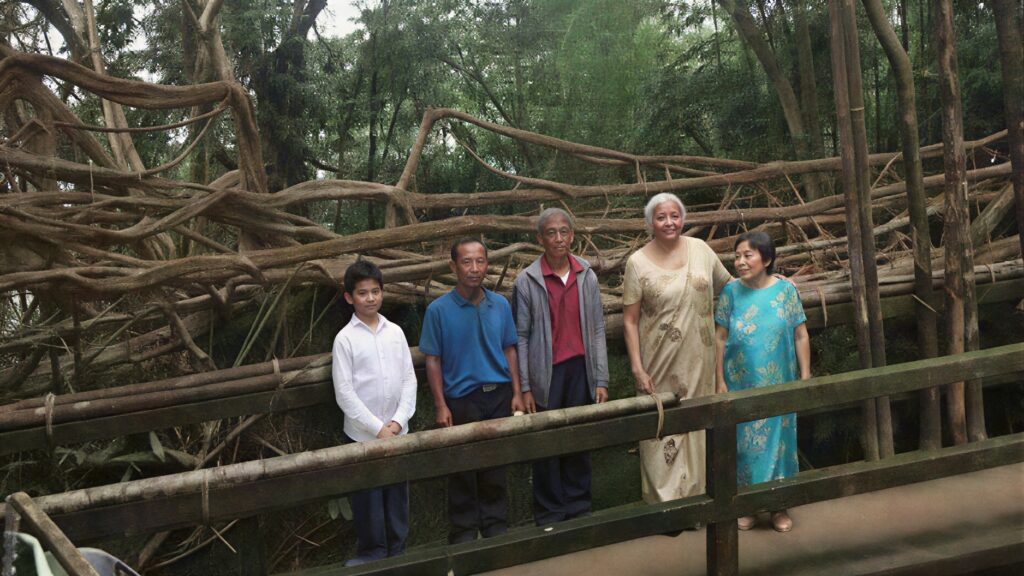
Unlike conventional bridges constructed from steel or concrete, these structures are natural in growth over a period. The Khasi community uses aerial roots of the Ficus elastica tree, or the Indian rubber tree.
First, villager guide the young roots over rivers and streams, using bamboo scaffolding or hollow tree trunks. The strength of roots also increases over time as they find ways to interlock with one another. They eventually form a strong natural pathway that can hold dozens of people simultaneously.
As the roots keep on growing, the bridge becomes stronger every year. In fact, some living root bridges have lived for hundreds of years. Also, they are maintained carefully by the community to ensure safety and their function for the future generations.
Why Living Root Bridges Are a Symbol of Sustainable Engineering
The modern infrastructure mostly depends on machines, cement, and massive construction. Living root bridges provide a contrast to that infrastructure, showing how human beings can work with nature rather than against it.
Advantages of Concrete Arch Bridges
Instead of deteriorating, they become stronger with age. They require very few outside materials or help from industrial equipment. Their ability to grow into an ecosystem is one of their unique features. They can withstand the heavy rainfall and flooding occurring in Meghalaya’s climatic conditions.
Therefore, the environmental experts always refer to these bridges as a best example of sustainable engineering. They solve not only transportation challenges but also preserve the region’s fragile environment.
Nongriat: The Village Where Nature and Tradition Meet
Amongst the many places that testify about living root bridges, the Nongriat village is stunning to behold.
Nestled within dense forests and rolling hills is Nongriat, home to the famous double-decker living root bridge. Therefore, tourists from all over the world come to this isolated village to see the remarkable link between culture and nature.
New opportunities have been brought to this community because of tourism. Responsible eco-tourism at the same time, creates awareness to the public the need to preserve these natural wonders.
Hally War’s Lifelong Mission to Protect This Heritage
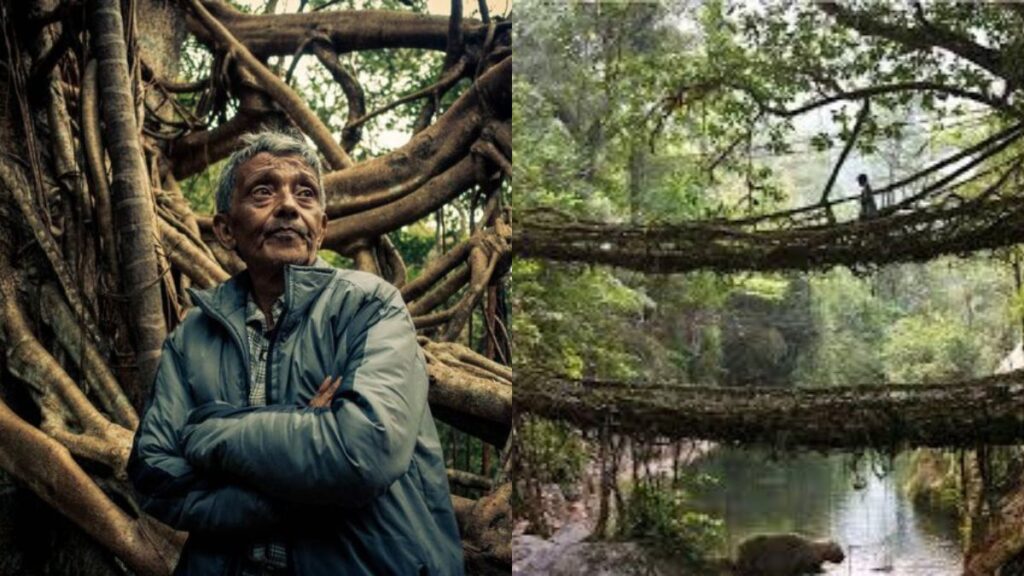
While many people admire the bridges today, there needs to be dedication and leadership to ensure that they are protected. This is where Hally War’s work proves to be inspirational.
For decades, he urged the local communities to take care of the bridges and maintain traditional knowledge. Also, he put efforts on advocacy related to the cultural and ecological importance of these structures.
Rather than allow modernization to obliterate ancient practices, he advocated for a balanced approach that preserved tradition while supporting responsible tourism.
Younger generations have also started to learn how to grow and care for the living root bridges to continue the legacy (ibid).
Recognition With the Prestigious Padma Shri in 2026
In recognition of his remarkable contribution, the Government of India honored Hally War with Padma Shre in 2026. War received the Padma Shri by the Government of India in 2026 for his remarkable contribution.
The recognition was his role in environmental conservation and also cultural preservation. Besides, it got international attention to the living root bridges in Meghalaya.
Today, his story serves as a reminder that one man’s commitment can preserve traditions that serve the entire planet.
Key Takeaways
The living root bridges constitute a centuries-old tradition among the Khasi community in Meghalaya. The bridges have grown out of aerial roots from the Ficus elastica tree. With time, the whole structure becomes more robust and has life expectancies of several hundreds of years.
Such natural engineering can be seen in villages like Nongriat. Nongriat Village is a prime example of such natural engineering, focused on which Hally War dedicated his life.
His efforts earned him the Padma Shri for environmental conservation in 2026.
Final Thoughts
The living root bridges offered more functionalities than simply serving as a way to cross the river. Instead, they symbolize patience, wisdom, and the symbiotic relationship between man and nature.
Thanks to the passionate efforts of Hally War and the Khasi community, this extraordinary tradition still exists today. Ultimately, their work proves that the most powerful innovations sometimes grow slowly—root by root—cultivated by respect for nature and culture.
Frequently Asked Questions About Hally War and Meghalaya’s Living Root Bridges

Who is Hally War and why is his work considered so inspiring?
Hally War is widely respected as a passionate protector of Meghalaya’s traditional living root bridges. For decades, he worked closely with local communities to preserve the ancient knowledge of growing bridges from tree roots. His dedication did more than save structures—it protected culture, identity, and a sustainable way of living with nature. As a result, his inspiring journey shows how one determined person can safeguard traditions that benefit future generations.
How did Hally War help preserve the living root bridge tradition?
Hally War actively encouraged communities to maintain and restore their root bridges instead of abandoning them for modern concrete structures. In addition, he spread awareness about their environmental value and cultural importance. Because of his efforts, younger members of the Khasi people have started learning how to guide tree roots and care for these natural bridges. Consequently, the tradition now has a stronger chance of surviving for centuries.
Why did Hally War focus so strongly on protecting living root bridges?
The motivation behind Hally War’s work came from a deep understanding that these bridges are more than just pathways. They represent sustainable engineering and cultural wisdom passed down through generations. Moreover, living root bridges protect the ecosystem because they require no cement, machines, or heavy construction. Therefore, preserving them helps maintain both environmental balance and local heritage.
Where can travelers see the living root bridges that Hally War helped promote?
Many of the bridges preserved through the awareness created by Hally War can be found in villages across Meghalaya. One of the most famous destinations is Nongriat, which attracts travelers from around the world. Visitors often trek through forests and hills to reach the stunning double-decker root bridge. Not only does the journey feel adventurous, but it also allows people to witness a rare harmony between nature and human creativity.
How do the bridges supported by Hally War actually grow stronger over time?
The bridges grow from the aerial roots of the Ficus elastica tree. Local villagers carefully guide these roots across rivers using bamboo supports. Over time, the roots intertwine and thicken, forming a strong natural walkway. Unlike concrete bridges that weaken with age, these living structures continue growing and becoming stronger each year. Because of this natural process, some bridges have lasted for hundreds of years.
What recognition did Hally War receive for his environmental efforts?
In 2026, the Government of India honored Hally War with the prestigious Padma Shri. This national award recognized his extraordinary contribution to environmental conservation and cultural preservation. Furthermore, the recognition brought global attention to Meghalaya’s living root bridges, encouraging researchers, travelers, and environmentalists to learn from this sustainable tradition.
Why does Hally War’s story matter for the future of sustainable engineering?
The work of Hally War demonstrates that innovation does not always require modern technology. Instead, traditional knowledge can offer powerful solutions to modern environmental challenges. Living root bridges prove that infrastructure can grow naturally while supporting local ecosystems. Therefore, his story inspires communities worldwide to rethink how development and nature can work together.
What can visitors learn from the legacy of Hally War?
Anyone who explores the forests of Meghalaya and sees a living root bridge quickly realizes something profound. Patience, cooperation, and respect for nature can create structures that last centuries. Hally War’s legacy reminds us that protecting cultural traditions is just as important as building new technologies. Ultimately, his work teaches a timeless lesson—true progress grows stronger when humans walk alongside nature rather than trying to control it.






Leave a Reply