
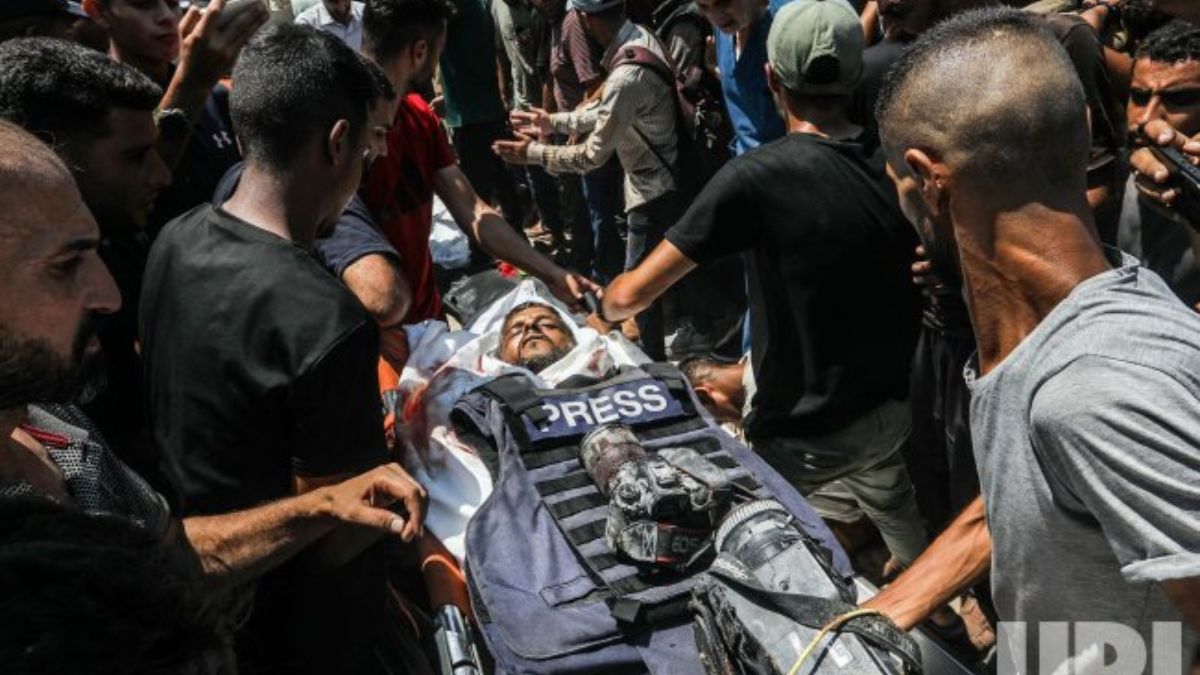
Hussam al-Masri, a courageous Reuters cameraman, dedicated his life to telling the world’s truth from one of the most dangerous conflict zones on earth. On August 26, 2024, the 49-year-old journalist was killed by Israeli fire while operating a live video feed at Nasser Hospital in Khan Younis, Gaza. His resilience, bravery, and unwavering commitment to journalism not only documented the harsh realities of war but also left behind an inspiring legacy that continues to honor the voices of innocent civilians caught in the conflict.
A Journalist Who Believed in the Power of Truth
Born and raised in Khan Younis, Hussam al-Masri dedicated his life to telling the untold stories of Gaza. Starting as a freelancer in 1998, he worked with the Palestinian Broadcasting Corporation before joining Reuters in May 2024. His work was not just a profession—it was a mission. He believed the camera should always record the truth, whether it showed Palestinian civilians suffering, gunmen in action, or Israeli forces.
His brother, Ezzeldin, recalled: “Hussam never stopped filming, even during vacations. For him, the camera was a weapon of truth.”
Reporting Amid Hunger and Displacement
Hussam’s personal life mirrored the hardships of the people he reported on. After Israel’s military offensive forced civilians to flee Khan Younis, his home was destroyed, and his family was left living in a tent. Despite this devastating loss, Hussam continued his work every day—often while struggling to find food for his wife and four children.
His wife, Samaher, is battling cancer, and Hussam had been desperately trying to secure her medical treatment outside Gaza. Yet, he never abandoned his mission to show the world the humanitarian crisis unfolding around him.
The Final Broadcast from Nasser Hospital
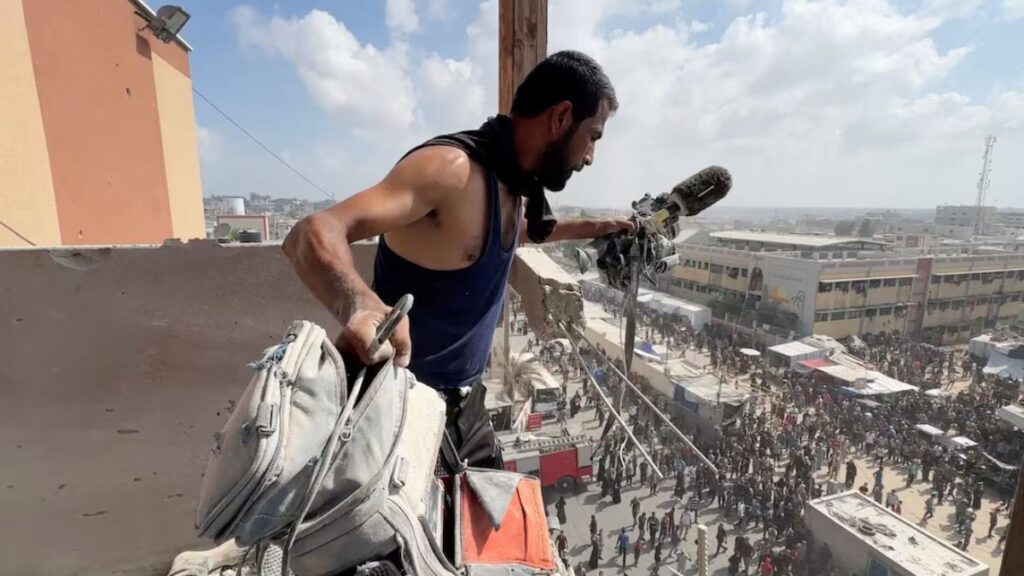
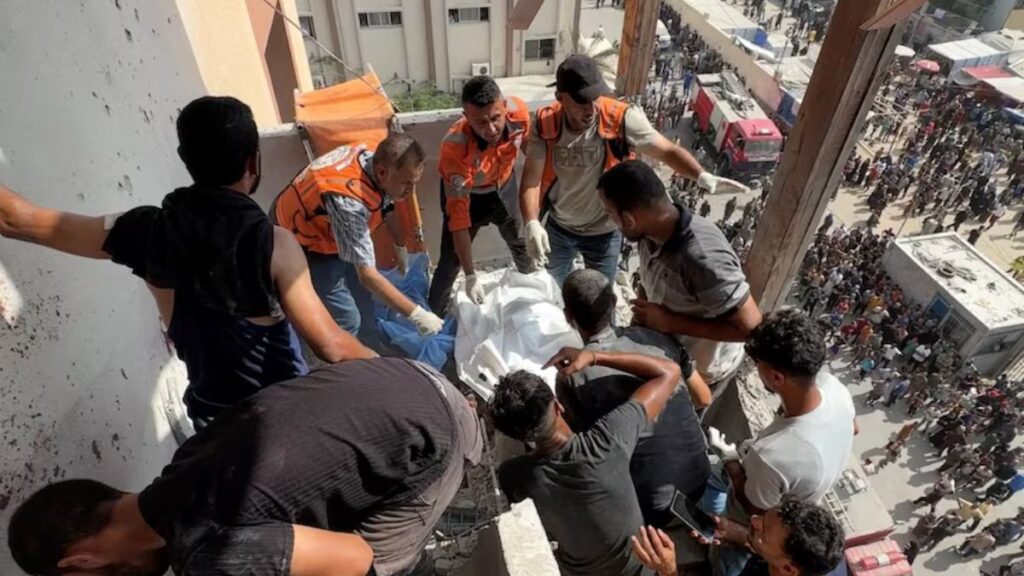
For months, Hussam was responsible for Reuters’ live feed from Nasser Hospital, which provided real-time updates to global media outlets. He believed the hospital was one of the safest locations from which he could operate. On Monday, August 26, while broadcasting from the stairwell, an Israeli strike hit the hospital.
His camera was found beside his body, symbolizing his final act of dedication to journalism. Minutes later, a second strike killed at least 19 people, including other journalists and rescue workers.
Reuters photographer Hatem Khaled was among those injured, while colleagues worldwide mourned the loss of a man they described as optimistic, strong, and deeply committed to his work.
Hussam al-Masri: Admired for His Positivity in Darkness
What made Hussam stand out in Gaza’s tight-knit community of journalists was his infectious optimism. His colleague and friend, Mohamed Salem, recalled their last conversation in which Hussam ended with his favorite words: “Tomorrow will be better.”
This positive spirit inspired his fellow journalists, even in the darkest moments of war. Reuters Editor-in-Chief Alessandra Galloni paid tribute, saying: “Hussam was deeply devoted to telling the story of Gaza to the world. He was strong, steady, and courageous in the most challenging circumstances.”
Hussam’s Last Story: Humanity in Grief
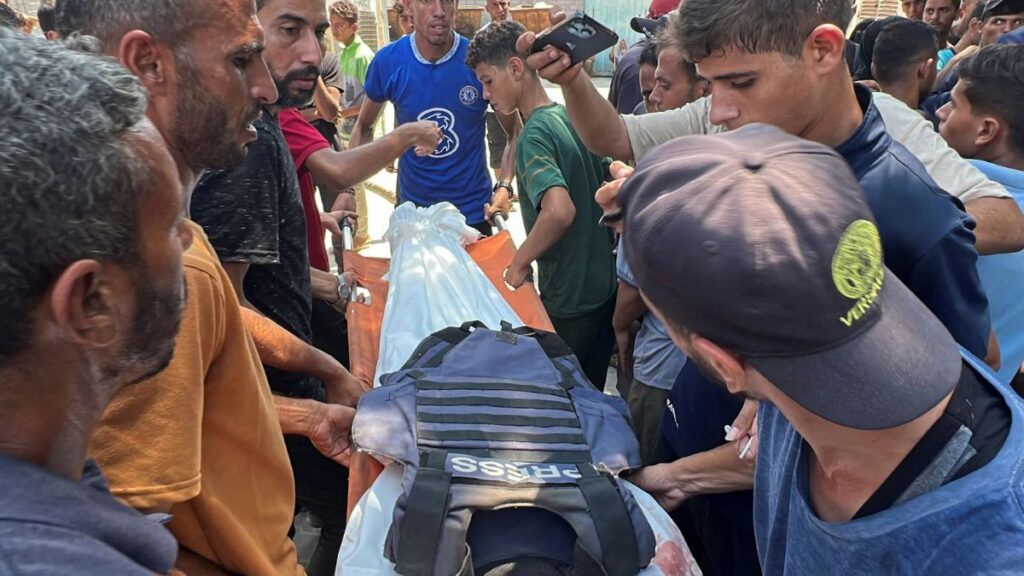
Just two days before his death, Hussam covered a heartbreaking story of families mourning children and relatives killed in Israeli strikes. His reporting gave the world raw, unfiltered access to the realities of Gaza—where famine, malnutrition, and endless suffering define everyday life.
His commitment was more than professional—it was deeply personal. He wanted to ensure the world did not look away.
Calls for Accountability
The Committee to Protect Journalists reported that 189 Palestinian journalists have been killed during the war. They have urged the international community to hold Israel accountable, emphasizing that journalists must not continue to be targeted with impunity.
Israeli Prime Minister Benjamin Netanyahu called Hussam’s death a “tragic mishap,” while Israel’s military stated that journalists were not the intended targets. Yet, the global outcry continues to grow louder, demanding justice for Hussam and others who lost their lives while reporting the truth.
Hussam al-Masri: Conclusion
Hussam al-Masri’s story is a reminder that journalism is not just about reporting news—it is about courage, sacrifice, and a relentless pursuit of truth. His legacy will live on through the powerful visuals and stories he shared with the world, ensuring that the voices of Gaza are never silenced.
As his family grieves and as the journalism community mourns, one thing is certain: Hussam’s bravery and optimism will continue to inspire journalists across the globe.
Note: All information and images used in this content are sourced from Google. They are used here for informational and illustrative purposes only.
Frequently Asked Questions (FAQ): Hussam al-Masri
Who was Hussam al-Masri?
Hussam al-Masri was a 49-year-old Reuters journalist and cameraman from Khan Younis in southern Gaza. He began his career as a freelancer in 1998 and joined Reuters as a contractor in 2024, covering the humanitarian crisis and live events in Gaza.
How did Hussam al-Masri die?
On August 26, 2024, Hussam al-Masri was killed by Israeli fire while operating a live video feed from Nasser Hospital in Khan Younis. His body was found beside his camera, showing his dedication to his work until his final moments.
What kind of work did he do for Reuters?
Hussam managed live broadcasts for Reuters, particularly from Nasser Hospital, which provided real-time visuals of Gaza to media outlets worldwide. He also reported on humanitarian issues, including famine, malnutrition, and civilian suffering.
What was Hussam al-Masri known for among his colleagues?
He was admired for his courage, optimism, and dedication. Despite living in a tent, losing his home, and facing food shortages, he always believed in hope. He often ended conversations with the words: “Tomorrow will be better.”
Did Hussam have a family?
Yes. Hussam was married to Samaher, who is battling cancer. They had four children: Shahd (23), Mohammed (22), Shatha (18), and Ahmad (15). At the time of his death, he was also trying to get his wife out of Gaza for medical treatment.
How many journalists have been killed in the Gaza war?
According to the Committee to Protect Journalists (CPJ), 189 Palestinian journalists had been killed in Gaza by the time of Hussam’s death. The organization has called for accountability and protection of journalists in conflict zones.
What was his last story before his death?
Just two days before his death, Hussam filmed families mourning over the bodies of relatives, including children, who had been killed in Israeli strikes. His work gave the world a direct look at the human cost of the war.
How has Reuters reacted to his death?
Reuters Editor-in-Chief Alessandra Galloni described Hussam as deeply devoted, strong, steady, and courageous. His loss has been deeply felt across the Reuters newsroom and the wider journalism community.






Leave a Reply