
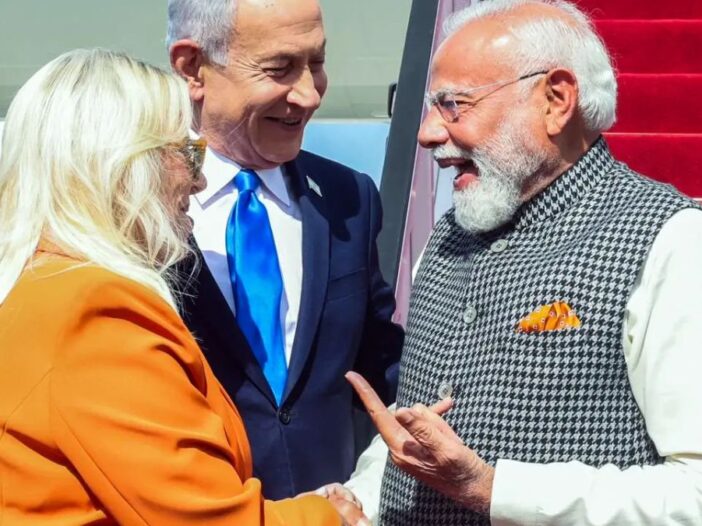
India’s Strategic Foreign Policy Amid the Middle East Crisis: India’s foreign policy is therefore at a crucial turning point. Political voices back home are also becoming sharper. Most notably, the opposition has accused Prime Minister Narendra Modi of valuing optics over substance. So the matter at hand is not only diplomacy but also the global credibility of India, its strategic autonomy and national interest in the long run.
This unfolding geopolitical crisis precipitated by a massive U.S.-Israel strike on Iran and this has put more focus on New Delhi’s stance. Hence, the question: is India balancing global partnerships or overreaching strategically?
Political Firestorm Over Modi’s Israel Visit
Prime Minister Narendra Modi visited Israel on February 25-26, 2026. However, the timing led to an instant controversy. The United States and Israel therefore launched a significant military operation against the leadership of Iran just a few days after.
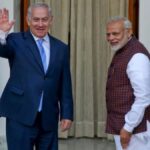
During his visit, Modi addressed the Knesset and met with Israeli Prime Minister Benjamin Netanyahu and Israeli President Isaac Herzog. He deliberately left out scheduling meetings with leaders of Palestine. Critics argue that therefore India shifted exceedingly visibly towards Israel amidst maximum regional instability.
On the other hand, the opposition Congress party, with Jairam Ramesh as the chief of its communication, criticized the government for ditching India’s long-held balanced approach in West Asia.
Iran Crisis and Global Shockwaves
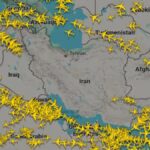
The crisis escalated to new heights after coordinated air strikes in Tehran resulted in the reported death of Iranian Supreme Leader Ali Khamenei. This development caused a major shock in the global markets and diplomatic arenas.
At the same time, U.S. President Donald Trump publicly called on the Iranian population to oppose its leadership. There were therefore fears of afull blown conflict in the region.
For India, the implications are very significant. Its energy supply is heavily dependent on the Middle East. In addition to this, millions of Indian citizens live in the region and work there too. Hence, any instability translates into a direct impact on India’s energy security, remittances, and economic stability.
Congress Attacks Government’s Diplomatic Strategy
According to Jairam Ramesh, India is ‘paying a heavy price’ for what he described as foreign policy based on image rather than strategic depth. He also lambasted the government for silence over U.S. claims on “Operation Sindoor” in May 2025.
Also, Congress questioned on the conduct of U.S.-Pakistan relations. President Trump gave too many compliments to the Pakistan’s leadership despite the escalated tensions in the region. Therefore, the opposition leaders claim that New Delhi did not defend its diplomatic stance strongly.
Besides, Ramesh accused the government of eroding India’s negotiating leverage against China following the 2020 Ladakh clash that claimed the lives of 20 Indian soldiers. Accordingly, critics say India is now under pressure to normalize ties on terms that favor Beijing.
U.S.-India Trade Deal Controversy
Other flashpoints include the newly announced India-U.S. trade agreement. President Donald Trump claimed that the deal was finalized at the requests of Modi. However, a few days later, the Supreme Court was reported to have ruled Trump’s tariff strategy unconstitutional.
Therefore, the opposition argues that India rushed into a one-sided agreement. Critics say India pledged to liberalize agricultural and other imports without securing equivalent market access benefits.
At the same time, questions remain regarding India’s commitment to reducing oil imports from Russia. The government has not made any clarifications in the public on the magnitude of such assurances. Therefore, ambiguity still remains in India’s energy diplomacy.
India’s Middle East Balancing Act
India has always tried to maintain “a fine balance” in the Middle East. On one hand, New Delhi boosted defense cooperation with Israel, making it one of the major arms purchasers. On the other hand, India recognized Palestine in 1988 and still supports the two-state solution.
Defense collaboration with Israel is still of strategic value. Defense collaboration with Israel is still strategically meaningful. As warfare becomes technology-dependent, India depends on advanced Israeli regimes to modernize its military. Hence, the partnership produces tangible benefits.
But regional stability is just as important too. Energy flows, diaspora security, and the connectivity projects rely on a stable Middle East. Therefore, India has to look neutral and refrain from siding with one bloc against the other amid rising conflicts.
Strategic Stakes: Energy, Defense, and Security
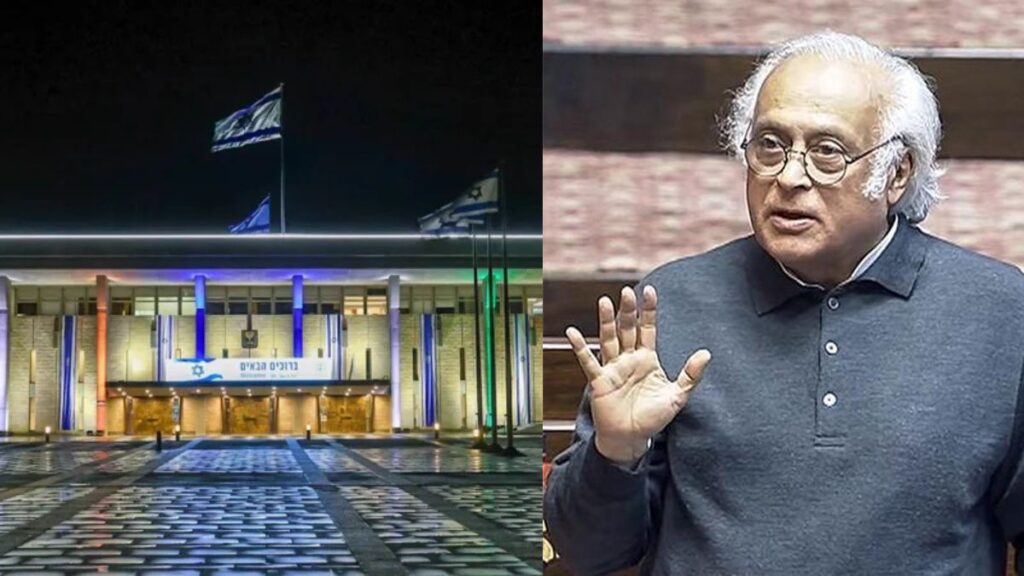
Energy security is still a priority. Any disruption of the Persian Gulf route would send oil prices soaring. The energy security remains a priority, and any turmoil in the Persian Gulf could result in a steep hike in oil prices.
Defense preparedness also includes in the equation. Given Pakistan and China tensions, India cannot afford technological stagnation. Hence, Israeli defense cooperation is a crutch.
Yet diplomatic credibility is just as important. However, diplomatic credibility is equally important. Therefore, balance is not optional but essential.
What This Means for India’s Global Future
India’s foreign policy today is confronted by its most complicated test after a long time. On one side is a growing strategic partnership with the United States of America as well as Israel. The other side includes a legacy of non-alignment and equidistance.
Frequently Asked Questions About India’s Strategic Foreign Policy Amid the Middle East Crisis
1. Why is India’s Strategic Foreign Policy facing intense scrutiny right now?
India’s Strategic Foreign Policy is under the spotlight because of the escalating conflict involving Iran, the United States, and Israel. Prime Minister Narendra Modi’s recent visit to Israel happened just days before a major military strike on Iran, which dramatically changed regional dynamics.
As a result, political opponents and policy analysts are questioning whether India positioned itself carefully enough during a highly sensitive moment. However, supporters argue that India must continue engaging key partners while protecting its national interests. This tension has fueled a powerful national debate.
2. How does India’s Strategic Foreign Policy balance relations between Israel and Palestine?
India’s Strategic Foreign Policy historically supports a two-state solution while maintaining strong defense and technology ties with Israel.
On one hand, India recognized Palestine in 1988 and continues to advocate peaceful resolution. On the other hand, defense cooperation with Israel has strengthened significantly over the past decade, especially in areas like counter-terrorism and advanced military systems.
Therefore, India walks a diplomatic tightrope — supporting peace while protecting security interests.
3. What role does energy security play in India’s Strategic Foreign Policy?
Energy security lies at the heart of India’s Strategic Foreign Policy. India imports a large portion of its crude oil from the Middle East.
Consequently, any conflict in the region directly impacts fuel prices, inflation, and economic growth. Moreover, instability can disrupt shipping routes and increase global energy volatility.
For this reason, maintaining regional stability is not just a diplomatic choice — it is an economic necessity.
4. Did India’s Strategic Foreign Policy shift after Modi’s Israel visit?
Many analysts believe India’s Strategic Foreign Policy appears more openly aligned with Israel compared to previous decades. Prime Minister Modi’s high-profile address to Israel’s parliament and the absence of meetings with Palestinian leaders sparked political criticism.
However, others argue that strengthening ties with Israel reflects evolving geopolitical realities rather than abandoning traditional principles. In fact, India continues to publicly support peaceful dialogue in the region.
5. How does India’s Strategic Foreign Policy impact relations with the United States?
India’s Strategic Foreign Policy increasingly overlaps with U.S. strategic interests, particularly in defense cooperation, trade, and Indo-Pacific security.
At the same time, disagreements over tariffs, trade deals, and regional interventions have created friction. Therefore, India must carefully manage cooperation without appearing dependent or pressured.
Ultimately, this relationship reflects a complex partnership rather than a simple alliance.
6. Why is the opposition criticizing India’s Strategic Foreign Policy so strongly?
Opposition leaders argue that India’s Strategic Foreign Policy prioritizes global optics over long-term strategic depth. They claim recent decisions weakened India’s bargaining position in trade negotiations and regional diplomacy.
Nevertheless, supporters counter that modern geopolitics demands visible engagement and decisive leadership.
This debate reflects a broader question: Should India remain cautiously neutral, or should it assert itself as a confident global power?
7. How does India’s Strategic Foreign Policy affect Indian citizens abroad?
Millions of Indians live and work in the Middle East. Therefore, India’s Strategic Foreign Policy directly impacts their safety and economic well-being.
In times of crisis, New Delhi must coordinate evacuations, ensure consular protection, and maintain diplomatic channels. Consequently, foreign policy decisions are not abstract — they influence real families, real livelihoods, and real futures.
8. Can India’s Strategic Foreign Policy maintain neutrality during global conflicts?
India has long championed strategic autonomy. However, modern conflicts are increasingly polarized.
While India continues to avoid formal military alliances, growing defense and trade partnerships inevitably shape perceptions. Still, India’s consistent messaging around peaceful resolution shows its attempt to maintain balanced diplomacy.
Whether this balance can hold under pressure remains one of the most important foreign policy questions of our time.
9. What does the future hold for India’s Strategic Foreign Policy?
India’s Strategic Foreign Policy now stands at a defining moment. The country seeks advanced defense technology, stable energy access, global trade expansion, and diplomatic credibility — all at once.
Therefore, policymakers must carefully weigh every engagement, every statement, and every agreement.
If managed wisely, India could strengthen its image as an independent and stabilizing global force. If miscalculated, however, diplomatic flexibility could shrink.
10. Why should citizens care about India’s Strategic Foreign Policy today?
Foreign policy may seem distant from daily life. Yet fuel prices, national security, job growth, and international reputation all connect directly to India’s Strategic Foreign Policy.
When tensions rise abroad, economic ripples reach households at home. When trade deals succeed, opportunities expand.
In other words, global strategy shapes domestic reality. That is why understanding India’s Strategic Foreign Policy is not just for experts — it is for every citizen who cares about the nation’s future.


Leave a Reply