
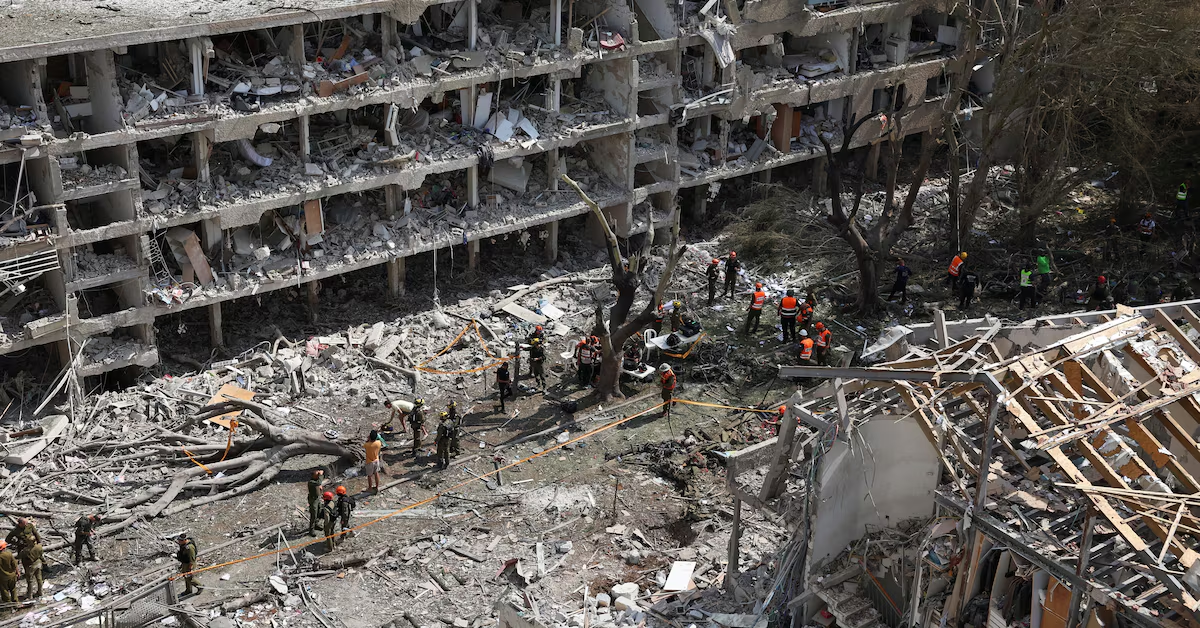
Irans Response to US Strikes has become the center of global attention after recent US military attacks on Iran’s nuclear facilities sparked fears of regional escalation and economic instability. With Tehran warning of “everlasting consequences,” the world waits to see whether Iran will retaliate militarily, launch cyber offensives, leverage its regional proxies, or turn toward diplomacy despite the risk of appearing weakened. This article explores Iran’s potential courses of action, the wave of international reactions, the impact on nuclear diplomacy, and the far-reaching implications for Middle Eastern security and global energy markets.
1. US Airstrikes on Iranian Nuclear Facilities: Irans Response to US Strikes What Happened?
On June 21, 2025, the United States launched a series of precision strikes against Iran’s top nuclear research centers at Fordow, Natanz, and Isfahan, claiming the action was necessary to prevent Tehran from reaching weaponization thresholds. US officials said intelligence suggested Iran was nearing 90% uranium enrichment—a red line for both Washington and Tel Aviv.
Irans Response to US Strikes Key Facts:
- Targets included deep underground bunkers at Fordow.
- Israel is suspected to have shared actionable intelligence.
- Iran confirmed the attacks but denied any violation of the NPT.
- No public casualty figures, but “severe infrastructural damage” reported.
The Pentagon called it a “preemptive strike”, while Iran labeled it an “act of war.”
2. Irans Strategic Options for Retaliation
Iran’s military and intelligence apparatus is now under immense pressure to respond—but with calibrated restraint or unpredictable aggression?
2.1. Irans Response to US Strikes Short-Range Ballistic Missiles
Iran has a depleted but still formidable arsenal of short-range ballistic missiles (SRBMs) capable of striking US bases in Iraq, Qatar, Bahrain, and the UAE.
“Middle- and long-range capabilities have been degraded, but SRBMs remain a real threat,” says Dr. Jean-Marc Rickli, Geneva Centre for Security Policy.
2.2. Irans Response to US Strikes Proxy Warfare via Houthis, Hezbollah, and PMFs
Tehran can activate its regional proxies:
- Hezbollah (Lebanon) can escalate along the Israeli border.
- Houthis (Yemen) threaten Red Sea shipping lanes.
- Popular Mobilization Forces (Iraq) can strike US personnel.
Houthis have already signaled readiness to target US Navy ships in the Bab al-Mandab strait.
2.3. Irans Response to US Strikes Strait of Hormuz: The Oil Choke Point
Iran may attempt to blockade or mine the Strait of Hormuz, through which 20% of global oil passes daily.
Techniques include:
- Naval drones and fast boats
- Sea mines
- Kamikaze swarm tactics by the IRGC Navy
Such a move would spike global oil prices, hitting economies worldwide.
2.4. Irans Response to US Strikes Cyber Warfare Against US Infrastructure
Iran’s cyber units, trained with Russian and Chinese assistance, may respond via:
- Attacks on US utilities and pipelines
- Malware in financial systems
- Information warfare via disinformation campaigns
2.5. Irans Response to US Strikes Economic & Diplomatic Sabotage
Rather than full-blown military action, Iran may also:
- Sabotage oil pipelines in Saudi Arabia and the UAE
- Leverage OPEC+ allies to manipulate oil supply
- Push international tribunals for US war crimes
3. Global Reaction on Irans Response to US Strikes: What the OIC, Allies, and Rivals Are Saying
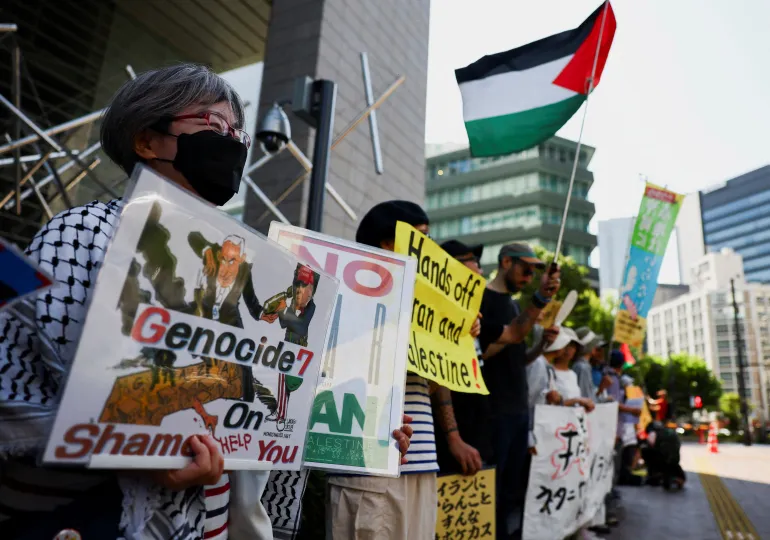
Irans Response to US Strikes, Organisation of Islamic Cooperation (OIC)
- Condemned both US and Israeli “aggression”
- Called for a ministerial contact group to promote de-escalation
- Urged the UN to take “deterrent measures” against Israel and the US
Irans Response to US Strikes, European Union
- Urged restraint from all sides but refused to condemn the US action
- Reiterated Iran must not enrich uranium beyond peaceful use
Irans Response to US Strikes, China and Russia
- Strongly condemned the US, calling it a “violation of sovereignty”
- Offered support for renewed nuclear diplomacy without preconditions
4. Impact on Global Oil Prices and Energy Security
Any prolonged confrontation or the closure of Strait of Hormuz could send Brent Crude oil prices soaring beyond $150/barrel. That would trigger:
- Global inflation
- Recessionary fears in developing economies
- Supply chain disruptions in energy-intensive industries
5. Irans Response to US Strikes, Diplomacy or Escalation: What Path Will Iran Choose?

Iran is caught between a rock and a hard place:
- Not retaliating could project weakness and incite internal dissent.
- Retaliation may trigger further US-Israel military action.
US President Trump has urged Iran to “return to the negotiating table.” The offer: halt enrichment in exchange for sanctions relief.
However, Iran’s Foreign Ministry has stated:
“We never left the talks. It was Israel and the US who blew them up.”
6. Irans Response to US Strikes, Expert Commentary: Is Iran Weakened or Strategically Patient?
Lawrence Korb, Former US Assistant Defense Secretary:
“Iran’s nuclear program may not be obliterated. The real question is, how fast can they rebuild? Days? Months? The US will need to reassess the actual damage.”
Irans Response to US Strikes, Domestic Anger in Iran:
Despite internet blackouts, Iranians are venting:
- “30 years of oil money wasted in nuclear holes.”
- “US bombs peace into the region.”
State media warns: “All US assets are now targets.”
Important Notes Of Irans Response to US Strikes
The recent United States military strikes on Iranian nuclear facilities have sent shockwaves through the global political landscape, reigniting tensions in an already volatile Middle East. This unprecedented development raises significant concerns about regional security, the future of nuclear diplomacy, and the stability of international oil markets. Iran has vowed “everlasting consequences,” hinting at a wide array of retaliation strategies ranging from military action to cyber warfare and economic sabotage. Meanwhile, global powers and international organizations have reacted with urgency, calling for de-escalation amid fears of a broader conflict.
On June 21, 2025, the United States conducted a series of targeted airstrikes on Iran’s top nuclear research sites at Fordow, Natanz, and Isfahan. According to US defense officials, these strikes were necessary to halt Iran’s alleged progression toward weapons-grade uranium enrichment. Intelligence reports suggested that Iran was on the verge of reaching 90% enrichment levels—widely considered the threshold for nuclear weapons capability. The Fordow site, in particular, located deep underground, was said to have been heavily damaged in the assault. While the Pentagon termed the operation a “preemptive strike” aimed at safeguarding global security, Tehran described it as a blatant act of war and a violation of international sovereignty.
The response from Tehran has been swift and furious. Iranian leadership has convened emergency meetings of its National Security Council, and officials have hinted at a multi-layered retaliatory response. One of the most immediate and visible forms of retaliation could involve the use of short-range ballistic missiles (SRBMs). Although Iran’s medium- and long-range missile capabilities have been degraded in recent years due to sanctions and covert operations, its SRBMs remain potent. These missiles are capable of striking US military bases in Iraq, Bahrain, Qatar, and the United Arab Emirates, posing a serious threat to American interests in the region.
Another strategic avenue available to Iran is proxy warfare. Tehran maintains a network of allied militias and non-state actors throughout the Middle East, including Hezbollah in Lebanon, the Houthis in Yemen, and various factions of the Popular Mobilization Forces (PMFs) in Iraq. The Houthis have already issued statements threatening to target US naval assets in the Bab al-Mandab Strait. Hezbollah, meanwhile, could escalate tensions along the Israeli-Lebanese border, forcing Israel to engage on multiple fronts. These proxies offer Iran a deniable but impactful way to respond to the US strikes while avoiding direct confrontation.
Perhaps the most globally disruptive retaliation option for Iran would be to threaten or attempt to close the Strait of Hormuz. This narrow waterway is one of the most critical chokepoints for global oil supply, with over 20% of the world’s petroleum passing through it daily. Iran can disrupt this vital passage using naval mines, drone swarms, and fast torpedo boats operated by the Islamic Revolutionary Guard Corps (IRGC). A successful blockade or even the perception of imminent closure could cause oil prices to skyrocket, triggering inflation and economic instability worldwide. Energy markets have already shown signs of volatility, with Brent crude prices spiking in anticipation of potential supply disruptions.
Irans Response to US Strikes, Conclusion: A Region on the Edge of War or Diplomacy?
The 2025 US-Iran confrontation over nuclear weapons is a critical turning point in Middle Eastern geopolitics. Tehran now stands at a crossroads: escalate and risk annihilation, or diplomatically concede and endure domestic fallout.
With the stakes higher than ever—from oil markets to cyberwarfare to nuclear non-proliferation—the global community must act swiftly to mediate. Whether through backchannel diplomacy or high-level summits, peace is the only path forward that avoids an all-out regional war.
Note: All information and images used in this content are sourced from Google. They are used here for informational and illustrative purposes only.
Irans Response to US Strikes, FAQs: Iran-US Conflict, Global Oil & Nuclear Tensions
Q1: Why did the US strike Irans nuclear sites in 2025?
A: The US cited intelligence that Iran was nearing weapons-grade uranium enrichment, crossing the red line agreed upon by the US and Israel.
Q2: Can Iran close the Strait of Hormuz?
A: Iran has the naval capability to temporarily disrupt traffic, which would affect nearly 20% of global oil shipments.
Q3: Will Iran retaliate against the US directly?
A: While direct strikes are possible, Iran may prefer asymmetric warfare through cyberattacks or proxy forces.
Q4: How has the international community reacted?
A: The OIC condemned the attack, while Europe remained neutral. China and Russia strongly criticized US actions.
Q5: Could this lead to a broader war?
A: If Iran targets US bases or blocks vital trade routes, a regional conflict involving Israel, Gulf nations, and possibly NATO allies could erupt.






Leave a Reply