
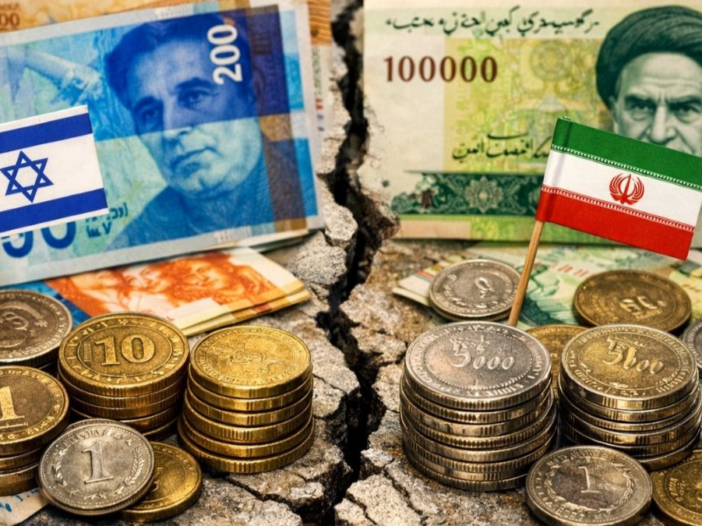
Israel vs Iran Currency tensions aren’t just headlines—they’re shaking wallets and rewriting economic realities around the world. In recent weeks, the Israeli shekel has shown remarkable resilience at about 3.14 to the US dollar, while the Iranian rial plunged to record lows near 1.75 million per dollar, triggering market panic and protest movements across Iran’s cities. As regional conflict escalates, this stark currency divide highlights a deeper story about economic strength, investor confidence, and geopolitical risk. For readers in India and beyond, understanding how these currencies stack up against the US dollar and the rupee is becoming essential.
When bombs start flying, markets get jittery. The recent back-and-forth between Israel and Iran didn’t just freak out the region, it showed how far apart their economies really are. Israel’s money, the shekel, stayed pretty steady at around 3.14 per dollar. Iran’s rial, though? It tanked to a crazy low of 1,749,500 per dollar on the open market.
So, who’s got the stronger money, really? And what does all this mean for places like India, for oil prices, and for the whole world economy?
Let’s break down what’s going on behind these numbers.
Shekel vs. Rial: Who’s Winning?
It’s not even close.
As of March 1, 2026:
- 1 USD = 3.14 ILS
- 1 USD = 1,749,500 IRR (on the open market)
So, basically:
- 1 Shekel ≈ 421,031 Rials
- 1 Rial ≈ almost nothing in Shekels
Yeah, one shekel can buy you over 400,000 rials. That HUGE difference is because their economies have been going in totally different directions for years.
But there’s a catch. Iran has a weird system with different exchange rates:
- Official rate: 1 USD = 42,086 IRR
- Central bank rate: 1 USD = 1,113,328 IRR
- Open market rate: 1 USD = 1,749,500 IRR
The open market rate is what people REALLY trust, so it shows the true economic pain.
Why Israel’s Money Is Surprisingly Strong
Usually, when there’s a fight, a country’s money gets weaker. But the shekel stayed about the same. Here’s why:
1. They Have a Lot of Money Saved Up
Israel has over $212 billion sitting in the bank. If people start selling off shekels like crazy, the central bank can jump in and calm things down fast.
2. Tech Money is Coming In
Israel’s economy is BOOMING in things like cybersecurity, AI, and making computer chips. Foreign companies keep investing, which means dollars keep flowing in, which helps the shekel, even when things get scary.
3. They Sell a Lot of Different Stuff
They’re not just selling one thing like oil. They also sell diamonds, medicine, and software. That means they always have money coming in.
4. They’ve Been Through This Before
They’ve had conflicts before, and their money usually bounces back quickly. That makes investors feel good.
Why Iran’s Money Is in Freefall

The rial didn’t just crash out of nowhere. The recent strikes just made a long-term problem even worse.
1. They’re Cut Off From the World
After the US backed out of the nuclear deal, Iran got hit with sanctions. That means they couldn’t sell as much oil or do business with other countries easily. They lost a TON of money.
2. Prices Keep Going Up
Things in Iran get about 40–48% more expensive every year. When prices go up that fast, people’s money doesn’t buy as much, so the currency gets weaker.
3. People Are Scared
When things get tense, Iranians take their savings and buy dollars or gold. That makes the demand for foreign money go WAY up.
4. The Strikes Freaked Out the Market
After the strikes near Tehran, the markets went nuts. Flights got canceled, and communications were disrupted. The open market rate went from 1.35 million per dollar in January to 1.75 million by the end of February. That’s a HUGE drop.
Shekel and Rial vs. India’s Rupee
If you’re reading this from India, this is what you need to know.
Shekel to Rupee
- 1 ILS ≈ ₹29.04
- 1 INR ≈ 0.0344 ILS
The shekel is much stronger than the rupee.
Rial to Rupee
Official rate:
- 1,000 IRR ≈ ₹1.97
- 1 INR ≈ 507 IRR
Open market rate:
- 1,000 IRR ≈ almost nothing
- 1 INR ≈ 14,466 IRR
The real value of the rial depends on which rate you’re using. But the informal market shows how weak it really is.
The rupee has gotten a little weaker against the rial in the past six months, officially. But the rial’s crash is the main thing here.
What About Gold, Oil, and That Strait?
What happens in one market, usually has implications to other markets.
Gold Prices Are Up
Inside Iran, gold prices went up to IRR 224,504,820 per gram. Around the world, gold hit $5,278 per ounce. People usually buy gold when they’re scared.
Oil and the Strait of Hormuz
About 20% of the world’s oil goes through the Strait of Hormuz. If something happens there, oil prices could jump up 20–40%.
If oil prices go up:
- The whole world sees even higher prices
- Countries that import oil get weaker
- Countries like India get squeezed
What This Means for India
1. Oil Imports Will Cost More
India buys over 1 million barrels of oil from the Gulf every day. If oil prices go up, India will have a harder time.
2. The Rupee Could Get Weaker
The rupee is already getting close to 91 per dollar. If things get worse, it could fall even further.
3. Remittances
About 9 million Indians work in Gulf countries. If things get unstable, they might not be able to send as much money home, which would hurt spending in India.
The Main Points
- The shekel is WAY stronger than the rial.
- Iran’s money has lost about 30% of its value in two months.
- Israel’s economy is strong, while Iran is struggling with sanctions and rising prices.
- Oil and gold prices are up because people are scared.
- India could face problems with oil, its currency, and money coming from workers abroad if things get even worse.
What It All Means
Fights make headlines, but money shows what’s REALLY going on.
Israel’s economy is diverse and good at innovation, which helps it even during tough times. Iran’s economy is struggling because of sanctions, and it doesn’t have much to protect it from shocks.
If you’re an investor, a politician, or an Indian business, remember this:
A country’s money is only as strong as its economy.
Things will keep changing, and markets will keep reacting. But real stability comes from a strong economy, not just from weapons.
Israel vs Iran Currency FAQs — Expert Answers Every Reader Wants
1. What does “Israel vs Iran” really mean in terms of currency strength?
Many people ask this because the numbers are staggering: while the Israeli shekel has remained steady near 3.14 per USD, the Iranian rial recently plunged to about 1.75 million per USD on the open market. This stark contrast highlights deep economic resilience in Israel versus structural weaknesses in Iran’s economy.
2. Why did the Iranian rial collapse in the “Israel vs Iran” currency battle?
The rial’s freefall isn’t just about conflict—it reflects years of sanctions, limited foreign investment, and rampant inflation. These issues were magnified after recent strikes near Tehran, spiking fear-driven dollar buying that pushed the rial to historic lows.
3. In “Israel vs Iran,” which currency is stronger against the US dollar?
Unquestionably, the Israeli shekel is stronger. With 1 USD buying roughly 3.14 shekels, compared to about 1.75 million rials, the shekel’s purchasing power clearly outpaces the rial by hundreds of thousands to one.
4. How do “Israel vs Iran” currencies compare with the Indian rupee?
For Indian readers, this matters a lot. The Israeli shekel trades around ₹29 per shekel, while the Iranian rial is so weak that 1,000 rials often has negligible rupee value on the open market. This shows how the currencies impact travel, trade, and remittances.
5. Did “Israel vs Iran” conflict cause the currency crash?
Yes—and no. While conflict increased fear and worsened sentiment, the underlying causes of the rial’s decline were already in motion long before recent attacks, including sanctions and inflation pressures. The military escalation acted as a catalyst, not the sole reason.
6. In “Israel vs Iran,” why has the shekel stayed resilient?
The Israeli shekel is backed by foreign exchange reserves, a diversified export economy, and steady foreign investment, which help it absorb geopolitical shocks far better than many regional currencies.
7. Does “Israel vs Iran” currency volatility affect global markets?
Absolutely. Sharp moves like the rial’s plunge can ripple into oil prices, gold demand, and regional investment flows. Especially due to the strategic importance of the Gulf, markets watch these currency shifts closely.
8. For everyday people, what does “Israel vs Iran” currency weakness mean?
In Iran, this means rising prices for food, medicine, and basic goods as import costs surge. In contrast, Israel’s relatively stable currency shields consumers and businesses from sudden shocks.
9. Could the “Israel vs Iran” currency gap narrow soon?
Only major economic reforms, easing sanctions, and renewed global investment could help the Iranian rial recover. Otherwise, the gulf between the shekel and iranian currency may persist or even widen.
10. What should India watch in the “Israel vs Iran” currency story?
India should monitor oil price trends, remittance flows, and rupee stability, especially since Gulf exports and expatriate income rely heavily on regional currency strength.





Leave a Reply