
Introduction of Jharkhand IED Blast:
Brave CRPF Heroes in Jharkhand IED Blast is a look at what happened after the most recent event that challenged India’s ability to fight against insurgency. On August 9, 2025, Maoists set off a bomb that hurt two CRPF guys from the 209 CoBRA Battalion in Saranda, Jharkhand. This shows the dangers still present in a troubled part of India, and how brave and committed the Indian security forces are, risking their lives to keep things quiet.
The Saranda Incident: Maoists Attack
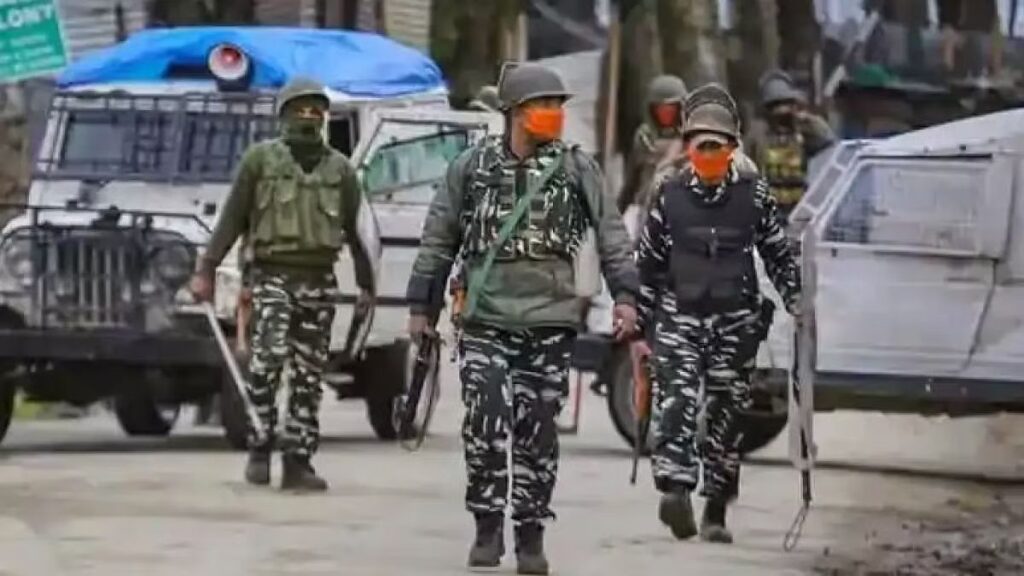
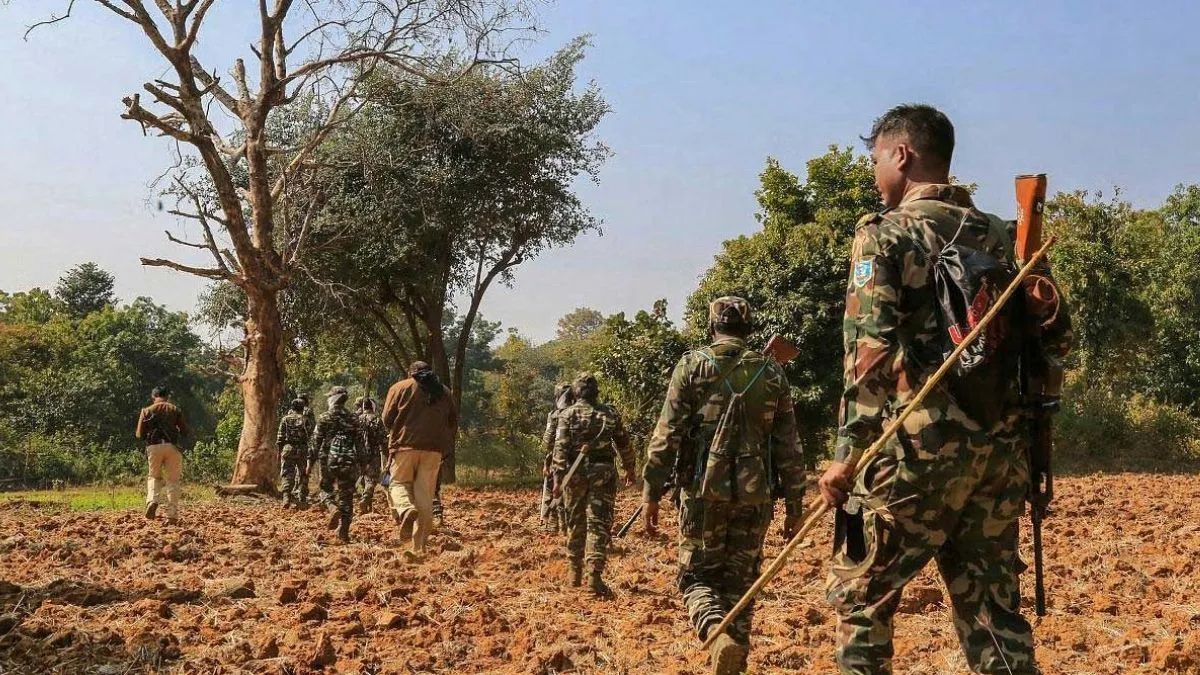
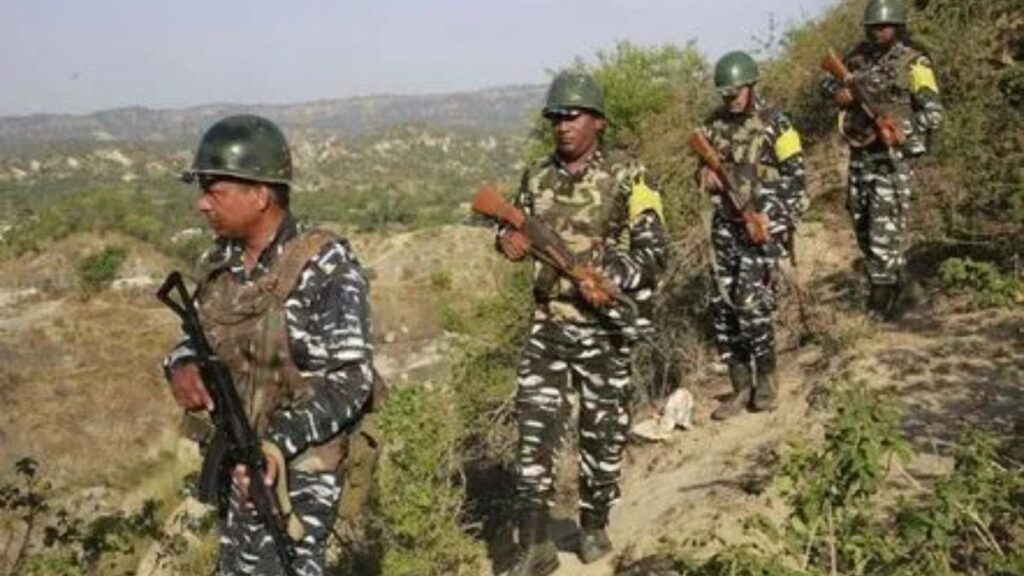
The Saranda Forest, near the Jaraikela police station in West Singhbhum, Jharkhand, is known for its thick woods and its role in fighting Maoists. Around 11 a.m. on August 9, 2025, Jharkhand Police and CRPF’s CoBRA Battalion were searching near Hindukocha village. Suddenly, a big bomb exploded.
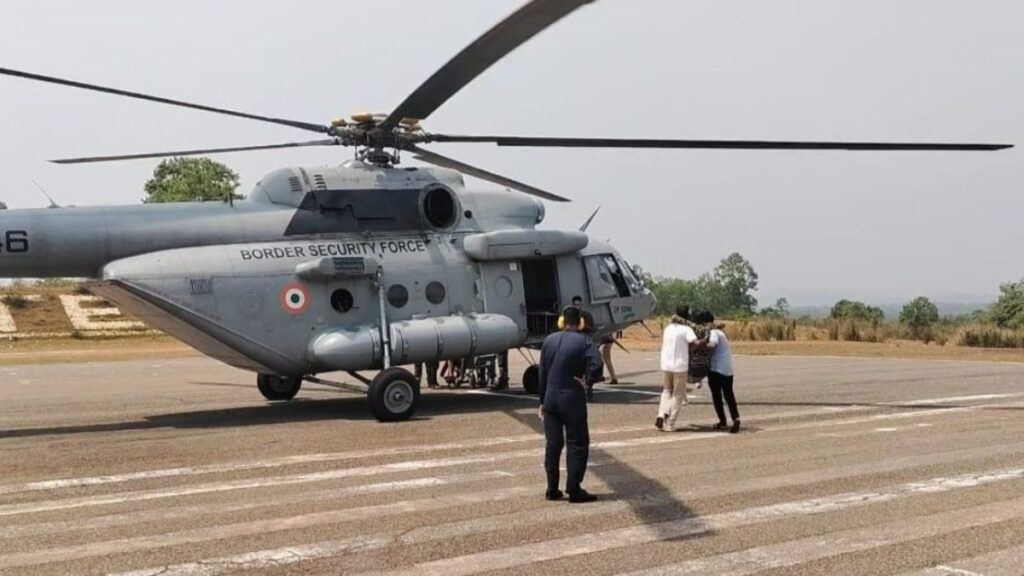
Two soldiers, Ram Pravesh Singh and Chhotu Kashyap, were hurt and quickly taken to Ranchi for medical help. Their bravery shows how strong India’s security forces are when fighting insurgency in tough places.
Quick Action and More Security
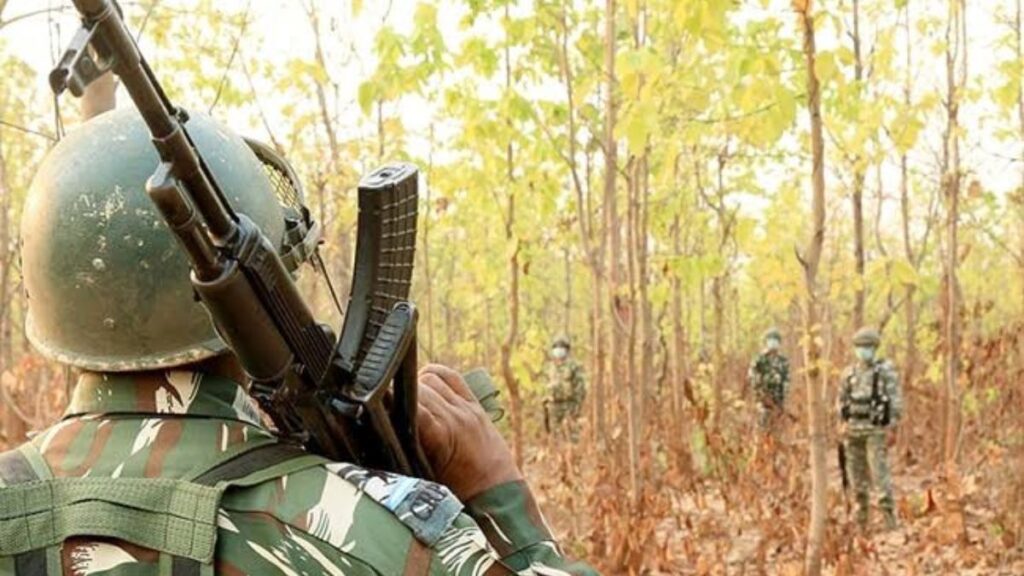
After the attack, Jharkhand Police and CRPF started a big search in the Saranda jungles to find the Maoists. The bomb was probably planted to target security patrols, which is a tactic Maoists often use.
Officials think there are around 85–90 armed Maoists in the area, and they guess that thousands of bombs are hidden in the forest. This is a constant danger to security forces and people. These searches are important to take out Maoist hiding spots and bring lasting peace to Jharkhand.
The Bigger Problem
The bomb is just one part of Maoist violence that is meant to mess up roads and endanger public safety. On August 2, 2025, Maoists bombed a railway track between Karampada and Rengda railway siding, which stopped trains and put people at risk. On July 3, 2025, a bomb near Vimalgarh Railway Station killed a railway worker and hurt another.
These attacks are the Maoists trying to stay in control, even though they are getting weaker. Now, they’re mostly in Saranda and Kolhan jungles, where the woods give them a place to hide.
Why Saranda and Kolhan Jungles Matter
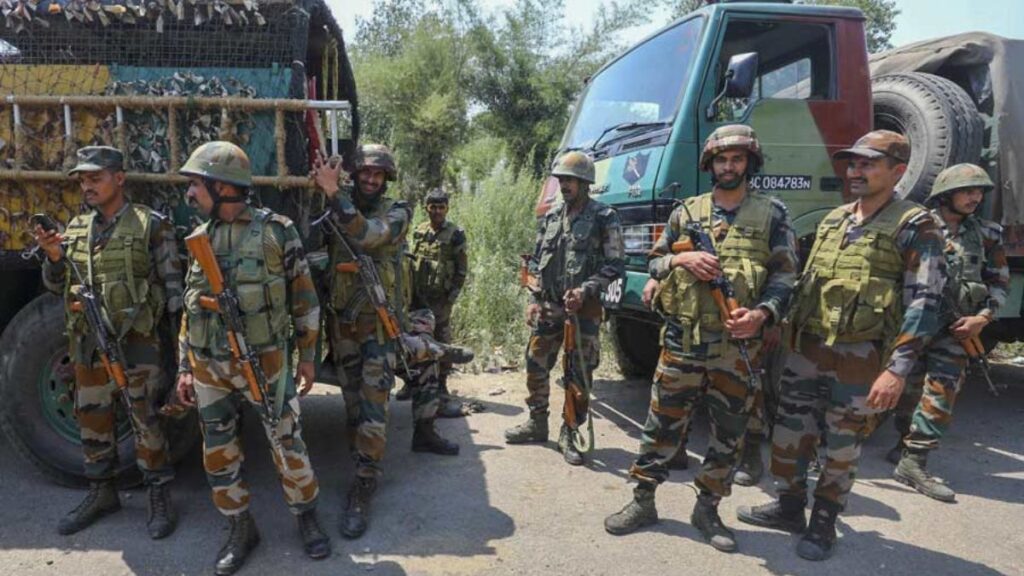
The Saranda and Kolhan areas are important because they are close to state lines, minerals, and important buildings. Since November 2022, CRPF and Jharkhand Police have been working together to capture Maoist leaders like Misir Besra and Patiram Majhi.
The rough land, hidden mines, and thick trees make things hard, but by keeping watch, using drones, and getting info from locals, they have been able to weaken the Maoists. These actions show how determined they are to bring peace and safety back to the area.
The Way Forward: Courage, Working Together, and Commitment
The courage of CRPF soldiers like Ram Pravesh Singh and Chhotu Kashyap is an example of what national service is all about. The government is putting money into new technology, drones, and better info to help fight against extremism.
India is standing with its injured soldiers, and the mission in Saranda represents a promise to stop Maoist insurgency and make sure that Jharkhand is a place of growth and peace.
With security groups working together better, things are looking up. The CRPF’s strength, new ideas, and bravery give hope in India’s fight against insurgency.
In short:
The Jharkhand bomb in Saranda is a reminder of the risks that India’s soldiers face. At the same time, it shows the strength and unity of India’s security forces, who are protecting the nation with great bravery. By using good plans, new tech, and working as a team, Jharkhand can become safer.
Detailed Summary of CRPF Personnel Injured in Jharkhand IED Blast
| Category | Details and Insights |
|---|---|
| Jharkhand IED Blast Overview | Jharkhand IED Blast occurred on August 9, 2025, in Saranda Forest, West Singhbhum, when Maoists detonated an explosive targeting security personnel from the 209 CoBRA Battalion. |
| Jharkhand IED Blast Victims | Jharkhand IED Blast injured two CRPF jawans, Ram Pravesh Singh and Chhotu Kashyap, who were quickly airlifted to Ranchi for medical treatment. |
| Jharkhand IED Blast Location | Jharkhand IED Blast took place near Hindukocha village, under Jaraikela Police Station limits, a region long known for Maoist presence and dense jungle terrain. |
| Jharkhand IED Blast Timing | Jharkhand IED Blast happened around 11:00 a.m., during a routine area domination and search operation by joint teams of Jharkhand Police and CRPF. |
| Jharkhand IED Blast Response | Jharkhand IED Blast led to an immediate counter-operation, as security forces began combing operations across the Saranda jungles to track and neutralize Maoist cadres. |
| Jharkhand IED Blast Maoist Activity | Jharkhand IED Blast highlights how Maoists continue to use hidden IEDs to disrupt law enforcement and discourage movement through strategic forest corridors. |
| Jharkhand IED Blast Security Forces’ Effort | Jharkhand IED Blast prompted the deployment of additional CRPF units and use of drone surveillance to monitor Maoist movement in difficult terrains. |
| Jharkhand IED Blast and Regional Impact | Jharkhand IED Blast reveals the volatile security situation in Saranda and Kolhan, regions critical for their mineral wealth and border connectivity. |
| Jharkhand IED Blast Previous Incidents | Jharkhand IED Blast followed other Maoist actions, such as the August 2, 2025, railway blast near Karampada-Rengda and the July 3, 2025, Vimalgarh IED attack. |
| Jharkhand IED Blast and Maoist Strategy | Jharkhand IED Blast fits into the Maoist tactic of fear-based control, aiming to disrupt infrastructure projects and demoralize security forces. |
| Jharkhand IED Blast in Security Context | Jharkhand IED Blast underscores the importance of continuous anti-insurgency efforts, including coordination between central and state police forces. |
| Jharkhand IED Blast Counter-Operations | Jharkhand IED Blast led to large-scale search and destroy missions, focusing on neutralizing Maoist camps and clearing hidden explosive devices. |
| Jharkhand IED Blast and Public Safety | Jharkhand IED Blast emphasizes the urgent need to protect civilians, as Maoist explosives are often planted along roads, railways, and village trails. |
| Jharkhand IED Blast Technology Integration | Jharkhand IED Blast has pushed authorities to adopt modern technologies like drones, bomb detection robots, and satellite imaging for safer operations. |
| Jharkhand IED Blast and CRPF Bravery | Jharkhand IED Blast once again showcases the fearless spirit of CRPF soldiers, who continue to risk their lives to ensure peace and stability. |
| Jharkhand IED Blast and Future Plans | Jharkhand IED Blast reinforces the need for sustained intelligence gathering, community cooperation, and investment in defense innovation. |
| Jharkhand IED Blast Long-Term Solution | Jharkhand IED Blast highlights that true peace will come through a mix of development, dialogue, and decisive security actions. |
| Jharkhand IED Blast and National Commitment | Jharkhand IED Blast serves as a reminder of India’s commitment to eliminating insurgency, ensuring that Jharkhand emerges stronger and safer. |
Note: All information and images used in this content are sourced from Google. They are used here for informational and illustrative purposes only.
FAQs: Brave CRPF Heroes in Jharkhand IED Blast – Understanding the Saranda Operation
1. What exactly happened in the Jharkhand IED blast in Saranda?
On August 9, 2025, an IED blast triggered by Maoists injured two brave CRPF CoBRA Battalion personnel, Ram Pravesh Singh and Chhotu Kashyap, during a joint operation with Jharkhand Police near Hindukocha village in Saranda Forest, West Singhbhum. The attack took place around 11 a.m., highlighting the constant danger faced by India’s security forces in Maoist-affected regions.
2. Who are the injured CRPF personnel, and what is their current condition?
The injured soldiers are Ram Pravesh Singh and Chhotu Kashyap, both part of the elite 209 CoBRA Battalion. They were airlifted to Ranchi for advanced medical treatment and are recovering under specialized care. Their quick evacuation and medical attention reflect the swift coordination of the CRPF and Jharkhand Police.
3. Why is Saranda Forest a hotspot for Maoist activity?
Saranda Forest, located in West Singhbhum, is strategically important because of its dense terrain, mineral-rich land, and proximity to multiple state borders. These factors make it an ideal hiding ground for Maoists. Despite repeated operations, the thick vegetation and difficult geography allow insurgents to plant improvised explosive devices (IEDs) and escape detection easily.
4. How many Maoists are estimated to be active in Saranda right now?
Authorities estimate that 85–90 Maoists are currently active in the Saranda and Kolhan jungles. Intelligence reports suggest that hundreds of IEDs are buried in the region, creating a high-risk environment for patrolling forces. Security teams are using drone surveillance and local intelligence to locate and neutralize these threats.
5. What actions did security forces take after the blast?
After the explosion, CRPF and Jharkhand Police launched intensive combing operations across Saranda to track down the Maoists involved. These ongoing search and destroy missions focus on neutralizing Maoist hideouts, recovering explosives, and restoring civilian safety in the region.
6. Is this the only Maoist attack in Jharkhand recently?
No. The Saranda IED blast is part of a series of Maoist attacks in Jharkhand. On August 2, 2025, Maoists blew up a railway track between Karampada and Rengda, halting goods train movement. Earlier, on July 3, 2025, an IED blast near Vimalgarh Railway Station killed one railway worker and injured another. These incidents show the Maoists’ intent to disrupt infrastructure and public safety.
7. Why are the Saranda and Kolhan jungles so important for security operations?
Both Saranda and Kolhan are vital because they connect key routes and border areas and host significant mineral and rail infrastructure. Since November 2022, security agencies have focused operations here to capture senior Maoist leaders like Misir Besra and Patiram Majhi alias Anal Da. Controlling these jungles is crucial to cutting off Maoist logistical and communication networks.
8. How are modern technologies helping in anti-Maoist operations?
The government and CRPF are increasingly relying on drone surveillance, satellite mapping, and advanced communication tools to monitor Maoist movement. These technologies, along with local intelligence inputs, allow security forces to detect hidden IEDs and plan precision-based operations with minimal risk to personnel.
9. What measures are being taken to ensure civilian safety in Jharkhand’s red zones?
Authorities are working to clear villages of IEDs, conduct community awareness drives, and strengthen police outposts. Development projects in education, healthcare, and road infrastructure are also being accelerated to weaken Maoist influence and bring stability and trust among local residents.
10. What does this incident mean for India’s larger fight against insurgency?
The Saranda IED blast highlights both the challenges and the courage involved in India’s counter-insurgency efforts. It underlines the need for sustained cooperation between central and state forces, modernized equipment, and community-driven peace initiatives. The resilience of the CRPF and Jharkhand Police demonstrates India’s firm resolve to secure its territories and restore lasting peace in Maoist-affected regions.






Leave a Reply