
NASA’s Powerful Milestone is more than a space update—it’s a moment that makes the world stop, look up, and feel something real. As Artemis II pushes deeper into the darkness between Earth and the Moon, the mission is already delivering history, emotion, and breathtaking perspective. From the first awe-inspiring images of our glowing planet to the crew’s heartfelt reflections from deep space, every second of this journey feels unforgettable. This is not just about distance or technology. Instead, it’s about human courage, wonder, and the powerful reminder that when we look back at Earth from space, we all share one extraordinary home.
Halfway Through Artemis II
NASA’s Artemis II mission has officially crossed one of its most exciting milestones – the halfway point on its journey to the Moon. Therefore, the mission is now a source of huge interest worldwide and rightly so. This spaceflight is not just a step but a leap into the future of human beings’ journey through the universe beyond Earth.
NASA notes that the Orion spacecraft carrying the four astronauts has now traveled a distance of over 136,000 miles from the earth. That moment is powerful not only for the distance but also because it marked the return to deep space by humans in a way the world has not seen since the Apollo era.
However, while Artemis II will not land on the Moon, the mission is still very important. Instead, the crew will fly around the Moon and then return home. So essentially, this mission acts as a test for astronauts to land on the moon in the future successfully.
NASA Posts Beautiful Photos of Earth Taken by Orion
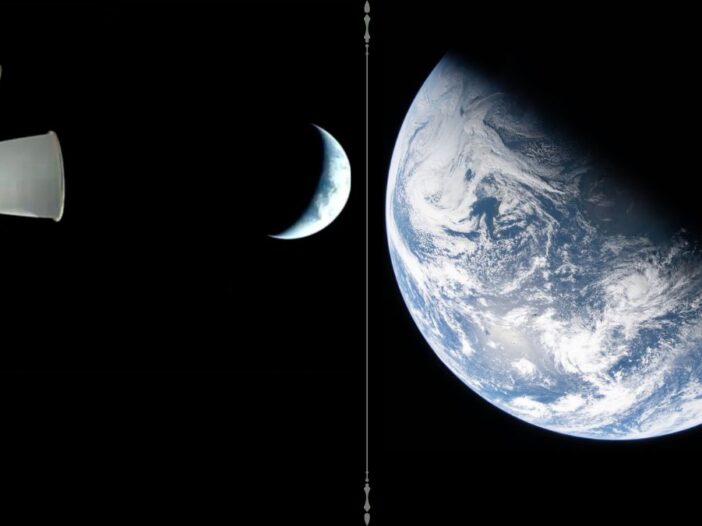
Perhaps the most emotional moment so far has been that can be when NASA has released the first breath-taking images of earth taken by the Artemis II crew. Needless to say, those images “caught the imagination of all who followed the mission”.
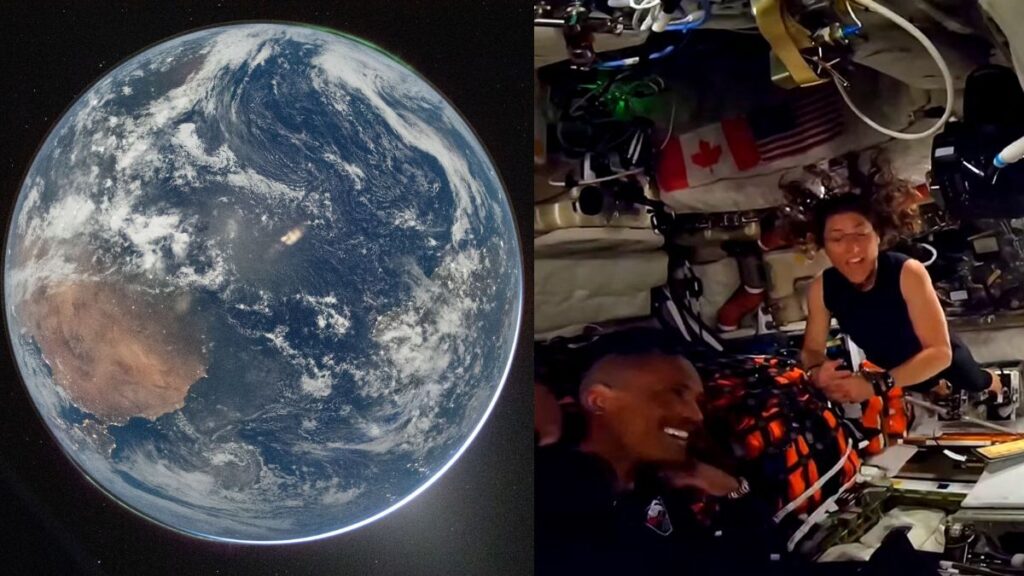
One of the first shots taken by mission commander Reid Wiseman shows a glowing Earth through the window of Orion like a fragile blue gem in the darkness of space. Another image shows the whole planet with swirling white clouds over the oceans and a green aurora in the picture.
That picture carries immense emotional power. That image carries extraordinary emotional weight.
In addition, the photos were taken immediately after the spacecraft Orion finished its translunar injection burn, which is a critical engine ignition that sent the spacecraft out of Earth orbit and onto the lunar course. As a result of that, Artemis II is wholly committed to its lunar trip.
Significance of Artemis II for the Future Space Exploration
Artemis II is not just a symbolic mission. Instead, it is a major element of NASA’s long-term plan of returning humans to the Moon and building a sustainable presence on the celestial body eventually.
More important, the mission also aids NASA in testing systems, performance of spacecraft, and preparedness of crew, in deep space. Each mile that Orion makes is packed with data for future moon missions.
If all else continues smoothly, Artemis II will also push human spaceflight further than ever before by travelling farther from Earth than any crew has before. That fact alone is sufficient enough to mark the Artemis II mission as historic.
Inside the Crew’s Emotional Ride
The astronauts have already called the view from Orion unforgettable. Commander Reid Wiseman called “seeing the earth filling the windows was the most spectacular moment” of the mission.
In addition, astronaut Christina Koch shared her overwhelming experience of seeing Earth on one side and moonlight mixed with sunset on the other. Those words matter because they show us the humanity of space exploration.
At the same time, astronaut Victor Glover delivered what may have been the most profound sentiments. Looking back at Earth from deep space, he said humanity appears as “one thing” – a reminder that people on Earth share the same home despite divisions.
Challenges And Historic Achievements
Even path-breaking missions have to deal with ground realities. For instance, there was a minor malfunction with the toilet on board Orion shortly after launch. Fortunately, mission control at NASA helped alleviate the issue and once again, demonstrated the importance of preparation and teamwork in space.
Artemis II still makes history. Here is the mission:
The first woman on a lunar mission
First POC sent to the moon
The first non-American to travel to the Moon
Besides, from an engineering perspective, this is the first crewed flight of NASA’s potent Space Launch System (SLS) rocket, so the mission is a vital engineering milestone too.
Key Takeaways
Halfway to the Moon
NASA has published the first amazing photographs of the Earth from Orion.
The crew will make a lunar flyby without landing.
The mission is essential for the future of the moon landing and deep space travels.
Artemis II is a history maker in terms of crew and mission firsts.
Summary
Artemis II is not a mission update—it is a moment that reconnects humanity with wonder, ambition, and possibility. (“Artemis II”, 2024)
And perhaps that is Artemis II’s best achievement so far.
Frequently Asked Questions (FAQs)

1) What is NASA’s Powerful Milestone in the Artemis II mission?
NASA’s Powerful Milestone is the moment Artemis II reached the halfway point between Earth and the Moon. That update matters because it confirms the Orion spacecraft is performing as planned on a mission that brings humans back into deep space for the first time in decades. More than a distance marker, it signals that NASA is steadily moving toward a new era of lunar exploration.
2) Why is NASA’s Powerful Milestone such a big deal for space exploration?
NASA’s Powerful Milestone matters because Artemis II is not just a flyby mission—it is a critical test for future Moon landings. Every stage of the journey helps NASA evaluate spacecraft systems, astronaut safety, communication, navigation, and mission operations. In simple terms, this mission helps build the confidence and capability needed for future human landings on the Moon.
3) How far from Earth was Orion when NASA’s Powerful Milestone was announced?
At the time NASA’s Powerful Milestone was shared, the Orion spacecraft had traveled more than 136,000 miles (about 219,000 kilometers) from Earth. That distance places the crew deep into translunar space, where they can begin preparing for the next major phase of the mission: the lunar flyby.
4) Does NASA’s Powerful Milestone mean Artemis II will land on the Moon?
No, NASA’s Powerful Milestone does not mean Artemis II will land on the Moon. Instead, the mission is designed to fly around the Moon and return to Earth. While that may sound less dramatic than a landing, it is actually one of the most important preparation steps before astronauts attempt future lunar surface missions.
5) What happens after NASA’s Powerful Milestone on the way to the Moon?
After NASA’s Powerful Milestone, the Artemis II crew will continue toward the Moon, perform a lunar flyby, travel thousands of miles beyond it, and then begin the return journey to Earth. This path follows what is called a free-return trajectory, which uses the Moon’s gravity to help guide the spacecraft safely back home.
6) What is the “free-return trajectory” behind NASA’s Powerful Milestone?
The free-return trajectory behind NASA’s Powerful Milestone is a carefully planned flight path that allows Orion to swing around the Moon and naturally head back toward Earth. That design adds an important layer of safety. If something unexpected happens, the spacecraft’s route still supports a return home without requiring a lunar landing or complex orbital operations.
7) What were the first Earth images released after NASA’s Powerful Milestone?
After NASA’s Powerful Milestone, NASA released the first stunning Earth photos captured from Orion. One image shows a curved slice of Earth through the spacecraft window, while another reveals the full glowing planet covered in clouds with a visible green aurora. Those images instantly became emotional highlights of the mission because they show Earth from a perspective few humans have ever seen.
8) Who took the photos connected to NASA’s Powerful Milestone?
The first widely shared photos connected to NASA’s Powerful Milestone were taken by mission commander Reid Wiseman. His images offered the world a breathtaking reminder of just how small, beautiful, and connected Earth looks from deep space.
9) What made the Earth images after NASA’s Powerful Milestone so emotional?
The Earth images after NASA’s Powerful Milestone felt deeply emotional because they transformed a technical mission into a human story. Looking at our planet from so far away creates a rare sense of perspective. It reminds readers and viewers that beyond politics, borders, and everyday noise, Earth is still one shared home.
10) What major engine event happened before NASA’s Powerful Milestone?
Before NASA’s Powerful Milestone, Orion completed its translunar injection burn. This was the crucial engine firing that pushed the spacecraft out of Earth’s orbit and officially set it on course for the Moon. Without that successful burn, the mission could not have entered its deep-space phase.






Leave a Reply