
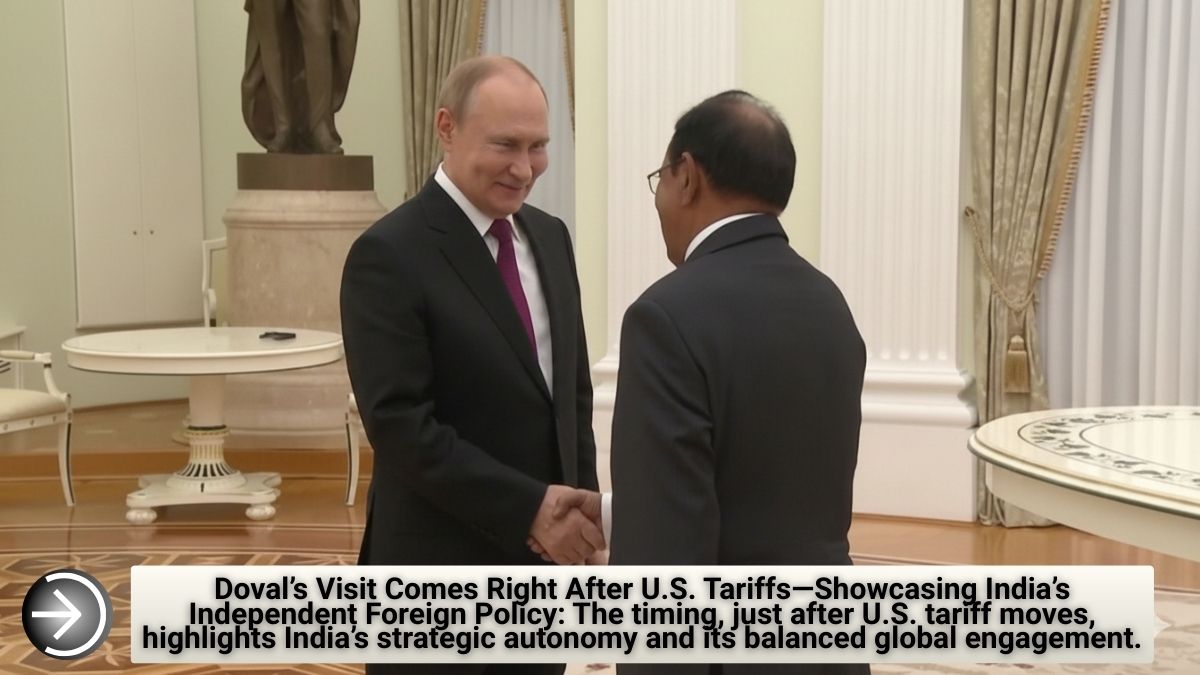
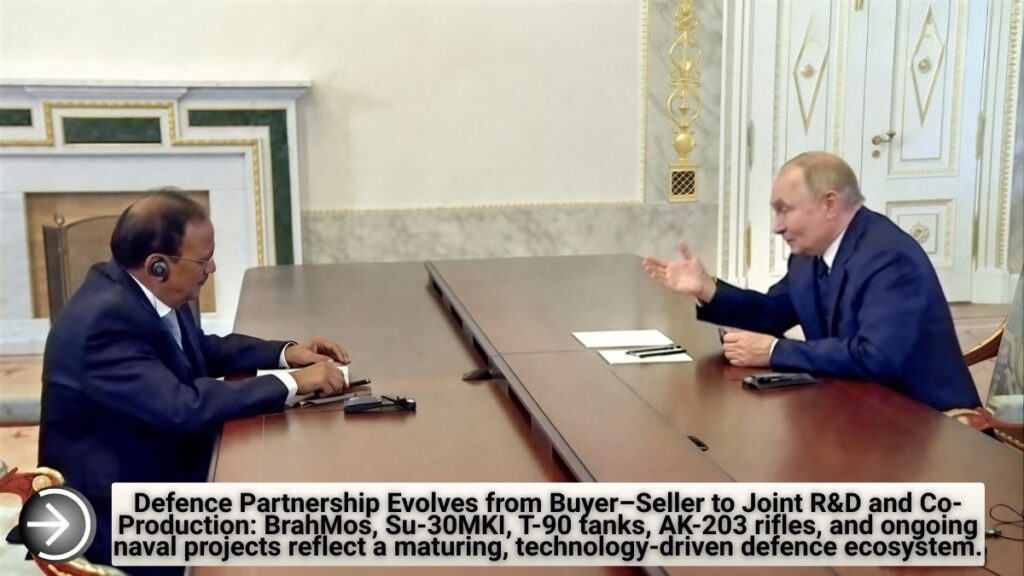
India-Russia relations are witnessing a renewed surge as National Security Adviser (NSA) Ajit Doval met Russian President Vladimir Putin at the Kremlin in Moscow. The high-profile meeting—held on 7 August 2025—comes at a crucial geopolitical moment, particularly a day after U.S. President Donald Trump announced additional tariffs targeting India for its continued purchase of Russian oil.
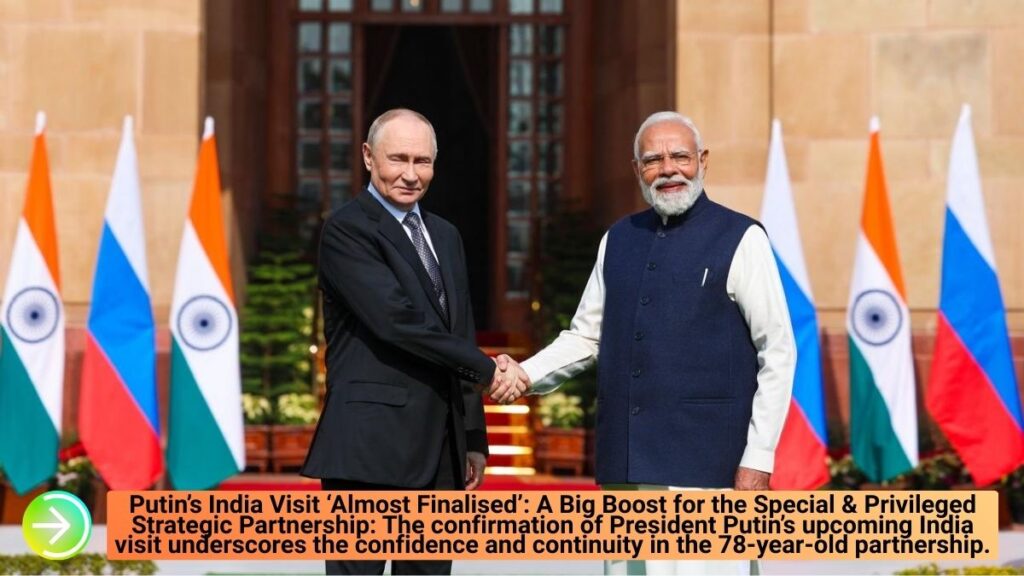
During the meeting, NSA Doval emphasized India’s “special and long-standing relationship with Russia”, underlining that both nations have maintained high-level engagement even during global turbulence. Doval confirmed that plans for President Vladimir Putin’s visit to India are “almost finalised,” though a formal date is yet to be publicly announced.
This interaction highlights the strategic depth, political trust, and enduring partnership between the two countries—one that remains among the most stable bilateral relationships globally.
Why Doval–Putin Meeting Matters Right Now
The timing is crucial:
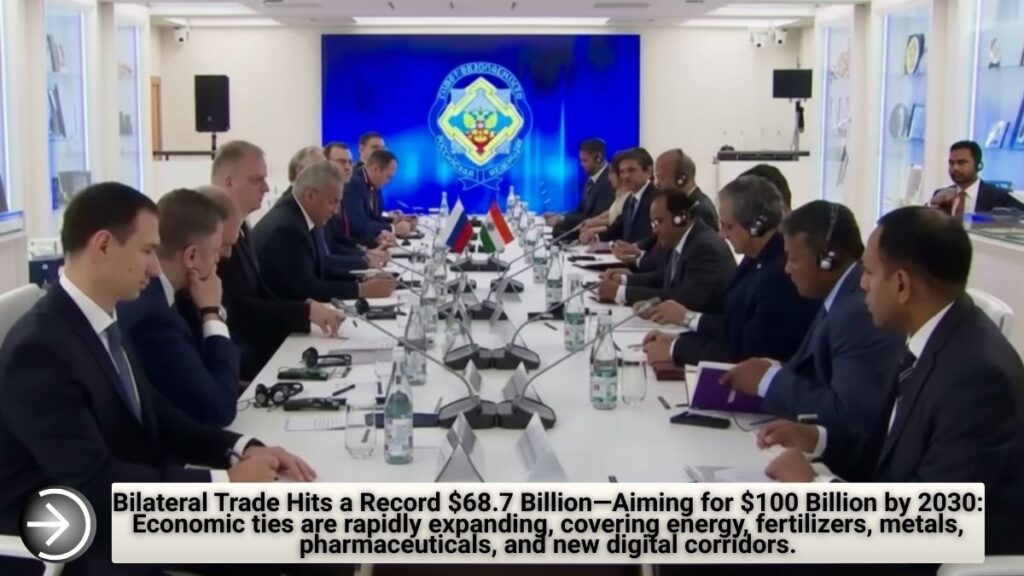
- Held one day after U.S. tariffs citing India’s Russian oil imports
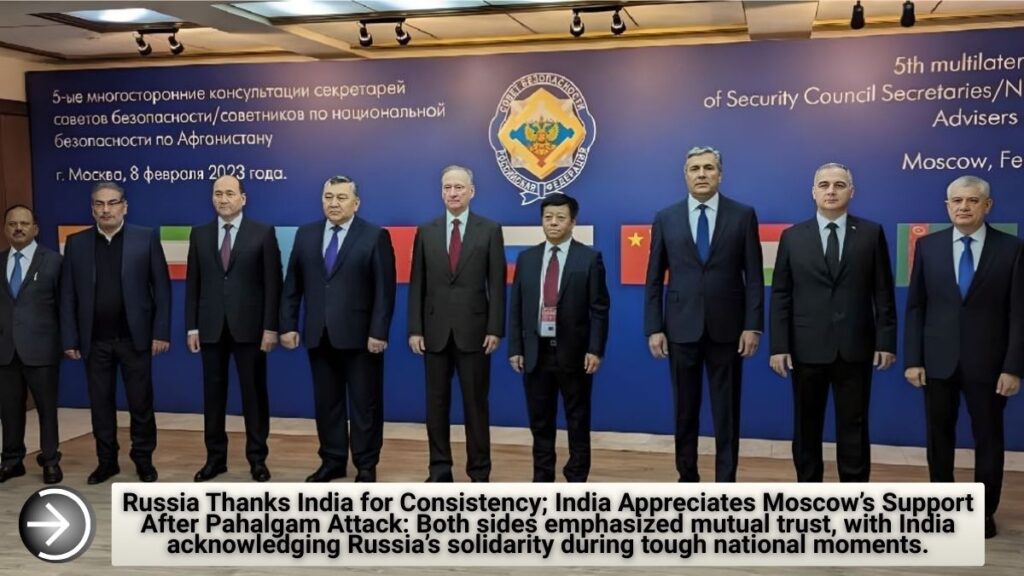
- Russia reaffirmed its unwavering support for India following the Pahalgam terror attack
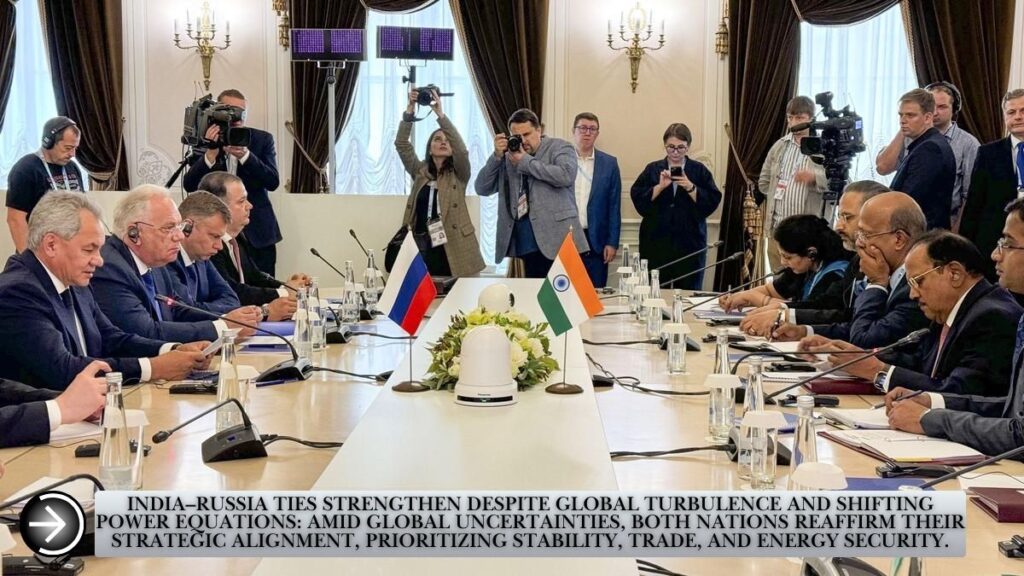
- Both sides emphasized the need for deeper cooperation amid a “tumultuous global environment”
- India continues to balance its strategic autonomy despite Western pressure
The meeting strongly signals that India and Russia are committed to strengthening their Special and Privileged Strategic Partnership irrespective of shifting geopolitical equations.
🇮🇳🇷🇺 India–Russia Relations: From Strategic Partnership to Special and Privileged Strategic Partnership
India and Russia share one of the most stable diplomatic partnerships of the modern era. Their bilateral ties were formally elevated in:
- 2000: India–Russia Strategic Partnership
- 2010: Upgraded to Special and Privileged Strategic Partnership
These frameworks allow for institutionalized cooperation across defence, trade, nuclear energy, science, technology, culture and more.
The backbone of this relationship includes the powerful mechanisms:
🇮🇳🇷🇺 India–Russia Intergovernmental Commission (IRIGC)
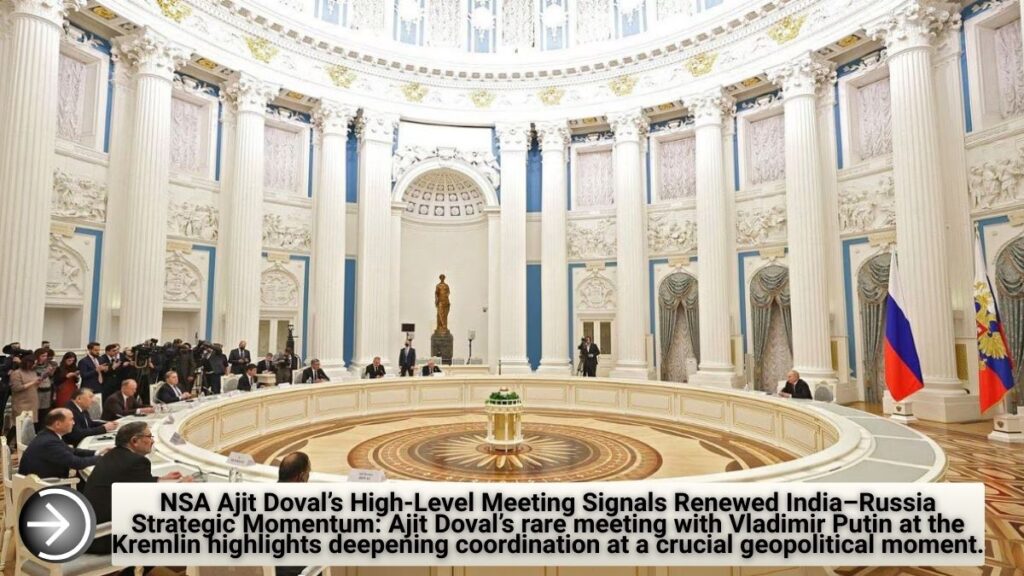
- IRIGC-TEC
- Trade, Economic, Scientific, Technological & Cultural cooperation
- Co-chaired by India’s External Affairs Minister and Russia’s First Deputy PM
- IRIGC-M&MTC
- Military & Military-Technical cooperation
- Co-chaired by Defence Ministers of both countries
The 2+2 Dialogue
Introduced in 2021, where Foreign and Defence Ministers meet jointly — further enhancing coordination on key strategic matters.
High-Level Political Engagements: 2024–2025 Overview
India and Russia maintain unusually dense political communication, including:
- Annual Leadership Summits — 22 held so far
- President Putin’s next India visit scheduled for 04–05 December 2025
- Regular meetings at BRICS, SCO, G20
- Multiple ministerial visits and dialogues across Moscow, New Delhi, China, Brazil, South Africa and the U.S.
Prime Minister and President Putin held several phone conversations in 2024 and 2025, especially after major global events and the Pahalgam terror attack.
EAM’s Major Engagements (2024–2025)
- Co-chaired 26th IRIGC-TEC
- Pushed for $100 billion trade by 2030
- Discussed consulate openings in Kazan & Yekaterinburg
- Reviewed global hotspots: Ukraine, Middle East, West Asia, Afghanistan
🇮🇳🇷🇺 India–Russia Economic Relations: Rising Trade & Investments
Economic cooperation remains a pillar of bilateral ties.
📌 Key Economic Milestones
- Record bilateral trade:$68.7 billion in FY 2024–25
- Indian exports: $4.9B (pharma, chemicals, steel, marine products)
- Imports from Russia: $63.8B (crude oil, fertilizers, coal, sunflower oil, precious stones)
- Goals set by leadership:
- $50 billion mutual investments by 2025
- $100 billion annual trade by 2030
- Ongoing negotiations:
- India–EAEU Free Trade Agreement (FTA)
- Strengthening logistics via INSTC, Chennai–Vladivostok Eastern Maritime Corridor, Northern Sea Route
- Service trade: Stable at ~$1 billion
Russia remains a vital partner for India in energy, financial services, steel, petrochemicals and technology.
🇮🇳🇷🇺 India–Russia Defence Cooperation: The Strongest Pillar
Defence cooperation is arguably the most trusted and long-standing dimension of India–Russia relations.
🔹 Military-Technical Cooperation Agreement (2021–2031)
Covers joint R&D, joint production, technology transfer and after-sales support.
Key Joint Development & Procurement Projects
| Weapon System | Collaboration |
|---|---|
| BrahMos Cruise Missile | Jointly developed by DRDO & Russia’s NPOM |
| Su-30MKI Fighter Jet | Licensed production by HAL |
| T-90S Bhishma Tanks | Manufactured in India under license |
| S-400 Triumf | Advanced SAM system procured from Russia |
| INS Vikramaditya | Refurbished Russian aircraft carrier |
| AK-203 Assault Rifles | Indigenous production via India–Russia Rifles JV |
Joint Military Exercises (2025)
- INDRA-2025 – Rajasthan
- Zapad-2025 – Nizhny Novgorod
- INDRA Naval Exercise – Chennai & Bay of Bengal
The cooperation now strongly focuses on joint R&D, new-generation weaponry, and potential exports.
🇮🇳🇷🇺 Science, Technology & Nuclear Cooperation
India and Russia hold one of the world’s most advanced bilateral scientific partnerships.
Key Areas of Collaboration
- Nuclear energy — Kudankulam Nuclear Power Plant
- Space cooperation — Gaganyaan astronaut training in Russia
- Nanotechnology, materials science & mathematics
- Advanced innovation programs under the 2021 STI Roadmap
Regular meetings under IRIGC ensure continuous scientific exchange.
Education & People-to-People Exchange
Russia remains a top destination for Indian students, especially in medicine, engineering and sciences.
Highlights
- 20,000+ Indian students currently in Russian universities
- Active collaboration through:
- Educational Exchange Programme (EEP)
- RIN (Network of Higher Education Institutions)
- SPARC
- GIAN
- Russian participation in India’s ITEC scholarship program
- Cultural exchanges include yoga festivals, Indian film festivals & Bharat Utsav in Moscow
Russia’s cultural affinity toward India—films, music, dance, yoga—remains exceptionally strong.
International Cooperation: BRICS, SCO, G20 & UN
India and Russia coordinate at nearly every major multilateral platform.
- Russia strongly supports India’s UNSC Permanent Membership aspiration
- BRICS, SCO, G20 cooperation remains deep
- India to take over BRICS Chairship in 2026
Both countries advocate a multipolar global order and reject zero-sum geopolitics.
Conclusion: A Stable, Time-Tested Partnership for a Changing World
Across 78 years, India–Russia relations have remained remarkably steady, immune to global power shifts. From defence and energy to technology, culture, and geopolitics, both nations continue to expand ties with:
- Record trade growth
- Deeper defence collaboration
- Closer diplomatic coordination
- Strategic connectivity projects
NSA Ajit Doval’s meeting with President Putin reaffirms this trajectory—and sets the stage for the much-anticipated Putin visit to India in 2025, where both nations will chart the next chapter of their Special and Privileged Strategic Partnership.
Note: All information and images used in this content are sourced from Google. They are used here for informational and illustrative purposes only.
FAQs: 🇮🇳🇷🇺 NSA Ajit Doval Meets Vladimir Putin – Key Insights on India–Russia Relations
1. Why is the meeting “NSA Ajit Doval Meets Vladimir Putin” considered a major diplomatic milestone?
The meeting “NSA Ajit Doval Meets Vladimir Putin” is significant because it happened during a sensitive global moment—just after the U.S. announced new tariffs on India over Russian oil purchases. The engagement reinforced India’s strategic autonomy and showcased the strength of the India–Russia Special and Privileged Strategic Partnership. It also helped finalize preparations for President Putin’s upcoming visit to India, marking a strong boost to bilateral ties.
2. What were the key outcomes of the “NSA Ajit Doval Meets Vladimir Putin” interaction in Moscow?
When NSA Ajit Doval meets Vladimir Putin, the central outcomes include reaffirming long-term political trust, strengthening defence cooperation, reviewing global security challenges, and confirming that the dates for Putin’s India visit are nearly finalized. It also highlighted Russia’s continued support to India after the Pahalgam terror attack and their shared focus on stability in a turbulent world.
3. How does the “NSA Ajit Doval Meets Vladimir Putin” meeting impact India–Russia defence relations?
The meeting “NSA Ajit Doval Meets Vladimir Putin” adds momentum to India–Russia defence cooperation under the 2021–2031 Military-Technical Agreement. It supports ongoing joint projects like BrahMos, AK-203 rifles, T-90 tank production, Su-30MKI assembly, and continued procurement of systems like the S-400. The dialogue helps deepen joint R&D, co-production, and long-term after-sales support essential for India’s defence preparedness.
4. What does the “NSA Ajit Doval Meets Vladimir Putin” meeting reveal about India’s strategic autonomy?
When NSA Ajit Doval meets Vladimir Putin, it sends a clear message that India remains committed to an independent foreign policy. Despite geopolitical pressure from the West, India continues to balance relations without compromising national interests, especially in energy security, defence procurement, and multilateral cooperation through BRICS, SCO, and the UN.
5. How did the “NSA Ajit Doval Meets Vladimir Putin” talks contribute to Putin’s upcoming visit to India?
The discussions during the “NSA Ajit Doval Meets Vladimir Putin” meeting confirmed that preparations for President Putin’s India visit are almost complete. The visit, scheduled for December 2025, will allow both leaders to review progress in trade, defence, nuclear energy, connectivity corridors, and regional security while setting new directions for the Special and Privileged Strategic Partnership.
6. What economic issues were highlighted during the “NSA Ajit Doval Meets Vladimir Putin” dialogue?
In the “NSA Ajit Doval Meets Vladimir Putin” interaction, both sides emphasized accelerating trade mechanisms, resolving payment challenges, expanding logistics connectivity, and achieving the $100-billion bilateral trade target by 2030. They also discussed expanding Indian exports and supporting the India–EAEU Free Trade Agreement to enhance market access.
7. How does the “NSA Ajit Doval Meets Vladimir Putin” meeting reflect on India–Russia counterterrorism cooperation?
The meeting “NSA Ajit Doval Meets Vladimir Putin” highlighted mutual commitment to fight terrorism in all its forms. Russia reiterated its support to India following the Pahalgam terror attack, while both sides agreed on deeper intelligence cooperation, coordination at multilateral platforms, and sustained efforts to combat global extremist networks.
8. How does the “NSA Ajit Doval Meets Vladimir Putin” discussion affect energy and oil cooperation?
When NSA Ajit Doval meets Vladimir Putin, energy security becomes a core topic. Russia remains a major supplier of crude oil, LNG, and coking coal to India. The meeting reinforced both countries’ resolve to continue energy partnerships despite external pressure, ensuring stable supply chains and long-term strategic energy cooperation.
9. What does the “NSA Ajit Doval Meets Vladimir Putin” meeting mean for connectivity projects like INSTC and the Chennai–Vladivostok Corridor?
The “NSA Ajit Doval Meets Vladimir Putin” talks support the rapid development of major connectivity initiatives such as the International North-South Transport Corridor (INSTC), the Chennai–Vladivostok Eastern Maritime Corridor, and Arctic cooperation. These routes promise faster trade, lower logistics costs, and new opportunities for Indian exporters.
10. How does the “NSA Ajit Doval Meets Vladimir Putin” meeting strengthen cultural and educational ties?
The “NSA Ajit Doval Meets Vladimir Putin” engagement also reinforces soft-power cooperation. With over 20,000 Indian students in Russia, rising tourism, film festivals, yoga events, and active cultural exchanges, both nations are working to deepen people-to-people connections. These efforts broaden the partnership beyond defence and geopolitics.
11. How does the “NSA Ajit Doval Meets Vladimir Putin” meeting align with India’s long-term vision for a multipolar world?
When NSA Ajit Doval meets Vladimir Putin, it is a reaffirmation of India and Russia’s shared commitment to a multipolar, balanced global order. Both countries actively collaborate within BRICS, SCO, the UN, and G20, promoting diplomacy, inclusive development, and sovereign equality in international relations.
12. What makes the “NSA Ajit Doval Meets Vladimir Putin” meeting crucial for future India–Russia cooperation?
The “NSA Ajit Doval Meets Vladimir Putin” meeting lays the foundation for the next phase of bilateral relations—expanding trade, innovation partnerships, regional connectivity, defence modernisation, and joint global leadership. It reinforces a relationship built on trust, reliability, and complementary national interests.





Leave a Reply