
Shubhanshu Shukla is writing a new chapter in India’s space story, and the excitement is impossible to ignore. When the Axiom Mission 4 lifts off aboard a powerful SpaceX Falcon 9 from Kennedy Space Center, millions of Indians will watch with pride. For Shukla, this journey isn’t just about reaching the International Space Station—it’s about pushing science forward and inspiring a new generation to dream bigger. From groundbreaking experiments in space farming and DNA repair to lessons broadcast to students on Earth, this mission represents hope, curiosity, and the unstoppable spirit of exploration that connects India to the future of space discovery.
Why Ax-4 Is a Big Deal for India and Everyone Else
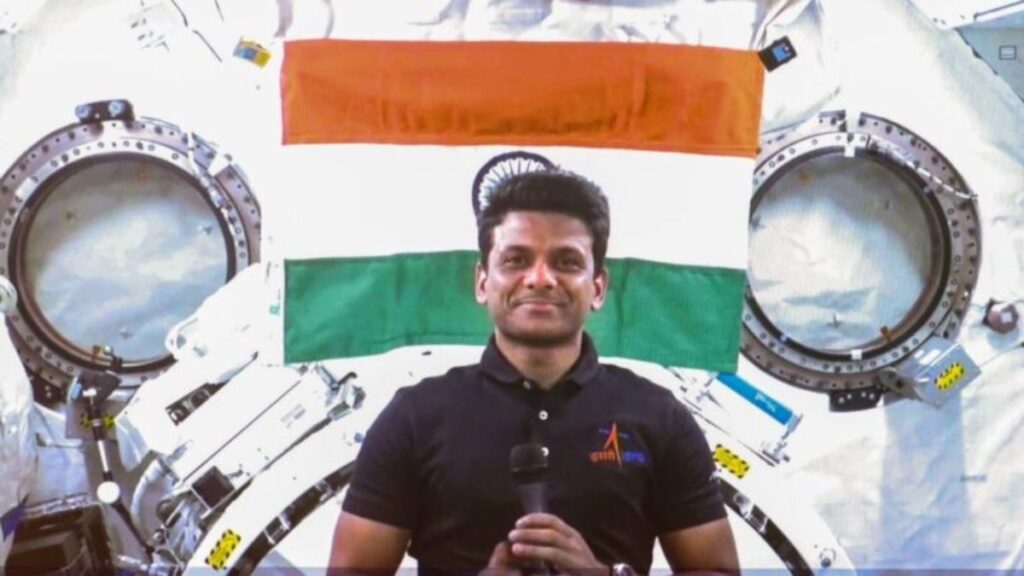
On June 25, 2025, everyone watched as a Falcon 9 rocket took off from Florida, carrying Axiom Mission 4 (Ax-4) to the International Space Station (ISS). On board was Group Captain Shubhanshu Shukla of the Indian Air Force—the first Indian in space in 41 years and the first to visit the ISS. This isn’t just about one person; it’s India getting back into the human spaceflight game and practicing for its own Gaganyaan missions. Globally, Ax-4 is the fourth private astronaut trip by Axiom Space, showing how companies, governments, and other countries can share the space station for experiments.
Launch Day: What Happened and When
Event GMT / IST Details
Liftoff 06:31 GMT / 12:01 IST Falcon 9 Block 5 launches from Kennedy Space Center
Stage 1 Landing T + 8 min Booster comes back to Landing Zone-1
Dragon “Grace” Orbit T + 9 min Heads toward orbit
ISS Arrival 11:00 GMT / 16:30 IST, 26 Jun Docks with the ISS
Trip Length 14 days Crew leaves around July 10, 2025
After a day or so, Dragon will connect to the ISS on June 26, 2025. NASA will show it live two hours before.
Meet the Crew

Shubhanshu Shukla’s Road to Space
Role Astronaut Nation Space Experience
Commander Dr Peggy Whitson USA 3 NASA trips to the ISS, over 675 days in space
Pilot Gp. Capt. Shubhanshu Shukla India Test pilot, first flight
Mission Specialist Sławosz Uznański-Wiśniewski Poland ESA backup astronaut, first flight
Mission Specialist Tibor Kapu Hungary Part of the HUNOR program, first flight
Whitson, who knows space inside and out, is teamed up with three rookies, each representing their country’s first time on the ISS.
Shubhanshu Shukla: From India to Space
Born in Lucknow in October 1985, Shukla grew up with Sqn Ldr Rakesh Sharma’s 1984 space trip and the 1999 Kargil War. Inspired, Shukla passed the NDA exam, flew Su-30 MKIs as a fighter pilot, and logged 2,000 hours in the air before being chosen for the Gaganyaan program in 2019.
Why Shukla’s Trip Is Meaningful
National Feeling: He’s wearing the Indian flag and said “Jai Hind” when he first spoke from space.
Learning Experience: He’s getting hands-on experience on the ISS for India’s own space missions.
Be an inspiration: He’s someone that 1.4 billion Indians can look up to.
Science in Space: Experiments

Ax-4 is packed with experiments, with Shukla running studies for ISRO:
Testing superfoods in space
Studying DNA repair in space radiation
Researching muscle regeneration
Testing oxygen and fuel production using algae
Studying eye and brain strain from screens
Mapping eye movements for future spacecraft
Broadcasting physics lessons to classrooms in India
What He’ll Do on the ISS: Research
Shubhanshu Shukla’s Schedule
Day 1: Safety briefings and health checks
Days 2-5: Studying sprouting, muscle regeneration
Days 6-8: Testing touch panels, algae reactors
Days 9-10: Working with NASA and ESA on bone and crystal studies
Days 11-12: Broadcasting to schools in India
Day 13: Getting ready to leave
Day 14: Leaving the ISS
Whitson is working hard to make sure they get as much research done as possible.
How Ax-4 Helps Gaganyaan: A Practice Run
Shukla is training to be a Gaganyaan astronaut. His time on the ISS will help with:
Life-support Systems: Dragon’s systems are similar to what ISRO will use.
Space Robotics: He’ll help test robotic procedures.
Mission Rules: He’ll learn from NASA’s rules.
What Happened Before Launch
Ax-4 had some setbacks:

Originally Planned: May 29, 2025
Delayed by: Weather, checks on Dragon, a fuel leak, and an issue on the ISS.
Finally: It launched on June 25.
Dragon “Grace”:
SpaceX’s fifth Crew Dragon, called Grace. It has better tech and bigger windows and should fly several times before SpaceX switches to Starship.
How to Watch
NASA+ will show the docking live.
ISRO YouTube will have experiment demos.
Follow @axiom_space, @isro, @space_station and #Ax4 on X.
Students can ask questions on ISRO’s website, and some will be answered from space.
Axiom-4 Mission: Key Facts & Highlights
| Topic | Details |
|---|---|
| Mission Name | Axiom Mission 4 (Ax-4) |
| Launch Date | June 25, 2025 |
| Rocket | SpaceX Falcon 9 |
| Spacecraft | Crew Dragon “Grace” |
| Launch Site | Kennedy Space Center, Florida |
| Destination | International Space Station (ISS) |
| Travel Time to ISS | Around 28 hours |
| Docking Date | June 26, 2025 |
| Mission Duration | Up to 14 days |
| Crew Size | 4 astronauts |
Axiom-4 Crew Members
| Astronaut | Country / Role | Interesting Note |
|---|---|---|
| Dr. Peggy Whitson | United States | One of the most experienced astronauts in the world |
| Gp. Capt. Shubhanshu Shukla | India | One of the few Indian astronauts to travel to the ISS |
| Sławosz Uznański-Wiśniewski | Poland | Known for advanced space technology research |
| Tibor Kapu | Hungary | Represents Hungary in modern human spaceflight |
Ax-4 Mission Timeline
| Event | Expected Timeframe |
|---|---|
| Launch | June 25, 2025 |
| First Stage Separation | About 8 minutes after launch |
| Capsule Separation | About 9 minutes after launch |
| Arrival & Docking at ISS | June 26, 2025 |
| Return to Earth | July 10, 2025 |
Major Experiments on the Axiom-4 Mission
| Experiment Area | Purpose |
|---|---|
| Growing food in space | Learn how astronauts can produce food during long missions |
| DNA repair | Study how human cells react to space radiation |
| Muscle growth | Understand how muscles change in microgravity |
| Algae for life support | Explore oxygen production and sustainable life systems |
| Space technology tests | Develop tools for future space missions |
| Eye strain research | Study how space conditions affect astronaut vision |
| Educational experiments | Share lessons and experiments with students on Earth |
ISRO–NASA Collaboration Highlights
| Research Area | What Scientists Are Studying |
|---|---|
| Bone loss in microgravity | Understanding how long space stays affect human bones |
| Health monitoring sensors | Testing wearable tech that tracks astronaut health |
| Educational broadcasts | Live science sessions for students |
| Data sharing | Joint research between ISRO and NASA scientists |
India’s Space Plan:
Key Moments:
1984: Rakesh Sharma’s flight
2019: Gaganyaan Program
2022: Robot Testing
2024: Test Flight
2025: Axiom-4
2027: Gaganyaan Launch
Conclusion: India’s New Space Age
After Rakesh Sharma, another Indian is in space, showing how far India has come. Axiom-4 is helping India get to the Moon, Mars, and beyond. Follow the mission and let the Indian flag fly aboard the ISS.
“This isn’t just my trip; it’s the start of India’s space program.”
— Gp. Capt. Shubhanshu Shukla
FAQ: Shubhanshu Shukla’s Mission to the ISS
Shubhanshu Shukla’s Road to Space
Q1: Who is Shubhanshu Shukla?
He’s the first Indian on the ISS, marking India’s return to space.
Q2: What’s his job on Axiom-4?
He’s the pilot.
Q3: How long will he be in space?
Two weeks.
Q4: What experiments is he doing?
He’s leading studies on space farming and more.
Q5: How does this help India’s space program?
He’s getting experience for India’s future missions.
Q6: How did he get ready?
He trained as a pilot
Q7: Can students get involved?
Yes, through live broadcasts from space.
Q8: Who else is he working with?
NASA, ESA, and Axiom Space.
Q9: How can I watch?
On NASA+ and ISRO channels.
Q10: What’s his legacy?
He’s starting a new chapter for India in space.