
Introduction about Rising Ganga River Levels in Varanasi:
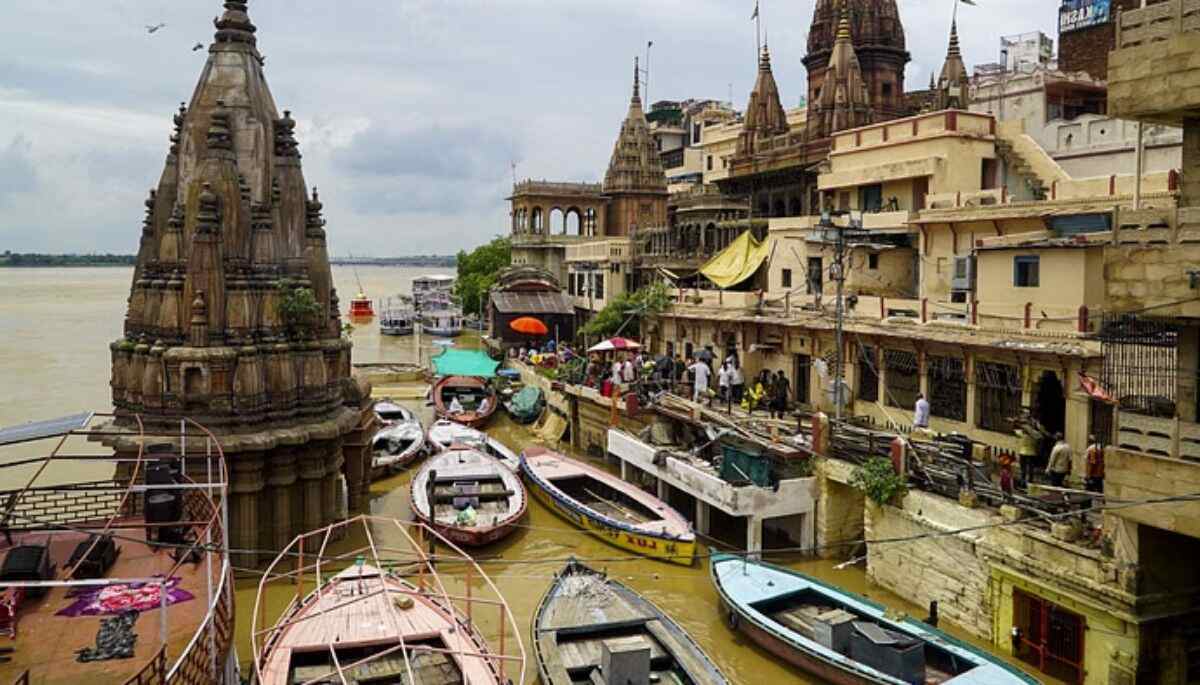
The Ganga River, revered as the lifeline of India’s spiritual and cultural heritage, has recently surged to alarming levels in Varanasi, creating both challenges and a sense of awe among residents and visitors. As of July 16, 2025, the river’s water level is just half a meter below the danger mark, submerging iconic ghats, affecting local communities, and prompting authorities to take swift action. This article explores the current situation, its impact on Varanasi’s residents, the measures being taken, and the resilience of a city deeply connected to the Ganga. From submerged temples to disrupted cremations, the rising waters have transformed daily life, yet the spirit of Varanasi remains unbroken.
The Ganga’s Rising Waters: A Growing Concern
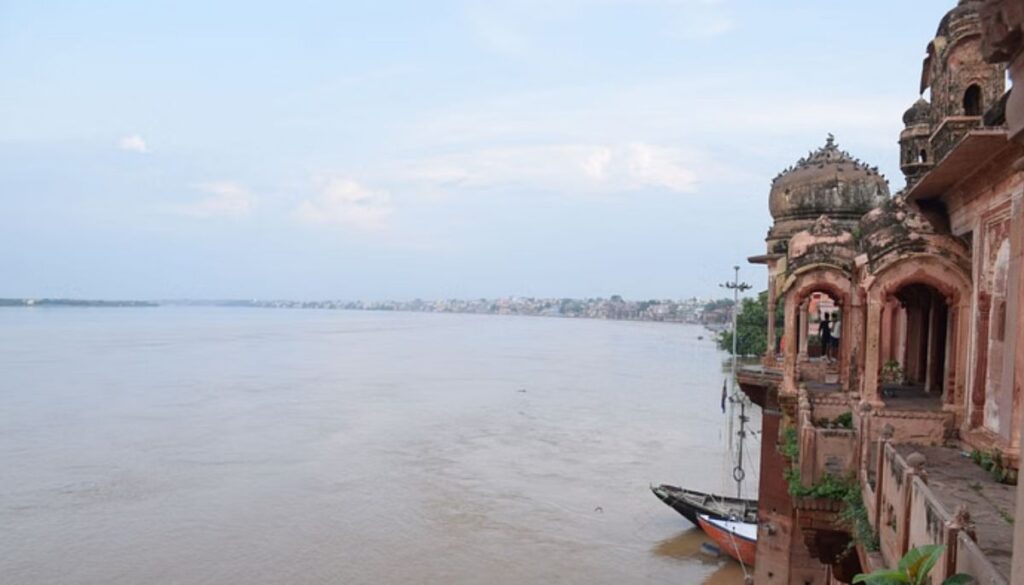
The Ganga River, a sacred symbol for millions, is currently experiencing a significant rise in water levels, creating a mix of concern and adaptation in Varanasi. According to the Central Water Commission’s flood bulletin issued on Tuesday, July 15, 2025, the water level reached 68.42 meters at 8 AM, rising at a rate of 4 centimeters per hour. By 7 PM, it had climbed to 68.70 meters, still 1.56 meters below the warning mark of 70.26 meters. While the pace of the rise slowed to 2 centimeters per hour by afternoon, the steady increase has kept local authorities and residents on high alert.
The situation is particularly worrisome in riverside areas like Saidpur, where both banks of the Ganga are overflowing. The Gomti River, a tributary that joins the Ganga near Kharauna village, has also reached dangerous levels, exacerbating the flooding. This convergence of rising waters has led to widespread inundation, affecting everything from agriculture to religious practices. Despite these challenges, the people of Varanasi are responding with resilience, adapting to the changing landscape while maintaining their deep connection to the river.
Submerged Ghats: A Shift in Varanasi’s Spiritual Landscape
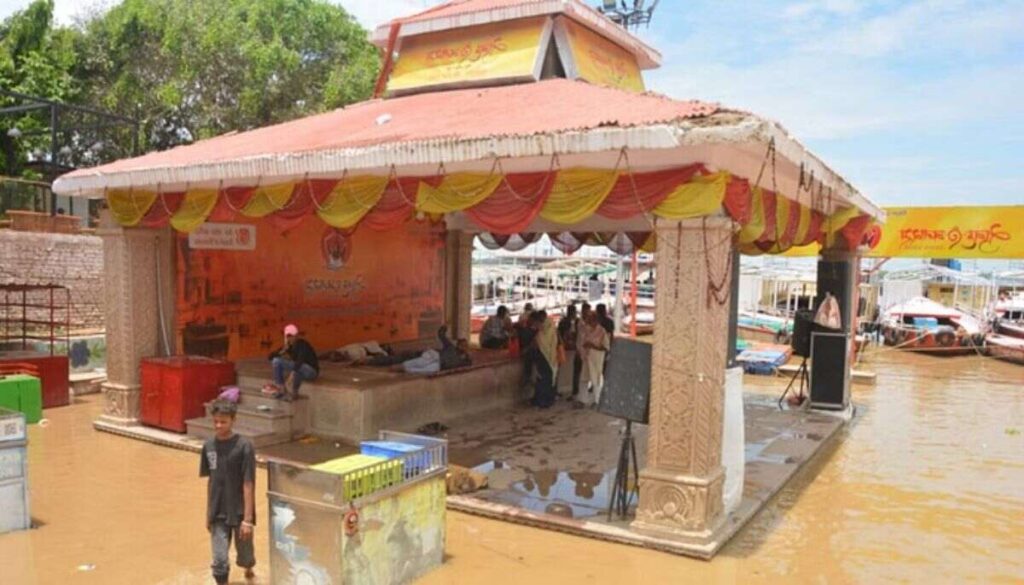
Varanasi, often called the spiritual capital of India, is famous for its 84 ghats, which line the Ganga’s banks and serve as centers for religious rituals, bathing, and cremations. However, the rising waters have submerged nearly all of these iconic ghats, transforming the city’s spiritual and cultural landscape. At Assi Ghat, the Subah-e-Banaras platform, a popular spot for morning rituals and cultural events, is now underwater, sparking fears of widespread flooding among locals.
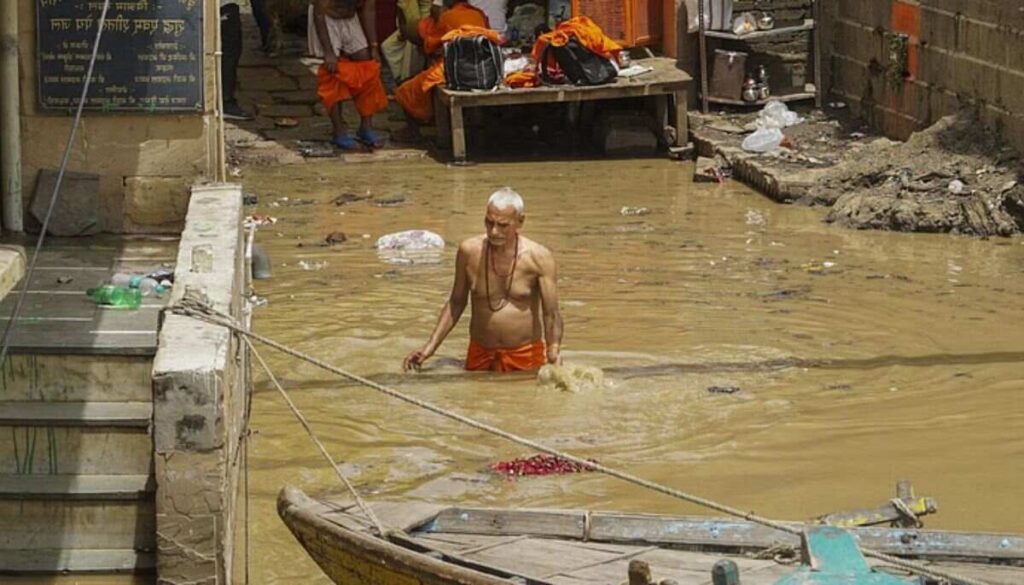
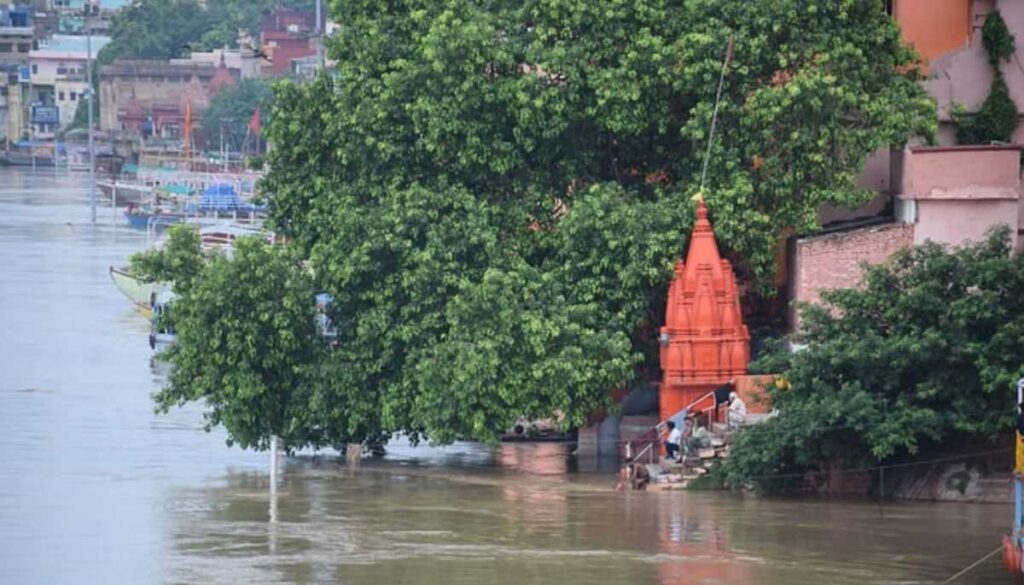
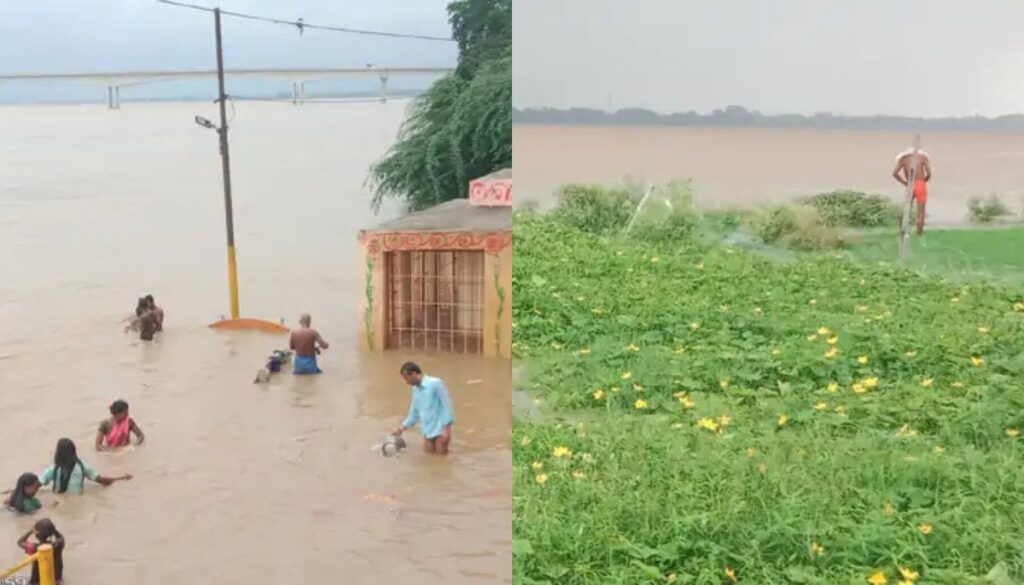
The Aditya Birla Ghat is completely submerged, forcing devotees to bathe on flooded roads. Similarly, ghats like Rang Mahal, Videshi Baba, Mahavir, Sangat, and Budhenath Mahadev in Saidpur are almost entirely underwater, with only a few steps visible. At Pakka Ghat, floodwater has entered the Devi temple, and local children have been seen jumping from the temple roof into the river to swim, a testament to the community’s ability to find moments of joy amid adversity.
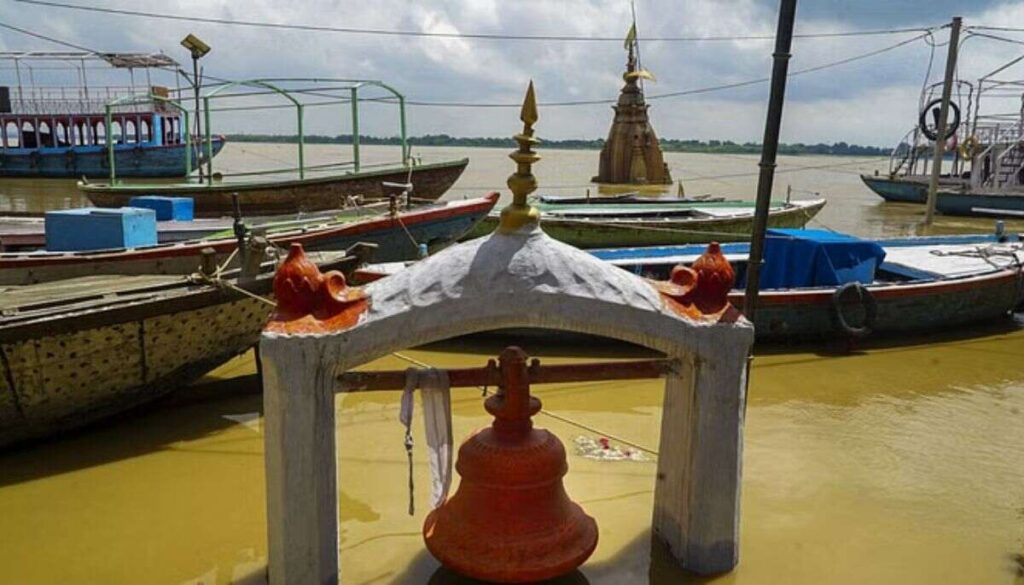
The iconic Dashashwamedh Ghat, known for its grand Ganga Aarti, is also affected. Water has reached the River Police post, and the Sheetla Mata temple at the ghat is fully submerged, with only the top of the temple visible. To preserve the sanctity of the deity, the Sheetla Mata mask was relocated to the Ahileshwar Mahadev Temple in the Ahilyabai State area after a late-night aarti on Monday. Daily rituals and offerings have resumed at the new location, ensuring that spiritual practices continue despite the flooding.
Impact on Cremation Grounds: A Challenge to Sacred Traditions
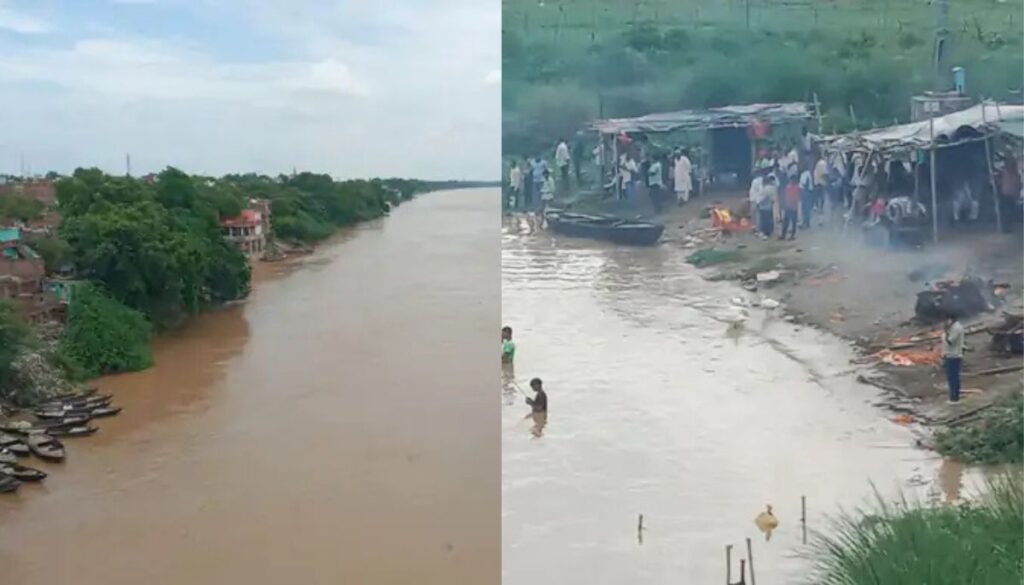
Varanasi is renowned for its cremation grounds, particularly Manikarnika and Harishchandra Ghats, where Hindus perform last rites to attain moksha (liberation). The rising Ganga has significantly disrupted these sacred traditions. At Joharganj cremation ground in Saidpur, limited space has led to delays when multiple bodies arrive, forcing grieving families to wait for their turn. The Kot Ghat cremation ground is completely submerged, prompting authorities to set up temporary cremation arrangements in a tin-shed waiting area.
At Manikarnika Ghat, cremations are now being conducted on rooftops, while at Harishchandra Ghat, they are taking place in nearby lanes. These adaptations reflect the city’s determination to maintain its spiritual duties despite the challenges posed by the floods. The River Police, led by in-charge Rajkishore Pandey, have announced that the Ganga Aarti at Dashashwamedh Ghat will now be performed symbolically, and watching the aarti from boats or motorboats has been suspended for safety reasons. The deployment of National Disaster Response Force (NDRF) and Provincial Armed Constabulary (PAC) personnel at the ghats underscores the seriousness of the situation and the commitment to public safety.
Flooding in the Varuna Corridor: A Threat to Residential Areas
The backflow of the Varuna River, a tributary of the Ganga, has deepened the flood threat in Varanasi’s densely populated riverside neighborhoods. The Varuna Corridor, a critical drainage and waterway system, is now overwhelmed by rising water levels, leading to flooding in areas like Hidayat Nagar and Deendayalpur. Homes belonging to residents such as Bhola Maurya, Shobha, Sona Devi, Natthu Sonkar, Rafiq, Sanjay Chaudhary, Barsati Ram, Ajay Chaudhary, Bhushan Mistri, and Munna in Deendayalpur have been inundated. Similarly, families in Hidayat Nagar, including Kaju, Miraj, Salman, and Chunnu, are grappling with floodwater in their homes.
The floodwater is also expected to enter through the Nagwan drain, threatening areas like Harijan Basti, Sonkar Basti, Dumraon Bagh Colony, and potentially parts of Saket Nagar, Rohit Nagar, and Batua Pura. In the Ramna area, water has advanced beyond the cremation grounds, and a further rise of five feet could submerge hundreds of bighas of crops in Ramna Tikri. The situation is being closely monitored by Revenue Department official Surendra Mishra, who is conducting regular inspections at Nagwan Primary School to assess the flood risk and coordinate relief efforts.
Agricultural Losses: A Blow to Livelihoods
The rising waters have not spared Varanasi’s agricultural sector, particularly in low-lying areas near the Ganga and Gomti rivers. Floodwaters have inundated fields, damaging crops and threatening the livelihoods of farmers. Vegetable crops, a significant source of income for many rural households, have been particularly hard-hit. The convergence of the Ganga and Gomti near Kharauna village has created a perfect storm, submerging farmland and leaving farmers uncertain about their future harvests.
Despite these losses, the community is working together to mitigate the damage. Farmers are exploring ways to protect their remaining crops, and local authorities are assessing the extent of the agricultural impact to provide support. The resilience of Varanasi’s farmers, who have faced floods in the past, is evident as they adapt to the current crisis and plan for recovery.
Safety Measures and Community Response
The rising Ganga has prompted a coordinated response from local authorities and community organizations. The River Police have banned motorboat activities, including watching the Ganga Aarti from the river, to ensure public safety. NDRF and PAC personnel are stationed at the ghats, ready to assist in case of emergencies. At Gyan Pravah in Samne Ghat, a channel gate has been installed to reduce the risk of floodwater entering the Ganga directly, providing some relief to nearby residents.
The community’s response has been equally inspiring. Despite the challenges, residents are finding ways to adapt, from relocating sacred idols to setting up temporary cremation sites. The relocation of the Sheetla Mata mask to a new temple site is a powerful example of how Varanasi’s people are preserving their spiritual traditions in the face of adversity. Local children, undeterred by the flooded ghats, are finding joy in swimming and playing in the river, showcasing the indomitable spirit of the city’s youth.
The Cultural and Spiritual Significance of the Ganga
The Ganga is more than just a river in Varanasi—it is the heart of the city’s identity. For centuries, it has been a source of spiritual inspiration, a site for sacred rituals, and a symbol of life and renewal. The current flooding, while challenging, is also a reminder of the river’s power and its central role in the lives of Varanasi’s residents. The submersion of temples and ghats has not diminished the city’s devotion to the Ganga; instead, it has sparked a renewed sense of unity and resilience.
The Ganga Aarti, a daily ritual that draws thousands of devotees and tourists, continues to be performed, albeit symbolically, at Dashashwamedh Ghat. The relocation of rituals to alternative sites, such as the Ahileshwar Mahadev Temple, ensures that the city’s spiritual life remains vibrant. The people of Varanasi understand that the Ganga’s ebbs and flows are part of its eternal rhythm, and they are adapting with grace and determination.
Looking Ahead: Preparing for the Future
As the Ganga’s water levels continue to rise, Varanasi is bracing for potential further impacts. The Central Water Commission and local authorities are closely monitoring the situation, providing regular updates to keep residents informed. The deployment of NDRF and PAC personnel, along with infrastructure measures like the channel gate at Gyan Pravah, demonstrates a proactive approach to managing the crisis.
For residents, the focus is on adaptation and recovery. Farmers are exploring ways to protect their crops, while communities in flood-affected areas are working together to support one another. The city’s history of resilience in the face of floods provides hope that Varanasi will emerge stronger from this challenge. Long-term solutions, such as improved drainage systems and flood-resistant infrastructure, will be critical to ensuring the city’s future preparedness.
A City of Resilience and Faith
The rising waters of the Ganga have tested Varanasi’s spirit, but they have also highlighted the city’s resilience and unwavering faith. From submerged ghats to flooded homes, the challenges are significant, yet the people of Varanasi are responding with courage and creativity. The relocation of sacred rituals, the adaptation of cremation practices, and the community’s collective efforts to support one another reflect the strength of a city deeply connected to its river.
As Varanasi navigates this period of flooding, it remains a beacon of hope and spirituality. The Ganga, with its powerful currents and sacred significance, continues to shape the city’s identity, reminding its people of their ability to adapt and thrive in the face of adversity. With the support of local authorities and the resilience of its residents, Varanasi will weather this storm, emerging stronger and more united than ever.
Ganga River Flood Situation 2025: Key Highlights at a Glance
| Topic | Details |
|---|---|
| Current Water Level (Ganga) | Shiva Temple (Aditya Birla Ghat), Devi Temple (Pakka Ghat), Sheetla Mata Temple (Dashashwamedh), and Multiple others between Assi–Rajghat |
| Affected Locations | Saidpur, Kashi (Varanasi), Assi Ghat, Dashashwamedh Ghat, Ramna, Nagwan, Varuna Corridor |
| Submerged Ghats (Saidpur) | Rang Mahal Ghat, Videshi Baba Ghat, Mahavir Ghat, Sangat Ghat, Budhenath Mahadev Ghat, Pakka Ghat |
| Temples Underwater | Shiva Temple (Aditya Birla Ghat), Devi Temple (Pakka Ghat), Sheetla Mata Temple (Dashashwamedh), Multiple others between Assi–Rajghat |
| Cremation Challenges | Joharganj and Kot Ghat submerged, leading to delays and alternate arrangements in tin sheds and rooftops |
| Children’s Safety Concern | Children seen jumping from temple rooftops for swimming – rising safety risks |
| Water Level in Kashi | Just 0.5 meters below the danger mark in Saidpur; rising steadily in Kashi |
| Major Restrictions Imposed | 68.70 meters at 7 PM Tuesday (1.56 m below the warning mark of 70.26 m); rising 4 cm/hour in the morning, 2 cm/hour in the evening |
| Symbolic Ganga Aarti | Now performed symbolically at Dashashwamedh Ghat due to the flooding of the platform |
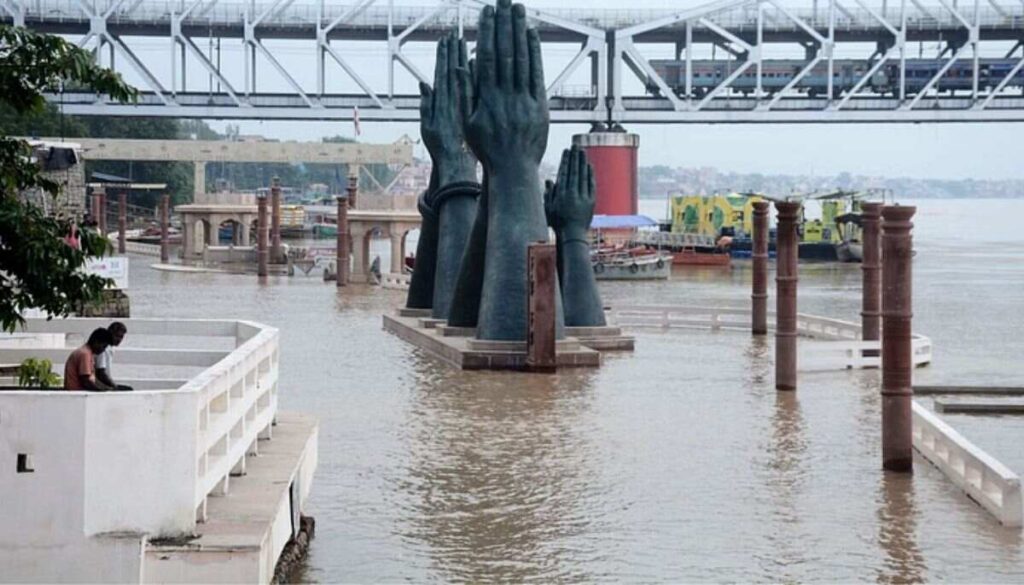
| Submerged Sculptures & Landmarks | Namaste Sculpture (Namo Ghat) is partially underwater; the Sheetla Mata idol moved to Ahileshwar Mahadev Temple |
| Varuna River Backflow | Boating and Ganga Aarti viewing from boats suspended by the River Police |
| Affected Families (Examples) | Bhola Maurya, Rafiq, Sanjay Chaudhary, Salman, Chunnu – houses submerged |
| Critical Zones at Risk | Harijan Basti, Dumraon Bagh Colony, Saket Nagar, Rohit Nagar, Ramna Tikri |
| Agricultural Losses | Revenue official Surendra Mishra is conducting regular inspections at Nagwan Primary School |
| On-Ground Monitoring | Causing water to enter Hidayat Nagar, Deendayalpur, flooding several homes |
| Emergency Deployment | Vegetable crops and 100+ bighas at risk; water is invading farming zones |
Summary of Rising Ganga River Levels in Varanasi:
| Rising Ganga River Levels in Varanasi Aspect | Rising Ganga River Levels in Varanasi Details |
|---|---|
| Rising Ganga River Levels in Varanasi – Current Situation | The Ganga River is just 0.5 meters below the danger mark, submerging ghats and low-lying areas. |
| Rising Ganga River Levels in Varanasi – Affected Areas | Saidpur, Assi Ghat, Dashashwamedh Ghat, Ramna, Varuna Corridor, and Nagwan regions. |
| Rising Ganga River Levels in Varanasi – Submerged Ghats | Rang Mahal, Videshi Baba, Mahavir, Sangat, Budhenath Mahadev, Aditya Birla, and Pakka Ghats. |
| Rising Ganga River Levels in Varanasi – Impact on Temples | Sheetla Mata Temple, Devi Temple, and several between Assi and Rajghat are underwater. |
| Rising Ganga River Levels in Varanasi – Cremation Challenges | Manikarnika and Harishchandra Ghats are partially submerged; cremations moved to rooftops and lanes. |
| Rising Ganga River Levels in Varanasi – Agricultural Damage | Flooding has destroyed vegetable crops and hundreds of bighas of farmland in Ramna Tikri. |
| Rising Ganga River Levels in Varanasi – Safety Measures | NDRF, PAC, and River Police deployed; boating and Aarti viewing suspended for safety. |
| Rising Ganga River Levels in Varanasi – Community Response | Residents are relocating idols, setting up temporary cremation areas, and assisting one another. |
| Rising Ganga River Levels in Varanasi – Cultural Resilience | Despite flooding, rituals like the Ganga Aarti continue symbolically, showing spiritual strength. |
| Rising Ganga River Levels in Varanasi – Future Preparedness | Authorities are monitoring water levels, improving drainage, and planning long-term flood solutions. |
| Rising Ganga River Levels in Varanasi Category | Rising Ganga River Levels in Varanasi Description | Rising Ganga River Levels in Varanasi Current Situation / Data | Rising Ganga River Levels in Varanasi Impact / Response |
|---|---|---|---|
| Rising Ganga River Levels in Varanasi – Current Water Level | The sacred Ganga River has surged to alarming levels, nearing the danger mark. | Water level at 68.70 meters as of July 15, 2025, just 1.56 meters below the warning mark of 70.26 meters. | Authorities remain on alert; water continues to rise at 2 cm/hour. |
| Rising Ganga River Levels in Varanasi – Affected Ghats | Historic ghats are submerged, disrupting rituals and tourism. | Assi, Aditya Birla, Dashashwamedh, Rang Mahal, and Pakka Ghats underwater. | Daily rituals relocated; Ganga Aarti performed symbolically. |
| Rising Ganga River Levels in Varanasi – Submerged Temples | Ancient temples along the riverfront are partially or fully underwater. | Sheetla Mata Temple, Devi Temple, and Shiva Temple submerged. | Idols relocated to higher ground; worship continues in alternate temples. |
| Rising Ganga River Levels in Varanasi – Impact on Spiritual Life | The city’s spiritual pulse is affected, yet devotion remains strong. | Ganga Aarti site flooded; platforms and ghats inaccessible. | Symbolic Aarti continues at relocated sites to maintain tradition. |
| Rising Ganga River Levels in Varanasi – Cremation Challenges | Rising waters disrupt sacred cremation rituals at ghats. | Manikarnika and Harishchandra Ghats partially submerged. | Cremations shifted to rooftops and temporary tin sheds for safety. |
| Rising Ganga River Levels in Varanasi – Residential Flooding | Floodwaters invade riverside homes and colonies. | Areas like Hidayat Nagar, Deendayalpur, and Dumraon Bagh flooded. | Families evacuated; temporary shelters arranged by local authorities. |
| Rising Ganga River Levels in Varanasi – Agricultural Damage | Flooding devastates farms and vegetable crops in low-lying regions. | Fields near Ramna Tikri and Kharauna village submerged. | Farmers working with officials to assess losses and seek compensation. |
| Rising Ganga River Levels in Varanasi – Varuna River Backflow | The tributary adds to the flood crisis with water flowing backward. | Varuna Corridor overwhelmed, Nagwan drain overflown. | Emergency inspections and flood barriers deployed. |
| Rising Ganga River Levels in Varanasi – Safety Measures | Authorities enforce strict safety and control mechanisms. | NDRF, PAC, and River Police deployed across ghats. | Boating, swimming, and Aarti viewing from boats banned for public safety. |
| Rising Ganga River Levels in Varanasi – Children’s Safety Concerns | Children seen swimming in submerged areas, raising alarms. | Kids jumping from temple rooftops at Pakka Ghat and Saidpur. | Police advisories issued; families urged to restrict children near flood zones. |
| Rising Ganga River Levels in Varanasi – Cultural Preservation | Flooding threatens heritage, but cultural continuity remains strong. | Subah-e-Banaras platform and Namaste Sculpture partially underwater. | Rituals and ceremonies shifted; cultural resilience continues. |
| Rising Ganga River Levels in Varanasi – Relief and Response Efforts | Multi-agency collaboration to tackle emergencies and aid victims. | Revenue official Surendra Mishra leading on-ground inspections. | Relief supplies distributed; medical and rescue teams on standby. |
| Rising Ganga River Levels in Varanasi – Government Monitoring | Continuous observation by Central Water Commission and local bodies. | Hourly updates on river level and flood patterns. | Alerts issued; communication lines open for residents. |
| Rising Ganga River Levels in Varanasi – Economic Implications | Tourism and local trade face temporary disruption. | Decline in pilgrim inflow; market areas near ghats closed. | Recovery plans initiated; safety prioritized over commerce. |
| Rising Ganga River Levels in Varanasi – Community Resilience | Citizens show unity, cooperation, and adaptation amid adversity. | Locals relocating idols, protecting homes, and assisting neighbors. | Demonstrates Varanasi’s unbreakable spirit and deep bond with the Ganga. |
| Rising Ganga River Levels in Varanasi – Future Preparedness | Long-term infrastructure and flood prevention under consideration. | Improved drainage and channel systems proposed. | Focus on sustainable flood management and community readiness. |
Note: All information and images used in this content are sourced from Google. They are used here for informational and illustrative purposes only.
Frequently Asked Questions (FAQs) – Ganga Flood Situation in Saidpur and Kashi, July 2025
What is the current water level of the Ganga in Saidpur and Kashi?
The water level in Saidpur is just 0.5 meters below the danger mark. In Kashi (Varanasi), it reached 68.70 meters as of Tuesday 7 PM, which is 1.56 meters below the warning level of 70.26 meters, according to the Central Water Commission.
Which ghats in Saidpur are currently submerged?
The following ghats are submerged due to rising water levels:
- Aditya Birla Ghat
- Rang Mahal Ghat
- Videshi Baba Ghat
- Mahavir Ghat
- Sangat Ghat
- Budhenath Mahadev Ghat
- Pakka Ghat (including the Devi Temple, which has water intrusion)
How is the flood affecting cremation facilities?
Cremation grounds such as Joharganj and Kot Ghat in Saidpur are underwater. Cremations are being carried out in makeshift areas like tin-shed waiting zones. In Varanasi, cremations at Manikarnika Ghat are happening on rooftops, while at Harishchandra Ghat, they are being conducted in adjacent lanes.
Is the ‘Subah-e-Banaras’ stage at Assi Ghat submerged?
Yes. The iconic Subah-e-Banaras platform at Assi Ghat is submerged, and rising water levels have halted traditional ceremonies in the area.
Which major temples in Varanasi are affected?
- Sheetla Mata Temple at Dashashwamedh Ghat is completely submerged.
- The idol has been relocated to the Ahileshwar Mahadev Temple in the Ahilyabai State area.
- Temples between Assi Ghat and Rajghat are submerged, with only their spires visible.
What is the status of the Ganga Aarti at Dashashwamedh Ghat?
The Ganga Aarti is now being performed symbolically. River Police have prohibited viewing from boats or motorboats due to safety concerns related to the floodwaters.
What safety measures are in place at the ghats?
Authorities have deployed the following teams for safety:
- National Disaster Response Force (NDRF)
- Provincial Armed Constabulary (PAC)
- River Police for patrolling and crowd control
Which residential areas are worst affected by the flood?
Flooded residential areas include:
- Hidayat Nagar
- Deendayalpur
- Dumraon Bagh Colony
- Saket Nagar
- Batua Pura
- Rohit Nagar
- Nagwan, Harijan Basti, and Sonkar Basti
Many families in these localities have reported water entering their homes.
How is the Varuna River contributing to the situation?
The backflow of the Ganga into its tributary, the Varuna River, has caused flooding in the Varuna Corridor. Densely populated areas in central Varanasi are now facing increased flood threats.
Are agricultural lands impacted?
Yes. Vegetable crops and farmland in low-lying areas, especially in Ramna Tikri, are severely impacted. If water levels rise by another five feet, hundreds of bighas of land may go underwater.
Are any government officials monitoring the situation?
Yes. Revenue Department official Surendra Mishra is actively surveying affected zones, including Nagwan Primary School and surrounding flood-prone areas.
What precautions should riverside residents take?
Residents are advised to:
- Stay away from submerged areas and avoid swimming.
- Disconnect electrical appliances if flooding reaches homes.
- Follow evacuation guidelines issued by authorities.
- Keep emergency supplies and documents ready.
Where can the public access official updates?
Residents should follow:
- Central Water Commission flood alerts
- Local administration bulletins
- Verified news reports from local and regional agencies






Leave a Reply