
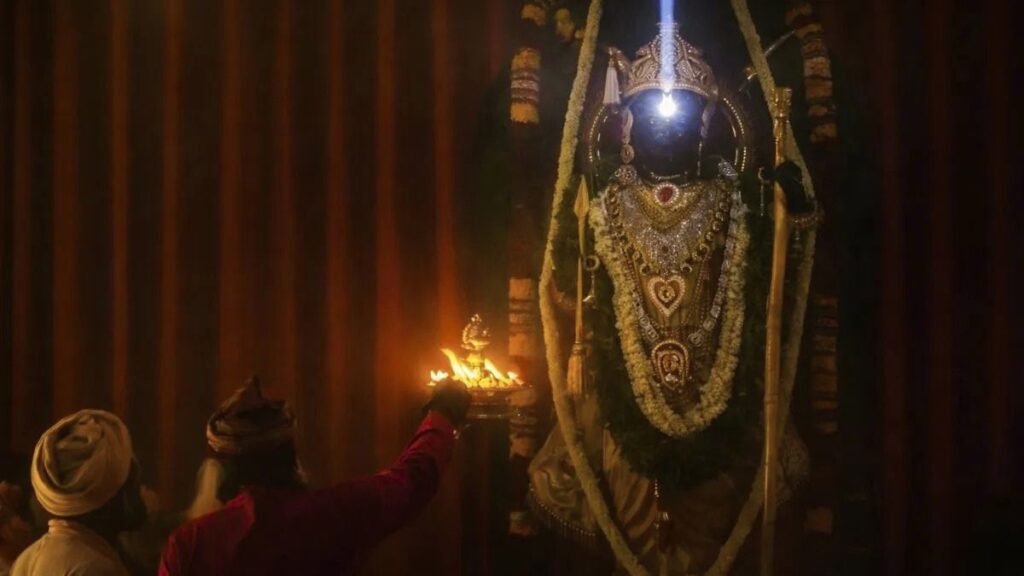
Ram Navami 2026 felt different the moment the bells rang, the chants rose, and millions of hearts turned toward Ayodhya. Then came the breathtaking moment everyone was waiting for—a divine beam of sunlight gently touched Ram Lalla’s forehead at the Ram Temple, creating the sacred Surya Tilak. For devotees, it was deeply emotional. For many others, it was almost impossible to look away. After all, this was not just faith on display; it was devotion, tradition, and extraordinary precision coming together in one unforgettable sight. So, what made this sacred moment possible? The answer is as fascinating as the celebration itself.
Ram Navami is not just a festival. It is a feeling. It brings devotion, nostalgia, family traditions, temple bells, and the quiet joy of chanting “Jai Shri Ram.” However, on Ram Navami 2026, one moment in Ayodhya captured hearts across India—the grand Surya Tilak of Ram Lalla at the Ram Janmabhoomi Temple.
At exactly the sacred midday hour, a narrow beam of sunlight touched Ram Lalla’s forehead. For devotees, it felt divine. For engineers and observers, it was equally breathtaking because it combined faith, science, timing, and sacred symbolism in one unforgettable moment.
What Happened During the Surya Tilak at Ayodhya Ram Temple?
On Ram Navami 2026, devotees witnessed the Surya Tilak ceremony at the Shri Ram Janmabhoomi Temple in Ayodhya. During the auspicious Madhyahna period, a focused beam of sunlight illuminated the forehead of Ram Lalla, creating a sacred tilak-like mark.
Although the moment lasted only around 3 to 4 minutes, it carried enormous spiritual significance. More importantly, this was not random sunlight entering the sanctum. Instead, it was a carefully engineered solar alignment system designed to direct sunlight with remarkable precision.
How the Surya Tilak at Ayodhya Ram Temple Is Created
At its core, the Surya Tilak mechanism works by guiding sunlight from the top of the temple into the Garbha Griha. To achieve this, the system uses a precise combination of:
Key Components Used
- 4 mirrors
- 4 lenses
- Tilt adjustment mechanism
- Brass pipes and enclosures
- Infrared heat filter
- Black-coated internal surfaces
As sunlight enters from above, the first mirror captures and redirects it. After that, the light travels through a carefully planned sequence of mirrors and lenses. Finally, the last optical stage sharpens and focuses the beam onto Ram Lalla’s forehead.
As a result, a sunbeam around 5.8 cm wide forms the divine tilak exactly at the intended moment.
The Science Behind the Surya Tilak Mechanism
This sacred event may look effortless, yet the system behind it is highly sophisticated.
Why the Alignment Works
The entire mechanism follows solar tracking principles. Since the Sun’s position changes with time and season, the angle of light must be calculated very precisely. Therefore, the temple system is designed to align sunlight specifically for Ram Navami at midday, when Lord Ram’s birth is traditionally believed to have occurred.
Why It Feels So Special
Because the idol of Ram Lalla faces east, the sunlight path must be controlled with extreme accuracy. Even a slight shift in angle could disturb the final beam. That is exactly why the Surya Tilak is admired not only as a religious event but also as a beautiful example of Indian engineering and temple design.
Materials, Safety, and Long-Term Design
A system like this must work safely and consistently. Therefore, the mechanism includes several smart design choices.
Built for Precision and Durability
- Brass components help ensure durability and structural stability.
- Black-coated interiors reduce scattering and keep the beam sharply focused.
- Lenses and mirrors are designed for long-term optical performance.
- An infrared filter helps block excess heat while allowing visible sunlight to pass.
Because of this safety layer, the sunlight reaches the idol without causing harmful heat concentration.
Ram Navami 2026 Date and Puja Muhurat
Ram Navami is celebrated on the Navami Tithi of Chaitra Shukla Paksha, marking the birth of Lord Rama, revered as Maryada Purushottam.
Important Ram Navami 2026 Timings
- Festival Date: March 27, 2026
- Most Auspicious Puja Time: Midday / Madhyahna
- Special Highlight: Surya Tilak at around noon
This midday window is considered especially sacred because scriptures associate it with the birth time of Lord Ram.
Major Ram Navami Rituals Observed in Ayodhya and Homes
Throughout the day, devotees performed rituals with devotion and discipline.
Common Ram Navami Rituals
- Mangala Aarti during Brahma Muhurat
- Abhishek with Panchamrit and holy water
- Shringar of Lord Ram
- Bhog offering, including sweets and fruits
- Ram Janmotsav Aarti at noon
- Surya Tilak ceremony
- Recitation of Ramayana or Ramcharitmanas
In many homes, devotees also offer yellow flowers, sandalwood, tulsi leaves, and panjiri prasad.
6 AI Prompts to Create Beautiful Lord Ram Images
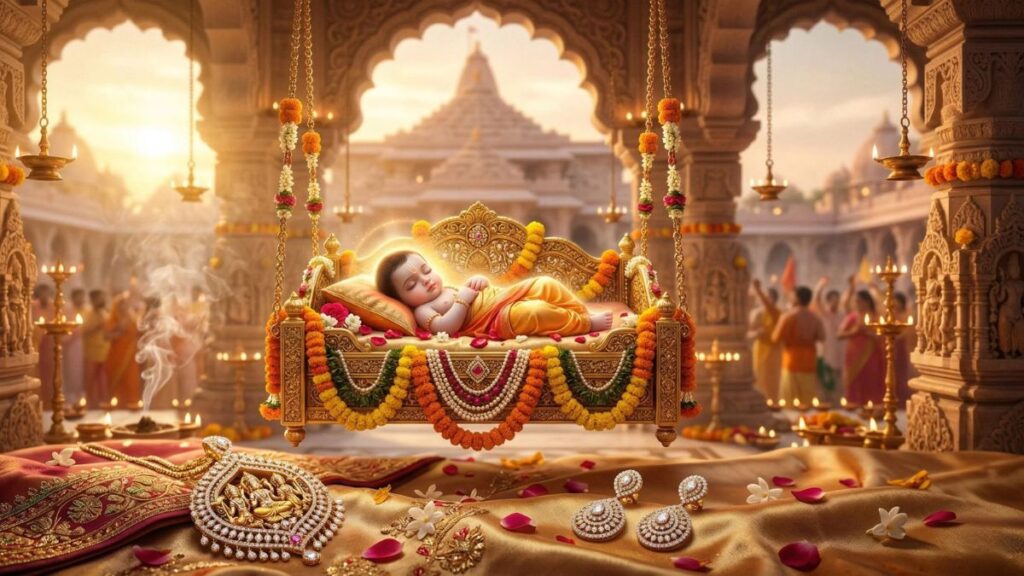
Interestingly, Ram Navami 2026 also saw a digital trend—people used AI tools to create personalized devotional visuals of Lord Ram for WhatsApp, Instagram, and festive greetings.
Best AI Prompt Ideas
- Baby Lord Ram in Ayodhya with royal decor and golden light
- Lord Ram with bow and arrow at sunrise with temple silhouettes
- Ram Darbar scene with Sita, Lakshman, and Hanuman
- Ram in Vanvaas surrounded by forest and soft sunlight
- Victory over Ravana in a dramatic battlefield scene
- Lord Ram and Sita together in a serene temple backdrop
These prompts work especially well on tools like ChatGPT image generation, Google Gemini, and other AI art platforms.
Key Takeaways
- The Surya Tilak at Ayodhya Ram Temple is a blend of faith and precision engineering.
- It uses mirrors, lenses, and solar alignment to direct sunlight onto Ram Lalla’s forehead.
- The event holds deep spiritual meaning because it happens during the sacred midday birth hour of Lord Ram.
- Ram Navami 2026 also inspired devotees to create custom AI-generated Lord Ram images.
- Overall, the celebration beautifully connected tradition, technology, and devotion.
Conclusion
The Surya Tilak of Ram Lalla is more than a visual spectacle. It is a sacred experience that reflects India’s spiritual depth and scientific brilliance at the same time. For a few unforgettable minutes, sunlight becomes prayer, engineering becomes devotion, and Ayodhya becomes the emotional heart of millions.
And perhaps that is why this moment touches people so deeply—because it reminds us that when faith and precision meet, something truly extraordinary happens.
Frequently Asked Questions (FAQs) About Ram Navami 2026
1) What made Ram Navami 2026 in Ayodhya so special this year?
Ram Navami 2026 felt especially emotional because devotees witnessed the grand Surya Tilak of Ram Lalla at the Ram Janmabhoomi Temple in Ayodhya. At the sacred midday hour, a carefully directed beam of sunlight touched the forehead of the idol, creating a divine tilak. For many people, this was more than a temple ritual. It felt like a once-in-a-lifetime blend of faith, devotion, science, and spiritual beauty.
2) How was the Surya Tilak created during Ram Navami 2026?
The Surya Tilak during Ram Navami 2026 was created using a precision optical system inside the temple. In simple words, sunlight was guided through a specially designed arrangement of mirrors, lenses, and alignment components. As a result, the beam reached Ram Lalla’s forehead at exactly the right moment. Although the final effect looked simple and divine, the mechanism behind it involved highly accurate engineering and solar positioning.
3) Why is the Surya Tilak on Ram Navami 2026 considered spiritually important?
The Surya Tilak on Ram Navami 2026 is considered spiritually powerful because Lord Ram is believed to have been born during the midday period, also known as Madhyahna. Therefore, sunlight touching Ram Lalla’s forehead at that exact sacred time symbolized divine blessings, purity, and cosmic alignment. For devotees, it was not just a visual moment. It carried deep emotional and spiritual meaning.
4) What is the science behind the Surya Tilak on Ram Navami 2026?
The science behind the Surya Tilak on Ram Navami 2026 is based on solar alignment and optical reflection. The system uses multiple mirrors and lenses to guide sunlight from the upper section of the temple into the Garbha Griha. Then, the final optical stage focuses the beam precisely onto the forehead of Ram Lalla. In other words, the temple used astronomy, optics, and engineering to create a sacred moment that looked almost miraculous.
5) How long did the Surya Tilak last on Ram Navami 2026?
During Ram Navami 2026, the Surya Tilak lasted for only a few precious minutes, generally around 3 to 4 minutes. Even though the duration was short, the emotional impact was unforgettable. In fact, that brief moment became one of the most talked-about highlights of the entire celebration.
6) What materials and safety measures were used for the Ram Navami 2026 Surya Tilak system?
The Ram Navami 2026 Surya Tilak system was designed with both precision and safety in mind. Reports suggest the mechanism included brass pipes, mirrors, lenses, black-coated inner surfaces, and an infrared filter. Because sunlight can carry heat, the system was also designed to control excessive heat exposure while still allowing the visible beam to pass through clearly and safely.
7) What is the exact date and puja time for Ram Navami 2026?
Ram Navami 2026 was observed on March 27, 2026, and the most sacred worship period was the midday muhurat, also called Madhyahna. This timing holds great importance because it is traditionally associated with the birth of Lord Ram. Therefore, most devotees performed their main puja, aarti, and offerings during the noon period.
8) What rituals were performed on Ram Navami 2026 in Ayodhya and at home?
On Ram Navami 2026, devotees observed a series of sacred rituals from morning to noon. These included:
- Mangala Aarti
- Abhishek with Panchamrit
- Shringar of Lord Ram
- Bhog offering
- Ram Janmotsav Aarti
- Surya Tilak ceremony
- Recitation of Ramayana or Ramcharitmanas
At home, many families also offered flowers, tulsi leaves, fruits, sweets, and devotional prayers with full faith and love.
9) Why do people fast on Ram Navami 2026, and what can they eat?
People observe a fast on Ram Navami 2026 as a mark of discipline, purity, devotion, and spiritual focus. Some devotees keep a fruit-only fast, while others eat one simple sattvic meal after the puja. Common fasting foods include fruits, milk, sabudana, potatoes, kuttu flour, and sendha namak. At the same time, many avoid regular grains, onion, garlic, and non-vegetarian food.
10) What bhog or prasad is commonly offered on Ram Navami 2026?
On Ram Navami 2026, devotees commonly offered simple and sacred bhog such as:
- Kheer
- Panjiri
- Fruits
- Panchamrit
- Panakam
- Dry fruits
- Tulsi leaves
Among these, kheer holds special significance because it is emotionally linked to the story of Lord Ram’s birth. That is why many families lovingly prepare it at home as a blessed offering.
11) Can I celebrate Ram Navami 2026 at home if I cannot visit a temple?
Absolutely, yes. Ram Navami 2026 can be celebrated beautifully at home with sincerity and devotion. You do not need a grand setup to feel spiritually connected. A clean prayer space, a picture or idol of Lord Ram, flowers, diya, bhog, and heartfelt prayer are more than enough. In fact, for many families, the most meaningful celebrations happen right at home, surrounded by loved ones and devotion.
12) How are people using AI creatively during Ram Navami 2026?
During Ram Navami 2026, many devotees also explored a modern devotional trend—creating custom AI-generated images of Lord Ram. Instead of sharing generic festival forwards, people started using AI tools to generate personalized Ram Navami visuals inspired by scenes like:
- Baby Lord Ram in Ayodhya
- Ram Darbar
- Lord Ram with bow and arrow
- Vanvaas scenes
- Victory over Ravana
- Lord Ram and Sita together
As a result, devotion met creativity in a very modern and meaningful way.
13) What are the best AI prompts to try for Ram Navami 2026 devotional images?
If you want to create devotional visuals for Ram Navami 2026, these prompt ideas work beautifully:
- A divine portrait of Lord Ram standing with a bow and arrow in front of Ayodhya temple at sunrise
- Baby Lord Ram in a royal cradle surrounded by golden temple light
- Ram Darbar scene with Sita, Lakshman, and Hanuman in a richly detailed court
- Lord Ram in forest exile with peaceful nature and soft sunlight
- Epic battle scene of Lord Ram defeating Ravana with glowing sky
- Serene devotional artwork of Lord Ram and Sita in temple surroundings
The more specific your description is, the more emotionally beautiful the result can become.
14) What does Ram Navami 2026 teach us beyond rituals and celebrations?
At its heart, Ram Navami 2026 reminds us of something deeply important—to live with truth, dignity, patience, discipline, and dharma. Lord Ram is remembered not only as a divine figure, but also as an ideal son, brother, husband, and king. Therefore, this festival is not only about rituals. It is also about remembering the kind of life we want to live and the values we want to carry forward.
15) Why is Ram Navami 2026 still so deeply relevant in today’s fast-changing world?
Because even in a rapidly changing world, Ram Navami 2026 brings people back to timeless values—faith, family, duty, humility, and inner strength. Whether someone celebrates in a temple, at home, or even through digital devotion and AI creativity, the emotional essence remains the same. And that is exactly why this festival continues to touch hearts generation after generation.
Quick FAQ Takeaway
If you are searching for the complete meaning of Ram Navami 2026, here is the simplest answer:
It is a sacred celebration of Lord Ram’s birth, a festival of faith and values, and in 2026, it became even more memorable because of the magnificent Surya Tilak at Ayodhya Ram Temple.