
National Pi Day 2026: 7 Brilliant Facts — what if one mysterious number could connect ancient civilizations, modern science, and a slice of pie on your plate? Every year on March 14, millions of curious minds pause to celebrate π (pi), a number that never ends and never repeats. Surprisingly, this tiny symbol has helped humans understand circles, build bridges, explore space, and unlock mathematical wonders. Yet Pi Day is not only about formulas and equations. Instead, it’s a joyful celebration of curiosity, discovery, and creativity. So whether you love math or simply enjoy pie, this fascinating day invites everyone to explore the endless magic hidden inside 3.14.
Every year on March 14, people who love math, students, and curious folks celebrate one of the most interesting numbers ever—pi (π). At first, it might look like just another math symbol, but this small Greek letter stands for something powerful. It helps us understand circles, planets, engineering, and even the universe.
What’s cool is that March 14, or 3/14, matches the first three digits of pi: 3.14. Because of that, people all over the world celebrate National Pi Day with fun learning activities, contests, and of course, eating pie.
In short, Pi Day mixes math, creativity, and fun, making learning something to look forward to.
What is Pi?
Pi is a math constant that shows the relationship between the distance around a circle (its circumference) and the distance across it (its diameter). If you divide the circumference by the diameter, the answer is always about 3.14.
The formula looks like this:
π = C ÷ D
Where C is the circumference and D is the diameter.
Pi starts with 3.14159 but its digits go on forever without repeating, so it’s called an irrational number. Because it doesn’t end, pi still challenges mathematicians and computer experts today.
Why Is Pi Day on March 14?
We celebrate on March 14 because the date (3/14) matches the first three digits of pi.
It also honors Albert Einstein, who was born on March 14, 1879. Because of this, many people see it as a day to celebrate math and science together.
Schools, museums, and science groups hold events to help people enjoy and explore numbers.
A Short History of Pi
Pi has been around for a long time—almost 4,000 years.
Early Civilizations
Around 2000 BC, Egyptian and Babylonian mathematicians used simple guesses of pi for building and measuring.
Mathematical Progress
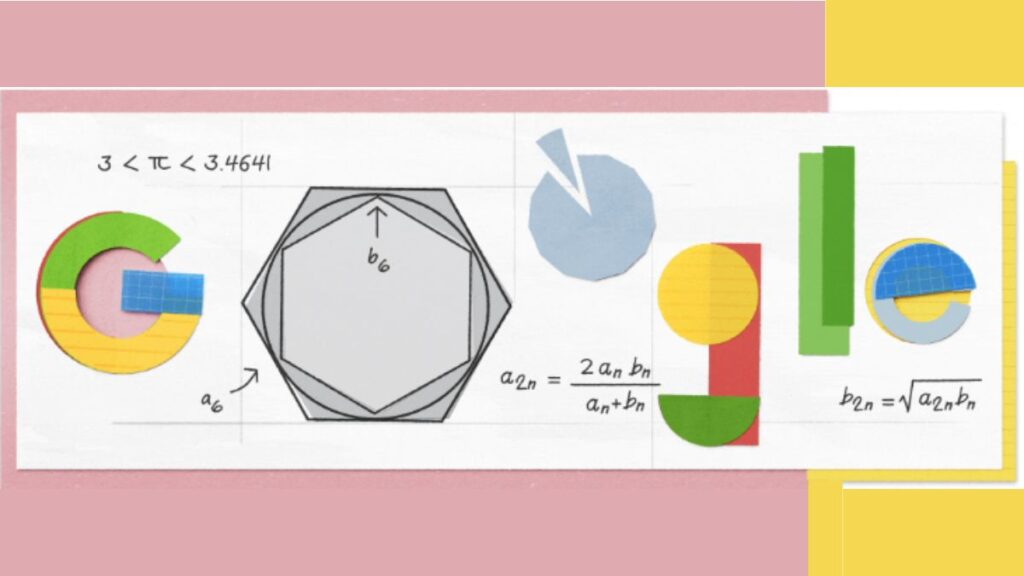
Later on, smart thinkers improved the value of pi:
- Archimedes used shapes like polygons to get better estimates.
- Fibonacci helped improve math calculations in Europe.
- Gottfried Wilhelm Leibniz developed formulas that made calculations easier.
In 1706, William Jones from Wales introduced the Greek letter π to represent this number, and it stuck.
Who Started Pi Day?
Though pi has been studied for centuries, the Pi Day celebration began in 1988 when physicist Larry Shaw organized the first big Pi Day event at the Exploratorium science museum.
They had a Pi parade, math activities, and shared pie, which made the day popular.
In 2009, the U.S. House of Representatives officially recognized March 14 as National Pi Day.
Fun Ways to Celebrate Pi Day
Pi Day isn’t just about numbers. It’s a fun holiday that mixes learning and celebration.
Here are some popular ways people celebrate:
- Eat pie. Since pi sounds like pie, many enjoy sweet or savory pies, which are circular—just like circles in math.
- Have a pi reciting contest. Some people memorize thousands of digits of pi.
- Watch the movie Life of Pi because of the name connection.
- Look for 3.14 in everyday places like prices, addresses, or license plates.
- Join math games and puzzles to make learning more fun.
Record for Memorizing Pi
Memorizing digits of pi is a popular challenge worldwide.
In 2015, Rajveer Meena set a Guinness World Record by reciting 70,000 decimal places of pi from memory, after months of practice.
This shows how dedicated pi fans can be.
Notable March 14 Events and Birthdays
Besides Pi Day, March 14 has seen some important events:
- In 1899, Count Ferdinand von Zeppelin got a patent for his navigable balloon.
- In 1903, Theodore Roosevelt created the first U.S. national wildlife refuge.
- In 1950, the FBI started its “10 Most Wanted Fugitives” list.
Famous people born on March 14 include:
- Quincy Jones, music producer
- Billy Crystal, actor and comedian
- Simone Biles, Olympic gymnast
Key Points to Remember
- Pi (π) is the ratio of a circle’s circumference to its diameter.
- The number starts with 3.14, which is why March 14 is Pi Day.
- People have been using approximations of pi for over 4,000 years.
- The modern Pi Day celebration began in 1988 at the Exploratorium.
- Celebrations include eating pie, math contests, and exploring numbers.
Final Thoughts
National Pi Day shows that math can be fun, creative, and exciting. Pi is more than just a number—it represents centuries of human curiosity and discovery.
So every March 14, take a moment to celebrate pi. Whether you do a math puzzle, watch a movie, or enjoy some pie, you’re joining a worldwide tradition that honors the endless mystery of π.
Frequently Asked Questions About National Pi Day 2026
What is National Pi Day 2026 and why is it celebrated worldwide?
National Pi Day 2026 celebrates the mathematical constant π (pi), which represents the ratio of a circle’s circumference to its diameter. The celebration happens on March 14 (3/14) because the date matches the first three digits of pi, 3.14.
However, the day is not only about numbers. People around the world celebrate it to appreciate mathematics, science, and human curiosity. Students, teachers, scientists, and math enthusiasts take this opportunity to explore the beauty of geometry, solve puzzles, and enjoy fun learning activities. In addition, the celebration also brings communities together through educational events and creative challenges.
Why is National Pi Day 2026 considered a fun holiday instead of just a math event?
National Pi Day 2026 feels more like a festival than a typical academic event. Although it celebrates a mathematical constant, the day is filled with exciting and creative traditions.
For example, people organize pie-eating contests, math quizzes, and pi-reciting competitions. Meanwhile, schools and science museums often host workshops that make mathematics easier and more enjoyable to understand. Because the word pi sounds like pie, many celebrations include delicious circular desserts as part of the fun. As a result, the day blends education with entertainment in a unique way.
Who started National Pi Day and how did National Pi Day 2026 become a global celebration?
The first official celebration of Pi Day began in 1988 at the Exploratorium science museum in San Francisco. Physicist Larry Shaw organized the event to promote curiosity and appreciation for mathematics.
Initially, the celebration was small and local. However, interest grew quickly because the idea was both simple and exciting. Eventually, the United States House of Representatives recognized March 14 as National Pi Day in 2009. Since then, the celebration has spread worldwide, and National Pi Day 2026 continues the tradition with educational events across schools, universities, and online communities.
Why do people eat pie on National Pi Day 2026?
One of the most loved traditions of National Pi Day 2026 is eating pie. This fun custom exists for two main reasons.
First, the words “pi” and “pie” sound the same, which naturally inspired the idea of celebrating with dessert. Second, pies are usually round, which perfectly represents the circle used in calculating the value of pi.
Because of this clever connection, bakeries, restaurants, and even schools often offer special pie deals or pie-themed activities on March 14.
How can students and families celebrate National Pi Day 2026 in a meaningful way?
Celebrating National Pi Day 2026 does not require complicated plans. In fact, some of the best activities are simple and educational.
Students can try memorizing digits of pi, solving geometry puzzles, or participating in math challenges. Families, on the other hand, can bake a pie together, watch educational documentaries, or explore science experiments related to circles.
Additionally, many museums and learning centers host workshops and demonstrations on this day. Therefore, National Pi Day becomes a great opportunity to combine learning, creativity, and family fun.
What amazing record is connected with National Pi Day 2026 and memorizing pi?
One of the most fascinating aspects of Pi Day celebrations involves memorizing the digits of pi. The numbers continue forever without repeating, which makes the challenge extremely difficult.
In 2015, Rajveer Meena achieved an extraordinary milestone by memorizing 70,000 decimal places of pi, a record verified by Guinness World Records. This incredible achievement inspires many participants during National Pi Day 2026 to test their memory and improve their mental focus.
Why is National Pi Day 2026 special for science lovers and historians?
National Pi Day 2026 holds deeper meaning for science lovers because it connects modern celebrations with thousands of years of mathematical discovery. Ancient civilizations such as the Egyptians and Babylonians used early approximations of pi in architecture and engineering.
Later, mathematicians like Archimedes developed geometric techniques to calculate more accurate values. Over centuries, researchers refined these calculations further. Consequently, Pi Day honors both historical innovation and modern scientific curiosity.
What makes National Pi Day 2026 inspiring for future mathematicians?
National Pi Day 2026 inspires young learners to see mathematics as more than numbers on a page. Instead, it reveals how mathematical ideas help explain real-world phenomena—from the design of bridges and buildings to the movement of planets in space.
When students participate in Pi Day activities, they often discover that problem-solving can be exciting and rewarding. Therefore, the celebration encourages curiosity, creativity, and a lifelong interest in science and mathematics.
How can National Pi Day 2026 motivate people to explore mathematics in everyday life?
National Pi Day 2026 reminds us that mathematics exists everywhere around us. Circles appear in wheels, clocks, planets, and architecture. Because pi helps measure these shapes, it plays a critical role in science, engineering, and technology.
By celebrating Pi Day, people begin to notice mathematical patterns in daily life. This awareness encourages curiosity and makes learning feel more meaningful. Ultimately, the celebration shows that even a simple number like π can open the door to endless discovery.