
Summary
A rare volcanic eruption in Ethiopia has disrupted several international flights to and from India, sending travellers into chaos and sparking fresh concerns in pollution-hit Delhi NCR.
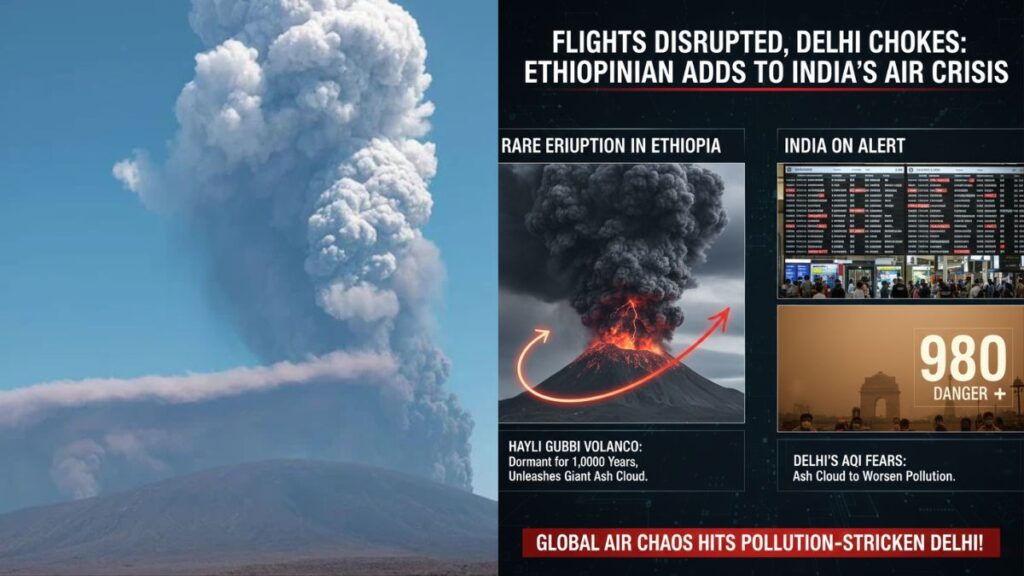
The Hayli Gubbi volcano, dormant for nearly 10,000 years, erupted over the weekend—pushing massive ash clouds high into the upper atmosphere and steering them across the Arabian Sea toward northwest India.
Here’s everything you need to know about flight cancellations, health risks, and whether Delhi’s AQI will take a hit.
What Happened? The Ethiopia Volcano Eruption Explained
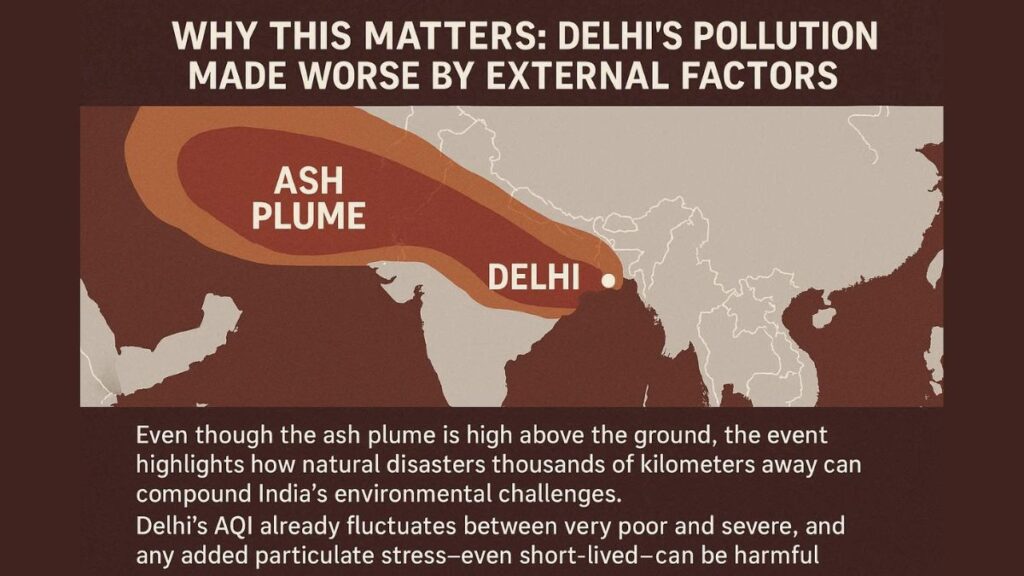
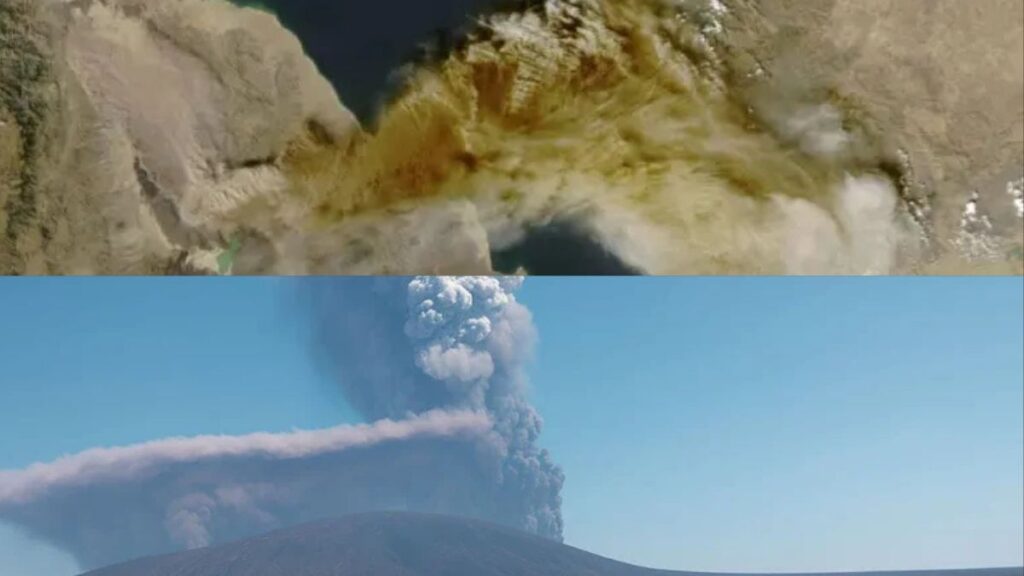
Located in Ethiopia’s Afar region, the Hayli Gubbi shield volcano spewed ash columns up to 14 km into the sky, marking its first known major activity in millennia.
Powerful upper-level winds carried the ash:
- Across the Red Sea
- Into Yemen and Oman
- Over the Arabian Sea
- And eventually into Rajasthan, Gujarat, Maharashtra, Punjab, and Delhi-NCR
This unusual long-distance ash drift triggered immediate aviation disruptions in India.
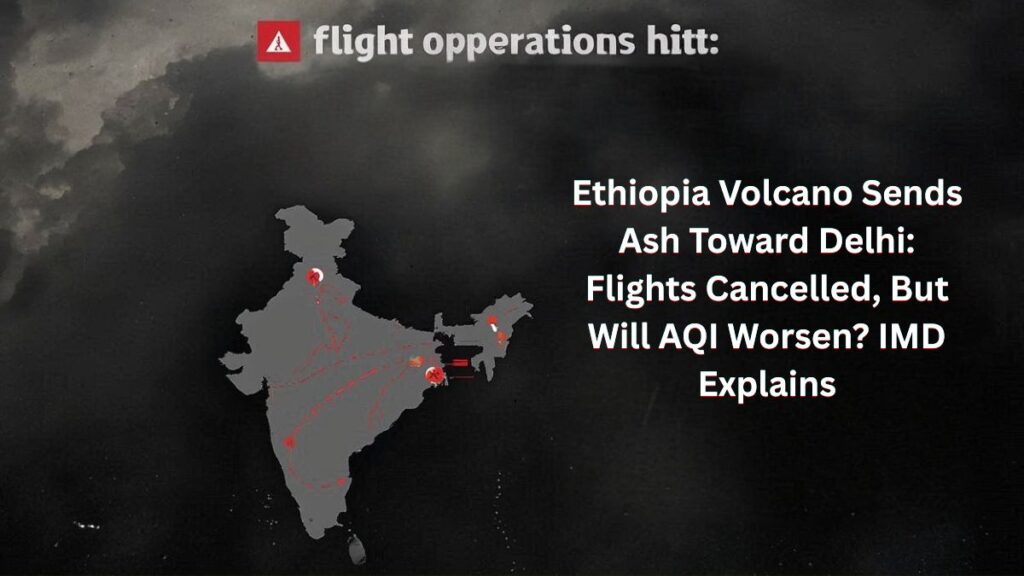
Flight Operations Hit: Air India and Akasa Cancel Flights
Airlines were forced to alter routes, delay operations and even cancel flights due to volcanic ash in the upper troposphere, which is hazardous for aircraft engines and navigation systems.
Flights Cancelled by Air India (25 November)
- AI 2822 – Chennai → Mumbai
- AI 2466 – Hyderabad → Delhi
- AI 2444 / 2445 – Mumbai → Hyderabad → Mumbai
- AI 2471 / 2472 – Mumbai → Kolkata → Mumbai
Akasa Air Cancellations
Akasa cancelled flights to Jeddah, Kuwait and Abu Dhabi for both Monday and Tuesday, citing ash-related airspace disruptions.
In total:
- 7 international flights cancelled
- 12 international flights delayed
between 1 AM and 6 PM on Tuesday.
Will the Volcanic Ash Impact Delhi’s Air Quality? IMD Responds
As panic rose among Delhi residents already battling severe pollution, the India Meteorological Department (IMD) issued a crucial clarification.
IMD’s Official Statement
According to Mrutyunjay Mohapatra, Director General of Meteorology:
- The ash is present only in the upper troposphere (25,000–45,000 ft)
- It is not mixing with surface-level air
- No significant impact on Delhi’s AQI or weather is expected
- The ash plume is expected to drift toward China by evening
So while flight operations remain affected, Delhi’s ground-level air quality is unlikely to worsen directly due to the ash.
But Are There Health Risks? Experts Warn of Possible Irritation
While IMD says surface-level AQI impact is limited, medical experts caution that even minimal high-altitude ash presence can exacerbate symptoms for sensitive groups—especially in a city where AQI is already in the “Very Poor” to “Severe” range.
Volcanic ash contains:
- Pulverised rock and glass
- Acidic compounds
- Fine particles similar to PM2.5
- Gases such as sulphur dioxide (SO₂)
According to pulmonologists, these can cause:
- Irritated throat or airways
- Coughing or difficulty breathing
- Worsened asthma or bronchitis
- Eye redness or burning
- Skin dryness and irritation
People with existing respiratory or cardiac conditions may be more vulnerable.
Who Is Most at Risk?
Groups requiring extra caution include:
- Asthma or COPD patients
- People with heart disease
- Older adults
- Children
- Pregnant women
- People with diabetes
- Those with chronic lung infections
Even short-term exposure can trigger respiratory discomfort in these groups, say global health bodies like CDC and IVHHN.
Precautions to Take in Delhi and Affected Regions
Health agencies and pulmonologists recommend the following:
Stay Indoors When Possible
Keep windows and doors closed.
Wear a Proper Mask
Use N95/P100 respirators outdoors.
Cloth or surgical masks do not block fine ash.
Improve Indoor Air Quality
- Clean or replace air filters
- Avoid AC units that bring in outside air
Clean Surfaces the Right Way
If ash settles on surfaces, wet-clean only.
Avoid sweeping, which can resuspend particles.
Protect Eyes and Skin
Rinse eyes and face with clean water if irritation occurs.
Keep Medicines Handy
People with asthma or chronic lung issues should carry inhalers and emergency meds.
Seek Medical Help if Symptoms Persist
Immediate care is advised if you develop:
- Breathing difficulty
- Wheezing
- Severe cough
- Chest tightness
- Eye burning
Why This Matters: Delhi’s Pollution Made Worse by External Factors
Even though the ash plume is high above the ground, the event highlights how natural disasters thousands of kilometers away can compound India’s environmental challenges.
Delhi’s AQI already fluctuates between Very Poor and Severe, and any added particulate stress—even short-lived—can be harmful for vulnerable populations.
Bottom Line: Should Delhiites Be Worried?
- Flight disruptions may continue temporarily.
- Air quality at the surface is unlikely to worsen sharply, according to IMD.
- Sensitive individuals should remain cautious, given existing pollution levels.
- The ash plume is expected to clear out toward China soon.
The Ethiopian volcano’s unexpected eruption serves as a reminder that global atmospheric events can ripple across continents. Staying informed, taking precautions, and protecting respiratory health remain essential, especially during Delhi’s pollution-heavy months.
Note: All information and images used in this content are sourced from Google. They are used here for informational and illustrative purposes only.
FAQs: Ethiopia Volcano Sends Ash Toward India
1. How is the “Ethiopia Volcano Sends Ash” event affecting flights in and out of India?
The Ethiopia Volcano Sends Ash incident has caused changes to upper-level air traffic routes, leading to multiple flight cancellations and delays. Airlines like Air India and Akasa temporarily suspended or rerouted flights as volcanic ash at high altitudes can damage aircraft engines and reduce visibility. These disruptions are precautionary and Airlines are expected to resume normal operations once the ash plume moves away.
2. Will the “Ethiopia Volcano Sends Ash” cloud worsen Delhi’s AQI?
According to IMD, although the Ethiopia Volcano Sends Ash plume reached Indian skies, it remains confined to the upper troposphere—far above the breathable air layer. This means Delhi’s ground-level AQI is not expected to deteriorate directly due to volcanic ash. Pollution conditions will continue to depend mostly on local weather and emissions.
3. Does the “Ethiopia Volcano Sends Ash” event pose health risks for people in Delhi?
The Ethiopia Volcano Sends Ash plume is too high to mix with surface air, but experts say people with asthma, COPD, heart disease, or chronic lung conditions should remain cautious due to Delhi’s existing pollution levels. Fine ash particles can potentially irritate the respiratory system if they descend, though current risk remains low.
4. Why did the “Ethiopia Volcano Sends Ash” cloud travel all the way to India?
The Ethiopia Volcano Sends Ash cloud traveled to India because strong upper-level winds carried ash from the Afar region across the Red Sea, into the Arabian Peninsula, and eventually over the Arabian Sea into northwest India. Such long-distance ash transport is rare but possible when volcanic eruptions push particles up to very high altitudes.
5. Is it safe to travel during the “Ethiopia Volcano Sends Ash” period?
Yes. Despite the Ethiopia Volcano Sends Ash disruption, aviation authorities are actively adjusting flight paths to ensure safety. Only a limited number of flights were cancelled or delayed as a precaution. Passengers are advised to check with airlines for updated schedules.
6. Can the “Ethiopia Volcano Sends Ash” plume impact weather conditions in India?
IMD confirms that the Ethiopia Volcano Sends Ash plume will not affect local weather in Delhi or other Indian states. The ash remains at very high altitudes and does not influence temperature, rainfall, humidity, or wind patterns at ground level.
7. How long will the “Ethiopia Volcano Sends Ash” be present over Indian skies?
Meteorologists say the Ethiopia Volcano Sends Ash cloud is already moving eastward and will drift toward China by the end of the day. Its presence over India is expected to be temporary and short-lived.
8. What precautions should people take during the “Ethiopia Volcano Sends Ash” episode?
Even though the Ethiopia Volcano Sends Ash does not directly worsen AQI, residents—especially those with respiratory conditions—should:
- Stay indoors when pollution spikes
- Use N95 masks outdoors
- Keep inhalers or medications accessible
- Clean indoor air filters regularly
These steps help counter Delhi’s existing pollution load.
9. How serious is the eruption behind the “Ethiopia Volcano Sends Ash” event?
The eruption is historically significant. The Ethiopia Volcano Sends Ash phenomenon stems from the Hayli Gubbi volcano’s first major eruption in nearly 10,000 years. The shield volcano emitted ash up to 14 km high, driven by tectonic activity in Ethiopia’s Afar region.
10. Why are experts not worried despite the “Ethiopia Volcano Sends Ash” reports?
Because the Ethiopia Volcano Sends Ash plume is not reaching ground level, experts say its impact on health and air quality in India is minimal. Authorities are monitoring the situation, and flight adjustments ensure safety. The overall message: Stay informed but not alarmed.