Summary
Ganeshotsav, one of India’s most vibrant and cherished festivals, is not only a celebration of devotion to Lord Ganesha but also a tradition deeply tied to the country’s freedom struggle. Celebrated with grandeur across the nation, Ganesh Chaturthi marks the divine incarnation of Lord Ganesha, yet the story behind its 10-day-long festivities reveals much more. This cultural movement, revived by Lokmanya Tilak in 1893, became a powerful medium of unity and patriotism against British colonial rule. In this blog, we explore the historical roots of Ganeshotsav, its connection with Tilak, its role in India’s independence, and why it continues to inspire faith, hope, and togetherness in modern times.
The Spiritual Essence of Ganesh Chaturthi 2025
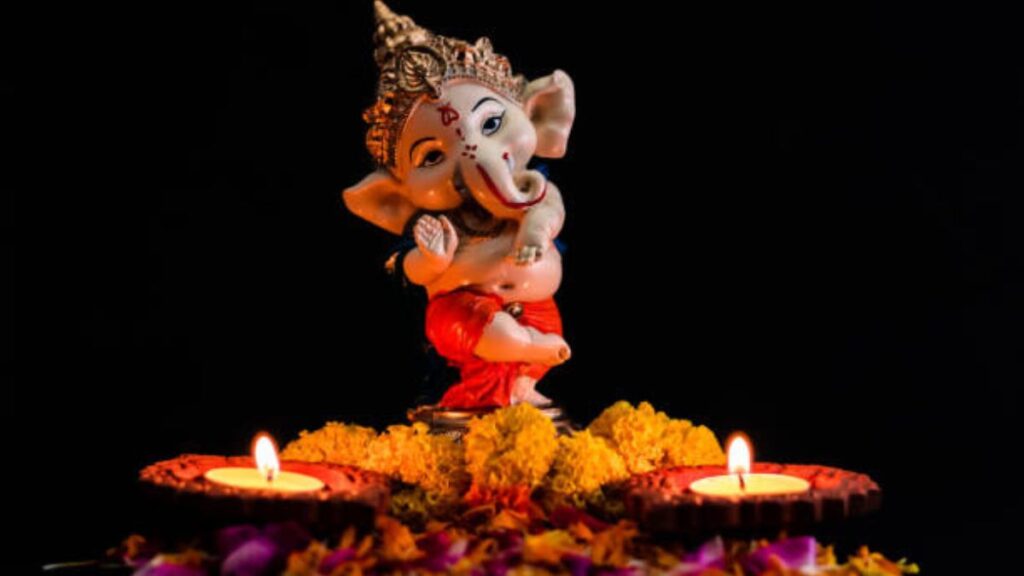
Ganeshotsav, dedicated to Lord Ganesha – the remover of obstacles, is celebrated every year with immense joy and devotion. The festival lasts for 10 days, beginning on Ganesh Chaturthi and concluding with Ganesh Visarjan. Families bring home idols of Lord Ganesha, while communities set up grand pandals decorated with lights, music, and cultural programs.
According to religious belief, this day marks the birth of Lord Ganesha, symbolizing wisdom, prosperity, and good fortune. Across India, devotees worship the elephant-headed deity, seeking blessings for success and harmony in life.
The Revolutionary Beginning – Ganesh Chaturthi 2025 and Freedom Struggle
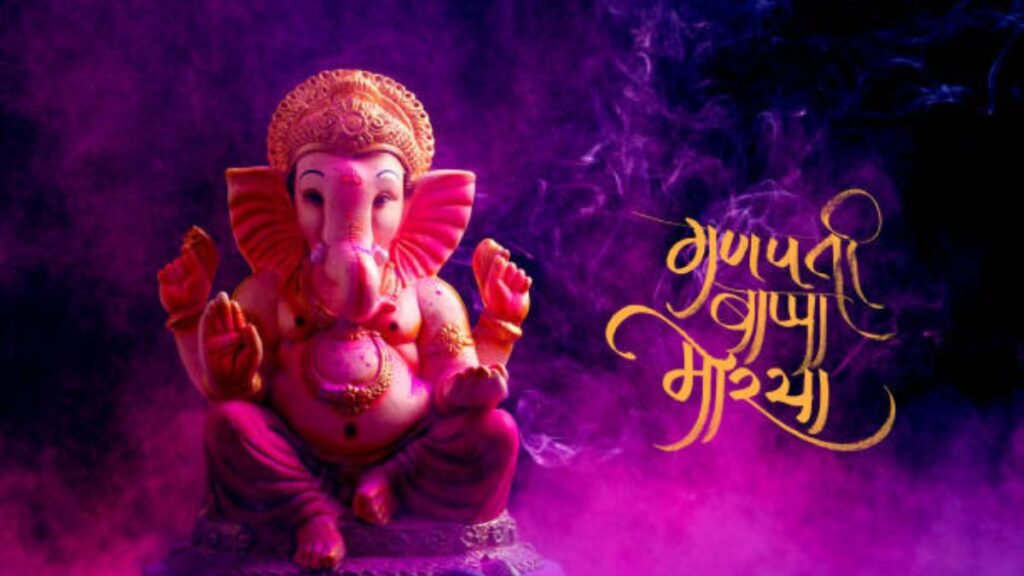
While Ganeshotsav is rooted in faith, its modern public celebration began in 1893, thanks to the vision of Lokmanya Bal Gangadhar Tilak, one of India’s greatest freedom fighters.
During British colonial rule, public gatherings were banned to suppress revolutionary ideas. Recognizing the need for a unifying platform, Tilak transformed Ganesh Chaturthi into a public festival, encouraging people to come together without arousing suspicion.
Through cultural programs, plays, patriotic songs, and speeches, Ganeshotsav became more than a religious celebration—it evolved into a powerful weapon of unity and resistance against colonial oppression.
The first public Ganeshotsav Mandal was established at Kesavji Naik Chawl in Mumbai, marking the beginning of a tradition that spread across Maharashtra and later to the entire country.
Ganesh Chaturthi 2025– A Festival of Unity and Patriotism
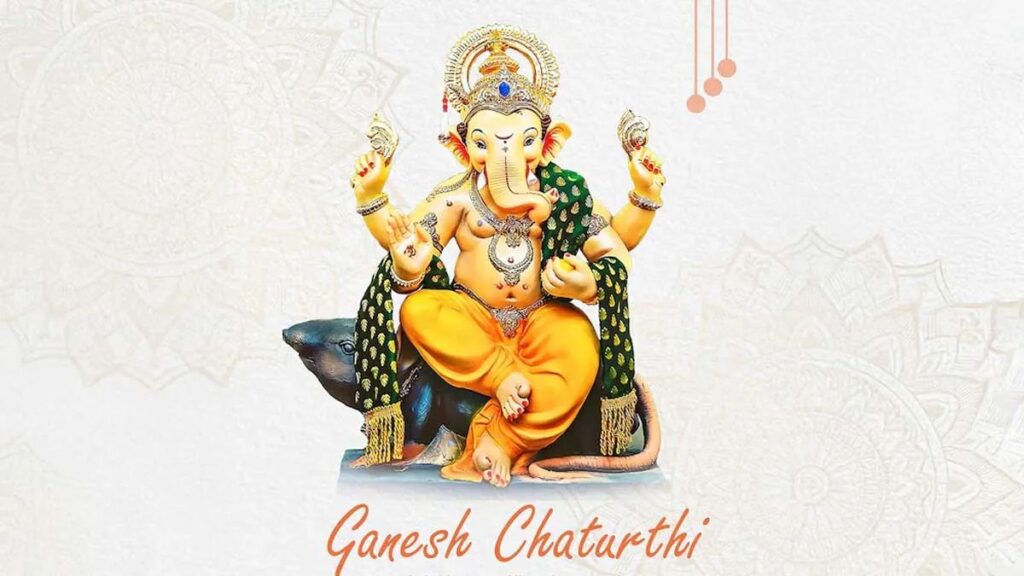
What seemed like a religious event to the British was, in fact, a movement of cultural nationalism. During these gatherings, revolutionaries inspired people with stories of valor, love for the nation, and the dream of independence.
This strategic use of festivals not only brought communities together but also ignited the flame of patriotism in every heart. The grand public celebration of Ganeshotsav became a symbol of courage, resistance, and social unity.
Connection with Shivaji Maharaj
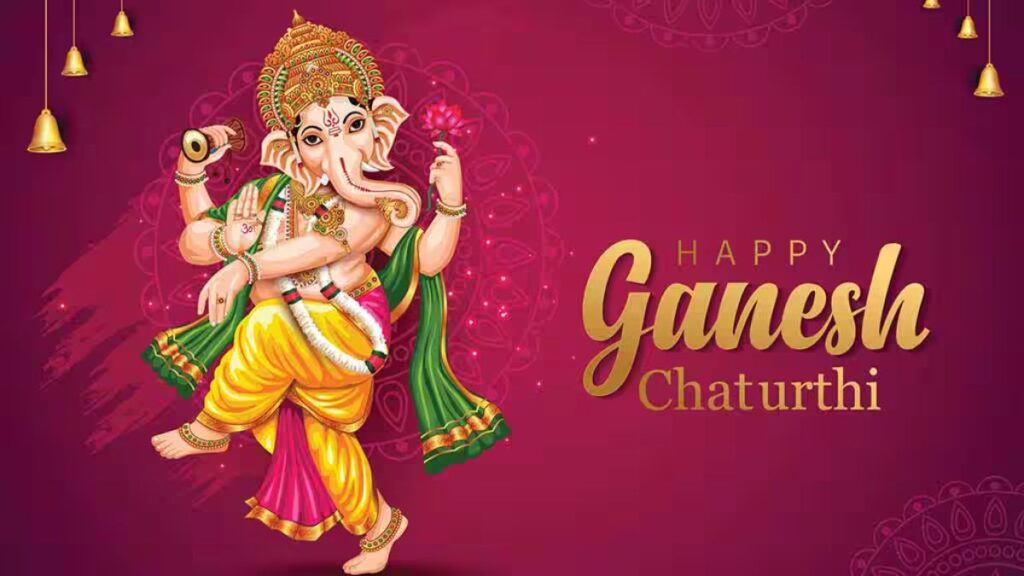
Some historians also trace the origins of Ganeshotsav back to the reign of Chhatrapati Shivaji Maharaj (1630–1680) in Pune. It is believed that the Peshwas, ardent devotees of Lord Ganesha, celebrated the festival publicly during the 18th century. However, under British rule, these traditions were suppressed until Tilak revived them with renewed zeal.
Ganesh Chaturthi 2025 – The Story of the Moon’s Curse
Ganesh Chaturthi also carries a fascinating legend linked with the Moon God (Chandra Dev). According to ancient tales, when Lord Ganesha was enjoying sweets, Chandra Dev mocked him. Angered by this insult, Ganesha cursed the moon, causing it to lose its radiance.
Realizing his mistake, the moon sought forgiveness. Lord Ganesha then softened the curse, declaring that anyone who looks at the moon on Bhadrapada Shukla Chaturthi would face false accusations and dishonor. Since then, it is believed that gazing at the moon on this day brings the curse of false blame.
Ganeshotsav Today – A Symbol of Joy and Togetherness
From its revolutionary origins to its cultural grandeur today, Ganeshotsav has grown into a festival that unites millions of people worldwide. The sight of beautifully decorated pandals, devotional music, and processions reflects not just religious devotion but also the spirit of community, togetherness, and national pride.
Even today, Maharashtra remains the heart of Ganeshotsav celebrations, with iconic pandals like Lalbaugcha Raja drawing millions of devotees. However, the festival is now celebrated in every corner of India and among Indian communities abroad.
Conclusion
Ganeshotsav is more than a festival—it is a legacy of faith, unity, and freedom. While it honors Lord Ganesha, the remover of obstacles, it also reminds us of Lokmanya Tilak’s vision and the sacrifices made during India’s freedom struggle.
Every year, as we celebrate Ganesh Chaturthi with devotion and grandeur, we not only pray for prosperity but also honor the powerful spirit of independence and unity that this festival represents.
Note: All information and images used in this content are sourced from Google. They are used here for informational and illustrative purposes only.
Frequently Asked Questions (FAQ) About Ganeshotsav
1. What is the significance of Ganeshotsav in India?
Ganeshotsav is a grand festival dedicated to Lord Ganesha, symbolizing wisdom, prosperity, and good fortune. Beyond its religious importance, it also carries historical significance as it was transformed into a public celebration by Lokmanya Tilak in 1893, becoming a medium of unity and patriotism during India’s freedom struggle.
2. Why did Lokmanya Tilak start the public celebration of Ganesh Chaturthi?
Lokmanya Tilak initiated public Ganeshotsav to unite Indians against British rule. Since the colonial government banned political gatherings, he used this festival as a cultural platform where people could come together, listen to patriotic speeches, and strengthen the spirit of nationalism.
3. How long does Ganeshotsav last, and how is it celebrated?
Ganeshotsav is celebrated for 10 days, starting on Ganesh Chaturthi and ending with Ganesh Visarjan. Families bring idols of Lord Ganesha into their homes, while communities organize grand pandals with decorations, prayers, cultural events, and processions.
4. What role did Ganeshotsav play in India’s freedom movement?
Ganeshotsav became a symbol of unity and resistance during the independence movement. Under the guise of religious gatherings, freedom fighters spread messages of courage, independence, and social harmony. It allowed people to come together without fear of British restrictions.
5. Is Ganeshotsav connected to Shivaji Maharaj?
Yes. Some historians believe that Ganeshotsav dates back to the era of Chhatrapati Shivaji Maharaj (1630–1680) in Pune. Later, the Peshwas in the 18th century also celebrated the festival publicly, though it lost prominence until Lokmanya Tilak revived it in 1893.
6. Why is seeing the moon on Ganesh Chaturthi considered inauspicious?
According to legend, when Lord Ganesha was enjoying sweets, the Moon God mocked him. In anger, Ganesha cursed the moon, making it lose its brilliance. The curse was later softened, but it was said that anyone who sees the moon on Bhadrapada Shukla Chaturthi would face false accusations and dishonor.
7. How is Ganeshotsav celebrated in Maharashtra compared to other states?
Maharashtra is the heart of Ganeshotsav celebrations, with iconic pandals like Lalbaugcha Raja attracting millions of devotees. Over time, the tradition has spread across India, with states like Karnataka, Andhra Pradesh, Goa, and even international Indian communities celebrating it with equal devotion.
8. Why is Ganeshotsav considered both cultural and spiritual?
Ganeshotsav is not only a religious festival worshipping Lord Ganesha but also a cultural movement. It combines prayers, rituals, and mythological stories with patriotic songs, plays, and social gatherings, making it a festival that celebrates both faith and national unity.
9. What makes Ganeshotsav 2025 special?
Ganeshotsav 2025 is expected to be celebrated with even more grandeur across India. With modern innovations in pandal designs, eco-friendly idols, and global participation, it continues to uphold its dual legacy—devotion to Lord Ganesha and the spirit of unity that inspired India’s freedom movement.