
GE’s Landmark F404 Engine Delivery Plan Powers Tejas Mk1A Growth, and suddenly, the conversation around India’s indigenous fighter program feels very different. For years, engine uncertainty cast a long shadow over the Tejas Mk1A, raising tough questions about production timelines and squadron readiness. Now, however, a clear delivery roadmap is restoring confidence, not just within Hindustan Aeronautics Limited, but across the wider defence community. More importantly, this shift signals stability where doubt once dominated. With predictable engine supplies on the horizon, manufacturing momentum, fleet modernization, and strategic planning all gain fresh energy. In many ways, this is more than a supply update — it is a decisive moment for India’s combat aviation ambitions.
Good News: GE’s Engine Plan to Help Tejas Mk1A Grow
India’s own fighter jet project just got a big shot in the arm. For months, people have been wondering what’s up, but now we have a clear plan for when engines will arrive. Most importantly, this fixes the biggest problem with the Tejas Mk1A: getting enough engines. Because of this, people who watch defense and those who love planes can feel better about India’s future in air combat.
Finally, Some Certainty About Engines
For a while now, it’s been hard to know when planes would get made because we weren’t sure when the engines would show up. But now, Hindustan Aeronautics Limited (HAL) says things are looking up. According to HAL’s main guy, D.K. Sunil, General Electric (GE) has promised to get the F404-IN20 engines to them faster.
This is a big deal because engines are super important—they decide how fast planes can get built. So, when the engine maker makes a firm promise, it means we can be more sure about production.
What’s the New Engine Plan?
GE will send 24 engines in the year 2026–27. After that, they’ll send about 30 engines each year starting in 2027–28. In the future, they plan to keep things steady at around 28 to 30 engines per year.
Also, they think they’ll send 20, 32, 32, and 30 engines in the years after that. These numbers might sound boring, but they’re really important. When HAL knows when the engines are coming, they can plan better. This means fewer delays because they don’t have enough engines.
Why These Numbers Matter
The engine plan fits right in with India’s plans to get more fighters. HAL has already ordered 212 engines in two big deals. The first deal was for 99 engines in 2021, and another deal for 113 engines was signed in 2025.
These deals will help build the 83 Tejas Mk1A fighters that have already been approved, and hopefully another 97 planes will get ordered soon. So, the engine plan matches the plane production plan—something that wasn’t happening before.
Without this, even the best factories would have problems. But when supplies are steady, things get made much better.
What’s Happening Behind the Scenes?
The better engine situation isn’t just luck. GE has put a lot of money into making more engines. They’ve built a special production line and added fancy computer systems. These upgrades are mostly for testing, which used to slow things down a lot.
Testing is still important because fighter jet engines need to be really reliable. But the computer systems help speed things up without hurting quality. This means they can make more engines without risking safety—a tricky thing in the airplane business.
Also, GE is trying to make sure that problems with their own suppliers don’t cause delays, which happened before. So, this new plan isn’t just a promise; it’s a real solution.
How This Helps Tejas Mk1A Production
If HAL gets around 30 engines each year, they could build almost two groups of fighters per year. This assumes that putting the planes together and testing them goes well. Even so, it shows that they could really increase production.
Before, the engine problems made them be careful with their plans. Now, with steady engine deliveries, things should go smoother, workers can be used better, and there should be less wasted time. This helps India’s defense industry get stronger.
Also, when production is steady, suppliers feel better and the supply chain gets stronger. So, this helps more than just one airplane project.
What This Means for the Indian Air Force
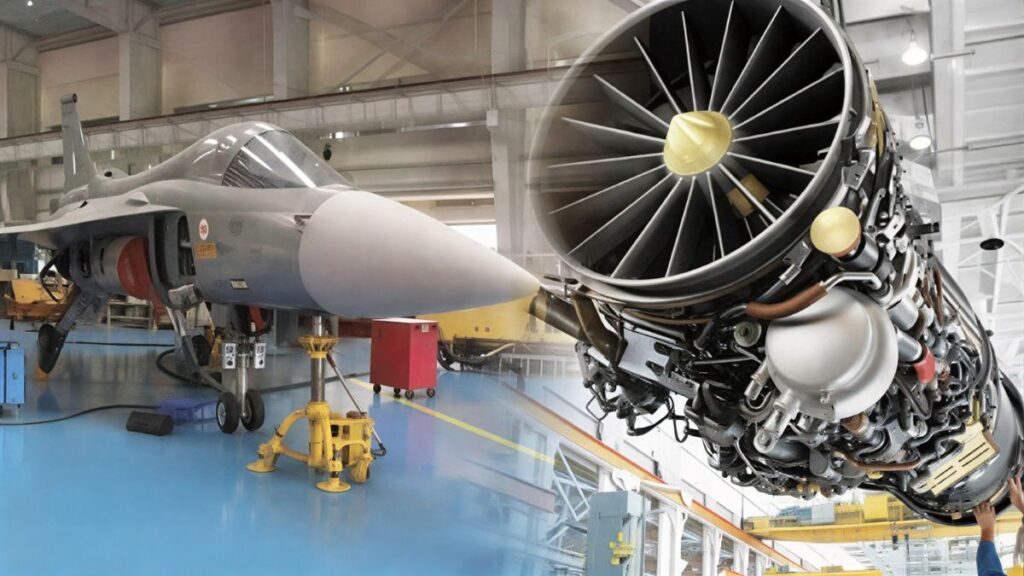
For the Indian Air Force (IAF), the engine delays caused some real problems. They had to change their schedules for getting new planes, and older planes like the MiG-21 and SEPECAT Jaguar had to stay in service longer than planned.
But, the improved engine deliveries change things. As Tejas Mk1A production speeds up, the IAF can start getting newer planes faster. This means the IAF can get back to having the right number of combat groups, which is important for security reasons.
Feeling Good About the Future
In the end, this engine delivery promise is more than just a supply update. It shows that people feel better about planning, working together, and building for the future. Airplane projects are always hard, but when things are clear, there’s less uncertainty—and that’s the biggest problem for getting things made on time.
So, this is a big step for India’s fighter jet dreams. As engines come in steadily and factories get into a rhythm, the Tejas Mk1A project looks set to grow.
For India’s defense airplane industry, the message is clear: things might slow down sometimes, but when big problems get fixed, things come back stronger than before.
FAQs: Understanding GE’s Landmark F404 Engine Delivery Plan Powers Tejas Mk1A Growth
1. Why is GE’s Landmark F404 Engine Delivery Plan Powers Tejas Mk1A Growth being seen as a turning point for India’s fighter program?
This development removes one of the most persistent obstacles in the Tejas Mk1A story — engine availability. For years, production targets faced uncertainty because engine deliveries lacked predictability. Now, with a defined supply schedule, manufacturing planning becomes far more reliable. Consequently, HAL can synchronize assembly lines with greater confidence, which directly accelerates aircraft rollout. In simple terms, clarity replaces speculation, and stability replaces hesitation.
2. How exactly does GE’s Landmark F404 Engine Delivery Plan Powers Tejas Mk1A Growth improve Tejas Mk1A production rates?
Aircraft production depends heavily on the steady arrival of engines. Even minor delays can stall final assembly. However, a structured flow of F404-IN20 engines allows HAL to plan workforce allocation, component integration, and testing cycles without disruption. Therefore, instead of reacting to shortages, production teams can operate on predictable timelines. Over time, this consistency dramatically improves throughput and efficiency.
3. What makes the delivery numbers in GE’s Landmark F404 Engine Delivery Plan Powers Tejas Mk1A Growth so strategically important?
The numbers translate directly into operational capability. With 24 engines scheduled in FY2026–27 and approximately 30 engines annually thereafter, India gains a measurable pathway toward scaling fighter induction. More importantly, these figures align with confirmed aircraft orders. Thus, engine supply now mirrors fighter production needs — a critical balance in aerospace programs. Without such alignment, even advanced facilities struggle to meet targets.
4. How does GE’s Landmark F404 Engine Delivery Plan Powers Tejas Mk1A Growth impact the Indian Air Force’s modernization efforts?
For the Indian Air Force, engine delays previously complicated squadron induction plans. Legacy aircraft had to remain operational longer, which increased maintenance burdens and operational risks. Now, predictable engine deliveries strengthen fleet renewal timelines. As Tejas Mk1A production stabilizes, the IAF can gradually reduce dependence on ageing platforms. Consequently, long-term force planning becomes more realistic and strategically sound.
5. Why did engine testing matter so much before GE’s Landmark F404 Engine Delivery Plan Powers Tejas Mk1A Growth?
Engine testing is not a formality — it ensures reliability, safety, and performance under extreme conditions. Historically, this phase created bottlenecks due to capacity limitations. However, GE’s investments in automation and dedicated production lines specifically target this challenge. Therefore, testing cycles can now move faster while maintaining strict quality standards. This upgrade significantly improves delivery confidence.
6. Does GE’s Landmark F404 Engine Delivery Plan Powers Tejas Mk1A Growth solve past supply chain disruptions?
While no global supply chain is entirely immune to disruptions, the plan introduces structural safeguards. GE has expanded manufacturing capacity and addressed vulnerabilities involving sub-tier suppliers. As a result, the likelihood of recurring delays reduces considerably. More importantly, long-term contractual commitments strengthen accountability and scheduling discipline across the ecosystem.
7. How do the engine contracts connect with GE’s Landmark F404 Engine Delivery Plan Powers Tejas Mk1A Growth?
Firm contracts provide the foundation for the delivery roadmap. HAL’s orders for 212 F404-IN20 engines — across agreements signed in 2021 and late 2025 — establish clear production expectations. These contracts align with Tejas Mk1A acquisition plans, covering both confirmed and anticipated aircraft orders. Consequently, engine supply planning now rests on legally binding commitments rather than projections.
8. Can GE’s Landmark F404 Engine Delivery Plan Powers Tejas Mk1A Growth truly enable two squadrons of fighters per year?
Theoretically, yes — provided assembly, integration, and flight-testing processes remain synchronized. Engines represent one of the most critical pacing factors. With deliveries stabilizing near 30 units annually, HAL gains the potential to scale production meaningfully. However, real-world output will always depend on coordination across multiple production stages. Even so, the plan dramatically improves feasibility.
9. Why are defence analysts optimistic about GE’s Landmark F404 Engine Delivery Plan Powers Tejas Mk1A Growth?
Defence manufacturing thrives on predictability. Uncertainty inflates costs, stretches timelines, and complicates operational planning. This delivery plan introduces measurable stability into a program of national importance. Therefore, analysts see reduced production risk, improved scheduling reliability, and stronger industrial confidence. In many ways, the psychological impact equals the logistical one — confidence drives momentum.
10. What larger message does GE’s Landmark F404 Engine Delivery Plan Powers Tejas Mk1A Growth send about India’s aerospace ambitions?
It signals maturation and resilience. Complex aerospace programs inevitably encounter challenges. However, the ability to stabilize supply chains, secure long-term commitments, and expand industrial capacity reflects institutional learning. Consequently, this milestone reinforces faith in India’s indigenous fighter ecosystem. Progress may not always be linear, but structural improvements build lasting momentum.