Summary
Operation Sindoor: India-Pakistan Clash
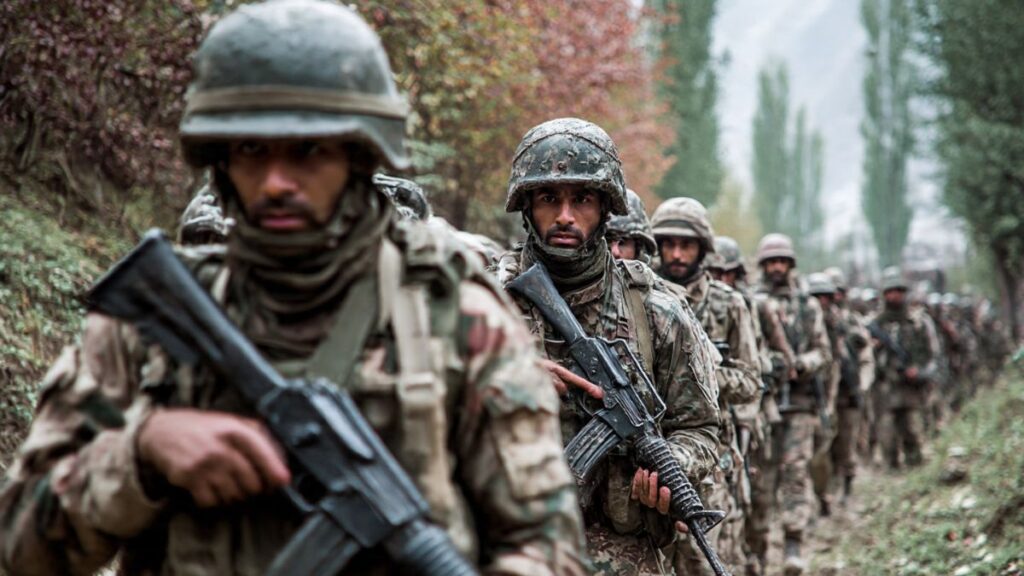
A new report from the US-China Economic and Security Review Commission (USCC) has reignited the debate over the India-Pakistan conflict of May 2025, revealing surprising details:
Neither India nor Pakistan emerged as the biggest winner.
China did.
While India and Pakistan battled for four days following the terrorist attack in Pahalgam, Beijing quietly used the clash as a live testing ground for its latest military hardware—and then aggressively marketed the results worldwide.
China Turned the Conflict Into a Weapons Showcase
According to the US Congress report, China “opportunistically leveraged” the crisis to test and advertise its newest defense technologies. Pakistan relied heavily on Chinese equipment, making the conflict the combat debut of several major platforms:
- JF-17 and J-10C fighter jets
- PL-15 BVR air-to-air missiles
- HQ-9 and HQ-16 air defense systems
- Chinese drones
- Reconnaissance satellites & BeiDou navigation system
For Beijing—whose modern defense industry did not exist during its last war with Vietnam in the late 1970s—this real-world combat data was invaluable.
Why China Needed This Combat Validation
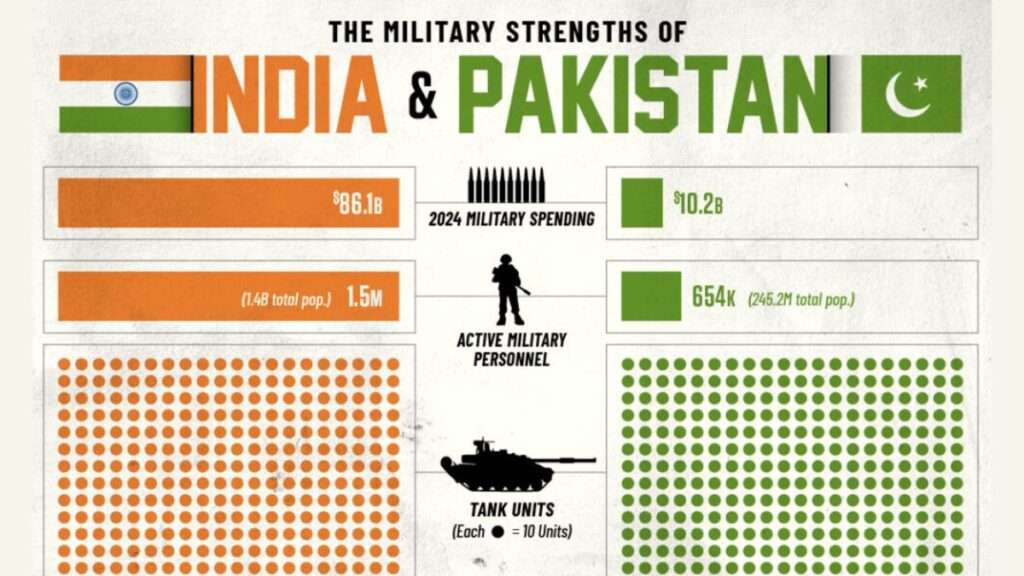
Despite rapid progress, China still holds just 5.9% of global arms exports (SIPRI 2025) and struggles with perceptions that its weapons lack real battlefield testing. The India-Pakistan clash helped China overcome that major credibility gap.
The US Congress report states:
“This was the first time China’s modern weapons systems were used in active combat, serving as a real-world field experiment.”
How Many Fighter Jets Were Shot Down? What the Report Reveals
One of the biggest mysteries of the conflict has been the number and type of aircraft lost.
Pakistan’s Claim
- First claimed 5 Indian jets downed (including 3 Rafales)
- Later raised the figure to 6 (including 4 Rafales)
India’s Position
- Acknowledged losses but refused details
- No breakdown of aircraft types released
US Congress Report’s Estimate
The Congressional panel states:
India lost 3 fighter jets
Not all were Rafales
This aligns with a July statement by French Air Force Chief Gen. Jérôme Bellanger, who said he saw evidence of:
- 1 Rafale
- 1 Sukhoi
- 1 Mirage 2000
Dassault CEO Éric Trappier backed this, confirming one Rafale, which crashed due to a technical failure, not a shootdown.
China Exploits Rafale Loss Claims for Propaganda & Sales
After the conflict, Chinese embassies embarked on a global sales campaign, presenting Pakistan’s battlefield performance as proof of the superiority of Chinese weapons.
The report notes:
“Chinese embassies hailed the successes of its systems to bolster weapons sales.”
Beijing circulated:
- Fake AI-generated images of Rafale debris
- Footage from video games
- Propaganda from hundreds of new fake social media accounts
French intelligence later confirmed over 1,000 fake accounts were launched to damage Rafale’s reputation and promote China’s J-35 and J-10C fighters.
Indonesia Momentarily Paused Rafale Purchase Due to Chinese Disinformation
The US report states that Chinese officials persuaded Indonesia to halt its ongoing Rafale purchase, showcasing the real impact of Beijing’s manipulation efforts.
However, the success was short-lived:
- Indonesia resumed its original order of 42 Rafales
- Then signed a new Letter of Intent for 24 more
Chinese Weapons Gain Momentum After Operation Sindoor
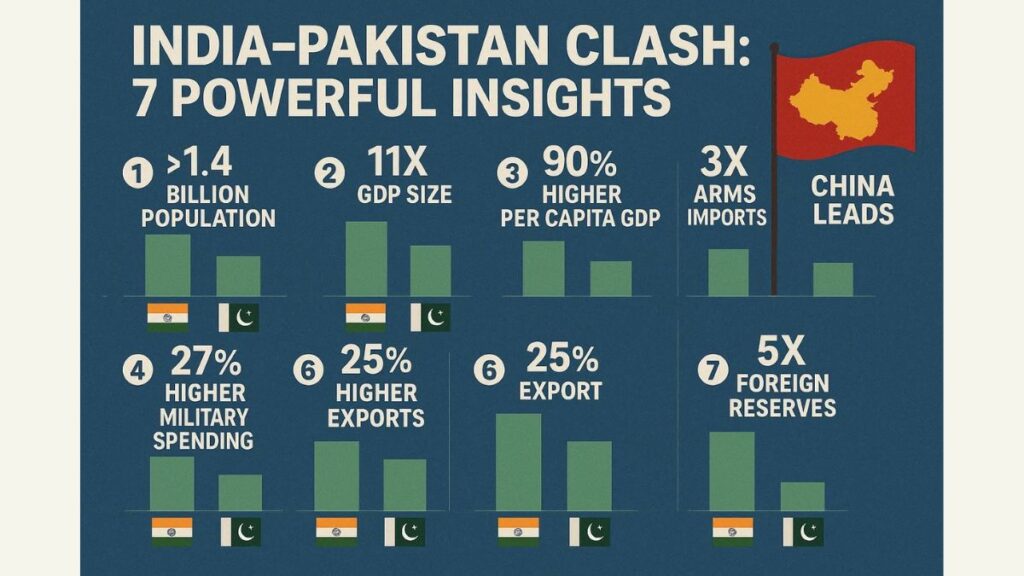
Despite the propaganda scandal, the conflict boosted international interest in Chinese systems.
Major deals after the war:
- Azerbaijan signed a $4.6 billion deal with Pakistan for 40 JF-17 Block III jets
- Indonesia later agreed to purchase 42 J-10C fighters
For Beijing, the India-Pakistan clash demonstrated:
- China can test advanced weapons through Pakistan
- India can be kept strategically off-balance
- Western arms sales can be undermined through disinformation
The Deepening China-Pakistan Military Nexus
The Congressional panel highlights how Beijing continues to strengthen its military partnership with Islamabad.
Key developments:
- Warrior-VIII counterterrorism drills (Nov–Dec 2024)
- China’s Navy joining Pakistan’s AMAN exercises (Feb 2025)
- China supplies 82% of Pakistan’s arms imports (2019–2023)
This partnership is now a central pillar of China’s regional strategy.
A Double-Edged Sword for China
While the conflict gave China a marketing boost and valuable combat data, analysts warn that using India-Pakistan clashes as a testing ground could backfire:
- India may accelerate partnerships with US, France, and Russia
- China risks being drawn into unpredictable regional escalations
- Bad publicity from propaganda scandals hurts trust in Chinese systems
Conclusion: China Capitalized the Most on the Conflict
The US Congress report makes one thing clear:
Pakistan may have gained tactical wins.
India suffered limited losses but preserved strategic ambiguity.
But China walked away with the greatest advantage—globally, militarily, and commercially.
Operation Sindoor became a turning point for Beijing’s defense ambitions, showcasing how China uses regional conflicts to advance its geopolitical goals.
Note: All information and images used in this content are sourced from Google. They are used here for informational and illustrative purposes only.
FAQs on the India-Pakistan Clash & Operation Sindoor
1. What did the US Congress report reveal about China’s role in the India-Pakistan Clash?
The US-China Economic and Security Review Commission found that China was the biggest strategic winner of the India-Pakistan Clash. While India and Pakistan engaged in a four-day conflict, Beijing used the situation to test its modern weapons in real combat, gather performance data, and aggressively market those results to other countries. This gave China a major edge in global arms sales and military influence.
2. How did China use the India-Pakistan Clash to test its latest weapon systems?
During the India-Pakistan Clash, Pakistan deployed several of China’s newest systems for the first time in real combat, including JF-17 and J-10C fighter jets, PL-15 air-to-air missiles, HQ-9 and HQ-16 air defense systems, drones, BeiDou navigation, and Chinese reconnaissance satellites. This allowed Beijing to validate and promote its weaponry with real battlefield data—an advantage it previously lacked.
3. How many aircraft were actually lost during the India-Pakistan Clash?
The US Congress report confirmed that India lost three fighter jets during the India-Pakistan Clash, not the higher numbers Pakistan claimed. French authorities and Dassault Aviation verified that losses included one Rafale (from technical failure), one Sukhoi, and one Mirage 2000. The report also noted that Pakistan’s claims of downing multiple Rafales were exaggerated and amplified by propaganda.
4. Why did Pakistan’s claims about shooting down Rafales during the India-Pakistan Clash become controversial?
Pakistan initially claimed it shot down five, later six Indian jets—including up to four Rafales. The US Congress report, French intelligence, and Dassault all contradicted this narrative. It was later revealed that China used these exaggerated claims during the India-Pakistan Clash to push disinformation, including AI-generated debris images and even video game footage, to promote its own fighter jets.
5. Did China’s disinformation campaign during the India-Pakistan Clash affect global arms sales?
Yes. The US report confirms that during the India-Pakistan Clash, Chinese diplomats used fabricated “proof” of Rafale losses to influence global buyers. China even convinced Indonesia to temporarily pause its Rafale purchase. However, Indonesia later resumed the deal for 42 Rafales and signed a new LoI for 24 more, rejecting the propaganda.
6. Which countries bought Chinese weapons after the India-Pakistan Clash?
After the India-Pakistan Clash showcased Chinese systems in real combat, two major deals were signed:
- Azerbaijan purchased 40 JF-17 Block III jets in a $4.6 billion agreement with Pakistan.
- Indonesia agreed to buy 42 Chinese J-10C fighter jets.
These deals highlight how the conflict strengthened China’s footprint in global defense markets.
7. How did the India-Pakistan Clash strengthen China-Pakistan military cooperation?
The India-Pakistan Clash highlighted the depth of China-Pakistan military integration. The US report noted that China supplied 82% of Pakistan’s arms imports over recent years, participated in Warrior-VIII drills and AMAN naval exercises, and expanded intelligence sharing. This partnership now plays a major role in China’s long-term regional strategy.
8. Why do analysts describe China’s strategy during the India-Pakistan Clash as a double-edged sword?
Although China benefited significantly from the India-Pakistan Clash, analysts warn that this strategy could backfire. India may speed up defense partnerships with the US, France, and Russia, China risks being tied to volatile regional conflicts, and the global backlash from its disinformation campaign may damage trust in Chinese military products.
9. What does Operation Sindoor reveal about India’s strategic position after the India-Pakistan Clash?
Operation Sindoor showed that India suffered limited losses but maintained strategic ambiguity, revealing little publicly about aircraft losses or operational setbacks. Despite the losses, the conflict underscored India’s ability to stabilize the frontline rapidly while focusing on long-term military modernization and deepening ties with key defense partners.
10. Why is China considered the real winner of the India-Pakistan Clash?
According to the US Congress report, China gained the most from the India-Pakistan Clash because it:
- Successfully tested modern weapons in live combat
- Used the results to boost global arms sales
- Leveraged propaganda to undermine Western equipment
- Strengthened China-Pakistan military cooperation
- Kept India strategically occupied on its western border
Overall, the clash became a powerful tool for China’s military, commercial, and geopolitical objectives.