Colombian Military Plane Crash — in a matter of seconds, a routine military flight turned into a heartbreaking national tragedy that has left families shattered, survivors scarred, and an entire country searching for answers. What should have been a normal take-off became a scene of fire, chaos, and unimaginable loss as a Hercules C-130 crashed in southern Colombia. Yet amid the horror, stories of courage emerged, with local residents rushing to rescue the injured from burning wreckage. As the death toll rises and painful questions grow louder, this disaster is no longer just a news story — it is a deeply human story of grief, bravery, and accountability.
This makes the death toll from the Colombian military plane crash stands at 69 after rescue teams called off their search efforts. Here is everything you need to know about the Hercules C-130 tragedy, survivors, investigation, and President Petro’s response.
Colombian Military Plane Crash: What Happened?
A devastating Colombian military plane crash leaves the nation mourning, after a Hercules C-130 crashed just moments after taking off in southern Colombia. The transport plane took off from Puerto Leguízamo to Puerto Asís when the accident happened near the Peruvian border.
According to Colombian armed forces, 126 people were on board including soldiers, police personnel and crew members. There was first confusion about the number of passengers. However, officials later came out with the new total.
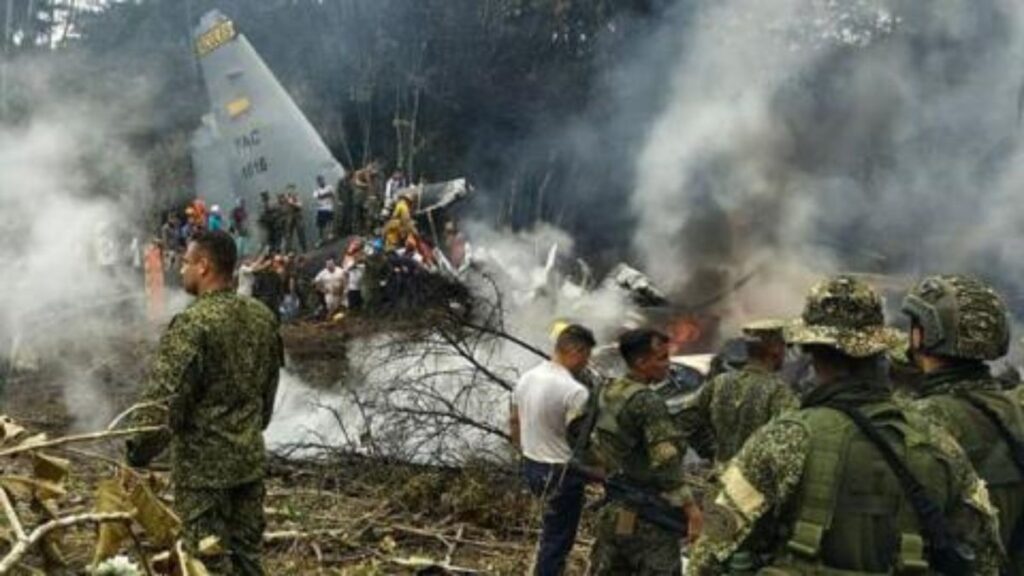
Adding to the misery is the fact that no important decision could be made due to how rapidly things unfolded. Not even ten minutes after take-off, the aircraft began losing height and crashed into a jungle area, where it caught fire.
Death Toll Rises to 69 After Search Ends
As rescue efforts rolled on, authorities confirmed that 69 members of Colombia’s security forces lost their lives. On Wednesday, the military officials announced the termination of search and rescue operations, which was a hard-hitting moment for all mourning loved ones and the entire nation.
At the same time, 57 people survived with injuries, many of them seriously wounded. As such, this is one of the deadliest military aviation crashes in modern Colombian history.
The victims allegedly included; 113 army personnel; Two police officers Victims were said to be made up of: 113 army personnel 2 police officers 11 crew members
The rescue operations became incredibly difficult, given the nature of the crash and the resulting fire, despite the tireless efforts by various rescue teams.
Survivors Pulled From Burning Wreckage
An emotional detail which emerged was that first responders were local residents. Instead of waiting helplessly, many civilians ran towards the scene to save lives.
Several injured survivors were pulled from the burning wreckage and taken to hospitals on the backs of motorbikes, highlighting both the remoteness of the area and the bravery of local communities.
Meanwhile, witnesses described hearing a loud explosion before the aircraft crashed into trees. A local farmer, who was one of the witnesses, said that the plane was flying very low just before the impact (Chen, n.d.).
Because this crash happened in a difficult jungle area, emergency access was still limited. Therefore, the whole process of body collection and medical evacuation took longer hours than usual.
President Petro Questions Aging Military Aircraft
Colombian President Gustavo Petro after such a tragedy seemed to raise a critical opinion regarding the equipment in military use in the country.
In a series of social media posts, Petro hinted that lives may be at risk due to obsolete or poorly serviced aircraft. He issued scathing remarks about delays in military modernization, asserting that bureaucratic obstacles had impeded urgent modernization initiatives.
His remarks have now led to wider public debates. Many citizens, on the one hand, are demanding answers. Officials, however, have called for patience until the investigations are over.
Still, Petro’s message was clear: the safety of Colombia’s young service members can’t wait.
What Investigators Know So Far
So far, officials have not confirmed what caused the crash. However, there is no immediate evidence that the plane was attacked by attacks from the armed groups active in the Putomayo region, according to early statements.
That detail matters because the border zone has witnessed escalated military movements in recent weeks, notably given the persistent operations of Colombian forces against drug trafficking cartels and armed militias.
Additionally, Colombia’s defence minister has said that some of the explosions heard after the crash was over probably came from ammunition exploding in the fire and was not hostile action.
Therefore, investigators are expected to concentrate on: Mechanical failure Aircraft condition and its maintenance history Performance at take-off Operational or technical faults (if any).
Why This Crash Has Shocked South America
This tragedy has garnered even more attention due to it being the second fatal Hercules C-130 accident in South America within a couple of weeks. Earlier, a Bolivian military C-130 crashed near El Alto, killing more people and raising fears about aging military fleets in the area.
Therefore, this is not just a national story anymore but a broader cautionary tale on aviation safety, military preparedness, and equipment modernization.
However, to Colombia, the human loss still remains the deepest wound.
Key Takeaways
69 people died in the Colombian military plane crash;
57 others were injured in after the Hercules C-130 went down minutes after take-off.
The plane was on a flight from Puerto Leguízamo to Puerto Asís.
Survivors were rescued from the burning wreckage with the assistance of local people.
President Gustavo Petro questioned the condition of military aircraft of Colombia.
The authorities have consequently suspended the search operations, but the investigation is still ongoing.
Final Thoughts
The Colombian military plane crash is more than a breaking news headline—it is a national tragedy filled with loss, courage, and urgent questions. While investigators now work to uncover what went wrong, families across Colombia are left grieving loved ones who never made it home.
And perhaps most painfully, this disaster has reminded the country that behind every military transport mission are real people, real families, and lives that depend on every decision made before take-off.
Frequently Asked Questions About the Colombian Military Plane Crash
1) What happened in the Colombian Military Plane Crash, and why has it shaken the entire country?
The Colombian Military Plane Crash happened shortly after a Hercules C-130 aircraft took off from Puerto Leguízamo in southern Colombia. Tragically, the plane lost height and crashed near the border with Peru, leaving dozens dead and many others injured.
What has deeply moved people is not only the scale of the loss, but also the human reality behind it. These were not just passengers — they were soldiers, crew members, and public servants heading into duty. As a result, the crash has become a national moment of grief, reflection, and urgent questions about safety.
2) How many people died in the Colombian Military Plane Crash?
The confirmed death toll in the Colombian Military Plane Crash rose to 69 people after search and rescue teams completed their operations.
At the same time, 57 others survived with injuries, which means this was both a devastating loss and, for many families, a desperate fight for hope. Therefore, the incident now stands among the most serious military aviation tragedies in Colombia in recent years.
3) How many people were on board the Colombian Military Plane Crash flight?
According to Colombia’s armed forces, 126 people were on board the aircraft involved in the Colombian Military Plane Crash.
That total reportedly included:
- 113 army personnel
- 2 police officers
- 11 crew members
Initially, officials released slightly different figures. However, authorities later clarified the final number as rescue teams gathered more accurate information from the scene.
4) Where did the Colombian Military Plane Crash happen?
The Colombian Military Plane Crash occurred in southern Colombia, in a remote area near the country’s border with Peru.
The aircraft had taken off from Puerto Leguízamo and was heading toward Puerto Asís when it crashed. Because the region is heavily forested and difficult to access, emergency teams faced major challenges reaching the wreckage quickly.
That remote location also explains why local civilians played such an important role in the earliest rescue efforts.
5) Why is the Colombian Military Plane Crash getting so much international attention?
The Colombian Military Plane Crash has drawn global attention for several powerful reasons.
First, the death toll is tragically high. Second, the aircraft involved was a Hercules C-130, a military transport plane used widely around the world. Third, this crash comes at a time when concerns are growing about the safety and age of military aircraft in parts of Latin America.
In addition, the emotional stories from the scene — especially civilians helping wounded survivors — have made this tragedy impossible to ignore.
6) What caused the Colombian Military Plane Crash?
Right now, officials have not confirmed the exact cause of the Colombian Military Plane Crash.
However, investigators are expected to examine:
- Possible mechanical failure
- Aircraft maintenance records
- Take-off conditions
- Operational or technical problems
Importantly, Colombia’s defence officials said there is no immediate sign that the aircraft was attacked by armed groups in the area. Therefore, the focus appears to be on what may have gone wrong during or just after departure.
7) Did the Colombian Military Plane Crash involve enemy fire or an attack?
So far, there is no official evidence that the Colombian Military Plane Crash was caused by enemy fire or a direct attack.
This matters because the crash happened in a region where armed groups, militias, and drug trafficking networks are active. Naturally, that possibility raised public concern almost immediately.
Even so, early official statements suggest that investigators do not currently believe hostile action caused the disaster.
8) How did people survive the Colombian Military Plane Crash?
One of the most powerful parts of the Colombian Military Plane Crash story is the courage shown by ordinary people nearby.
According to reports, local residents rushed to the wreckage and helped rescue injured survivors from the burning aircraft. In some cases, wounded victims were carried to safety and taken for treatment on the backs of motorbikes.
That response turned a moment of horror into a reminder of something deeply human: even in tragedy, compassion moves faster than fear.
9) What did President Gustavo Petro say about the Colombian Military Plane Crash?
After the Colombian Military Plane Crash, President Gustavo Petro strongly suggested that the tragedy may be linked to Colombia’s aging military equipment.
He publicly criticized delays in modernizing the armed forces and warned that outdated aircraft could continue putting lives at risk. As a result, the crash has sparked a wider national debate about whether enough has been done to protect military personnel during transport operations.
His comments have added political urgency to an already heartbreaking disaster.
10) Was the plane in the Colombian Military Plane Crash old or unsafe?
That question is now central to the investigation into the Colombian Military Plane Crash.
Although the Hercules C-130 is known worldwide as a reliable military aircraft, any plane can become vulnerable if it is poorly maintained, outdated, or overstretched operationally. Therefore, officials will likely review the aircraft’s age, condition, service history, and maintenance timeline in detail.
For many readers, this is the hardest part of the story: if this crash was preventable, then accountability will matter just as much as mourning.
11) Why were so many soldiers on the Colombian Military Plane Crash flight?
The aircraft involved in the Colombian Military Plane Crash was a military transport plane, which means it was designed to carry personnel and operational cargo between strategic locations.
The flight was reportedly transporting soldiers and security personnel within a region that has seen heightened military movement in recent weeks. Because of ongoing operations near Colombia’s southern border, such flights can play a critical role in logistics and deployment.
Still, this tragedy has now raised serious concerns about whether those missions are being carried out with enough safety protections.
12) What makes the Colombian Military Plane Crash especially heartbreaking?
What makes the Colombian Military Plane Crash especially painful is that it combines sudden loss, unanswered questions, and unimaginable human emotion.
Families waited for updates. Survivors fought through fire and trauma. Local communities stepped in before large rescue teams could arrive. And across Colombia, people were left asking the same difficult question: Could this have been avoided?
Yet even in this darkness, one truth stands out clearly — the bravery shown by rescuers, civilians, and survivors will not be forgotten.
13) Has a similar Colombian Military Plane Crash happened before in the region?
While every disaster is unique, the Colombian Military Plane Crash has drawn comparisons because another Hercules C-130 accident occurred in South America recently.
That has intensified public concern about regional military aviation safety, especially when older aircraft are still being used in difficult environments.
As a result, this tragedy may push governments and defence agencies to take a much closer look at aircraft readiness, maintenance, and modernization policies.
14) What happens next after the Colombian Military Plane Crash investigation begins?
After the Colombian Military Plane Crash, investigators will likely begin a detailed review of the aircraft, the crew’s communication, flight conditions, and technical records.
That process may include:
- Inspecting the wreckage
- Reviewing maintenance logs
- Analyzing witness footage
- Interviewing survivors and personnel
- Reconstructing the final moments of the flight
Although investigations take time, families and the public will be hoping for two things: truth and accountability.
15) Why should readers care deeply about the Colombian Military Plane Crash?
The Colombian Military Plane Crash is not just another tragic headline. It is a story about real people, real service, real sacrifice, and real consequences.
It matters because behind every military mission are human lives. It matters because safety failures can cost entire families their future. And it matters because tragedies like this should never become normal.
Most of all, it matters because every life on that plane had a name, a family, and a story that deserved to continue.