Summary
Intro About Ram Mandir Dhwajarohan:
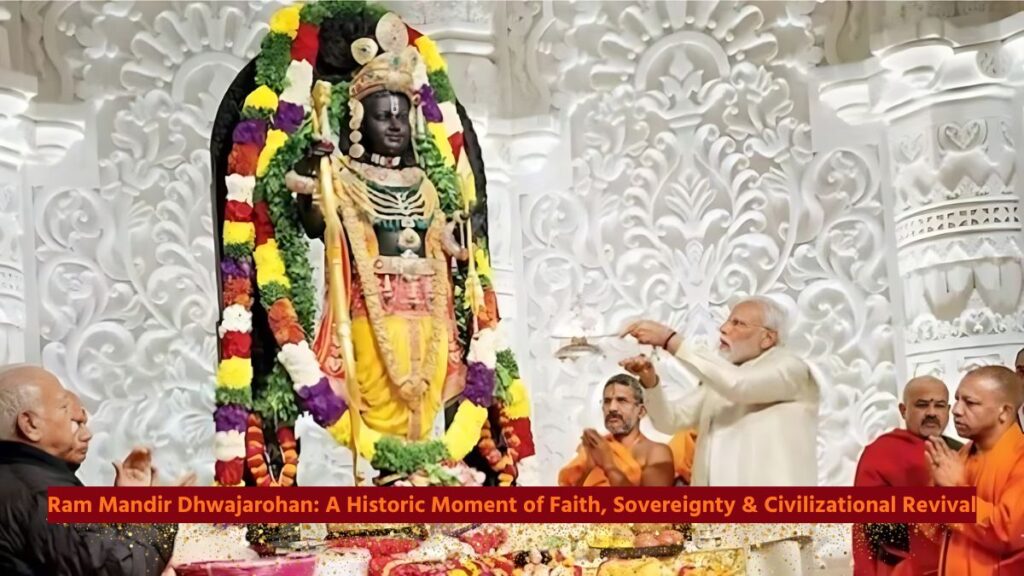
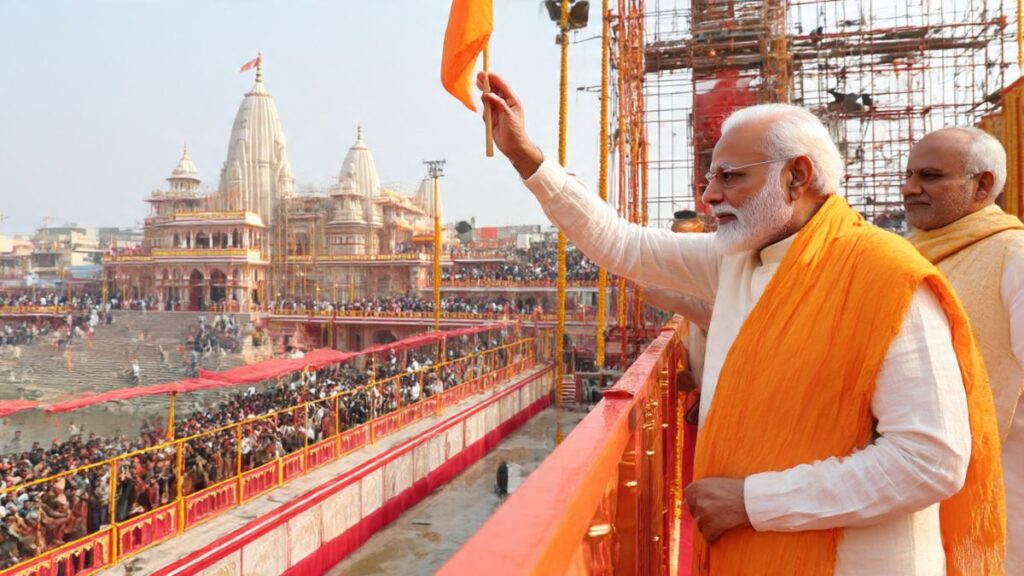
In a landmark moment etched into India’s cultural and spiritual history, Prime Minister Narendra Modi on Tuesday proudly hoisted a saffron Dharma Dhwaja atop the newly completed Shri Ram Janmabhoomi Temple in Ayodhya. The auspicious ceremony, known as “Dhwaj Arohan”, marks the formal completion of the grand Ram Mandir—an event awaited for centuries by millions of devotees.
The Prime Minister was joined by RSS Sarsanghchalak Mohan Bhagwat, Uttar Pradesh Governor Anandiben Patel, and Chief Minister Yogi Adityanath, making the occasion a convergence of national, cultural, and spiritual leadership.
“Today the entire world is filled with the spirit of Shri Ram” – PM Modi
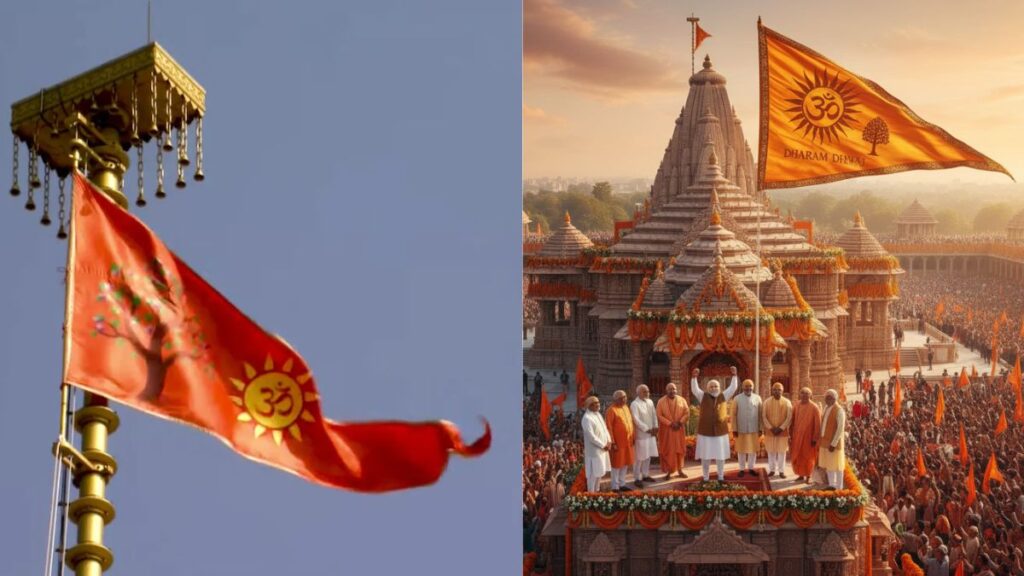
Addressing thousands of devotees, PM Modi said that Ayodhya today stands as the pinnacle of India’s civilizational awakening. Emotions ran deep as he described the moment as the culmination of a 500-year-long yajna of faith, struggle, and unbroken devotion.
The Prime Minister emphasized that:
- The Dharma Dhwaja is not just a flag but a symbol of India’s cultural renaissance.
- Its saffron color, the Solar dynasty emblem, the sacred Om, and the Kovidar tree represent the ideals of Ram Rajya, truth, discipline, and justice.
- The flag stands as an eternal reminder of India’s ideals: truth prevails over falsehood, duty over desire, and unity over division.
According to scriptures, even those who bow to the flag from afar receive the same divine merit as visiting the sanctum—making this moment spiritually significant for devotees across the world.
Ayodhya: Where Ideals Become Conduct
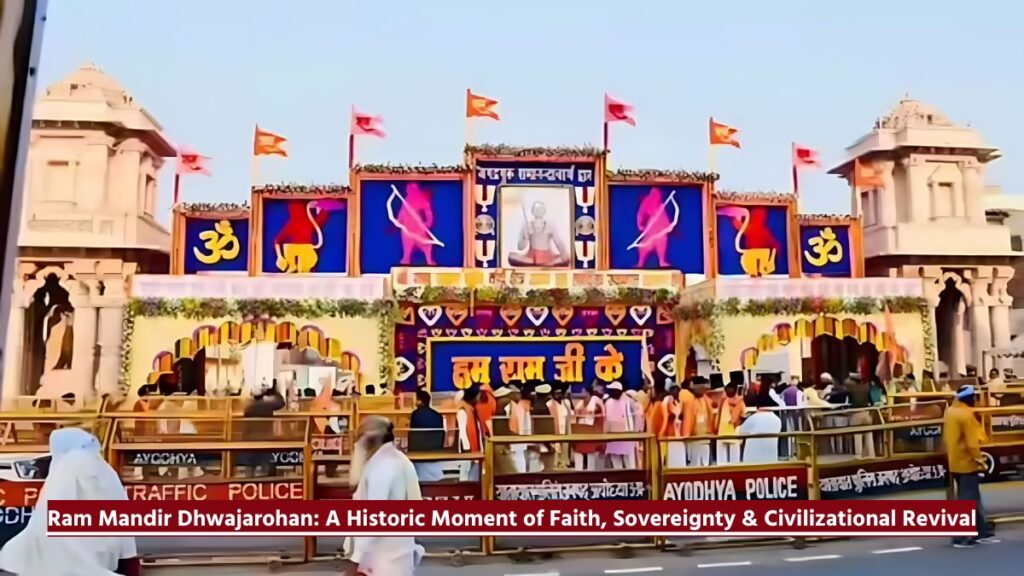
PM Modi highlighted how Ayodhya is not just a place but a living embodiment of values. Here, Shri Ram transformed from Yuvaraj Ram to Maryada Purushottam—guided by:
- Maharshi Vashishtha
- Maharshi Vishwamitra
- Maharshi Agastya
- Nishadraj
- Mother Shabari
- Bhakt Hanuman
The Ram Mandir complex now includes seven newly built temples, including those dedicated to Mata Shabari, Nishadraj, and the revered sages—symbolizing the unity of diverse communities and traditions.
“Our Ram unites through emotions, not differences.”
Modi reaffirmed that the journey of the last 11 years has focused on uplifting every section of society—women, Dalits, backward classes, tribals, farmers, laborers, and youth. He stressed that a collectively empowered society is essential to achieving the dream of a Viksit Bharat by 2047.
The Call to Dismantle Macaulay’s Legacy by 2035
In a powerful message, PM Modi urged the nation to dedicate the next 10 years to breaking free from the mentality of colonial inferiority introduced by Thomas Babington Macaulay in 1835.
He emphasized:
- India is the original mother of democracy, with examples such as the democratic system of Uttiramerur and Basavanna’s Anubhava Mantapa.
- Colonial distortions made Indians believe that democracy, modern thought, and governance were foreign imports.
- To build a strong foundation for the next millennium, India must reclaim pride in its own heritage and civilizational strengths.
He noted significant steps already taken—like revising the Indian Navy flag to reflect Chhatrapati Shivaji Maharaj’s legacy, replacing colonial symbols with indigenous pride.
Ayodhya: Blending Spirituality With Modernity
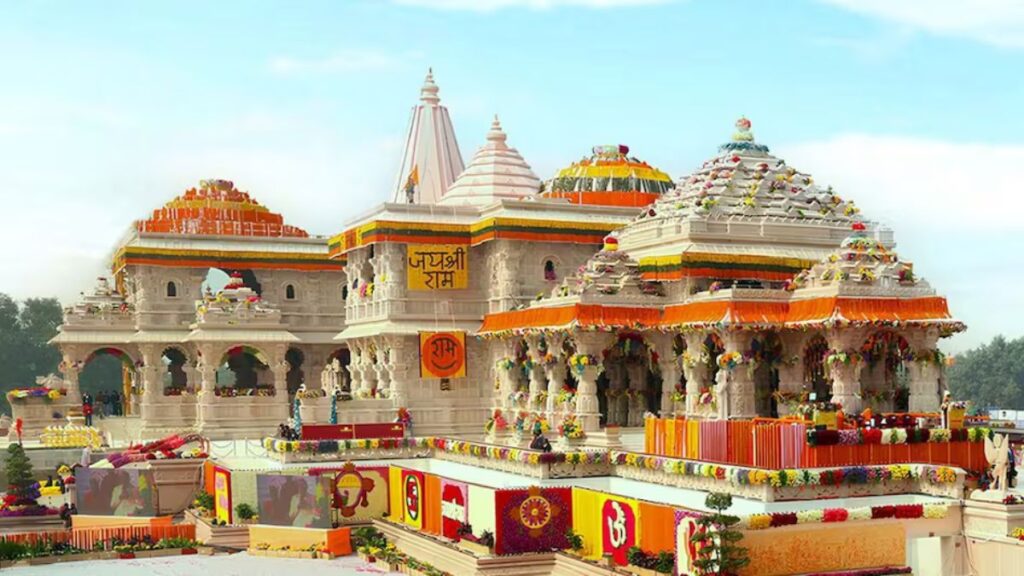
PM Modi shared a visionary roadmap for Ayodhya:
- A global model of development rooted in spirituality
- Harmonious integration of AI, tradition, art, and heritage
- Iconic infrastructure like the grand airport, world-class railway station, Ram Path, Bhakti Path, and Janmabhoomi Path
Since the Pran Pratishtha, 45 crore devotees have visited Ayodhya—boosting the local economy and transforming the city into one of UP’s fastest-growing regions.
India’s Rising Global Stature
Highlighting India’s rapid economic ascent—rising from the 11th to 5th largest economy—PM Modi asserted that India is swiftly moving toward becoming the world’s 3rd largest economy.
He explained that to accelerate this journey, India must adopt the metaphorical chariot of Ram Rajya, whose:
- Wheels = Valor & Patience
- Flag = Truth & Supreme Conduct
- Horses = Strength, Wisdom, Discipline & Benevolence
- Reins = Forgiveness, Compassion & Equality
This chariot, he said, will guide India toward Viksit Bharat.
The Sacred Dharma Dhwaja: Features & Symbolism
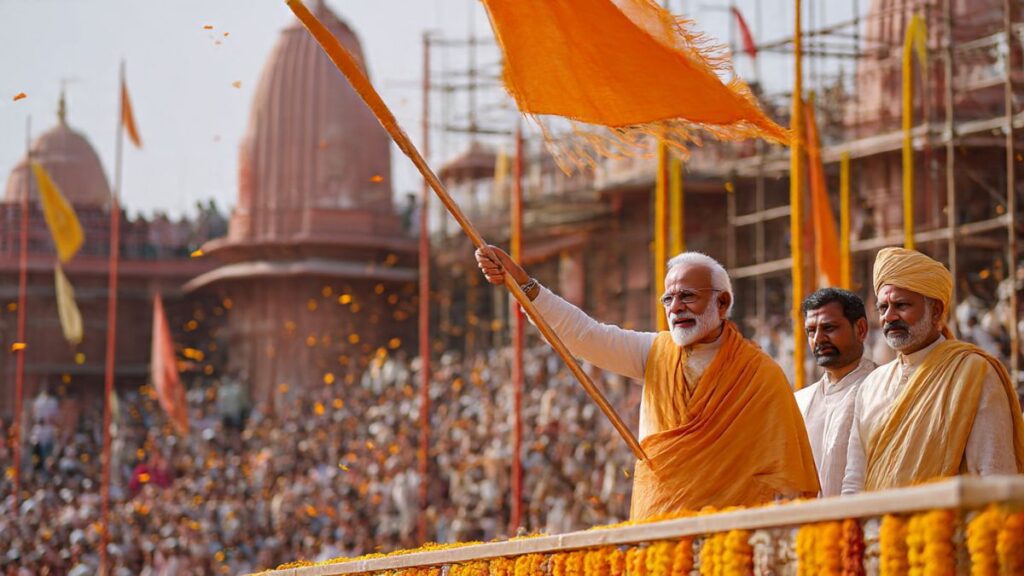
The newly installed flag is a right-angled triangular saffron banner:
- Height: 10 feet
- Length: 20 feet
- Depictions:
- A radiant Sun symbol
- Sacred Om
- The revered Kovidara (Kund) tree
It stands atop a Shikhar built in Nagara architectural style, surrounded by an 800-metre Parkota inspired by South Indian temple design.
The complex features:
- 87 stone-carved episodes from Valmiki Ramayana
- 79 bronze-cast episodes depicting Indian cultural heritage
Together, they offer a rich learning experience for visitors and future generations.
A Day of Deep Spiritual Significance
The ceremony coincided with:
- Margashirsha Shukla Panchami
- Abhijit Muhurat of Shri Ram and Maa Sita’s Vivah Panchami
- Martyrdom day of Guru Tegh Bahadur Ji, who meditated in Ayodhya for 48 hours
These convergences made the Dhwajarohan Utsav exceptionally auspicious.
A New Chapter Begins
As the saffron flag rose over Ayodhya, it carried with it a message of unity, dignity, cultural resurgence, and national pride.
This moment signals not just the completion of a temple, but the awakening of a civilization reclaiming its identity, and a nation stepping confidently toward its future.
Note: All information and images used in this content are sourced from Google. They are used here for informational and illustrative purposes only.
Frequently Asked Questions (FAQ) About Ram Mandir Dhwajarohan
1. What is the significance of the Ram Mandir Dhwajarohan ceremony in Ayodhya?
The Ram Mandir Dhwajarohan marks the formal completion of the Shri Ram Janmabhoomi Temple’s construction. It symbolizes India’s cultural renaissance, civilizational unity, and the fulfillment of a 500-year-old spiritual resolve. The hoisting of the saffron Dharma Dhwaja by Prime Minister Narendra Modi represents truth, discipline, justice, and the essence of Ram Rajya.
2. Who participated in the historic Ram Mandir Dhwajarohan event?
The Ram Mandir Dhwajarohan ceremony was attended by several key dignitaries including Prime Minister Narendra Modi, RSS Sarsanghchalak Mohan Bhagwat, Uttar Pradesh Governor Anandiben Patel, and Chief Minister Yogi Adityanath. Their presence underscored the convergence of cultural, spiritual, and national leadership.
3. What does the saffron flag hoisted during Ram Mandir Dhwajarohan represent?
The flag hoisted during the Ram Mandir Dhwajarohan is a ten-foot high and twenty-foot long triangular saffron banner. It features a radiant Sun, sacred Om, and the Kovidara tree—symbols representing the Solar dynasty, divine purity, and India’s cultural roots. The Dharma Dhwaja stands for truth, duty, fearlessness, and the spirit of Ram Rajya.
4. How does Ram Mandir Dhwajarohan reflect India’s civilizational heritage?
The Ram Mandir Dhwajarohan is a tribute to India’s timeless values. PM Modi highlighted how Ayodhya shaped Shri Ram into Maryada Purushottam through the guidance of sages and the devotion of common people. The event reclaims India’s cultural identity and revives ancient traditions that were overshadowed during the colonial era.
5. What message did PM Modi share during the Ram Mandir Dhwajarohan ceremony?
During the Ram Mandir Dhwajarohan, PM Modi emphasized cultural pride, national unity, and the need to eliminate the colonial mindset shaped by Macaulay’s legacy by 2035. He urged citizens to awaken Ram-like values within themselves to build Viksit Bharat by 2047 and highlighted India’s status as the mother of democracy.
6. How is Ayodhya being transformed following the Ram Mandir Dhwajarohan?
Post-Ram Mandir Dhwajarohan, Ayodhya is emerging as a global model where spirituality meets modernity. With a world-class airport, upgraded railway station, Ram Path, Bhakti Path, and Janmabhoomi Path, the city blends heritage with smart development. Over 45 crore devotees have visited since the Pran Pratishtha, fueling massive economic growth.
7. What architectural features were highlighted during Ram Mandir Dhwajarohan?
The Ram Mandir Dhwajarohan ceremony showcased the temple’s Nagara-style Shikhar and the 800-metre Parkota inspired by South Indian architecture. The complex includes 87 stone-carved scenes from Valmiki Ramayana and 79 bronze episodes from Indian culture, offering an immersive spiritual and educational experience.
8. Why is the date of the Ram Mandir Dhwajarohan considered spiritually powerful?
The Ram Mandir Dhwajarohan took place on an exceptionally auspicious day—Margashirsha Shukla Panchami, the Abhijit Muhurat of Shri Ram and Maa Sita’s Vivah Panchami, and the martyrdom day of Guru Tegh Bahadur Ji, who meditated in Ayodhya. This combination amplified the spiritual depth of the event.
9. How does Ram Mandir Dhwajarohan inspire India’s future vision?
The Ram Mandir Dhwajarohan serves as a guiding force for India’s journey toward becoming a developed nation by 2047. PM Modi compared the nation’s progress to Shri Ram’s symbolic chariot—powered by valor, patience, truth, wisdom, compassion, and discipline—values essential for building a confident, culturally rooted future.
10. What makes the Ram Mandir Dhwajarohan a turning point for India?
The Ram Mandir Dhwajarohan is more than a ceremonial flag hoisting—it marks the resurgence of India’s identity, pride, and unity. It symbolizes a civilization reclaiming its heritage and a nation stepping into a new era of cultural confidence, spiritual strength, and developmental ambition.