Prabhu Shree Ramakrishna Paramahamsa Jayanti 2026 invites us to revisit a saint whose life radiated devotion, harmony, and divine insight. Discover sacred dates, inspiring lessons, and wisdom that still touches hearts today.
This sacred occasion every year elicits millions of devotees, seekers and curious readers to take a look once again at the extraordinary life of one of India’s most mystical and revered mystics. Ramakrishna Paramahamsa Jayanti is not just a day of remembrance. Rather, it is a celebration that invokes the energies of devotion, spiritual discovery and universal harmony.
Moreover, his story continues to warm hearts and inspire minds because it speaks to a supernatural truth and the human desire for love and connection with God.
Ramakrishna Paramahamsa Jayanti 2026: Date, Tithi, and Spiritual Importance
Ramakrishna Paramahamsa Jayanti in 2026 is celebrated on 19 February 2026 as per the Hindu lunar calendar.
As per the Panchang;
- Dwitiya Tithi Begins: 18 February 2026, 04:57 PM * Dwitiya Tithi Ends: 19 February 2026 – 03:58 PM
Though his birth is historically recorded on February 18, 1836, his Jayanti is traditionally celebrated basing on the Dwitiya Tithi of Shukla Paksha in Phalguna. As a result, the celebration continues to vary every year in the Gregorian calendar.
This will, importantly, be the 190th birth anniversary of Ramakrishna Paramahamsa, significantly marking the celebrations among the followers worldwide.
From Gadadhar of Kamarpukur to Ramakrishna Paramahamsa
The saint later came to be known as Ramakrishna Paramahamsa was born Gadadhar Chattopadhyay in the peaceful village of Kamarpukur.
Although he was born into a lowly Brahmin family, his childhood displayed an uncommon spiritual sensitivity. Gadadhar could seldom be found playing with the children; he would rather spend a lot of time in intense thinking. Sometimes even a simple religious song or act was enough to put him in ecstasy (ibid).
Most notably, his profound devotion to Goddess Kali influenced his early spiritual life. There was no symbolism or philosophy behind his emotional attachment to the Divine Mother. Her emotional connection to the Divine Mother was not symbolic or philosophical; rather (or alternatively), it was an intensely personal and experiential matter.
Therefore, for him spirituality was never theory – it was lived reality.
Dakshineswar: The Crucible of Divine Experience
The Dakshineswar Kali Temple stands as a pivotal place in his life where he took on the role of a priest.
On this place, his devotion took a particular step. Here, his devotion became more intense as he worshipped with a childlike enthusiasm and sincerity each day. Kali Darshan (visions of Kali) became so intense that he wept, prayed and surrendered to her.
Finally, these heightened spiritual exercises led to the stage of transformational mystical experiences. To the devotees, these episodes remain central to his legacy. From a scholastic perspective, they are one of the most extensively recorded cases of devotional mysticism in the Indian sub-continent.
Guidance of Bhairavi Brahmani: Validation of a Mystic
It was during such moments that Bhairavi Brahmani entered his life.
Importantly, she was able to discern that his spiritual experiences were genuine. She was able to match his states with classical descriptions in Bhakti and Tantric literature.
Therefore, her presence did more than mentor him – it served to protect and validate his spiritual journey.
Totapuri and the Leap into Advaita
Another major change came with Totapuri, a wandering monk of the Dashnami tradition.
Unlike Ramakrishna’s approach that embraced devotional practice, Totapuri stressed on Advaita Vedanta, or the theory of non-duality. This was in stark contrast at first. However, Ramakrishna took to the discipline without reservation.
Consequently, he attained nirvikalpa samadhi — a state beyond form, identity, and duality. This Bhakti and Advaita synthesis later became one of the most fascinating aspects of his teachings.
“As Many Faiths, So Many Paths”: A Revolutionary Insight
Perhaps his most enduring message was simple enough to take your breath away:
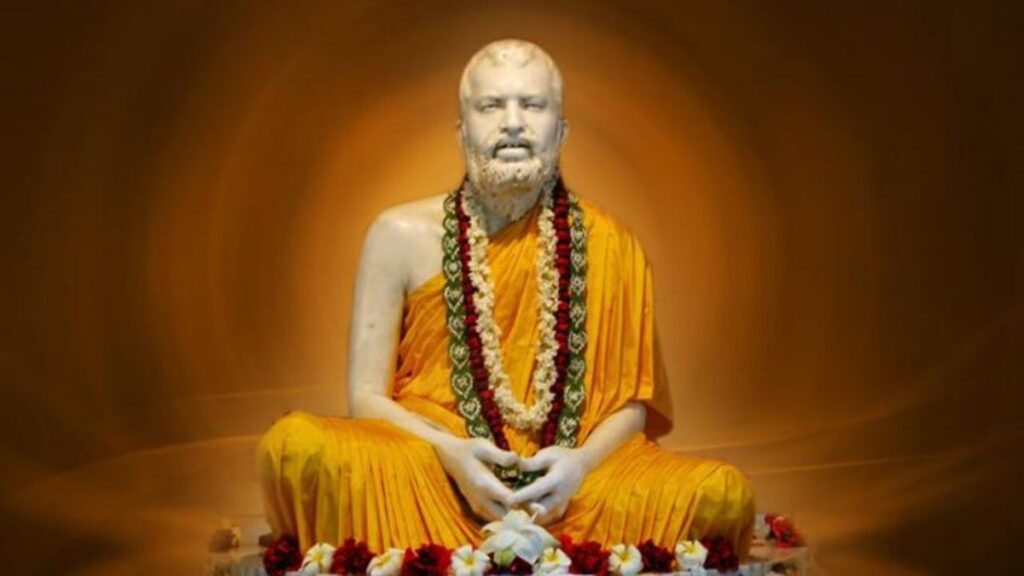
All religions lead to the same ultimate reality.
Instead of proclaiming this as doctrine, Ramakrishna tested it through practice. He even underwent spiritual austerities in Hinduism, Islam, and Christianity.
For this reason, his conclusions were unusually convincing. He did not make statements as a philosopher but as a seeker of experience.
In today’s world where religious tensions still exist, this teaching seems highly relevant. Before the world started talking about interfaith harmony, his life was a testament to it in practice.
Teachings That Still Resonate Across Generations
Ramakrishna’s wisdom continues to influence spiritual discourse because it is felt to be at once profound and accessible.
Key principles include;
- Direct Experience Rather than Intellectualism For him, realization not mere study brought genuineness in spirituality.
- Inner Purity over Ritualism While he respected the traditions, he emphasized the inner purity over ritualism.
- Ego as the real obstacle Ego as the True ObstacleAccording to him, pride and greed distort spiritual sight.
- Service as Worship To love the humanity, he taught, is to love God.
Therefore, his teachings appeal equally to the monks, householders, and modern professionals seeking to find a balance in their lives and a deeper sense of meaning.
Influence on Swami Vivekananda: A Global Ripple Effect
Among his many disciples, Swami Vivekananda is a prominent disciple.
Initially skeptical, Vivekananda’s rational mind surrendered to the spiritual depth of Ramakrishna. This relationship ended up shifting modern Indian spirituality for good.
After his guru passed on, Vivekananda took the message to the world stage. Most importantly, he founded Ramakrishna Mission in 1897.
Frequently Asked Questions About Prabhu Shree Ramakrishna Paramahamsa Jayanti 2026
1. Why is Prabhu Shree Ramakrishna Paramahamsa Jayanti 2026 so spiritually meaningful for devotees and seekers alike?
Prabhu Shree Ramakrishna Paramahamsa Jayanti 2026 is far more than a ceremonial date. For many, it represents a moment of deep remembrance, gratitude, and introspection. Devotees recall a life filled with extraordinary devotion, while spiritual seekers reflect on timeless lessons about love, faith, and self-realisation. Moreover, his message of religious harmony continues to offer comfort in a world often divided by differences.
2. When exactly will Prabhu Shree Ramakrishna Paramahamsa Jayanti 2026 be observed, and why does the date vary each year?
Prabhu Shree Ramakrishna Paramahamsa Jayanti 2026 will be observed on February 19, 2026, according to the Hindu lunar calendar. Although Sri Ramakrishna was born on February 18, 1836, the Jayanti follows the Dwitiya Tithi of Shukla Paksha in the month of Phalguna. Because the lunar calendar differs from the Gregorian calendar, the observance shifts every year. This tradition, therefore, preserves the sacred timing associated with his birth.
3. Who was remembered during Prabhu Shree Ramakrishna Paramahamsa Jayanti 2026, and why does his life still inspire millions?
Prabhu Shree Ramakrishna Paramahamsa Jayanti 2026 honours Gadadhar Chattopadhyay, the mystic later revered as Ramakrishna Paramahamsa. Despite minimal formal education, his life radiated spiritual depth, compassion, and unwavering devotion to the Divine Mother, Kali. Even today, people feel drawn to his authenticity, simplicity, and universal outlook. His teachings resonate because they speak directly to the human heart rather than abstract philosophy.
4. What makes the childhood story behind Prabhu Shree Ramakrishna Paramahamsa Jayanti 2026 so fascinating?
The story recalled during Prabhu Shree Ramakrishna Paramahamsa Jayanti 2026 begins in the quiet village of Kamarpukur. As a child, Gadadhar displayed unusual spiritual sensitivity, often entering states of ecstasy during devotional songs or rituals. While others saw a playful boy, many sensed a soul deeply connected to the Divine. This early devotion, therefore, laid the foundation for his later spiritual revelations.
5. Why is Dakshineswar frequently discussed during Prabhu Shree Ramakrishna Paramahamsa Jayanti 2026?
Dakshineswar holds profound importance when reflecting on Prabhu Shree Ramakrishna Paramahamsa Jayanti 2026. It was here that Sri Ramakrishna served as a priest at the Kali Temple and experienced many of his transformative mystical states. His intense longing for the Divine Mother, expressed through tears, prayer, and surrender, became legendary. Consequently, Dakshineswar symbolizes not just a location, but a sacred space of divine encounter.
6. How did Prabhu Shree Ramakrishna Paramahamsa Jayanti 2026 highlight his message about the unity of religions?
One of the most captivating aspects of Prabhu Shree Ramakrishna Paramahamsa Jayanti 2026 is his revolutionary belief that all religions lead to the same truth. Rather than merely preaching tolerance, he personally practised spiritual disciplines within Hinduism, Islam, and Christianity. Because of this direct experience, his insights carried unusual credibility. In an era still wrestling with religious conflict, his example feels both bold and deeply reassuring.
7. What core teachings are remembered during Prabhu Shree Ramakrishna Paramahamsa Jayanti 2026?
Prabhu Shree Ramakrishna Paramahamsa Jayanti 2026 brings attention to teachings that remain strikingly relevant. He emphasized direct spiritual experience over intellectual debate, inner purity over rigid ritualism, and compassion over ego. Most importantly, he taught that serving humanity is a form of worship. These principles, therefore, appeal to people from all walks of life, regardless of belief or background.
8. Why is Swami Vivekananda inseparable from discussions of Prabhu Shree Ramakrishna Paramahamsa Jayanti 2026?
Prabhu Shree Ramakrishna Paramahamsa Jayanti 2026 naturally evokes the powerful bond between Sri Ramakrishna and Swami Vivekananda. Initially a skeptic, Vivekananda eventually became one of his greatest disciples. After Sri Ramakrishna’s passing, Vivekananda carried his teachings across India and the world. Consequently, the Jayanti also celebrates the global ripple effect of Ramakrishna’s wisdom.
9. How does Prabhu Shree Ramakrishna Paramahamsa Jayanti 2026 connect to the Ramakrishna Mission’s humanitarian work?
Prabhu Shree Ramakrishna Paramahamsa Jayanti 2026 also reminds people of a living legacy — the Ramakrishna Mission. Founded by Swami Vivekananda, the Mission transformed spiritual ideals into compassionate action through schools, hospitals, and relief efforts. Thus, the Jayanti reflects not only philosophical teachings but also practical service to society. This connection, therefore, deepens the relevance of the celebration.
10. What emotions and reflections do devotees often experience during Prabhu Shree Ramakrishna Paramahamsa Jayanti 2026?
For many, Prabhu Shree Ramakrishna Paramahamsa Jayanti 2026 becomes an intensely personal occasion. Some feel devotion, others curiosity, and many experience quiet inspiration. His life story encourages introspection about faith, purpose, and compassion. Ultimately, the day invites individuals to pause, reflect, and reconnect with deeper values often overshadowed by daily life.
11. Why does Prabhu Shree Ramakrishna Paramahamsa Jayanti 2026 remain relevant in today’s fast-paced world?
In a world driven by speed, stress, and constant distraction, Prabhu Shree Ramakrishna Paramahamsa Jayanti 2026 offers a rare opportunity for stillness. His teachings emphasize simplicity, sincerity, and inner peace — qualities modern life often neglects. Moreover, his message of harmony feels urgently needed. Therefore, the Jayanti continues to attract not only devotees but also thoughtful readers and spiritual explorers.
12. What lasting life lesson can one take away from Prabhu Shree Ramakrishna Paramahamsa Jayanti 2026?
Perhaps the most powerful takeaway from Prabhu Shree Ramakrishna Paramahamsa Jayanti 2026 is profoundly human: truth can be sought through love, humility, and sincerity. Sri Ramakrishna’s life reassures people that spiritual wisdom does not require scholarly complexity. Instead, it flourishes through genuine devotion and compassion. This timeless insight, therefore, continues to inspire hearts across generations.