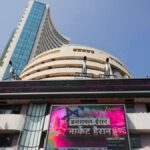
Dramatic Sensex & Nifty Crash rattled Dalal Street on Monday, sending shockwaves through investor portfolios and wiping out over ₹9 lakh crore in market wealth within hours. As geopolitical tensions in West Asia intensified, fear gripped financial markets, triggering a sharp sell-off across sectors. Consequently, the Sensex plunged over 1,000 points while the Nifty slipped below crucial support levels, leaving retail and institutional investors stunned. Meanwhile, soaring Brent crude prices and relentless foreign outflows added fuel to the fire. What sparked this sudden market meltdown, and more importantly, what should investors do next?
When fear grips financial markets, numbers turn red faster than emotions can settle. On Monday, Dalal Street witnessed one of its sharpest sell-offs in recent months. As geopolitical tensions in West Asia escalated, investors rushed to cut risk, triggering a powerful wave of selling across Indian equities.
Consequently, both benchmark indices — the BSE Sensex and the Nifty50 — ended sharply lower, wiping out over ₹9 lakh crore in investor wealth within hours.
Why Indian Stock Markets Crashed Amid Rising West Asia Tensions
The sharp fall followed escalating military conflict involving Iran, Israel, and the United States. Reports confirmed the death of Iran’s Supreme Leader Ali Khamenei, which intensified fears of a broader regional war.
As a result, concerns over potential disruption in the Strait of Hormuz — a critical global oil transit route — spooked global investors. Because nearly one-fifth of the world’s oil passes through this corridor, even minor disruptions can spark major economic consequences.
Therefore, global risk sentiment deteriorated rapidly. Investors shifted from equities to safer assets, leading to a broad-based sell-off.
Sensex and Nifty Tumble: Key Numbers Investors Must Know
In early trade, the BSE Sensex plunged 2,743 points to 78,543. However, it later recovered partially and closed at 80,238, still down 1,048 points or 1.29%.
Similarly, the Nifty50 slipped 575 points intraday before settling 312 points lower at 24,865.
Meanwhile, total market capitalization on the BSE fell from ₹463 lakh crore to nearly ₹454 lakh crore during intraday trade. That dramatic erosion reflects how quickly geopolitical risk can reshape investor sentiment.
Sector-Wise Impact: Who Gained and Who Lost?
Although panic dominated the session, some stocks resisted the fall.
Top Gainers
- Bharat Electronics (BEL)
- Sun Pharma
- ITC
- ONGC
Defence and upstream oil companies gained as investors anticipated higher defence spending and stronger realizations from elevated crude prices.
Top Losers
- InterGlobe Aviation (IndiGo)
- Larsen & Toubro
- Adani Ports
- Maruti
- Asian Paints
- Bajaj Finserv
Aviation, auto, paints, and financial stocks suffered the most. Higher crude prices increase input costs, weaken margins, and reduce consumer spending power. Consequently, rate-sensitive and oil-dependent sectors faced aggressive selling pressure.
Brent Crude Jumps Over 8%: Why Oil Matters for India
Global benchmark Brent crude surged 8.34% to $78.95 per barrel. This spike triggered inflation fears and currency concerns.
India imports the majority of its crude oil. Therefore, rising oil prices widen the trade deficit, strain fiscal balances, and push bond yields higher. Additionally, expensive fuel increases transportation and manufacturing costs, ultimately impacting corporate earnings.
Because markets price future risks instantly, equities reacted sharply to this sudden energy shock.
FII Selling and Rising India VIX Signal Caution
Foreign Institutional Investors (FIIs) offloaded equities worth ₹7,536 crore on Friday. Although Domestic Institutional Investors (DIIs) absorbed part of the selling, foreign outflows amplified volatility.
At the same time, India VIX edged higher, reflecting growing uncertainty. When volatility rises, traders typically reduce leveraged positions. As a result, short-term declines can become steeper than fundamentals justify.
Gold and Silver Surge as Investors Seek Safety
While equities bled, bullion shined.
Gold prices in India jumped to ₹1,73,090 per 10 grams, whereas silver climbed to ₹2,94,900 per kilogram. Globally, spot gold surged to multi-week highs as investors rushed into safe-haven assets.
Historically, during geopolitical crises and inflationary spikes, gold performs well. Therefore, portfolio diversification becomes critical during uncertain times.
What Should Investors Do During Market Volatility?
Sharp corrections often trigger emotional decisions. However, history shows that geopolitical sell-offs tend to be short-lived once clarity emerges.
Practical Steps for Investors:
- Avoid panic selling.
- Review asset allocation strategy.
- Focus on fundamentally strong companies.
- Maintain a long-term investment horizon.
- Consider hedging with gold or defensive sectors.
If crude prices stabilize and tensions ease, markets may recover gradually. Until then, volatility will likely remain elevated.
Key Takeaways
- Sensex and Nifty crashed due to West Asia geopolitical tensions.
- Over ₹9 lakh crore in investor wealth was erased.
- Brent crude surged above $78, increasing inflation fears.
- Aviation, auto, and financial stocks fell sharply.
- Gold and silver rallied as safe-haven assets.
- FIIs continued heavy selling amid global risk aversion.
- Long-term fundamentals of the Indian economy remain intact.
Final Thoughts
Market crashes feel overwhelming. Nevertheless, they often reflect sentiment more than structural weakness. Although short-term pain is real, disciplined investors who focus on long-term wealth creation typically emerge stronger.
In uncertain times, patience is not just a virtue — it is a strategy.
Frequently Asked Questions (FAQs) on the Dramatic Sensex & Nifty Crash

1. What triggered the Dramatic Sensex & Nifty Crash in the first place?
The Dramatic Sensex & Nifty Crash was primarily triggered by escalating geopolitical tensions in West Asia. After reports confirmed the death of Iran’s Supreme Leader Ali Khamenei, markets reacted sharply to fears of a broader regional conflict. As a result, crude oil prices surged and investors rushed to reduce risk exposure. Additionally, heavy foreign institutional selling amplified the decline, turning nervousness into a full-blown sell-off.
2. How did rising oil prices intensify the Dramatic Sensex & Nifty Crash?
The surge in Brent crude played a major role in deepening the Dramatic Sensex & Nifty Crash. Because India imports most of its crude oil, higher prices increase inflation, widen the trade deficit, and pressure corporate margins. Consequently, sectors such as aviation, paints, tyres, and automobiles witnessed sharp declines. Investors quickly priced in these risks, which accelerated the downward momentum.
3. Which sectors were hit hardest during the Dramatic Sensex & Nifty Crash?
During the Dramatic Sensex & Nifty Crash, aviation, auto, financial services, paints, and infrastructure stocks faced intense selling pressure. Companies like InterGlobe Aviation (IndiGo), Larsen & Toubro, and Maruti experienced steep losses. Higher fuel costs and inflation concerns hurt these sectors the most. However, defence and upstream oil companies showed resilience, proving that not all segments react the same way during market turmoil.
4. Why did some stocks gain despite the Dramatic Sensex & Nifty Crash?
Even amid the Dramatic Sensex & Nifty Crash, a few stocks managed to post gains. Defence companies benefited from expectations of increased military spending, while upstream oil producers gained from rising crude realizations. This contrast highlights an important lesson: market crashes rarely impact every sector equally. Therefore, strategic diversification can cushion portfolio volatility.
5. How much investor wealth was erased in the Dramatic Sensex & Nifty Crash?
The Dramatic Sensex & Nifty Crash wiped out more than ₹9 lakh crore in investor wealth in a single trading session. The total market capitalization on the BSE dropped sharply as panic selling intensified. Although such numbers may feel overwhelming, markets often recover once uncertainty fades and fundamentals regain focus.
6. Did foreign institutional investors worsen the Dramatic Sensex & Nifty Crash?
Yes, foreign institutional investors significantly contributed to the Dramatic Sensex & Nifty Crash. Large-scale equity selling reflected global risk aversion. When FIIs pull money out, liquidity tightens and volatility rises. Meanwhile, domestic institutional investors absorbed some selling, which helped prevent even deeper losses.
7. Why did gold and silver rise during the Dramatic Sensex & Nifty Crash?
As fear spread during the Dramatic Sensex & Nifty Crash, investors shifted toward safe-haven assets. Historically, gold and silver attract capital during geopolitical and economic uncertainty. Therefore, bullion prices surged sharply while equities fell. This move demonstrates how asset allocation plays a critical role in protecting wealth during turbulent times.
8. Is the Dramatic Sensex & Nifty Crash a long-term concern for investors?
While the Dramatic Sensex & Nifty Crash looks alarming in the short term, history suggests that geopolitical sell-offs are often temporary. If crude prices stabilize and tensions ease, markets typically recover lost ground. Moreover, India’s long-term economic fundamentals — including corporate earnings growth and domestic demand — remain structurally strong.
9. What should investors do after the Dramatic Sensex & Nifty Crash?
After a Dramatic Sensex & Nifty Crash, emotional decisions can cause more harm than the crash itself. Instead of panic selling, investors should reassess asset allocation, focus on fundamentally strong companies, and maintain a long-term perspective. Additionally, gradual investing through systematic plans can reduce timing risks during volatile phases.
10. Could another Dramatic Sensex & Nifty Crash happen if tensions escalate further?
Markets react quickly to uncertainty. Therefore, if geopolitical tensions intensify or oil prices spike further, volatility may increase again. However, investors who prepare through diversification, risk management, and disciplined investing strategies are better positioned to handle such events confidently.
Final Thought
The Dramatic Sensex & Nifty Crash may have shaken confidence, but it also reminds investors of an essential truth: markets reward patience, preparation, and perspective. Although short-term volatility tests emotions, long-term discipline builds wealth.