
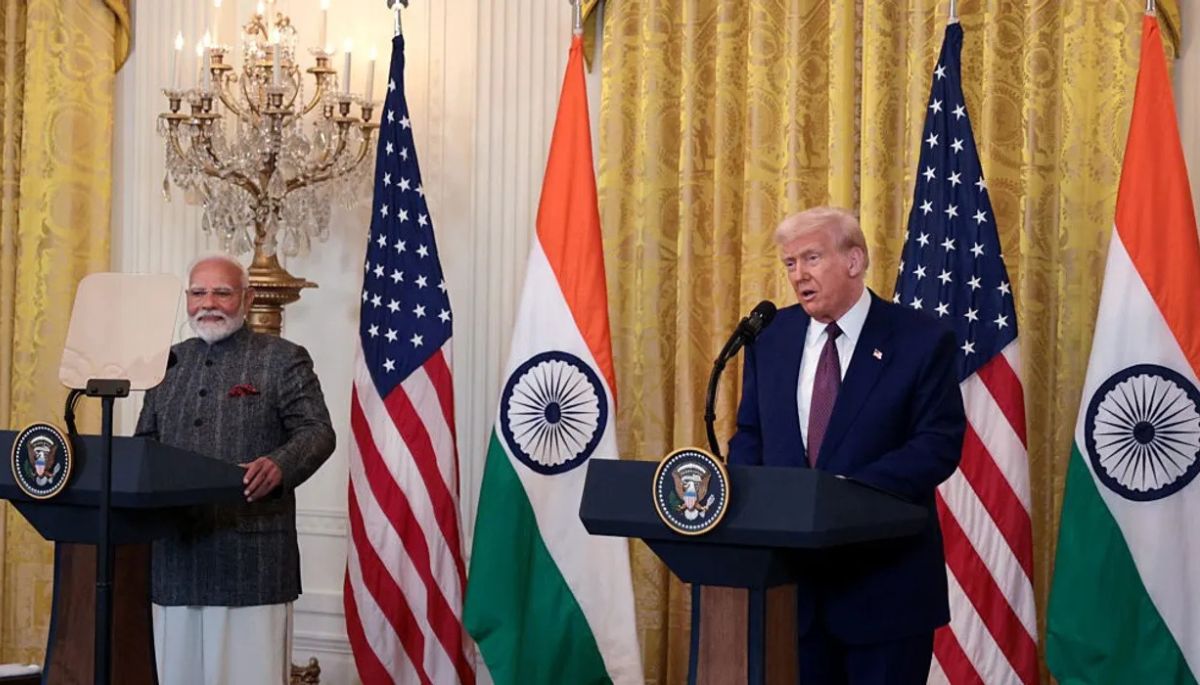
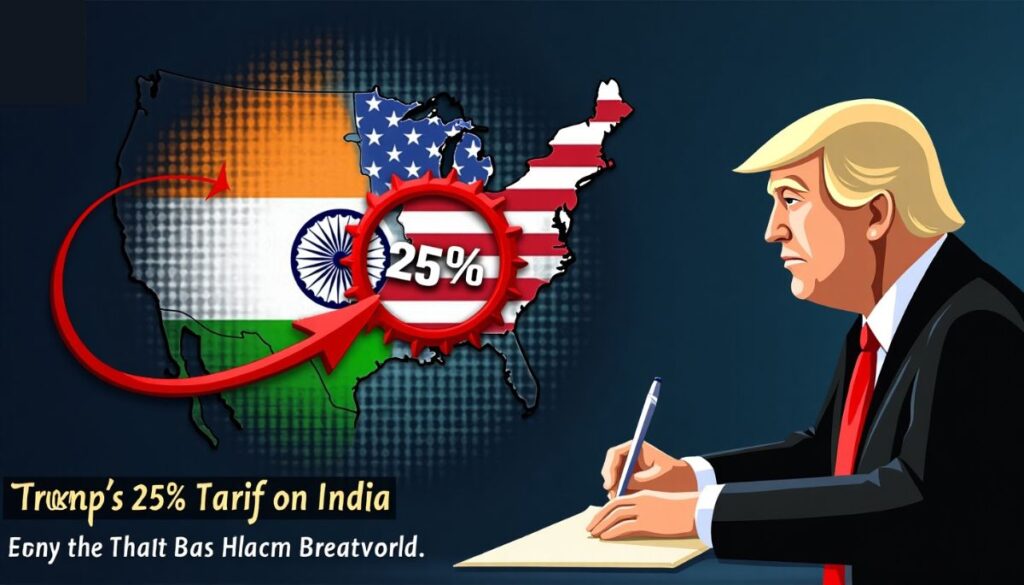
As the August 1, 2025, deadline looms, U.S. President Donald Trump has announced a 25% tariff on Indian imports, citing India’s high tariffs, non-monetary trade barriers, and its ties with Russia. This bold move has sparked intense discussions about the future of India-U.S. trade relations, especially as negotiations for a bilateral trade agreement (BTA) continue. Despite the challenges, there’s optimism that ongoing talks could lead to a mutually beneficial deal. Let’s explore the implications of Trump’s tariffs, the reasons behind them, and what lies ahead for this critical economic partnership.
Understanding Trump’s Tariff Announcement
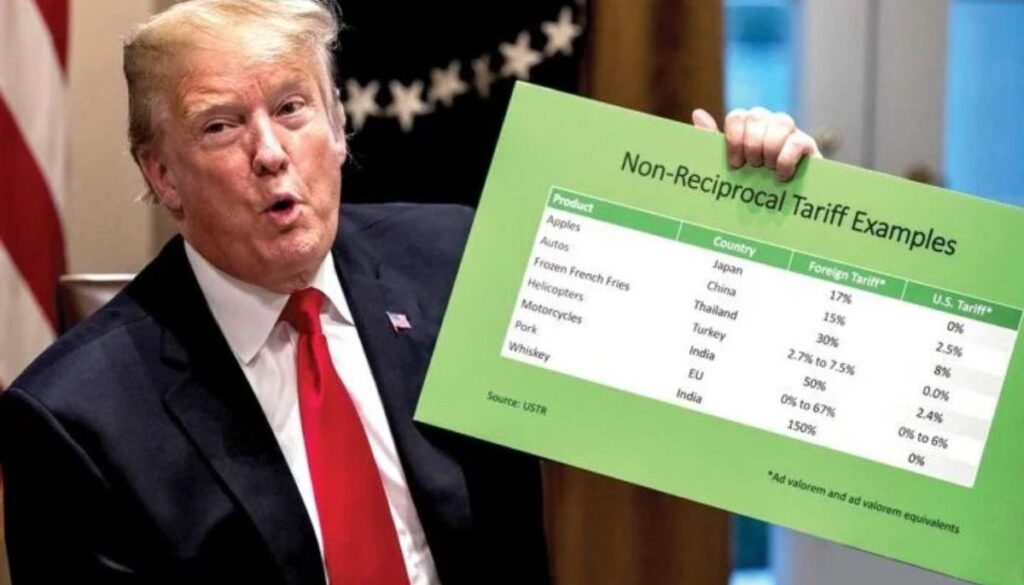
On July 30, 2025, President Trump took to Truth Social to announce a 25% tariff on Indian imports, effective August 1, along with an additional penalty for what he called India’s “obnoxious non-monetary trade barriers.” In his statement, Trump described India as a “friend” but criticized its high tariffs, which he claimed are among the highest globally, and its restrictive trade practices. He also pointed to India’s significant purchases of Russian military equipment and energy, particularly amid the ongoing Ukraine conflict, as a key concern. “We have a massive trade deficit with India,” Trump stated, emphasizing that these tariffs aim to address the imbalance.
This announcement comes just days before the August 1 deadline for reciprocal tariffs, a cornerstone of Trump’s “America First” trade policy. The tariffs are part of a broader strategy to reduce the U.S. trade deficit, which stood at $45.7 billion with India in 2024, driven by exports like pharmaceuticals, electronics, and apparel. The additional penalty tied to India’s Russia ties adds a geopolitical layer to the economic dispute, making this a complex issue for both nations.
Why India Faces Tariffs: Key Issues Highlighted
Trump’s decision hinges on several grievances. First, he pointed to India’s high tariffs, which he claims have limited U.S. business opportunities. India’s weighted average tariff was 10.66% in 2025, down from 17% in 2023, but still significant in sectors like motorcycles and whiskey, where tariffs can exceed 100%. Second, Trump criticized India’s non-monetary trade barriers, such as Quality Control Orders (QCOs), which impose strict import regulations to protect local industries. These measures, totaling over 700 rules, have been labeled “burdensome” by the U.S., creating obstacles for American goods like apples, nuts, and genetically modified crops.
Additionally, Trump highlighted India’s defense and energy ties with Russia, noting that India is one of Russia’s largest buyers of military equipment, including S-400 missile systems, and energy, alongside China. This is particularly sensitive given global calls for Russia to end its actions in Ukraine. While India has diversified its energy sources, its continued reliance on Russian oil has drawn scrutiny, with Trump framing it as a reason for the additional penalty.
Economic Impact: What’s at Stake for India?
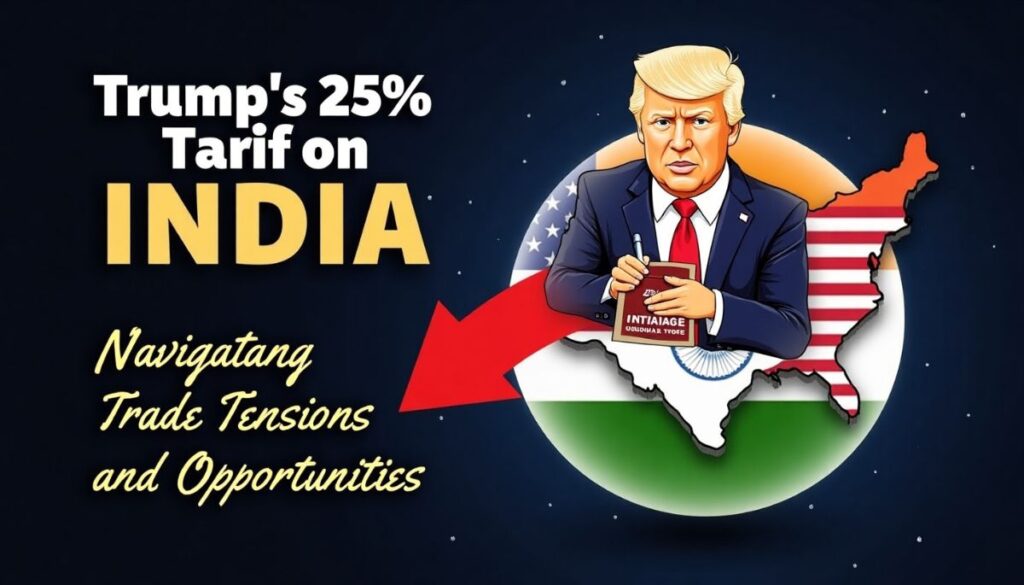
The 25% tariff could have significant repercussions for India’s economy. A recent SBI study estimated that a 20% tariff could shave 0.5% off India’s GDP, suggesting that a 25% tariff could have an even greater impact, potentially reducing export volumes by 1.25%. Key sectors like pharmaceuticals, auto parts, and electronics, which form a large part of India’s $87 billion in exports to the U.S., are particularly vulnerable. The uncertainty has already disrupted commerce, with U.S. buyers delaying orders and Indian exporters facing challenges for the upcoming fall-winter season.
However, experts suggest India is better positioned than some competitors. Countries like Vietnam and the Philippines face tariffs of 20%, while others, like Myanmar, face up to 40%. India’s service exports, projected to reach $387.5 billion in 2024-25, particularly in IT and financial services, may cushion the blow. Additionally, exemptions for critical goods like pharmaceuticals and semiconductors could mitigate some of the impact.
Expert Perspectives: A Mix of Concern and Optimism
Former Finance Secretary SC Garg expressed frustration, calling the U.S. approach “blackmail” rather than fair trade. He argued that India’s trade surplus is a result of competitive exports, and relying on costly U.S. oil imports is impractical. “If the U.S. doesn’t want to do business with us, it’s okay,” Garg said, suggesting India may need to accept higher tariffs temporarily.
In contrast, Jayant Dasgupta, former envoy to the WTO, noted that the 25% tariff aligns with expectations and is less severe than the 100% tariffs threatened for countries heavily reliant on Russian oil. He remains hopeful, pointing out that Trump often escalates rhetoric before softening his stance. “Talks are still going on,” Dasgupta said, suggesting a deal could still emerge.
Ongoing India-U.S. Trade Talks: A Path Forward

Despite the tariff announcement, negotiations for a bilateral trade agreement continue to progress. The fifth round of talks, led by India’s Rajesh Agrawal and U.S. Trade Representative Brendan Lynch, concluded in Washington last week. A U.S. delegation is expected to visit India in mid-August for the sixth round, with both sides aiming for a comprehensive deal by September or October 2025.
India has taken a firm stance on sensitive sectors like agriculture and dairy, resisting U.S. demands for genetically modified crops and greater market access. However, New Delhi has proposed incremental tariff reductions and quota-based systems for certain imports, similar to its recent trade agreement with the UK. Commerce Minister Piyush Goyal expressed confidence, stating that talks are advancing at a “fast pace” and aim for a “win-win” agreement.
The goal is ambitious: doubling bilateral trade to $500 billion. Key discussion points include agriculture, automobiles, special chemicals, and digital services. While a comprehensive deal may take time, an interim agreement with tariff reductions below 20% is under consideration, potentially giving India an edge over other Asian competitors.
Geopolitical Context: Balancing Alliances
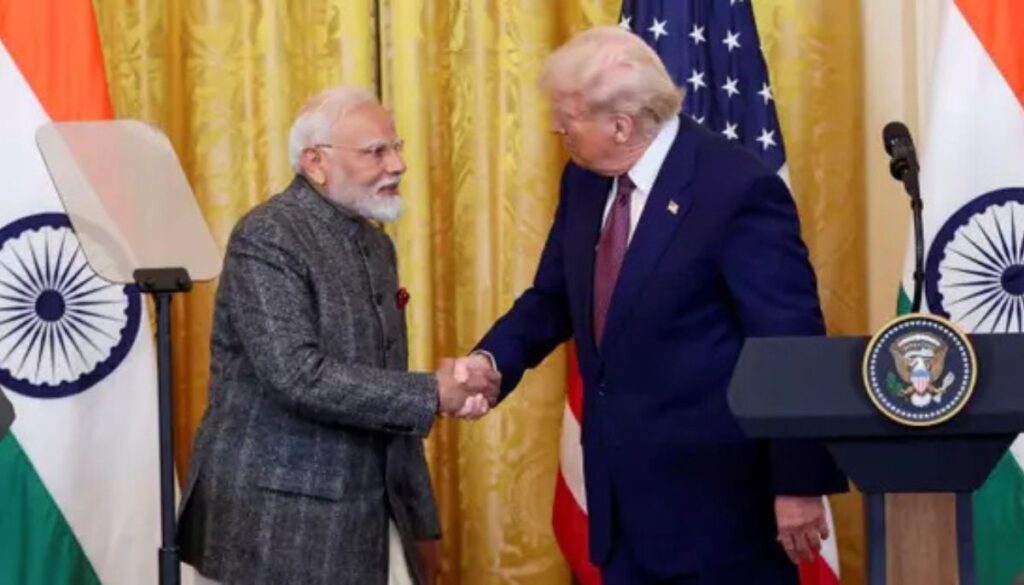
The tariffs also reflect geopolitical tensions, particularly India’s ties with Russia. While Trump praised India’s leadership under Prime Minister Narendra Modi and claimed credit for brokering a ceasefire with Pakistan, he emphasized that India’s Russian energy and defense purchases are problematic. India, however, negotiates from a position of strength as the world’s fifth-largest economy and a key U.S. partner in countering China’s influence.
Foreign Secretary Vikram Misri highlighted India’s confidence in trade talks, stating that discussions are “progressing very well” and aim for a mutually beneficial deal. India’s recent trade agreements with the UK and the European Free Trade Association demonstrate its growing openness to global trade, which could bolster its negotiating position.
Opportunities Amid Challenges
While the tariffs pose challenges, they also present opportunities. India could gain market share in sectors like chemicals and apparel, where competitors face higher tariffs. An SBI report suggests that capturing a 2% share in chemical exports could add 0.2% to India’s GDP, while a 5% increase in apparel exports could contribute 0.1%. Additionally, India’s robust service sector and exemptions for key goods provide a buffer against the tariffs’ impact.
The ongoing talks offer hope for a resolution. Trump’s history of softening tariff threats after negotiations, as seen with Japan and the Philippines, suggests that a deal could lower India’s tariffs to 15-20%. With both sides committed to a long-term partnership, the focus remains on finding common ground.
Trump’s 25% Tariff on India: Key Highlights
| Topic | Details |
|---|---|
| Tariff Announcement Date | July 30, 2025 |
| Effective From | August 1, 2025 |
| Tariff Rate | 25% tariff + penalty |
| Reason Stated by Trump | India’s high tariffs, non-monetary trade barriers, and defense/energy ties with Russia |
| Trump’s Statement | “India is our friend, but their trade barriers are obnoxious, and they buy too much from Russia.” |
| India’s Trade Deficit With US | Claimed as “massive” by Trump |
| Non-Monetary Barriers Cited | Stringent certification rules, limited access for US goods, excessive bureaucracy |
| India’s Military Ties With Russia | “Vast majority” of equipment bought from Russia |
| India’s Energy Imports | Major buyer of Russian oil, along with China |
| Economic Impact Prediction (SBI Study) | 25% tariff could reduce India’s GDP by 0.5% |
| Export Volume Effect | 1% tariff hike = ~0.5% fall in export volume |
| Expert Reactions | SC Garg: “This is blackmail, not trade.” Jayant Dasgupta: “Not unexpected, talks are still ongoing.” |
| Next Negotiation Round | Scheduled in India – August 2025 |
| Goal of India-US Trade Talks | Double bilateral trade to $500 billion by October 2025 |
| Pending Discussion Areas | Agriculture, automobiles, SCOMET goods, digital trade |
Looking Ahead: A Bright Future for India-U.S. Trade
The announcement of a 25% tariff on India is a hurdle, but it’s not the end of the story. With negotiations ongoing and a U.S. delegation set to visit India in August, there’s still time to secure a deal that benefits both nations. India’s strategic importance, growing economy, and willingness to engage in trade talks position it well to navigate these challenges. As both countries work toward doubling their bilateral trade, the focus on mutual cooperation and fair competition offers a promising path forward.
Stay tuned for updates as India and the U.S. continue to shape their economic partnership in this dynamic global landscape.
Detailed Summary of Trump’s 25% Tariff on India:
| Aspect | Observation / Focus Area | Analysis / Perspective | Potential Impact | Future Outlook |
|---|---|---|---|---|
| Economic Policy Shift | Tariff on India reflects Trump’s protectionist stance. | Tariff on India demonstrates America’s renewed focus on reducing trade deficits through aggressive tariff mechanisms. | Tariff on India may disrupt short-term exports but could push India to diversify markets. | Tariff on India may lead to a recalibrated trade balance with stronger regional partnerships. |
| Strategic Trade Move | Tariff on India targets sectors with U.S. competitiveness concerns. | Tariff on India underscores Washington’s intent to pressure India into trade concessions favorable to U.S. industries. | Tariff on India could initially hurt India’s auto, pharma, and electronics exports. | Tariff on India might prompt India to accelerate its “Make in India” manufacturing agenda. |
| Diplomatic Messaging | Tariff on India signals a mix of friendship and firmness. | Tariff on India highlights how the U.S. balances diplomacy with economic assertiveness toward allies. | Tariff on India may test India-U.S. relations during ongoing BTA negotiations. | Tariff on India may eventually soften as talks progress toward a bilateral deal. |
| Geopolitical Undertones | Tariff on India links trade with global power alignment. | Tariff on India brings India’s ties with Russia under indirect scrutiny in a broader geopolitical chessboard. | Tariff on India could increase pressure on India to reduce Russian energy and defense imports. | Tariff on India may motivate India to strengthen trade and defense ties with the West. |
| Domestic Politics | Tariff on India serves Trump’s “America First” voter base. | Tariff on India is positioned to appeal to U.S. domestic manufacturing constituencies during the election cycle. | Tariff on India may polarize U.S. business lobbies dependent on Indian imports. | Tariff on India might be revised post-election, depending on policy outcomes. |
| Global Supply Chain Impact | Tariff on India affects multiple multinational ecosystems. | Tariff on India challenges global companies reliant on Indian manufacturing hubs for pharmaceuticals and IT hardware. | Tariff on India could cause short-term supply disruptions in critical goods. | Tariff on India may accelerate diversification toward Southeast Asia and Africa. |
| Comparative Trade Advantage | Tariff on India could shift competitiveness among Asian economies. | Tariff on India gives temporary leverage to countries like Vietnam and Indonesia in the U.S. market. | Tariff on India could reduce India’s export share in key segments by 1–1.5%. | Tariff on India might drive India to secure preferential trade pacts with the EU and UK. |
| Financial Markets Reaction | Tariff on India triggers currency and market volatility. | Tariff on India led to short-term rupee depreciation amid investor caution. | Tariff on India raised concerns in sectors heavily dependent on U.S. exports. | Tariff on India may stabilize as policy clarity emerges through BTA discussions. |
| Public Sentiment | Tariff on India stirs mixed responses among citizens. | Tariff on India divides opinion — some view it as unfair, others as a chance for economic self-reliance. | Tariff on India strengthens calls for “Aatmanirbhar Bharat” initiatives. | Tariff on India may inspire greater domestic innovation in manufacturing. |
| Trade Negotiation Leverage | Tariff on India adds urgency to bilateral talks. | Tariff on India gives the U.S. a negotiating edge to push for deeper access to India’s agricultural and digital markets. | Tariff on India increases pressure on Indian negotiators to find middle ground. | Tariff on India may lead to phased tariff reductions in an interim trade pact. |
| Technology & Services Sector | Tariff on India spares key IT and digital services. | Tariff on India reflects recognition of India’s importance in global tech supply chains. | Tariff on India allows IT exports to continue driving India’s trade surplus. | Tariff on India reinforces India’s positioning as a resilient services leader. |
| Long-term Economic Reform | Tariff on India may accelerate structural policy shifts. | Tariff on India pushes India to reduce non-monetary barriers and modernize customs procedures. | Tariff on India encourages reforms in ease-of-doing-business and global trade competitiveness. | Tariff on India could spark India’s next wave of trade liberalization. |
| Investor Confidence | Tariff on India momentarily dampens investor sentiment. | Tariff on India causes uncertainty for global investors evaluating India’s export sectors. | Tariff on India might delay FDI inflows into export-oriented industries. | Tariff on India could eventually improve investor confidence once clarity returns. |
| Mutual Dependence Factor | Tariff on India highlights the interdependence of both economies. | Tariff on India reveals how deeply integrated U.S.-India trade has become over decades. | Tariff on India impacts both Indian exporters and U.S. consumers relying on affordable imports. | Tariff on India may reinforce the need for balanced, sustainable trade ties. |
| Economic Opportunity Creation | Tariff on India opens doors for innovation and diversification. | Tariff on India may drive India to explore new trade frontiers in Africa, Latin America, and ASEAN. | Tariff on India could boost startups and MSMEs catering to alternative export destinations. | Tariff on India can transform into a catalyst for global economic repositioning. |
Note: All information and images used in this content are sourced from Google. They are used here for informational and illustrative purposes only.
FAQs: Trump’s 25% Tariff on India – What You Need to Know
Q1. Why has Donald Trump announced a 25% tariff on Indian goods?
Former US President Donald Trump has announced a 25% tariff claiming that India imposes excessively high tariffs and enforces “obnoxious non-monetary trade barriers.” He added that this 25% tariff aims to push India towards fairer trade practices while addressing geopolitical concerns related to its defense and energy purchases from Russia.
Q2. When will the 25% tariff on India come into effect?
The new 25% tariff is scheduled to come into effect on August 1, 2025, along with additional trade penalties. The 25% tariff will be imposed across several key export sectors, marking one of the most significant trade actions against India in recent years
Q3. What impact will this 25% tariff have on India’s economy?
According to a recent SBI report, the 25% tariff on Indian exports could shrink the country’s GDP by up to 0.5%. The study warns that such a flat 25% tariff may significantly affect India’s export competitiveness in the US market.
Q4. Which sectors in India are likely to be hit hardest by the 25% tariff?
Industries such as automobiles, textiles, IT services, and pharmaceuticals are expected to feel the greatest impact of the 25% tariff. These sectors have high exposure to US markets and may experience a drop in export volumes due to the new 25% tariff.
Q5. What is India’s response to the 25% tariff announcement?
There has been no official response yet from India regarding the 25% tariff. However, diplomatic sources indicate that New Delhi plans to raise the issue during ongoing trade discussions and may seek a negotiated settlement to reduce or defer the 25% tariff.
Q6. Is this the first time Trump has imposed tariffs on India?
No. During his presidency, Trump had previously revoked India’s GSP (Generalized System of Preferences) status and imposed limited trade penalties. However, the 25% tariff marks a significant escalation compared to his earlier trade actions.
Q7. Can India retaliate or challenge the 25% tariff?
India could file a complaint with the WTO or impose counter-tariffs on select US imports in response to the 25% tariff. Analysts believe, however, that India might opt for a diplomatic resolution rather than escalating the trade dispute over the 25% tariff.
Q8. How do experts view Trump’s 25% tariff move?
Former Finance Secretary S.C. Garg described the 25% tariff as “economic blackmail,” while ex-WTO envoy Jayant Dasgupta said it was “not unexpected.” Experts note that Trump’s 25% tariff strategy aligns with his long-standing “America First” trade agenda.
Q9. Is India planning to reduce its dependency on Russian oil and arms due to the 25% tariff?
Although the 25% tariff may pressure India to strengthen trade ties with the US, the country continues to prioritize strategic autonomy. India has made informal commitments to import more oil and defense equipment from the US, but a complete shift from Russia is unlikely.
Q10. What’s the long-term goal of India-US trade talks amid the 25% tariff tension?
Both nations aim to double bilateral trade to $500 billion by October 2025 despite the ongoing 25% tariff dispute. Negotiators are working toward finalizing the first phase of a Bilateral Trade Agreement (BTA), which could potentially ease the impact of the 25% tariff on key sectors.






Leave a Reply