
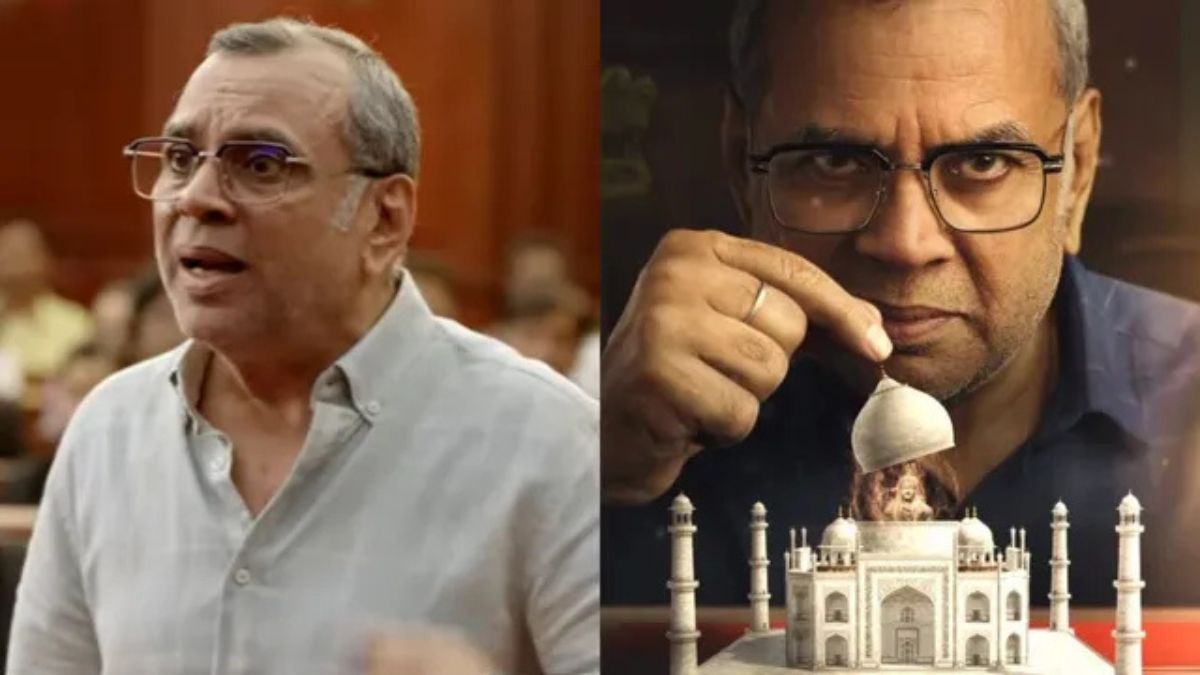
The Taj Story movie review is about how veteran actor Paresh Rawal holds up this political courtroom drama with such belief and strength. It’s directed by Tushar Amrish Goel. This movie takes a look at India’s most famous monument, the Taj Mahal, and goes into the current arguments around where it came from. The movie puts together ideas of belief, identity, and nationalism, asking questions about history, heritage, and what’s real, sure to get people curious and create some debate.
A Touchy Story in a Courtroom Setting
In The Taj Story, Paresh Rawal is Vishnu. He’s a tour guide from Agra who really thinks the Taj Mahal used to be a Shiva temple called Tejo Mahalaya. After a video comes out of him wanting a DNA test on the monument, he gets in trouble. He loses his job by a Guide Association. Vishnu doesn’t give up, files a Public Interest Lawsuit (PIL) — and that’s when the real story starts.
Director Tushar Amrish Goel makes this feel like a courtroom story, where beliefs about history and faith bump into each other. The main question is — “Did Shah Jahan build the Taj Mahal, or was it a Hindu temple turned into a tomb?. It’s about 165 minutes long.
Themes of Changing History and Identity
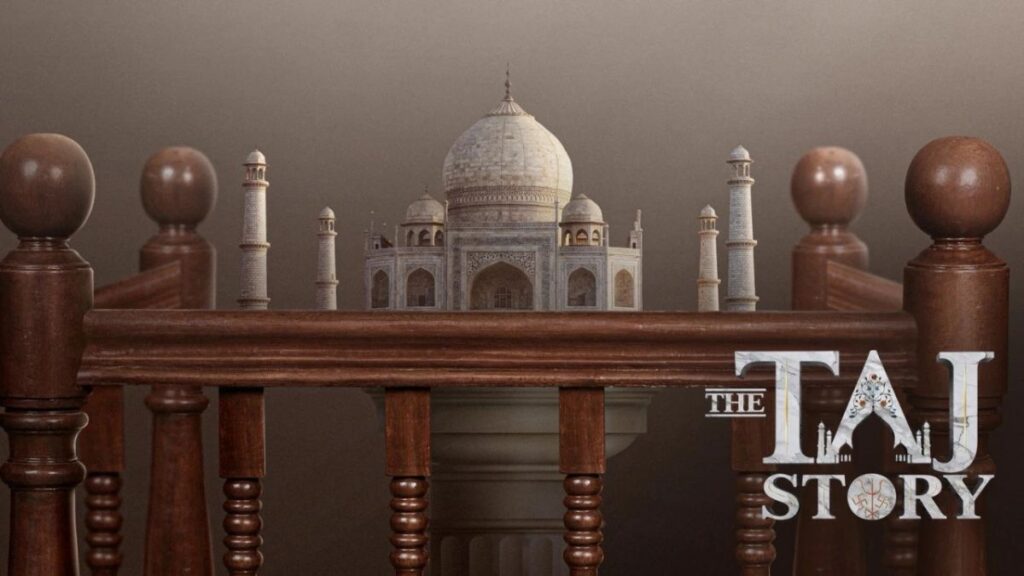
The film gets into today’s political feelings, showing how some filmmakers are trying to “fix” what they think is wrong in how India’s history is taught. The Taj Story acts like a what-if idea — a thought turned into a political argument. Through what people say and the courtroom scenes, it says historians have been on Mughal rulers’ sides, not talking about the bad things they supposedly did.
The movie mentions P.N. Oak and Marvin Miller’s ideas, talking about them as truths, but historians have already said those ideas are not true. By calling it a “Publicity Interest Petition,” the film smartly uses its storyline to keep people talking about this.
Paresh Rawal makes the Movie Great
If the film works, it’s because Paresh Rawal is so good on screen. He uses his political mind and acting skills, Rawal changes Vishnu from just a guide to someone who is really determined. His courtroom scenes with Zakir Hussain, who plays the Mughal lawyer, are exciting — mixing drama with some funny moments.
While the movie seems to choose one side, Rawal’s good acting keeps it from feeling like it’s trying to force something on you. His face shows belief, confusion, and charisma — all at the same time. Zakir Hussain’s good points add to it, making the courtroom scenes interesting.
Problems with How It’s Made
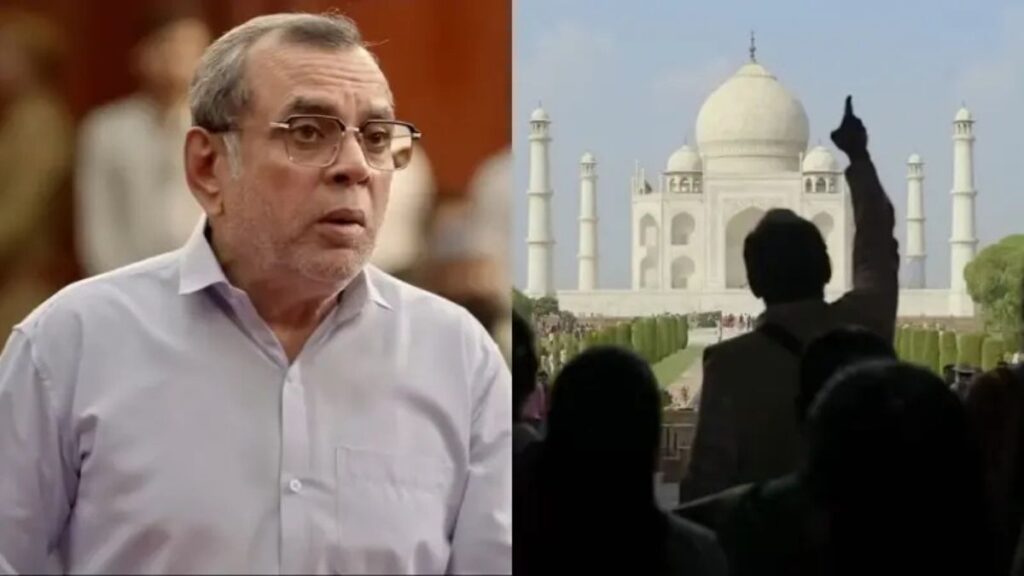
Even though the acting is strong, the writing isn’t always great. The story has trouble staying fair between looking at history and pushing a message. The way it looks is good, but there are small mistakes — like misspelling “Archaeology” —showing the movie’s half-truths.
The Taj Story takes ideas from The Kashmir Files-style of movie, with overdone characters — men with skull caps representing the “other.” This makes what they are trying to do clear, but it might make some people not like it.
In The End: A Political Movie with a Great Actor
The Taj Story might not change history, but it changes how films can change what people think. It’s a political, emotional courtroom film that does well because of Paresh Rawal’s acting.
For people who want fun mixed with ideas and courtroom drama, this movie is okay.que — if polarizing — experience. However, those expecting historical accuracy or objectivity may find it lacking.
Note: All information and images used in this content are sourced from Google. They are used here for informational and illustrative purposes only.
FAQs on The Taj Story Movie
Q1. What is The Taj Story movie about?
The Taj Story is a courtroom drama directed by Tushar Amrish Goel, centered on a controversial claim that the Taj Mahal was once a Hindu temple called Tejo Mahalaya. It follows Vishnu, a tourist guide played by Paresh Rawal, who files a Public Interest Litigation to uncover the “truth” behind the monument’s history.
Q2. Who directed The Taj Story?
The Taj Story is directed by Tushar Amrish Goel, known for exploring politically charged and socially debatable subjects through his storytelling.
Q3. Who plays the lead role in The Taj Story?
Veteran actor Paresh Rawal plays the lead role of Vishnu, an Agra-based guide determined to prove his belief about the Taj Mahal’s origins.
Q4. What is the main theme of The Taj Story?
The film explores revisionist history, political ideology, and identity politics while examining how historical narratives can be reinterpreted to suit contemporary beliefs.
Q5. How long is The Taj Story?
The movie runs for approximately 165 minutes, offering a detailed courtroom and socio-political drama.
Q6. Who are the main cast members of The Taj Story?
The key cast includes Paresh Rawal, Zakir Hussain, Namit Das, and Sneha Wagh, each contributing strong performances that enrich the film’s narrative.
Q7. What makes The Taj Story different from other historical dramas?
Unlike conventional period films, The Taj Story mixes courtroom debate, political commentary, and historical speculation to question long-accepted facts about one of India’s greatest monuments.
Q8. Does The Taj Story promote a political message?
Yes, the film is designed with strong ideological undertones, echoing sentiments similar to The Kashmir Files-style cinema, which blends political narrative with dramatic storytelling.
Q9. How is Paresh Rawal’s performance in The Taj Story?
Paresh Rawal delivers a powerful and convincing performance, portraying Vishnu as a man torn between faith and logic. His chemistry with Zakir Hussain adds depth and occasional humor to the courtroom scenes.
Q10. What are some criticisms of The Taj Story?
Critics argue that the film leans heavily on propaganda and exaggerates historical claims without solid evidence. Some also point out factual errors, including misspellings and oversimplified arguments.
Q11. What is the conclusion of The Taj Story?
The film ends with a display of ongoing petitions related to the Taj Mahal controversy, hinting that the debate is far from over and reinforcing its theme of keeping the issue alive in public discourse.
Q12. Should you watch The Taj Story?
You should watch The Taj Story if you enjoy courtroom dramas, political debates, and strong performances by veteran actors like Paresh Rawal. However, approach it with a critical perspective if you’re seeking historical accuracy.
Q13. What is the key takeaway from The Taj Story?
The key takeaway is that The Taj Story aims to question historical narratives, evoke emotion, and stimulate political conversation — blending entertainment with ideology in a provocative manner.






Leave a Reply