
U.S. & Israel’s War with Iran Heats Up — The Middle East is hurtling toward a historic and explosive turning point as U.S. and Israeli forces intensify strikes against Iranian military and strategic targets, signaling a seismic shift in regional dynamics. After a U.S. submarine torpedoed an Iranian warship far from Iran’s coast and aerial bombardments cripple key sites in Tehran, the conflict has spread from the Gulf to Lebanon and beyond, disrupting global energy routes and sending tensions sky-high. With missiles flying, massive evacuations underway, and national leaderships shaken, Day 5 marks both shock and upheaval on a scale unseen in decades — and the world is watching closely.
The war between the U.S., Israel, and Iran has totally changed the Middle East. What started as small attacks is now a much bigger mess. Cities are on edge, no one controls the skies, it’s hard to get oil, and the markets are going nuts.
Folks in Iran, Israel, Lebanon, and Gulf countries are scared and confused. Big military stuff is happening, and world leaders are saying what happens next could decide how safe the area.
U.S. Ramping Up Attacks
The U.S. is making one part clear: They’re not slowing down.
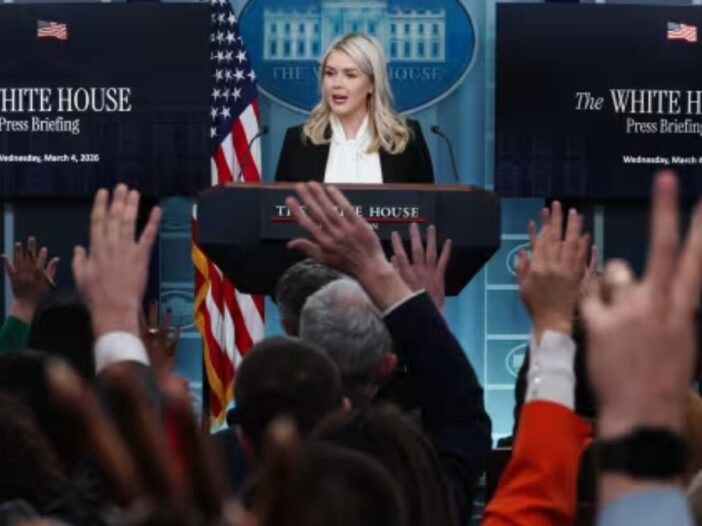
Defense Secretary Pete Hegseth said they’re going faster. More bombers and fighters are heading to the region, and the U.S. military keeps bombing Iranian stuff.
Gen. Dan Caine said they’re going to hit deeper inside Iran. Officials say they want to stop Iran from rebuilding its missiles, navy, and control centers.
Since this all started, U.S. forces have dropped more than 5,000 bombs. B-2, B-1, and B-52 bombers have hit missile factories, air defenses, and command posts. American officials claim Iran’s air defenses are weak.
But it’s costing lives. Six U.S. troops have died, including some in Kuwait.
Submarine Attack: Iranian Warship Gets Sunk
One crazy thing that happened was at sea.
A U.S. submarine blew up the Iranian ship IRIS Dena close to Sri Lanka in the Indian Ocean. Officials say it’s the first time a sub has sunk a warship in years.
Sri Lanka saved 32 crew members but found around 80 dead bodies. The U.S. military says they’ve taken out more than 20 Iranian ships and one submarine since the fighting started.
Iran’s navy isn’t much of a threat right now.
Civilians Hurt & Things are Getting Bad
People are really getting hurt.
A U.S. human rights group says almost 1,100 civilians are dead in Iran, and that includes 181 kids under 10. Over 5,400 civilians are hurt. Iranian officials don’t agree with these numbers, and it’s hard to check because the internet is down and the media can’t report freely.
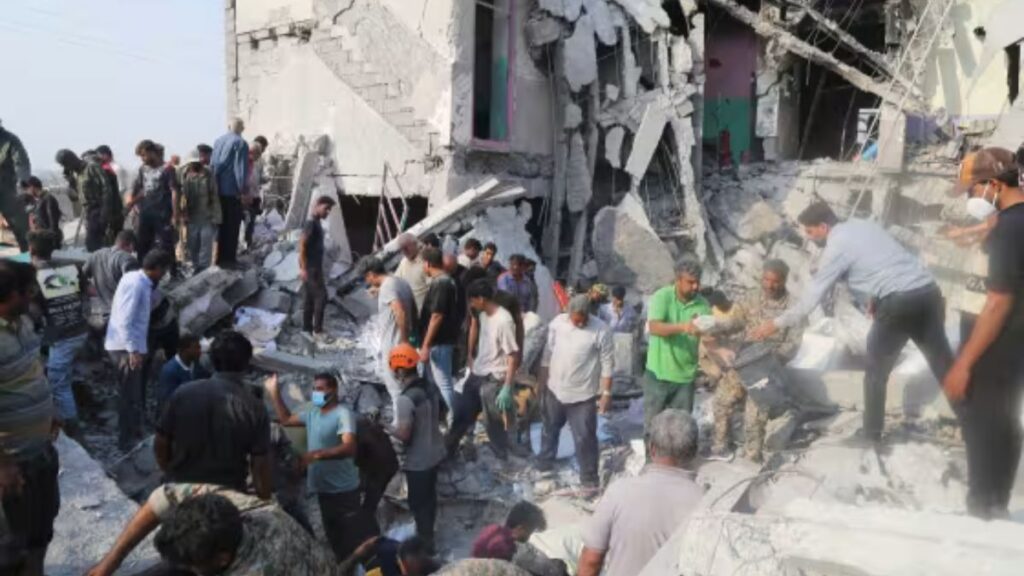
One bombing made everyone angry. Airstrikes hit Shajareh Tayyebeh elementary school in Minab, killing 168 people, mostly kids. U.S. officials are checking it out and say they don’t try to hit civilians on purpose.
People in Iranian cities are worried. Families are waiting for news, hospitals are packed, and life is tough.
Iran’s Leaders are in Trouble
The Supreme Leader of Iran Ali Khamenei died in the first U.S. and Israeli attacks. Iran delayed his funeral because Tehran was getting bombed so badly.
Now, the Assembly of Experts is trying to find someone to take his place. People think Mojtaba Khamenei, the dead guy’s son, might get the job. But things could take a minute because of the war.
Israel’s Defense Minister Israel Katz said they’ll target whoever gets picked.
Israel Bombs Tehran & Lebanon Hard
Israel is also attacking hard.
The Israeli military has launched big attacks on Revolutionary Guard and intelligence buildings in Tehran. Over 100 fighter jets dropped a lot of bombs.
Also, Israel says one of its F-35I jets shot down an Iranian YAK-130 plane over Tehran—the first time an Israeli F-35 has taken down a plane.
In Lebanon, things are crazy with Hezbollah. Airstrikes have hit the southern parts of Beirut, and people are being told to leave. Groups helping people say over 65,000 have had to leave home.
War Spreads & Energy Prices Go Up
This war isn’t just in Iran and Israel now.
An Iranian missile hit Al Udeid Air Base in Qatar, but no one got hurt. Some defenses stopped a missile aimed at Turkey. Some junk from missile strikes killed a girl in Kuwait.
Most important, ships can’t get through the Strait of Hormuz. Iran said it’s closed and that they’ll attack any ships that try to go through. Tons of ships are stuck near Gulf countries.
Qatar stopped making gas. Energy prices have shot up, and Asian markets are freaking out because they don’t know when things will get back to normal.
What’s Going On in Tehran: Scared People, Not Enough Stuff, & No News
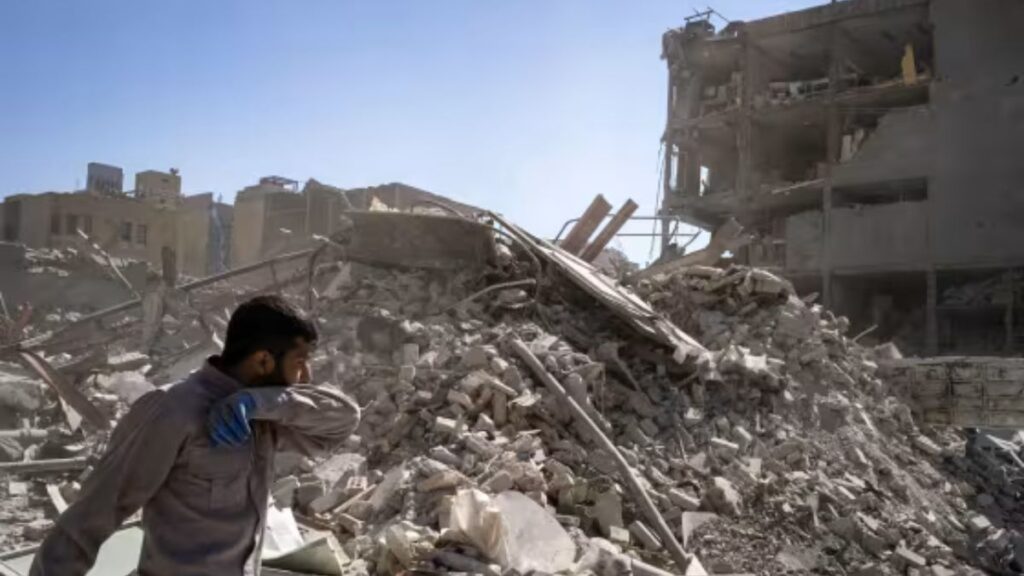
Even though Tehran is getting bombed, some people are still there.
Some people left, but others are stuck because they don’t have the money to go anywhere. The lights are still on, but food costs more and banks aren’t letting people take out much money.
There’s barely any internet. Some people are getting news from other countries, but it’s tough. No big protests have started because there are police everywhere.
People are super stressed. One person said he’s shocked but hopes things will change.
Is Iran Trying to Build Nukes?
This whole thing is about Iran’s nuclear program.
Israeli officials said Iran could have made weapons-grade uranium in two weeks if they wanted to.
U.S. officials said Iran wasn’t being serious during nuclear talks. So, they decided to attack to stop Iran from making nukes in the future.
The International Atomic Energy Agency said the nuclear stuff is still safe.
People are Leaving, Flights are Canceled, & the World is Affected
It’s hard to fly in the Middle East right now.
Over 9,000 Americans have gotten back home since the war started, but 1,500 still need help.
Other countries have sent planes to get their people out. Officials have told people to leave places like Qatar.
Airports are full of families happy to see each other.
Is the Middle East Going to Change?
This fight involves Iran, Israel, Lebanon, Turkey, Qatar, Kuwait, Sri Lanka, and important shipping routes. The economy is messed up, and countries aren’t getting along.
Some people are freaking out because this war could shake things up.
U.S. officials are hinting that even bigger attacks are coming. Iran seems ready for a long fight.
It’s all down to what happens in the next few days. Things could either get better or get a whole lot worse.
What to Know
- The U.S. is bombing Iran harder.
- A U.S. submarine sank an Iranian ship.
- Lots of civilians are dying in Iran.
- Iran needs a new leader.
- Israel is bombing Tehran and Lebanon.
- The Strait of Hormuz is closed.
- People are trying to escape.
- Everyone’s worried about nukes.
What’s Going On? A Big Turning Point
The war between the U.S., Israel, and Iran could be a major event.
The military says they’re winning, but civilians are suffering. The economy is unstable, alliances are strained, and the Middle East isn’t safe.
What happens next will change the area for years.
The world is watching.
FAQ: Understanding the Escalation as U.S. & Israel’s War with Iran Heats Up
1. Why is everyone saying U.S. & Israel’s War with Iran Heats Up marks a historic turning point?
Because this is no longer a limited exchange of strikes. The conflict now stretches across air, sea, and multiple national borders. U.S. forces have expanded operations deep inside Iran, Israel has intensified airstrikes on military infrastructure, and Iran has retaliated with missile and drone attacks across the region. Energy routes are disrupted, regional alliances are being tested, and leadership in Iran is in transition. It feels like a defining moment because the consequences may reshape Middle Eastern security for years.
2. How did the conflict expand so dramatically as U.S. & Israel’s War with Iran Heats Up?
Escalation followed a series of high-impact military moves. A U.S. submarine torpedoed and sank the Iranian frigate IRIS Dena in the Indian Ocean, signaling that the battlefield had expanded beyond Iran’s borders. Israeli fighter jets struck command centers and military compounds in Tehran. In response, Iran launched hundreds of missiles and drones toward Israeli and regional targets. Each action triggered another, creating a cycle that rapidly widened the scope of the war.
3. What are the main military objectives as U.S. & Israel’s War with Iran Heats Up?
U.S. and Israeli officials say their goals are to degrade Iran’s missile systems, weaken air defenses, reduce naval capabilities, and prevent further progress toward nuclear weapons development. Strategic strikes have targeted missile factories, intelligence facilities, and Revolutionary Guard compounds. The stated aim is long-term security — to prevent a future, larger war by limiting Iran’s military reach now.
4. What is happening inside Iran as U.S. & Israel’s War with Iran Heats Up?
Life inside Iran has changed overnight. Airstrikes have hit military and government sites in Tehran and other cities. Internet access is restricted. Many businesses are closed, food prices are rising, and banks are limiting withdrawals. Some residents have fled major cities, while others remain due to financial constraints. Despite the tension, basic utilities are still functioning in many areas. There is fear — but also uncertainty about what political changes may follow.
5. How significant is the leadership shift as U.S. & Israel’s War with Iran Heats Up?
The death of Supreme Leader Ali Khamenei created a major power vacuum at a time of war. Iran’s Assembly of Experts is moving to appoint a successor, with Mojtaba Khamenei reportedly among those considered. Leadership transitions during wartime carry enormous implications. The next supreme leader’s stance could either harden the conflict or open a path to de-escalation.
6. What role is Israel playing as U.S. & Israel’s War with Iran Heats Up?
Israel has taken an aggressive operational role, launching large-scale airstrikes on Iranian military targets and confronting Iranian-linked forces in Lebanon. Israeli officials argue they are acting to neutralize long-term threats, particularly missile production and nuclear advancement. The conflict has also intensified tensions with Hezbollah in Lebanon, raising fears of a second active front.
7. How is the wider region affected as U.S. & Israel’s War with Iran Heats Up?
The war’s ripple effects are enormous. Missile interceptions have occurred near Turkey. A strike targeted a base in Qatar. Shipping in the Strait of Hormuz has slowed dramatically, disrupting global oil and gas flows. Gulf states are on high alert. Markets across Asia and Europe have reacted to energy supply concerns. Even countries not directly involved are feeling economic and security pressure.
8. What does the sinking of the IRIS Dena mean as U.S. & Israel’s War with Iran Heats Up?
The torpedoing of the IRIS Dena marked a rare modern naval engagement. It demonstrated that the conflict is not confined to airstrikes but includes high-risk maritime warfare. It also signaled U.S. willingness to assert naval dominance in regional waters. Strategically, it weakened Iran’s naval presence and underscored how quickly this war has expanded geographically.
9. Are civilians paying the price as U.S. & Israel’s War with Iran Heats Up?
Yes — and this is the most painful dimension. Reports indicate over a thousand civilian deaths in Iran, including children. Displacement in Lebanon has surged. Families across the region are living with sirens, uncertainty, and economic instability. Governments insist civilians are not intentionally targeted, but the human cost of modern warfare remains deeply felt.
10. How central is the nuclear issue as U.S. & Israel’s War with Iran Heats Up?
At the heart of the conflict lies Iran’s nuclear capability. Israeli officials claim Iran could have enriched uranium to weapons-grade levels within weeks. While weaponization was reportedly incomplete, the perceived urgency fueled military action. Preventing nuclear breakout remains one of the core justifications for escalation.
11. Could diplomacy still emerge as U.S. & Israel’s War with Iran Heats Up?
Even during intense conflict, diplomacy is never completely off the table. Regional and European leaders have warned that continued escalation risks long-term instability. Leadership changes in Iran, international pressure, and economic strain could eventually open space for negotiation. History shows that even the most intense wars can shift toward dialogue — but timing is everything.
12. What should the world watch most closely as U.S. & Israel’s War with Iran Heats Up?
Three factors matter most:
- The appointment and direction of Iran’s next supreme leader.
- Whether the Strait of Hormuz reopens fully to global shipping.
- Whether additional regional actors become directly involved.
These elements will determine whether this conflict stabilizes or spirals into something far broader.
Final Reflection
As U.S. & Israel’s War with Iran Heats Up, the headlines speak of missiles and submarines — but beneath them are families, futures, and fragile hopes. The world is witnessing a moment of extraordinary tension. Yet even in escalation, there remains a shared global desire for stability, security, and ultimately peace.






Leave a Reply