
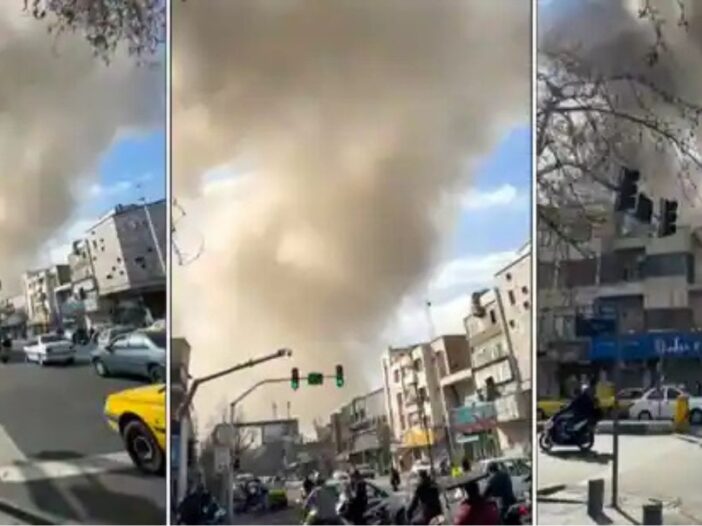
US Attacks Iran Breaking & Crucial Update: In an unprecedented escalation across the Middle East, the United States and Israel have launched coordinated military strikes deep inside Iranian territory, sending shockwaves through capitals from Tehran to Abu Dhabi. Massive explosions have been reported in multiple Gulf cities, prompting air defense alerts and urgent evacuations as tensions spiral into a high-stakes confrontation. With airspaces shut, airlines scrambling to reroute flights, and regional governments warning of further retaliation, this moment marks a critical turning point in regional security. Millions of people are glued to updates, as the world watches whether this clash triggers a wider conflict.
The Middle East just woke up to a huge military thing. Big booms were heard in major Gulf cities. Israel said they launched a preventative strike on Tehran. Soon after, the US said they were involved, which makes this whole situation way more serious.
Because of this, airspace is closing everywhere. Airlines are trying to figure out new routes, and tons of people are worried about what’s next. Those strikes in Iran turned into a big regional security mess real fast.
Israel’s Surprise Strike on Tehran
Israel kicked things off with surprise airstrikes near Supreme Leader Ayatollah Ali Khamenei’s offices and home in Tehran. Word is, a bunch of missiles hit close to the place. But, officials are saying Khamenei had already been moved somewhere safe.
Israeli leaders are saying they had to this to stop anything bad from happening. So, Israel said they’re in a state of emergency. Schools and offices are closed, and hospitals are getting ready for possible attacks.
Also, sirens went off all over the place as air defenses tried to stop incoming missiles.
US Says They’re in on Operation Epic Fury
Right after the strikes, President Donald Trump said the US was directly involved. He said the goal was to get rid of Iran’s missile stuff. And, he said they might do more if they need to.
The Pentagon is calling this Operation Epic Fury. And Israeli Prime Minister Benjamin Netanyahu is calling Israel’s part Operation Roaring Lion. Both are saying it’s super important for their countries’ safety.
Because of this statement, the stock market is shaky, and security agencies are on high alert.
Iran Is Not Happy, Tensions Rise
Iran’s Foreign Affairs Ministry is calling the strikes illegal. They said the people who did this will regret it, and that Iran has the right to defend itself.
Soon after, Iranian missiles were reportedly fired at Israel. Israel’s defense systems stopped some of them, but explosions were still heard up north. So, alerts are still in place everywhere.
Plus, missiles went beyond Israel. Qatar stopped one near the Al-Udeid Air Base, where the US military has a lot of stuff. Bahrain also said a missile was headed for the US Navy’s Fifth Fleet headquarters.
Explosions All Over Gulf Cities
As things got worse, people in Doha, Dubai, Abu Dhabi, and Riyadh heard loud explosions. Even though officials haven’t said anything hit directly in all those places, air defense systems were going off in a bunch of Gulf states.
The United Arab Emirates is calling this a serious violation of their country. So, they said they might do something if things get worse.
A lot of people are scared because of the sirens and explosions. Families are watching the news, and governments are telling people to stay calm and pay attention.
Airspace Closures Mess Up Flights Worldwide
Because of the fighting, Iran, Israel, and Iraq closed their airspace. Then, the UAE did too, stopping civilian flights in some areas.
So, big airlines are canceling or changing flights. This includes:
- Lufthansa
- Air France
- Air Arabia
- Iberia Express
- Turkish Airlines
Also, Air India had to turn a flight back to Delhi because Israel closed its airspace.
Flightradar24, a flight tracking website, showed almost no planes over the area, which shows how bad the disruption is.
IndiGo and Air India Tell People What’s Up
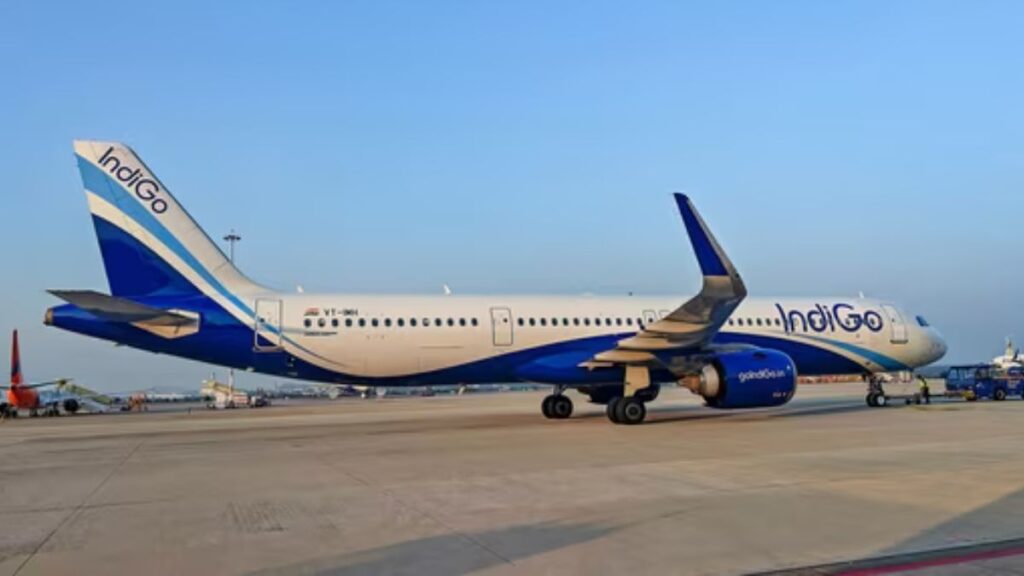
IndiGo, the biggest airline in India, said they’re watching what’s happening with Iranian airspace. They said they’re ready to change things if things get worse.
They’re telling people to check their flight status before they leave. And airlines said they’ll send updates to people’s contact info.
Meanwhile, Russian officials said their airlines stopped flights to Iran and Israel. Even though there are other ways to get to Gulf places, it’ll take longer and cost more.
What This Means for People in Iran and Israel
In Tehran, reports are saying the internet is slow and some people can’t use their phones. Long lines are forming at gas stations as people get ready for anything.
In Israel, officials are stopping public events and telling people to only do Essential Activity. So, life has changed a lot for people there.
This shows how this whole thing is affecting real people, not just news headlines.
What This Means for the Area
Even though leaders are saying the strikes were targeted, the effects are being felt everywhere. Airspace closures, messed-up trade routes, and more security are causing financial and humanitarian problems.
Plus, if things keep getting worse, more countries might get involved. Right now, it’s unclear if this will calm down or get even bigger.
Key Points
- Israel struck near Ayatollah Ali Khamenei’s place in Tehran.
- The US said they were involved in Operation Epic Fury.
- Iran said they’d strike back and fired missiles at Israel.
- Explosions were heard in Doha, Dubai, Abu Dhabi, and Riyadh.
- Airspace is closed in a lot of Middle Eastern countries, causing big airline problems.
- IndiGo and Air India are telling passengers what’s going on.
- The area is now really unstable.
The situation is changing fast. Governments are making big decisions, and people are paying attention and hoping things calm down. The next few days will show if this gets better or turns into a bigger crisis.
Frequently Asked Questions: US Attacks Iran Breaking & Crucial Update
1. What exactly happened in the US Attacks Iran Breaking & Crucial Update?
In this US Attacks Iran Breaking & Crucial Update, Israel launched what it described as pre-emptive strikes on Tehran, reportedly targeting locations near Supreme Leader Ayatollah Ali Khamenei’s compound. Shortly afterward, the United States confirmed its direct involvement in the operation. As a result, Iran responded with missile launches, triggering interceptions and air defense alerts across Israel and parts of the Gulf region.
2. Why did the US get involved in the US Attacks Iran Breaking & Crucial Update?
According to official statements, the US joined the operation to neutralize what it called imminent threats from Iran’s missile capabilities. American leadership framed the action as defensive and strategic. However, critics argue that such involvement risks broader regional instability. Therefore, this move has sparked global debate about escalation versus deterrence.
3. Is the US Attacks Iran Breaking & Crucial Update leading to a wider regional war?
At this stage, tensions remain extremely high but contained within military exchanges. However, because missile activity has affected Qatar, Bahrain, and airspace across multiple countries, concerns about wider conflict are growing. Governments worldwide are closely monitoring developments, while diplomatic channels attempt to prevent further escalation.
4. How is the US Attacks Iran Breaking & Crucial Update affecting flights and international travel?
The impact has been immediate and widespread. Iran, Israel, and Iraq closed their airspace, followed by additional restrictions in surrounding regions. Major airlines such as Lufthansa, Air France, Turkish Airlines, Air India, and IndiGo have canceled or rerouted flights. Consequently, travelers are facing delays, longer routes, and possible last-minute cancellations. Passengers are strongly advised to check flight status before heading to airports.
5. Are Gulf countries directly involved in the US Attacks Iran Breaking & Crucial Update?
Several Gulf nations have reported explosions or missile interceptions. For instance, Qatar intercepted a missile near a US military base, and Bahrain reported activity near its naval facilities. While these countries have not declared active participation in the conflict, their strategic military ties and geographic proximity have placed them on high alert.
6. How are civilians being affected in the US Attacks Iran Breaking & Crucial Update?
Beyond the headlines, ordinary people are feeling the pressure. In Tehran, reports indicate internet slowdowns and long queues at fuel stations as residents prepare for uncertainty. In Israel, authorities have closed schools and limited public gatherings. Fear, anxiety, and confusion are spreading just as quickly as military updates.
7. What has been the global reaction to the US Attacks Iran Breaking & Crucial Update?
International reactions remain cautious. Some governments are calling for restraint and immediate de-escalation, while others emphasize national security concerns. Meanwhile, global markets and oil prices are showing signs of volatility, reflecting uncertainty about how long tensions may last.
8. Could the US Attacks Iran Breaking & Crucial Update impact global oil prices and the economy?
Yes, it potentially could. Because the Middle East plays a central role in global energy supply, any disruption in the region raises concerns about oil production and shipping routes. If tensions escalate further, energy prices and global markets may experience additional pressure.
9. What should travelers and expatriates do during the US Attacks Iran Breaking & Crucial Update?
First and foremost, follow official advisories from embassies and local authorities. Additionally, monitor airline notifications and avoid unnecessary travel to affected areas. Staying informed through reliable sources can reduce panic and help you make calm, practical decisions.
10. What happens next after the US Attacks Iran Breaking & Crucial Update?
The coming days are critical. Military responses, diplomatic outreach, and international mediation efforts will likely determine whether tensions cool down or intensify. While uncertainty remains high, many global leaders are urging restraint to avoid a prolonged regional conflict.



Leave a Reply