
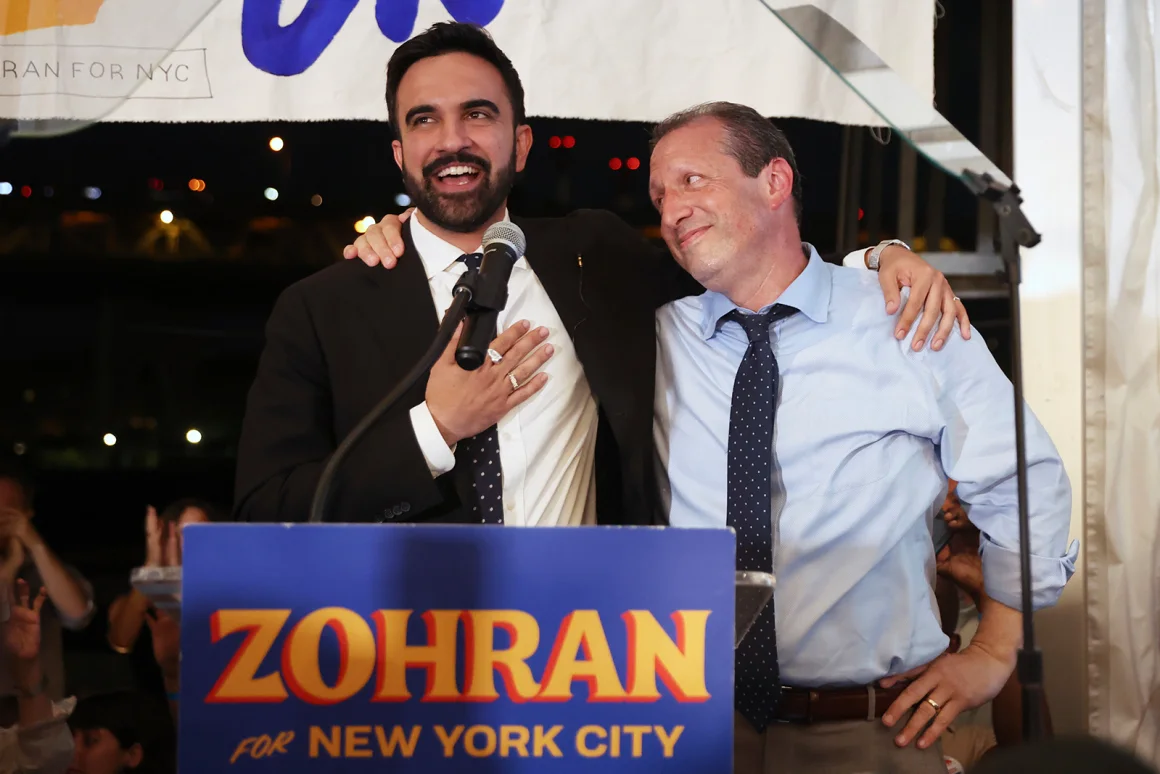
Zohran Mamdani is the name suddenly echoing through New York City politics—and far beyond it. At just 33, the Ugandan-born, Indian-heritage assemblyman has done what many thought impossible: defeating political heavyweight Andrew Cuomo in a dramatic mayoral primary that stunned observers across the country. But Mamdani’s rise is more than a political upset—it’s a story about identity, generational change, and a city struggling with rent, rising costs, and inequality. From the son of filmmaker Mira Nair to a progressive voice backed by young voters, Mamdani’s journey is forcing communities—especially Indian-Americans—to ask: what kind of future do we really want?
Intro: A Primary Win Heard ‘Round the World
The 2025 NYC mayoral primary shocked everyone. Zohran Mamdani, a 33-year-old assemblyman born in Uganda with Indian roots, beat Andrew Cuomo. Now, he’s the frontrunner to lead NYC. This win has folks in the Indian community buzzing, both excited and a little worried.
Who’s Zohran Kwame Mamdani?
- Born: Kampala, Uganda (1990)
- Parents: Mira Nair (filmmaker) & Mahmood Mamdani (academic)
- School: Bowdoin College (Economics & Sociology)
- Job Now: NY State Assemblymember
- What He Wants to Do as Mayor: Freeze rents, open city-run grocery stores, free buses, childcare for everyone, Green initiatives for NYC
- Could Be the First: Muslim and Indian mayor of NYC; also, the first millennial mayor since 1990 with backing from the DSA
Mamdani’s background helps him connect with lots of different groups. He can drop Bollywood references one second and quote hip-hop the next. He says it’s about who’s side are you on—the rich, or the people who make the wealth? He’s got support from taxi drivers, renters’ groups, young climate activists, and tons of young South Asians.
Indian-Americans: Excited or Nervous?
- Excitement: A Win for Representation
Indian-Americans love seeing one of us succeed, like Sundar Pichai at Google or Kamala Harris. Mamdani’s win could be another win for the community.
- Nervousness: Worries About Fitting In
Some folks, especially wealthier ones, are hesitant because:
- Religion: Mamdani’s Muslim, and some still have biases.
- Politics: He’s a socialist supported by Bernie Sanders. Many Indian-Americans are business folks who might not like things like rent freezes.
- Israel/Palestine: Mamdani called for a ceasefire, which upset some groups.
This shows that politics in the Indian community can be stuck in the past. While younger Indian-Americans are open to different ideas, some older immigrants still have the same views they had back home. Mamdani forces people to rethink things.
Busting Myths About Zohran Mamdani
- Myth: He hates Hindus.
- Truth: He’s never pushed anti-Hindu laws and celebrates Diwali.
- Myth: Rent freeze hurts small landlords.
- Truth: It only affects big landlords making big profits.
- Myth: He’ll defund the police.
- Truth: He wants to move some funds to mental health services and hire more community officers.
Why His Ideas Might Work
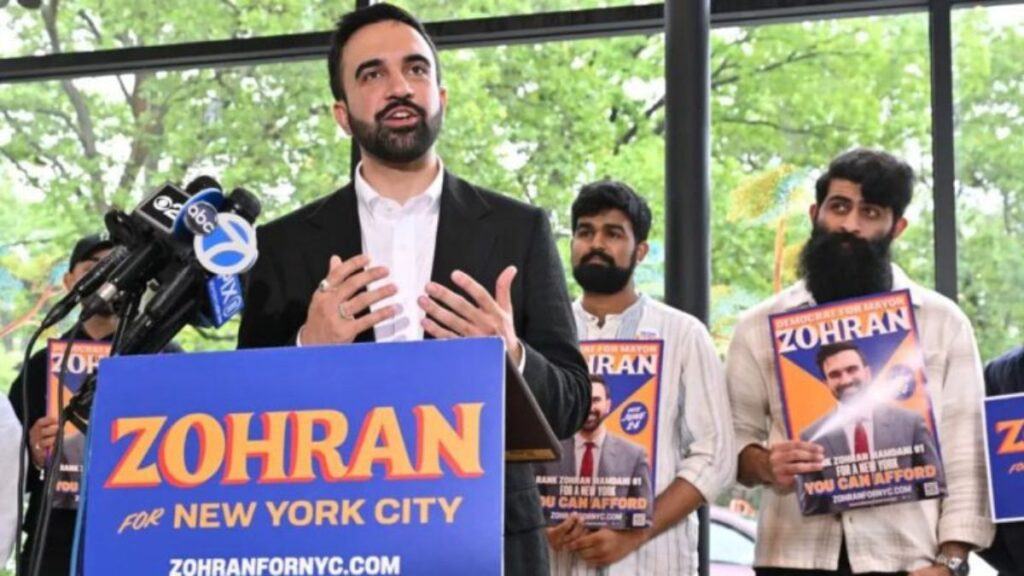
- Housing
- Rent: NYC rent is super high and keeps going up.
- His Plan: Freeze rent for a year and tax landlords with lots of empty units.
- Groceries
- Cost: Groceries in NYC are way more expensive than average.
- His Plan: Open city-run grocery stores to save people money.
- Transportation
- Problem: Getting around NYC can be a pain.
- His Plan: He already got money for better subway service and is trying out free buses.
What People Are Saying
- Asha Patel, 26, Student: I spend most of my money on rent. A freeze would help me breathe.
- Rajat Kulkarni, 48, IT worker: I’m worried about his views on Palestine, but cheaper groceries sound good.
- Farah Khan, 35, Landlord: I own a small building, so his policies don’t affect me. The media is just trying to scare people.
- Suhasini Rao, 60, Retired Nurse: He’s the only politician who supported Diwali school holidays.
Key Facts About Mamdani
- Name: Zohran Kwame Mamdani
- Background: Indian-Ugandan-American
- Parents: Mira Nair, Mahmood Mamdani
- Religion: Muslim
- Age: 33
- Politics: Democrat, Democratic Socialist
- Job: NY Assemblymember
- Could Be First: Muslim, Indian, millennial mayor
- Main Issues: Rent, groceries, free buses, childcare, immigrant rights
- Israel/Palestine: Wants a ceasefire and supports Palestinian rights
- Focus: Helping working-class folks
- Support: Young people, immigrants, renters, progressives
- Opposition: Conservative Hindus, pro-Israel groups, landlords
- Accusations: Falsely called names by right-wing groups
- Compared To: Arvind Kejriwal (for being a progressive)
- Endorsements: Big names like Alexandria Ocasio-Cortez and Bernie Sanders
- Big Win: Beating Andrew Cuomo
Lessons for Indian-American Politics
- Diversity: The community is made of different people; everyone has different views.
- Politics Matter: Young voters care more about policies than background.
- Be Careful What You Read: News from back home might not be accurate in NYC.
- Generational Change: Younger Indian-Americans are progressive.
What You Can Do
- Read Up: Check out Mamdani’s policies on his site.
- Go to a Meeting: The campaign hosts meetings in different languages.
- Register to Vote: Make sure you’re registered!
- See How Much You’d Save: Calculate how a rent freeze would affect you.
- Fact-Check: Don’t believe everything you see on WhatsApp.
In Conclusion
Mamdani’s rise makes Indian-Americans think hard: Can we support diversity only when it agrees with us? Do we want to just fit in, or do we want to help working-class people, including those with similar roots to us?
Supporting Mamdani should be about his plans, not fears. His ideas address real problems for Indians, from those in Edison to those in Queens. Rejecting him because he’s Muslim or a socialist goes against the values we say we celebrate.
If he wins, Mamdani won’t just be another Indian-American success story. He’ll be a test of whether that story can change to one that moves beyond individual success to fixing society. Do we use identity to divide, or to build a city where everyone belongs?
FAQ: Understanding Zohran Mamdani — The Rising Political Voice Shaping NYC’s Future
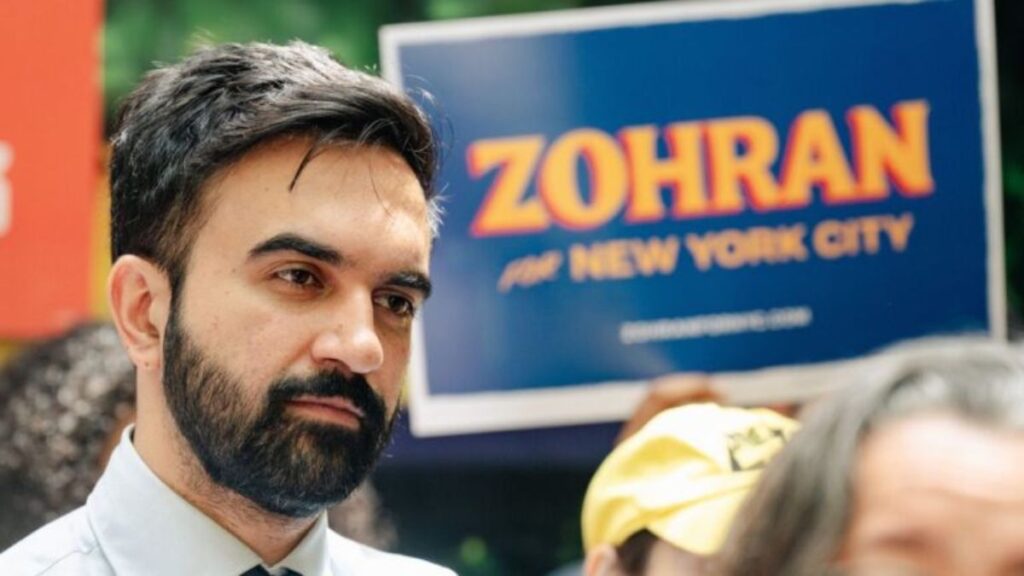
1. Who is Zohran Mamdani and why is Zohran Mamdani suddenly making global headlines?
Zohran Kwame Mamdani is a New York State Assemblymember whose surprising victory in the 2025 New York City Democratic mayoral primary transformed him from a relatively unknown progressive lawmaker into a major political figure. Born in Uganda to Indian parents, Mamdani represents a new generation of politicians focused on affordability, climate action, and working-class issues.
His defeat of former New York governor Andrew Cuomo shocked political observers and energized young voters, immigrants, and progressive activists across New York City and beyond.
2. What makes Zohran Mamdani’s background so unique compared to other NYC mayoral candidates?
Zohran Mamdani’s life story crosses continents and cultures. He was born in Kampala, Uganda, raised partly in New York, and comes from a highly influential intellectual and artistic family.
His mother is acclaimed filmmaker Mira Nair, known for films like Monsoon Wedding, and his father is renowned scholar Mahmood Mamdani, a professor of political science.
This multicultural upbringing allows Mamdani to speak comfortably to immigrant communities, young urban voters, and global audiences alike.
3. Why do supporters say Zohran Mamdani represents a new generation of leadership in New York City?
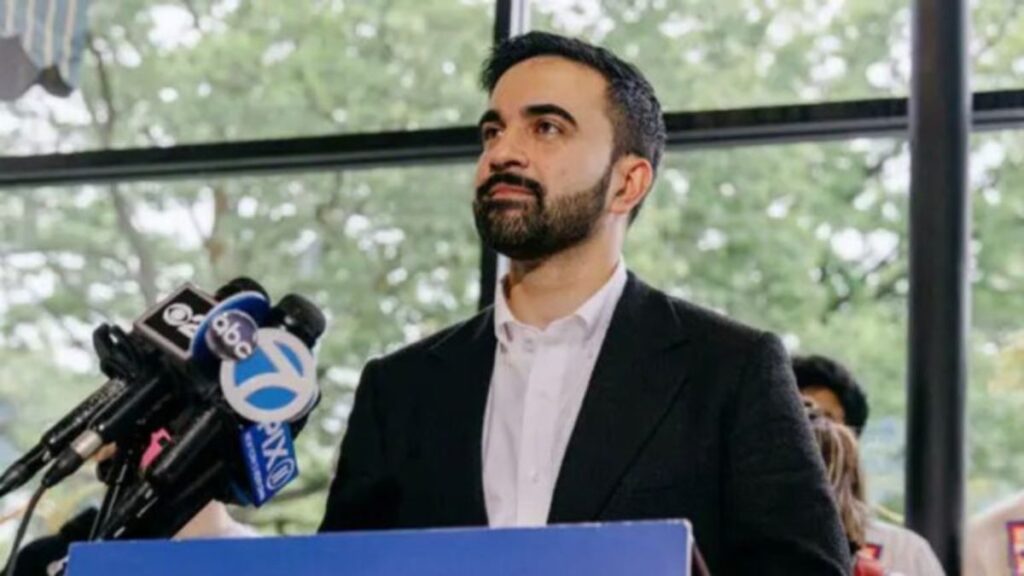
Supporters believe Zohran Mamdani represents generational change. At 33, he would become the first millennial mayor of New York City in decades.
Unlike many traditional politicians, Mamdani built his support through grassroots organizing, renters’ rights campaigns, and youth-led political movements connected to the Democratic Socialists of America.
His campaign message centers on a simple but powerful question: Should a city work for wealthy investors or for the people who keep it running?
4. What policies has Zohran Mamdani proposed that are getting the most attention?
Zohran Mamdani’s platform focuses on lowering the everyday cost of living in New York City. Some of his most talked-about proposals include:
Rent Freeze:
Temporarily freezing rent for stabilized apartments to protect tenants from sudden increases.
City-Run Grocery Stores:
Creating publicly operated grocery stores to reduce food prices in neighborhoods where costs are high.
Free Bus Service:
Expanding free public buses to make commuting easier and more affordable.
Universal Childcare:
Providing accessible childcare so working parents can stay in the workforce.
Green Climate Programs:
Investing in environmental initiatives to make New York cleaner and more sustainable.
Supporters say these policies directly address the biggest pressures facing working families.
5. Why does Zohran Mamdani receive strong support from younger voters and immigrants?
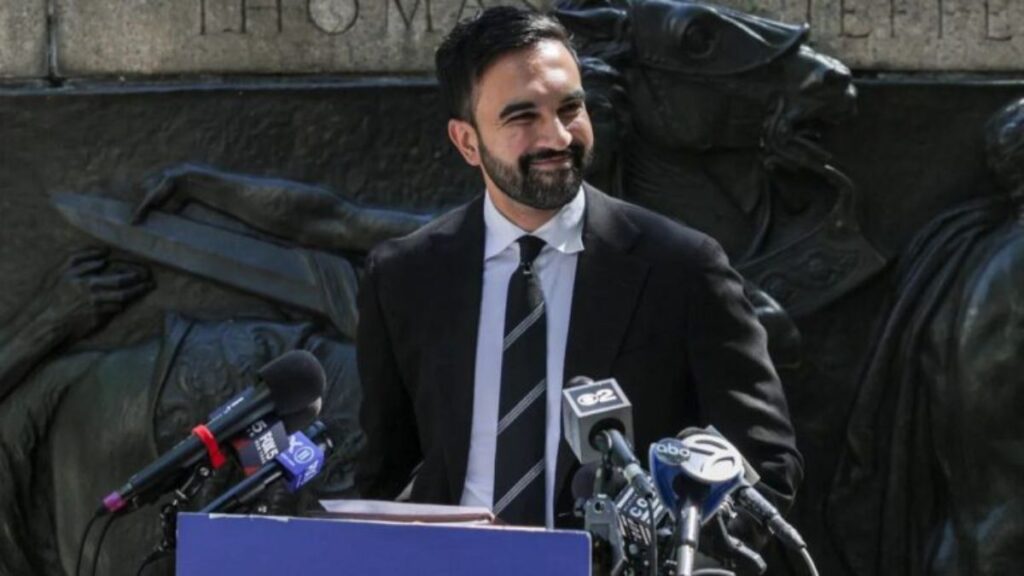
Many younger voters feel that Zohran Mamdani speaks directly to their struggles: rising rent, student debt, expensive groceries, and unstable work.
His campaign also actively engages immigrant communities in multiple languages and emphasizes policies that affect renters, taxi drivers, gig workers, and service workers — groups that often feel ignored by traditional politics.
This approach has made Mamdani particularly popular among young South Asian, Arab, African, and Latino voters.
6. Why are some Indian-Americans excited about Zohran Mamdani’s political rise?
For many Indian-Americans, Zohran Mamdani represents a powerful moment of representation.
His success joins a growing list of influential figures of Indian origin in global leadership and technology, including people like Sundar Pichai and Kamala Harris.
Seeing someone with Indian roots competing to lead one of the world’s most influential cities inspires pride across the diaspora.
7. Why do some Indian-Americans still feel uncertain about Zohran Mamdani?
Despite excitement about representation, some members of the community have concerns about Mamdani’s political ideology.
Three issues often come up:
Economic policy: Some business-oriented immigrants worry about policies like rent freezes or stronger regulations on large landlords.
Religion: As a Muslim politician, Mamdani sometimes faces prejudice or misunderstanding from those unfamiliar with Muslim political leaders.
Foreign policy views: His support for a ceasefire in the Israel-Palestine conflict has drawn criticism from some pro-Israel groups.
These debates highlight how politically diverse the Indian-American community has become.
8. Is it true that Zohran Mamdani is anti-Hindu or hostile to Indian culture?
There is no credible evidence that Zohran Mamdani has promoted anti-Hindu policies or rhetoric.
In fact, he has publicly participated in cultural celebrations like Diwali and has engaged with multiple South Asian communities across New York.
Much of the controversy comes from online misinformation and political attacks rather than verified actions.
9. How did Zohran Mamdani manage to defeat a powerful political figure like Andrew Cuomo?
Zohran Mamdani’s victory over Andrew Cuomo was driven by several key factors:
• A strong grassroots campaign
• Support from progressive leaders
• High turnout among young voters
• Growing frustration with establishment politics
He also received endorsements from prominent progressive politicians such as Alexandria Ocasio-Cortez and Bernie Sanders, which boosted his credibility among progressive voters.
10. What challenges could Zohran Mamdani face if he becomes mayor of New York City?
If Zohran Mamdani becomes mayor, he would face enormous challenges:
• New York’s housing crisis
• Budget pressures and economic inequality
• Political opposition from powerful real-estate interests
• Managing one of the world’s most complex cities
Even supporters acknowledge that turning bold campaign promises into real policies will require negotiation, compromise, and strong leadership.
11. Why is Zohran Mamdani often compared to Arvind Kejriwal?
Some commentators compare Zohran Mamdani to Arvind Kejriwal because both built political careers around anti-establishment movements and policies focused on everyday affordability.
Like Kejriwal’s emphasis on affordable services in Delhi, Mamdani’s platform prioritizes rent, transportation, and basic living costs.
However, the political systems of New York and India are very different, so the comparison is mostly symbolic.
12. What does the rise of Zohran Mamdani say about the future of Indian-American politics?
Zohran Mamdani’s rise reveals something important: the Indian diaspora is not politically uniform.
Younger Indian-Americans often prioritize economic justice, climate policy, and social equity, while older generations may focus more on business success and stability.
His campaign has sparked conversations about identity, representation, and whether political support should be based on shared heritage or shared values.
13. Why is Zohran Mamdani’s campaign inspiring so many first-time voters?
For many voters, Zohran Mamdani represents something rare in modern politics: authenticity.
He speaks openly about inequality, immigration struggles, and the realities of living in an expensive city. That honesty resonates with people who often feel invisible in traditional political debates.
Many supporters say they are voting not just for a candidate — but for the possibility that politics can actually improve everyday life.
14. Could Zohran Mamdani really change the political story of immigrant success in America?
Zohran Mamdani’s campaign raises a powerful question about the immigrant story in America.
For decades, success has often been defined as personal achievement — becoming a CEO, doctor, or entrepreneur.
Mamdani suggests another version of success: using political power to improve society for everyone, especially the working class.
If he wins the mayor’s office, his leadership could redefine what immigrant political influence looks like in one of the world’s most important cities.





Leave a Reply