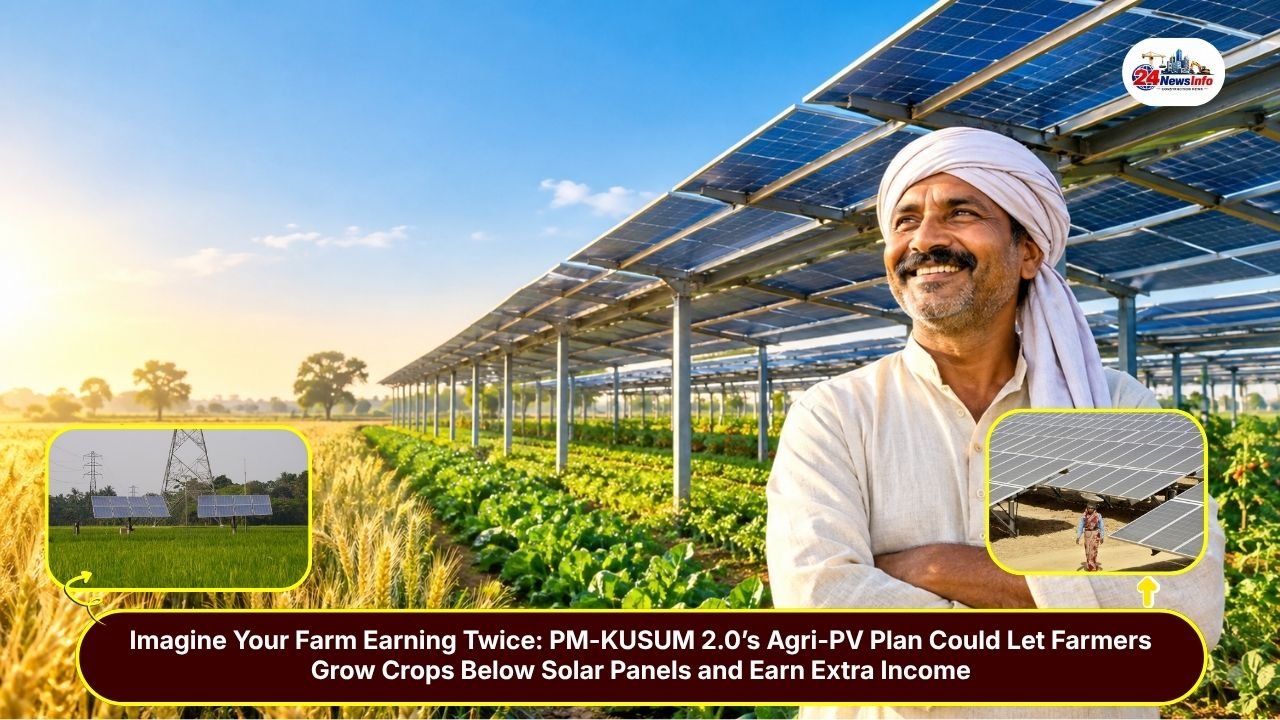
PM-KUSUM 2.0 is finally bringing the hope that every hardworking farmer has been waiting for. Imagine walking into your field and watching crops grow below while solar panels silently earn money above. No more sleepless nights worrying about diesel prices that keep rising every month. No more watching your hard-earned money disappear into irrigation costs. This new scheme with its powerful Agri-PV component can turn the same land into a double income source. Extra electricity sales, almost free irrigation, and real savings in your pocket. For small farmers in UP and across the Hindi belt, this feels like the first real chance to breathe easier and dream bigger for their children’s future.
Listen up farmer brothers and sisters. Growing crops is no longer the only way to earn from your land. Now you can also generate electricity from the same field. PM-KUSUM 2.0 is coming soon and it has a special focus on Agri-PV that is agrivoltaics. Crops will grow on the same land while solar panels generate power above. Union Minister for New and Renewable Energy Pralhad Joshi recently gave a clear indication that the announcement of the scheme could happen very soon. Small and marginal farmers FPOs and panchayats will get priority. This will reduce irrigation costs cut diesel dependence and bring extra income. For farmers in the Hindi belt especially Uttar Pradesh this is a big opportunity.
What is PM-KUSUM 2.0 and Why is it Needed?
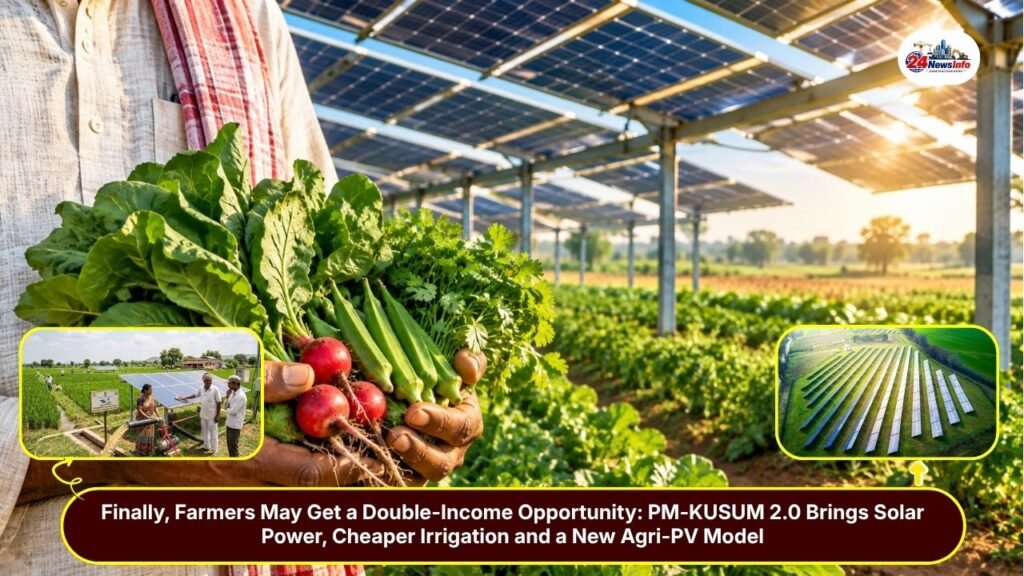
PM-KUSUM or Pradhan Mantri Kisan Urja Suraksha evam Utthaan Mahabhiyan was launched in 2019. Its aim was to connect the agriculture sector with solar energy and increase farmers income. The first phase had a target of adding 34800 MW capacity with central support of Rs 34422 crore. Now PM-KUSUM 2.0 is the next phase of the same scheme.
The minister said on the sidelines of the 7th Agrivoltaics World Conference that the process is underway and the Prime Minister may make the announcement soon. It will include a dedicated Agri-PV component. The important point is that land ownership will remain with the farmer. Small and marginal farmers farmer producer organisations cooperatives and panchayats will be the main beneficiaries. For the common farmer it is simple the field will not stay idle panels on top and crops below. For more such latest updates on major infrastructure projects you can always check 24newsinfo.com.
Key Points About the Scheme
- Focus remains on supporting small and marginal farmers
- Land ownership stays with the farmer
- New model of decentralised renewable energy in rural India
How Will Agri-PV and Agrivoltaics Benefit Farmers?
| Key Point | Summary |
|---|---|
| Scheme Name | PM-KUSUM 2.0 |
| Main New Feature | Dedicated 10 GW Agri-PV component |
| Core Benefit | Dual income from crops + solar power |
| Target Group | Small & marginal farmers, FPOs, panchayats |
| Expected Budget | Higher than Phase-1 (around Rs 50,000 crore) |
| Current Status | Announcement expected very soon |
| Biggest Advantage | Lower irrigation cost + extra electricity sale |
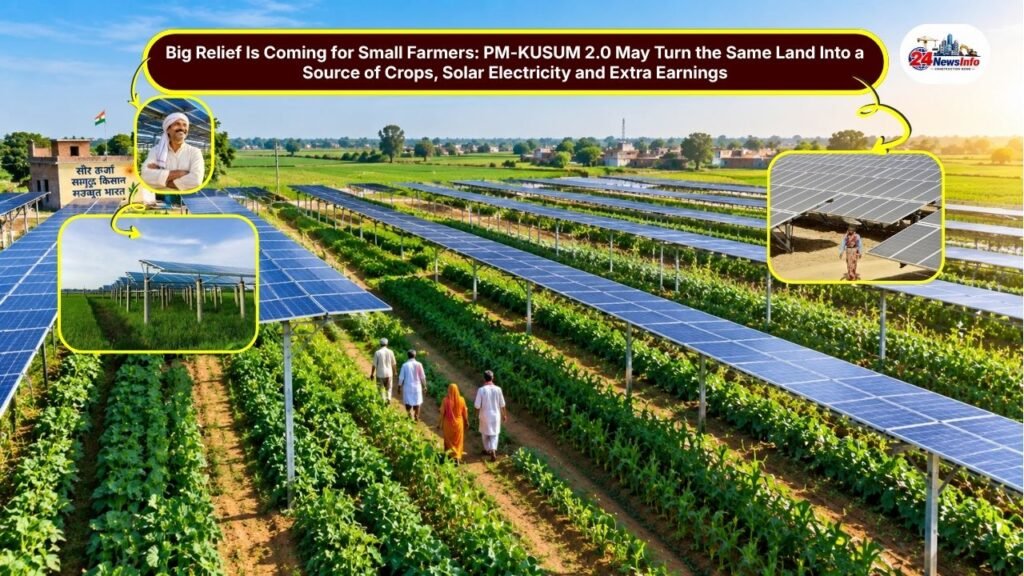
Agri-PV under PM-KUSUM 2.0 means farming and solar power generation on the same land. Panels are installed at a height so that tractors can move underneath and crops can grow. Studies show that a farmers annual income can rise from around Rs 60000 per acre to over Rs 1 lakh per acre. Extra earnings by selling electricity and almost zero irrigation cost.
Take the example of Ramesh Yadav a small farmer from Jhansi district in Bundelkhand. He installed solar panels on part of his two acre land under similar pilot work and continued growing moong and vegetables below. He saved nearly Rs 12000 on diesel every year and also earned by selling surplus power. Many farmers like him are waiting for PM-KUSUM 2.0 so they can scale this up easily.
Irrigating wheat with a diesel pump costs nearly Rs 6790 per acre and cotton can go beyond Rs 8000. With solar savings of Rs 5000 to Rs 6500 per acre are possible. Pollution will also come down. In areas like Bundelkhand in UP where water is scarce this model will prove very useful. Solar farming in India and agrivoltaic farming will no longer remain just words they will become part of a common farmers life.
Main Benefits of Agri-PV
- Dual use of same land for crops and power
- Higher income through electricity sale
- Big savings on diesel and electricity bills
- Lower pollution and better environment
Budget and Financial Support Under PM-KUSUM 2.0
The first phase of the scheme had a central financial support of Rs 34422 crore. For PM-KUSUM 2.0 the budget is expected to be higher. Some reports and pre-announcement discussions point towards an outlay near Rs 50000 crore though final figures will come only after official notification. This higher budget will help cover the dedicated 10 GW Agri-PV component along with continued support for solar pumps and feeder solarisation.
Higher allocation means more subsidy support for small farmers and better viability gap funding for agrivoltaic projects. States will also contribute their share as before. Farmers will still need to put in some of their own money or take bank loans but the overall burden is expected to remain manageable.
| Particulars | Phase-1 | Expected in PM-KUSUM 2.0 |
|---|---|---|
| Central Support | Rs 34,422 crore | Higher around Rs 50,000 crore |
| Focus Area | Pumps and decentralised plants | Strong push on Agri-PV |
| Subsidy Share for Farmers | 30-50% central | Similar or improved |
| Special Support | Higher in NE and hilly areas | Likely to continue |
Achievements of the First Phase and What Lies Ahead
In the first phase around 29 lakh agricultural pumps have been solarised so far. Good progress has been seen in Components B and C though Component A lagged behind. The scheme timeline has been extended till March 2027 in some cases. Under PM-KUSUM 2.0 the budget is expected to be higher than the previous phase. Some reports mention a figure around Rs 50000 crore though the official notification is still awaited.
The governments focus is on decentralised solar energy so that power is generated in villages themselves and pressure on the grid reduces. Employment will also increase in panel installation maintenance and local manufacturing. One more natural example is from a group of farmers in western UP who formed a small FPO and solarised their pumps. They report that electricity bill for irrigation almost vanished and they could water crops on time even during power cuts.
Key Benefits for Farmers and How to Get Connected
PM KUSUM 2.0 benefits are clear. Cheap or free irrigation extra income by selling surplus power end of diesel expenses and environmental protection. Small farmers will get priority. In UP even in the first phase subsidy of 60 to 90 per cent is available at many places especially for SC ST farmers and those in Bundelkhand.
The real advantage of PM-KUSUM 2.0 for farmers is that it will not be limited to pumps alone the entire farming system will get linked with solar. Work can also be done collectively through FPOs. After the official announcement state governments will issue guidelines. Farmers should note that proper design of panels is important otherwise crop yield may get affected in some cases.
Comparison: PM-KUSUM Phase-1 vs Proposed PM-KUSUM 2.0
| Detail | PM-KUSUM Phase-1 | Proposed PM-KUSUM 2.0 |
|---|---|---|
| Main Focus | Solar pumps and decentralised plants | Agri-PV / agrivoltaics + earlier components |
| Capacity Target | 34,800 MW | Higher target including dedicated 10 GW Agri-PV |
| Budget (Central) | Rs 34,422 crore | Higher than previous (some reports ~Rs 50,000 crore) |
| Main Beneficiaries | Farmers, FPOs, cooperatives | Small & marginal farmers, FPOs, panchayats |
| New Element | Three main components (A, B, C) | Dedicated Agri-PV component |
| Timeline | March 2026 (some extensions till 2027) | Announcement expected soon, then implementation |
Special Opportunity for Farmers in UP and the Hindi Belt
Thousands of solar pumps have already been installed in Uttar Pradesh under the first phase. The PM-KUSUM solar scheme has reduced diesel dependence here. With the arrival of PM-KUSUM 2.0 farmers in Bundelkhand Purvanchal and western UP will be able to earn dual income. Local employment will rise pollution will fall and youth will find work in the villages themselves. Solar energy for farmers will no longer remain just a subsidy it will become a permanent source of income. Many local farmers have already started asking about how soon the new scheme will start so they can apply early.
What Preparations Should Farmers Make?
Wait for the official announcement for now. Keep an eye on the websites of MNRE and state agencies. Prepare for collective applications through FPOs or at the panchayat level. Choose the right crops that grow well under panels. Keep documents ready to avail bank loans and subsidies.
Simple Steps to Prepare
- Watch MNRE and state government portals regularly
- Form or join FPOs for group applications
- Select suitable crops for shade under panels
- Arrange land and identity documents in advance
Conclusion
PM-KUSUM 2.0 is a step that will give farmers not just energy security but also extra income and self-reliance. With the Agri-PV model farming and electricity generation will go hand in hand. The Union Ministers statements make it clear that the announcement is near. Common farmers will get direct benefits lower costs higher earnings and cleaner air. Farmers across the country including UP should stay prepared. This scheme is realy going to light up the fields and help many families improve there income in coming years.
FAQs
1. What is PM-KUSUM 2.0?
It is the second phase of the PM KUSUM scheme with a special focus on agrivoltaics.
2. When will PM-KUSUM 2.0 be launched?
According to Minister Pralhad Joshi the Prime Minister may announce it very soon.
3. What is Agri-PV under PM-KUSUM 2.0?
Growing crops and generating solar power on the same land.
4. What does the 10 GW Agri-PV component mean?
A dedicated capacity of about 10 gigawatts for agrivoltaics.
5. What benefits will farmers get?
Cheaper irrigation extra income by selling electricity and end of diesel expenses.
6. Who will own the land?
Ownership will remain with the farmer.
7. Will small farmers get priority?
Yes the focus is on small and marginal farmers FPOs and panchayats.
8. How much progress was made in the first phase?
Around 29 lakh pumps have been solarised.
9. How will UP benefit?
Through solar pump subsidy and the new Agri-PV model for dual income.
10. How to apply?
Through state agencies and the MNRE portal after the official announcement.
11. What will be the budget?
It is expected to be higher than the first phase.
12. Will crop yield be affected?
With proper design yield can be maintained or even improved.