
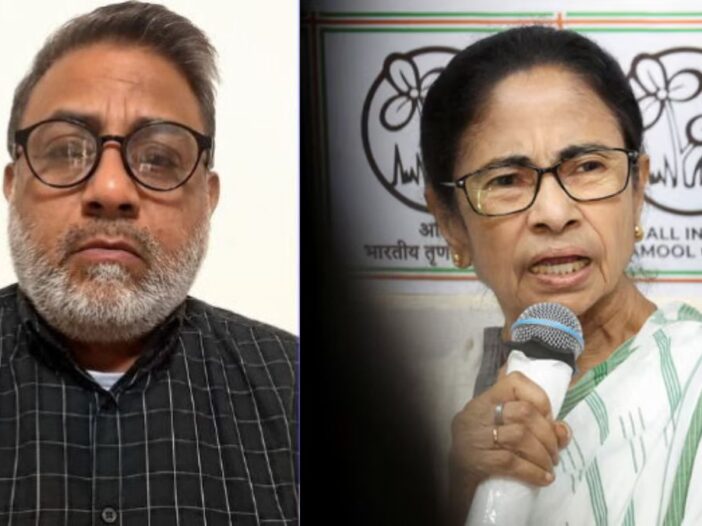
Bangladeshi Jamaat Leader’s Shocking Call That Left India Speechless. Bangladeshi Jamaat Leader’s Shocking Call has ignited a firestorm across India — and for good reason. Imagine a foreign religious-political leader openly telling an Indian Chief Minister to break away from her own country. That is exactly what happened. Md Nurul Huda did not whisper this — he said it on camera, boldly and without hesitation. He promised 170 million Bangladeshi Muslims would back the move. Every Indian watching felt the same chill — this was not political opinion. This was a direct attack on India’s unity, sovereignty, and democratic identity. And it demands every citizen’s urgent attention.
The political landscape of South Asia has been rocked by a deeply controversial statement from Bangladesh Jamaat leader Md Nurul Huda, who openly urged West Bengal Chief Minister Mamata Banerjee to reject Indian federal authority and declare the state an independent nation. This explosive remark has triggered widespread outrage across India and sparked urgent conversations about cross-border political interference.
What Exactly Did the Bangladeshi Jamaat Leader Say?
In a widely circulated video, Huda did not mince words. He called the Bharatiya Janata Party a “vote chor” (vote thief), “communal,” and a “rioter” party. Furthermore, he urged Mamata Banerjee to “declare war against Delhi” rather than stepping down from her position as Chief Minister following TMC’s electoral setback.
Most provocatively, Huda claimed that 170 million Bangladeshi Muslims would stand in solidarity with West Bengal if Banerjee chose to pursue independence. He argued that Bengal should not accept what he described as “alien” and “non-Bengali” control from New Delhi. Additionally, he suggested that other Indian states should similarly seek freedom from central rule.
Why Did This Statement Surface Now?
To understand the context, it is important to note what triggered these remarks. The All India Trinamool Congress suffered a significant defeat in the West Bengal Assembly elections, with the BJP emerging as a dominant force. Despite this outcome, Mamata Banerjee refused to resign, stating clearly, “neither I have lost nor will I resign from the post of CM.”
Her refusal to accept the results drew sharp criticism from opposition leaders. However, it also attracted support — and interference — from unexpected quarters across the border.
Jamaat-e-Islami Hind Also Weighed In
Adding another layer to this controversy, Mohammad Salim Engineer, Vice President of Jamaat-e-Islami Hind, also commented on the political situation. He suggested that Banerjee’s refusal to step down implied the election results did not genuinely reflect public opinion. Moreover, he argued that “large-scale rigging” had altered the outcome — a claim that echoed Banerjee’s own allegations against the Election Commission and the EVM process.
However, Engineer acknowledged that a government would still be formed regardless of individual protests, noting that all constitutional provisions remained in place for that process.
Why This Statement Is Deeply Alarming
Statements like Huda’s are not merely political commentary — they represent a serious breach of diplomatic norms. Foreign leaders openly encouraging a sitting Indian Chief Minister to secede from the Indian Union crosses a clear red line. Therefore, political analysts and security experts have raised urgent concerns about the implications of such rhetoric.
- It directly threatens India’s territorial integrity.
- It encourages a foreign religious body to interfere in Indian democratic processes.
- It attempts to weaponize communal identity across international borders.
Mamata Banerjee’s Position and Its Consequences
Banerjee’s continued refusal to accept the election results has, unfortunately, created an opening for such foreign provocateurs. By alleging that the BJP “stole 100 seats” and blaming the Election Commission, she has inadvertently provided external actors with a narrative to exploit. Consequently, her political stand — however legitimate as domestic opposition — has had unintended international consequences.
Key Takeaways
- A Bangladesh Jamaat leader urged Mamata Banerjee to declare West Bengal an independent nation.
- He claimed 170 million Bangladeshi Muslims would support such a move.
- Jamaat-e-Islami Hind’s VP echoed election-rigging allegations.
- The remarks follow TMC’s electoral defeat and Banerjee’s refusal to resign.
- Cross-border political interference in Indian democracy deserves serious scrutiny.
Final Thought: A Line That Must Never Be Crossed
Domestic political disagreements are a natural part of democracy. Nevertheless, when foreign religious-political organizations begin actively encouraging Indian leaders to break away from the Union, every Indian — regardless of political affiliation — must recognize the genuine threat this poses. India’s unity is not a political bargaining chip, and no election result, however disputed, justifies inviting foreign interference into the nation’s internal affairs.
Frequently Asked Questions
What is the Bangladeshi Jamaat Leader’s Shocking Call to Mamata Banerjee regarding Bengal’s future?
Many Indians felt stunned when Bangladeshi Jamaat leader Md Nurul Huda openly urged Chief Minister Mamata Banerjee to reject Delhi’s rule and declare West Bengal an independent nation. His passionate appeal came right after the assembly election results, where he encouraged her not to resign but to take a bold stand against the central government. This unexpected cross-border statement has left people curious, concerned, and deeply engaged in discussions about regional identity and national unity.
How does the Bangladeshi Jamaat Leader’s Shocking Call promise support for West Bengal?
In his viral video message, Nurul Huda declared that 170 million Muslims from Bangladesh would stand firmly with Mamata Banerjee if she chose the path of independence. He expressed strong confidence that the entire nation of Bangladesh would back such a move. This assurance of solidarity has sparked intense emotions among observers, raising both hopes for regional unity and serious questions about its implications for India’s sovereignty.
Why did the Bangladeshi Jamaat Leader’s Shocking Call criticize the BJP so strongly?
Huda described the BJP as a “vote chor” and “rioter” party in his remarks. He argued that Bengal should not accept what he termed “alien” and “non-Bengali” control from Delhi. His fiery criticism reflects deep political emotions and has added fuel to the already heated atmosphere in West Bengal, making many wonder about the role of external voices in Indian state politics.
What connection exists between the Bangladeshi Jamaat Leader’s Shocking Call and Mamata Banerjee’s refusal to resign?
Mamata Banerjee has firmly stated that she has neither lost nor will she resign as Chief Minister. Huda welcomed her defiant position and even urged her to “declare war against Delhi.” This alignment of voices has created a powerful narrative of resistance that resonates with her supporters while alarming others who value constitutional processes and national integrity.
What did the Bangladeshi Jamaat Leader’s Shocking Call suggest about other Indian states?
Beyond West Bengal, Huda suggested that other Indian states should also consider seeking freedom from Delhi’s rule. This broader appeal has triggered widespread debate, with many readers feeling a mix of surprise and curiosity about its potential to influence national politics and regional aspirations across the country.
How has the Bangladeshi Jamaat Leader’s Shocking Call been received inside India?
The statement quickly ignited massive online discussions and strong reactions across social media. While some view it as unwarranted interference, others see it as a reflection of deep emotional ties between Bengal and Bangladesh. Meanwhile, Jamaat-e-Islami Hind Vice President Mohammad Salim Engineer echoed concerns over the election process, alleging large-scale rigging, though he acknowledged that government formation would proceed as per constitutional provisions.
What makes the Bangladeshi Jamaat Leader’s Shocking Call so significant for Indian politics today?
This episode highlights the intense passions running through West Bengal’s politics after the elections. It raises important questions about democracy, federalism, and external influences. For many, it serves as a reminder of how strongly people feel about their regional identity, while also reinforcing the need for unity and calm dialogue in these sensitive times. The story continues to evolve, keeping citizens across the nation closely watching every development.






Leave a Reply