
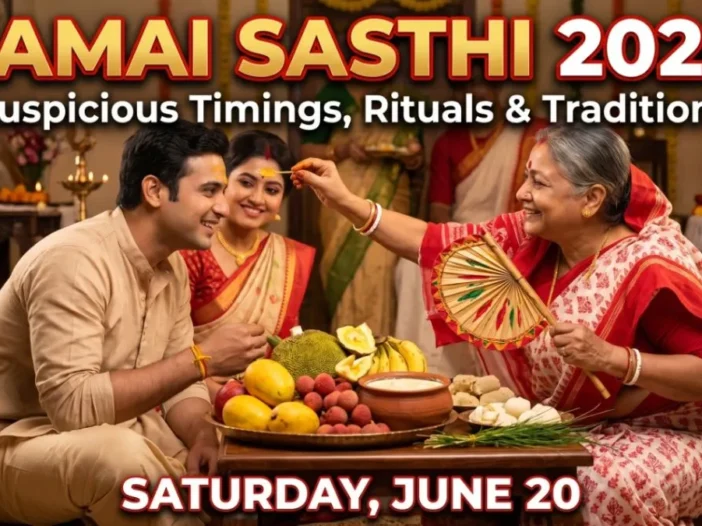
Jamai Sasthi 2026 is finally here — and across Bengali households today, mothers are waking up before sunrise with one mission: to shower their sons-in-law with love so overwhelming it could move anyone to tears. The kitchen smells of ripe mangoes and mishti doi. Brass vessels gleam in morning light. Sacred grass sits carefully counted — all 108 blades. This is not just a festival. It is a mother’s deepest prayer wrapped in tradition, fruit, and fierce affection. Today, families reunite, hearts soften, and Bengali culture reminds the world that love is best expressed through rituals passed down for generations.
To ensure the well-being and lasting marital happiness of their beloved daughters and sons-in-law, mothers-in-law observe the sacred Jamai Sasthi fast and rituals. Here’s everything you need to know about the date, timings, customs, and significance of this cherished Bengali festival.
What is Jamai Sasthi?
Amid the scorching heat of the Bengali month of Jyeshtha, Jamai Sasthi brings a day of joy and family celebration. It is one of the most eagerly awaited occasions of the year for mothers-in-law and sons-in-law in Bengali Hindu households.
Although it is widely known for lavish feasts and celebrations, the festival has a deeper cultural and religious significance. Married daughters and their husbands are invited to the parental home, where they are blessed for prosperity, health, and a happy married life. The day strengthens family bonds and reflects traditional Bengali Hindu values.
Jamai Sasthi 2026: Date and Tithi (Lunar Timing)
According to traditional Bengali calendars, Jamai Sasthi in 2026 falls on:
Saturday, 20 June 2026 (5 Asharh, Bengali calendar)
Vishuddha Siddhanta Panchika
- Sasthi Tithi begins: 19 June 2026 (Friday) at 5:01 PM
- Sasthi Tithi ends: 20 June 2026 (Saturday) at 3:47 PM
Gupta Panchika
- Sasthi Tithi begins: 19 June 2026 (Friday) at 10:16:42 PM
- Sasthi Tithi ends: 20 June 2026 (Saturday) at 8:57:35 PM
How to Perform the Jamai Sasthi Ritual
The festival is not only about food and festivities; worship of Goddess Sasthi is an important part of the observance.
Morning Rituals
- Mothers-in-law take a ritual bath early in the morning.
- Offer prayers to Goddess Sasthi with:
- Five fruits
- Sweet curd (mishti doi)
- Arrange:
- 3, 5, or 7 seasonal fruits
- 108 blades of sacred grass (durba)
- Ideally, place the fruits on jackfruit leaves; alternatively, use a brass vessel.
- Keep a water-filled pot topped with mango leaves.
- Fan the offerings with a traditional palm-leaf fan.
- Light incense and lamps and recite the Sasthi vow (brata katha).
Blessing the Daughter and Son-in-Law
- Apply a mark of curd on their foreheads.
- Offer fruits and curd.
- Wave the palm-leaf fan while chanting “Shat-Shat” to ward off evil.
- Tie a yellow sacred thread around the son-in-law’s wrist.
- Sprinkle water using 108 blades of durba grass.
- Offer sweets generously to the son-in-law.
After the rituals are completed, the family joins in the celebrations and feast.
Required Items for Jamai Sasthi
The traditional items used include:
- New clothes
- Seasonal fruits (mangoes, black plums, bananas, lychees, jackfruit, etc.)
- Betel leaves and areca nuts
- Rice grains
- 108 blades of durba grass
- Bamboo basket (karul)
- Karonda (karamcha) fruit
- Palm-leaf hand fan
- Gifts for the daughter and son-in-law
Traditional Customs
On Jamai Sasthi:
- The mother-in-law ties a turmeric-colored thread on the son-in-law’s wrist.
- A tilak of oil and turmeric is applied to his forehead.
- A palm-leaf fan is waved while repeating “Shat-Shat-Shat.”
- Rice and durba grass are placed on his head as a blessing.
- A platter containing five whole fruits is offered.
Today, many families also celebrate at restaurants, though the traditional blessings and family gathering remain central to the festival.
Cultural Significance
Jamai Sasthi holds a special place in Bengali Hindu society. Families eagerly await this occasion throughout the year. Since it falls during the fruit-rich summer season, tables are filled with mangoes, lychees, jackfruit, jamun, sweets, and elaborate Bengali dishes.
For many sons-in-law, it is famously the day when they receive exceptional hospitality and affection from their in-laws.
Folklore and Origins of Jamai Sasthi
Several stories are associated with the festival.
One popular belief is that in ancient times, a married daughter’s parents were not permitted to visit her home until she gave birth to a son. Jamai Sasthi, observed on the Shukla Sasthi (sixth lunar day of the waxing moon) in Jyeshtha, provided an opportunity for parents to see their daughter and visit her marital home.
Another folk tradition suggests that mothers worshipped Goddess Sasthi—the protector of children and fertility—to bless their daughters with healthy offspring. Over time, the worship of Goddess Sasthi became closely linked with honoring the son-in-law, giving rise to the festival’s name, Jamai Sasthi (“Son-in-Law’s Sixth Day Festival”).
Today, the celebration focuses less on old fertility beliefs and more on family bonding, blessings, hospitality, and preserving Bengali cultural traditions.
Jamai Sasthi 2026 at a Glance
- Festival: Jamai Sasthi 2026
- Date: Saturday, 20 June 2026
- Bengali Date: 5 Asharh
- Sasthi Tithi: From 19 June 2026, 10:16 PM to 20 June 2026, 8:57 PM (Gupta Panchika)
- Main Purpose: Blessing the daughter and son-in-law for happiness, prosperity, and a strong married life.
- Key Rituals: Worship of Goddess Sasthi, tying a sacred yellow thread, applying curd and turmeric marks, offering fruits, sweets, and a ceremonial feast.
Frequently Asked Questions About Jamai Sasthi 2026
1. When exactly is Jamai Sasthi 2026 and what is the auspicious timing to perform the rituals?
Jamai Sasthi 2026 falls on Saturday, 20 June 2026, which is 5 Asharh in the Bengali calendar. The most widely followed auspicious window, according to Gupta Panchika, begins on 19 June at 10:16 PM and ends on 20 June at 8:57 PM. This means the entire day of 20 June remains deeply auspicious for performing rituals, offering blessings, and celebrating with your beloved family.
2. What are the most important rituals every mother-in-law must follow on Jamai Sasthi 2026?
On Jamai Sasthi 2026, mothers-in-law begin the day with a ritual bath, followed by worship of Goddess Sasthi using five fruits, sweet curd, 108 blades of durba grass, and a lit lamp. Afterward, they apply a curd and turmeric tilak on the son-in-law’s forehead, tie a sacred yellow thread on his wrist, wave a palm-leaf fan while chanting “Shat-Shat-Shat,” and offer a generous platter of seasonal fruits and sweets. Each step carries a heartfelt prayer for the daughter’s lifelong happiness.
3. What essential items do you need to celebrate Jamai Sasthi 2026 the traditional way?
To celebrate Jamai Sasthi 2026 authentically, you need seasonal fruits like mangoes, lychees, jackfruit, bananas, and black plums, along with 108 blades of sacred durba grass, mishti doi, betel leaves, areca nuts, a palm-leaf hand fan, a bamboo basket, karonda fruit, new clothes, and thoughtful gifts for the daughter and son-in-law. Gathering these items the evening before ensures the morning rituals flow smoothly without any last-minute rush.
4. What is the deeper meaning and origin behind celebrating Jamai Sasthi 2026?
Jamai Sasthi 2026 honors a tradition rooted in centuries of Bengali culture. Historically, social customs prevented parents from freely visiting their married daughter’s home. The Shukla Sasthi day in Jyeshtha gave families a precious chance to reunite. Over time, the worship of Goddess Sasthi, the divine protector of children and fertility, merged with the occasion of honoring the son-in-law. Today the festival stands as a beautiful celebration of family love, maternal devotion, and the bond between two families joined by marriage.
5. How can sons-in-law make Jamai Sasthi 2026 truly memorable for their mothers-in-law?
Jamai Sasthi 2026 is equally an opportunity for sons-in-law to express genuine gratitude and affection. Arriving early, participating respectfully in every ritual, accepting blessings with warmth, and bringing thoughtful gifts for the entire family can make the day truly unforgettable. A sincere word of appreciation to your mother-in-law for her love and effort means far more than any grand gesture. After all, this festival thrives on heartfelt human connection, not just tradition.
6. What are the most heartfelt wishes to send loved ones on Jamai Sasthi 2026?
On Jamai Sasthi 2026, the warmest wishes come straight from the heart. Telling your son-in-law “May Goddess Sasthi bless you with lifelong health, happiness, and success” or sharing “Thank you for being the loving partner our daughter deserves” carries deep emotional meaning. You can also write “May your home always overflow with joy, laughter, and togetherness this Jamai Sasthi and every year beyond.” These simple, sincere words remind every son-in-law just how deeply valued and cherished he truly is.






Leave a Reply