
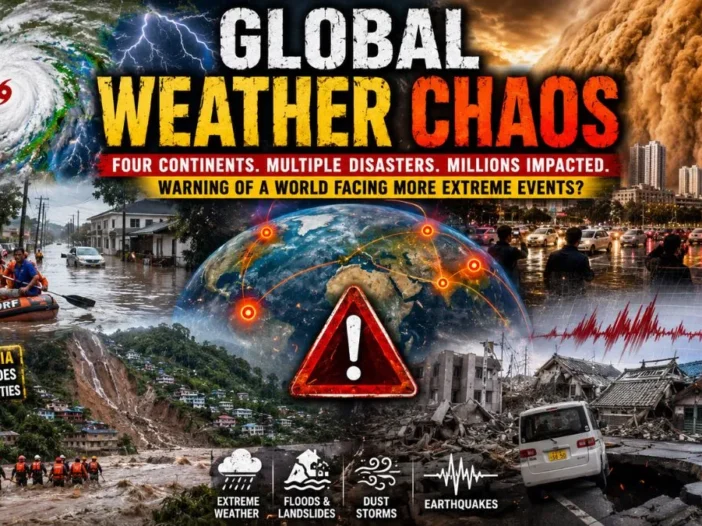
Global Weather Chaos is unfolding at a pace that feels almost impossible to ignore. Within just a few days, raging floodwaters have swallowed communities in Texas and Northeast India, a towering wall of dust has turned daylight into darkness in China, and powerful earthquakes have once again shaken Japan. Millions of people are waking up to fear, uncertainty, and the struggle to rebuild as nature unleashes its full force across four continents. Is this simply a week of extraordinary disasters, or a warning of a world facing more frequent extremes? Here’s everything you need to know about the devastating events gripping the globe right now.
Extreme weather and seismic events have struck multiple regions across the globe within days of each other. Texas, Northeast India, China, and Japan are all grappling with disasters that have disrupted millions of lives. Together, these events highlight a troubling pattern of intensifying natural hazards worldwide.
Texas Declares Disaster as Tropical Storm Arthur Floods Over 100 Counties
Tropical Storm Arthur slammed into Texas in mid-June 2026, combining with a stalled weather front to unleash severe flash flooding. As a result, more than 100 counties suffered damage, prompting a statewide disaster declaration. The storm pulled a massive surge of moisture from the Gulf of Mexico, and consequently, local drainage systems and rivers quickly became overwhelmed. Recovery efforts are now underway as officials assess the scope of the damage.
Northeast India Battles Relentless Monsoon Flooding and Landslides
Meanwhile, the Northeast region of India has remained on high alert for several days as monsoon rains continue to batter the area. Flash floods, landslides, and river erosion have struck multiple states, with Assam and Arunachal Pradesh bearing the brunt of the destruction. Rising river levels have damaged roads, bridges, and railway infrastructure, severely disrupting transport and daily life for residents.
In response, authorities have issued weather warnings across the region. The India Meteorological Department now forecasts continued heavy to extremely heavy rainfall, which means the risk of further flooding and landslides remains elevated in vulnerable areas over the coming days.
Harbin Plunged Into Darkness by Massive Dust Storm
In China, a massive dust storm blacked out the skies over Harbin, turning daylight into near-total darkness by 5:00 PM. Force 13 winds, triggered by a rare collision of cold and warm air masses, drove a towering wall of sand through the city. Visibility dropped below 100 metres, and the powerful winds uprooted trees throughout the area.
Given the severity of the conditions, local authorities are urging residents to stay indoors and seal their windows. Severe weather alerts remain active across Heilongjiang Province as officials monitor the situation closely.
Japan Rattled Again as Aftershocks Continue Near Honshu
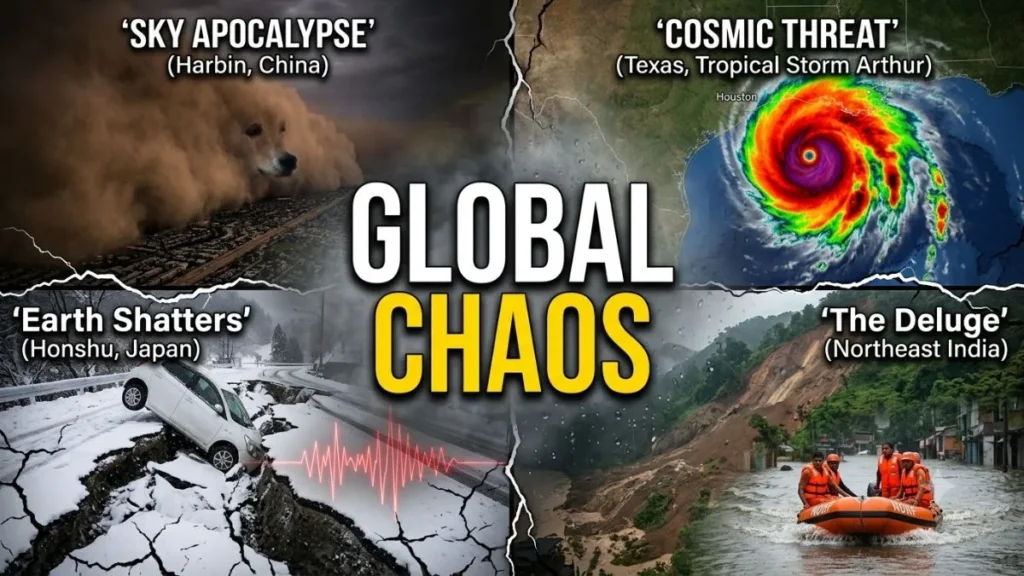
Japan, too, has faced renewed turmoil. A 6.1-magnitude earthquake struck near Honshu just three days after a stronger 7.2-magnitude quake hit the same region. Tremors were felt across several prefectures, reaching as far as Tokyo and Osaka. The number of people injured has since risen to 20, and emergency teams continue to monitor the area for further activity.
Although no major tsunami warning has been issued, officials are advising residents to stay alert for possible aftershocks. The earthquake sequence, after all, remains ongoing, and seismologists are watching the region closely for signs of further activity.
Key Takeaways
- Tropical Storm Arthur triggered flash floods across over 100 Texas counties, leading to a statewide disaster declaration.
- Monsoon rains have caused severe flooding and landslides in Assam and Arunachal Pradesh, damaging critical infrastructure.
- A Force 13 dust storm blacked out Harbin’s skies, prompting officials to urge residents to stay indoors.
- A 6.1-magnitude earthquake struck near Honshu, raising the injury count to 20 just days after a 7.2-magnitude quake.
As these events unfold simultaneously across different continents, they serve as a stark reminder of how quickly extreme weather and seismic activity can upend communities. Residents in all four regions are urged to follow official guidance and stay informed as conditions continue to evolve.
FAQs About Global Weather Chaos Detail Information
1: What is Global Weather Chaos and why is it affecting so many regions at once?
Answer: Global Weather Chaos refers to multiple extreme events occurring simultaneously across different continents. This week, floods in Texas and Northeast India, a massive dust storm in China’s Harbin, and earthquakes near Japan’s Honshu demonstrate how diverse natural hazards can disrupt millions of lives within a short period.
2: How did Global Weather Chaos trigger the Texas flooding?
Answer: Tropical Storm Arthur combined with a stalled weather front, producing intense rainfall across Texas. The overwhelming runoff flooded rivers and drainage systems, damaged over 100 counties, prompted a statewide disaster declaration, and launched large-scale emergency response and recovery efforts throughout the affected communities.
3: Why is Global Weather Chaos making Northeast India vulnerable?
Answer: Persistent monsoon rains have caused flash floods, landslides, and river erosion across Assam and Arunachal Pradesh. Roads, bridges, and railway lines have suffered significant damage, while continued heavy rainfall forecasts mean residents must remain alert and closely follow official weather and evacuation advisories.
4: How did Global Weather Chaos turn Harbin dark during the day?
Answer: A rare collision of cold and warm air masses generated Force 13 winds that carried an enormous wall of dust across Harbin. Visibility fell below 100 metres, trees were uprooted, and authorities advised residents to stay indoors until hazardous conditions improve.
5: Why are experts closely watching Global Weather Chaos in Japan?
Answer: A magnitude 6.1 earthquake struck near Honshu just days after a stronger 7.2 quake, increasing concerns about ongoing aftershocks. Although no major tsunami warning was issued, emergency teams and seismologists continue monitoring seismic activity to protect communities from further risks.
6: What can people learn from Global Weather Chaos this week?
Answer: Global Weather Chaos highlights the importance of preparedness, reliable weather updates, and emergency planning. Whether facing floods, dust storms, or earthquakes, staying informed, following official guidance, and acting early can help protect lives, reduce risks, and strengthen community resilience during natural disasters.





Leave a Reply