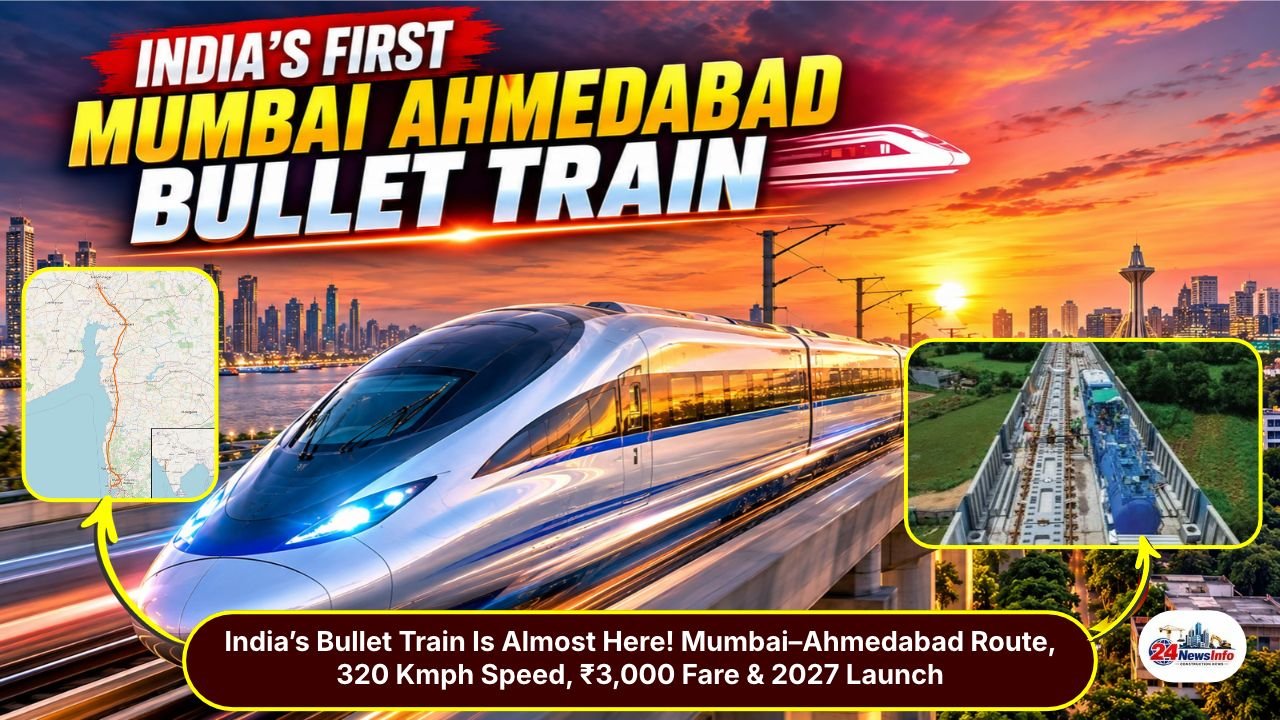
Mumbai Ahmedabad Bullet Train is not just another project on paper. It is the heartbeat of millions who have waited years for this moment. Imagine leaving Mumbai early morning and reaching Ahmedabad before your second cup of tea cools down. The Mumbai-Ahmedabad Bullet Train has been years in the making, but it’s finally starting to feel real. Leave Mumbai at sunrise, and you could be stepping off in Ahmedabad while your chai’s still warm.
No more dozing off in traffic jams or getting crushed in a packed train compartment for hours. Dads who keep missing dinner because their train got delayed, students sprinting to make it to an exam, businessmen who’ve lost deals over a late arrival — this project is going to change all of that. It’s not really about the train itself. It’s about getting time back.
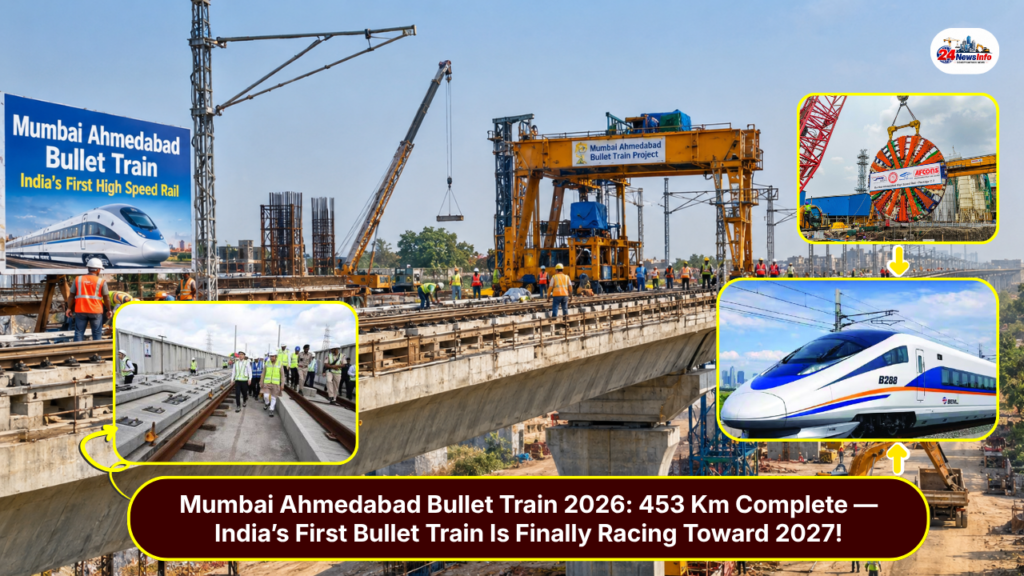
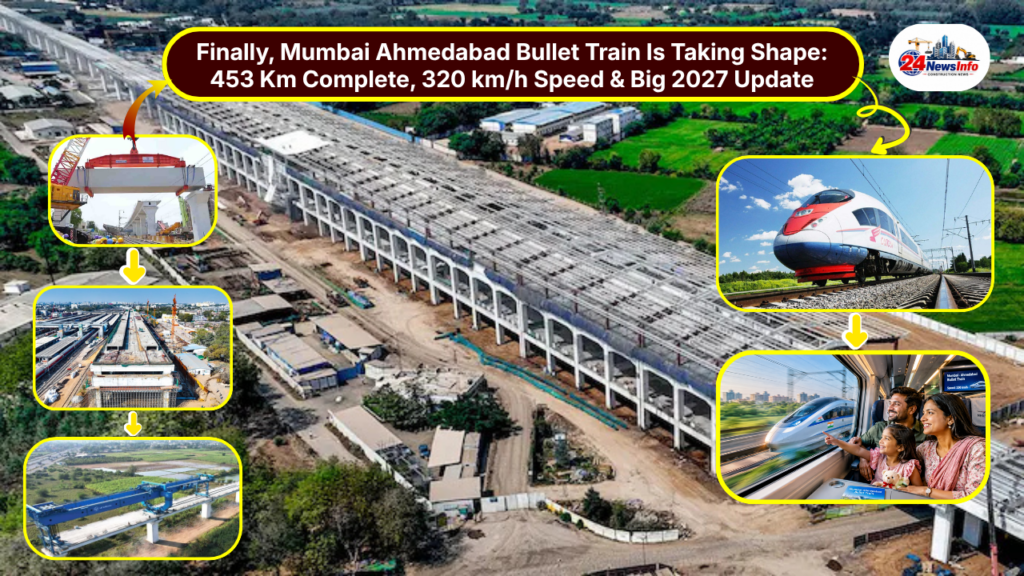
Here’s the part that still gets me: a trip that currently eats up six or seven hours will take about two. That’s the whole point of this corridor — India’s first, and NHSRCL isn’t dragging its feet on it either. Their July 2026 update puts pier work at 453 km and viaduct construction at 359 km already done. Beyond the speed, though, this means jobs, cleaner air, and better connections between two of the country’s biggest business hubs. For anyone living around Gujarat or Maharashtra, this is a genuinely big deal.
What is the Mumbai Ahmedabad Bullet Train Project and Why is it Important?
The Mumbai Ahmedabad High Speed Rail Corridor is India’s first bullet train project. This 508 kilometre corridor will start from Mumbai Bandra Kurla Complex and go all the way to Sabarmati in Ahmedabad. It is being built by NHSRCL using Japanese Shinkansen technology and with support from a JICA loan.
Right now trains between Mumbai and Ahmedabad take six to seven hours road travel takes eight to ten hours and flights take four to five hours including airport procedures. The bullet train running at speeds of up to 320 km per hour will cover the same distance in one hour fifty eight minutes with limited stops. Common people will save time business will become easier and pollution will reduce because it will be an electric train.
For people from UP Bihar and the Hindi belt who work in Mumbai and Gujarat this improved connectivity can also prove to be a game changer. Take a small example a businessman from Surat who used to leave early morning for Mumbai meeting and return late night can now finish work and come back same day without much stress. For more such latest updates on major infrastructure projects you can always check 24newsinfo.com.
Mumbai Ahmedabad Bullet Train Latest Update 2026: How Much Work is Complete?
The most recent update till August 2026 is very positive. According to Maharashtra CM Devendra Fadnavis and NHSRCL report the progress looks strong.
- 453 km pier work completed
- 359 km viaduct construction done
- 215 km RC track bed finished
- 91 km track slabs with CAM injection completed
- Over 9000 OHE masts erected
- 297 km noise barriers installed
- 17 river bridges and 15 steel bridges completed
- 4 mountain tunnels and 5 km NATM tunnel finished
Structural work and roofing at Surat station are complete and interior finishing is in progress. Roof and facade work is also advancing at Ahmedabad station. The Mumbai BKC station is being built nearly ten storeys underground. The first twenty one km of the corridor will be completely underground including India’s first undersea tunnel under Thane Creek. Some people still think the work is slow but the numbers show it is moving faster now.
The government target is to start the Surat Vapi or Surat Bilimora section around August 2027. The full corridor is expected to open phase by phase by 2028 to 2029.
Mumbai Ahmedabad Bullet Train: Key Facts at a Glance
| Key Point | Details |
|---|---|
| Project Name | Mumbai Ahmedabad Bullet Train |
| Total Length | 508 km |
| Number of Stations | 12 |
| Top Speed | 320 km per hour |
| Expected Travel Time | 1 hour 58 minutes to 2 hours 17 minutes |
| First Section Start | Surat Vapi around August 2027 |
| Full Corridor Target | 2028 to 2029 |
| Latest Progress | 453 km pier 359 km viaduct completed |
| Estimated Ticket Price | Around 3000 rupees |
| Implementing Agency | NHSRCL |
Mumbai Ahmedabad Bullet Train Route and Stations
The Mumbai Ahmedabad Bullet Train route will pass through Maharashtra Gujarat and Dadra and Nagar Haveli. There will be a total of twelve stations.
- Mumbai BKC
- Thane
- Virar
- Boisar
- Vapi
- Bilimora
- Surat
- Bharuch
- Vadodara
- Anand
- Ahmedabad
- Sabarmati
Around ninety percent of the route will be on elevated viaducts. Boisar station will also become important for the upcoming Vadhvan Port. Industrial hubs like Surat and Vadodara will get direct connectivity which will benefit the diamond textile and chemical industries. For example a diamond trader from Surat can reach Mumbai in less than one hour and handle urgent work without booking costly flights every time.
Mumbai Ahmedabad Bullet Train Cost Ticket Price and Travel Time
The original estimated cost was around 1.08 lakh crore with a major portion coming from the JICA loan. Some reports now suggest the cost may go up to nearly 2 lakh crore but the railways are preparing to absorb the increase themselves.
The Mumbai Ahmedabad Bullet Train ticket price has not been officially finalised yet. Estimates suggest the full Mumbai Ahmedabad journey could cost around 3000 rupees or close to first class AC train fares. It will still be cheaper than flights and much better in terms of time.
Travel time looks good.
- With four stops around one hour fifty eight minutes
- Stopping at all twelve stations two hours seventeen minutes
The operational speed will be up to 320 km per hour. Initially Indian high speed trains B28 will run and Japan E10 Shinkansen is expected later.
Budget Breakdown of Mumbai Ahmedabad Bullet Train Project
Many people ask where all the money is going so here is a simple look at the budget side. The project is mostly funded by soft loan from Japan and rest from Indian government and state governments.
| Budget Component | Approximate Amount | Source |
|---|---|---|
| Total Estimated Cost | 1.08 lakh crore (may rise to 2 lakh crore) | Overall project |
| JICA Soft Loan | Around 81 percent | Japan International Cooperation Agency |
| Central Government Share | Around 17 percent | Ministry of Railways |
| Maharashtra and Gujarat Share | Remaining portion | State governments |
| Amount Spent Till Mid 2026 | Over 90,000 crore | Actual expenditure |
This budget is big but the long term savings in time fuel and road maintenance will make it worth. Land acquisition and utility shifting also took good portion of the money in early years.
What Benefits Will Common People Get Jobs Time and Environment
This is not going to be a train only for the rich. Thousands of people have already got employment during construction and more jobs will come once operations begin in station management maintenance tourism and logistics.
People will save time making business meetings family visits and daily work easier. Workers traders and professionals in the Mumbai Surat Ahmedabad corridor will benefit. Pollution will reduce because the train is electric. Road traffic will also ease. For people from UP Bihar who settle in Gujarat and Maharashtra for work travel will become simpler and faster. One natural example is a daily wage worker family living in Vapi can visit relatives in Ahmedabad more often without spending full day on road.
Mumbai Ahmedabad Bullet Train vs Train, Road & Flight: Which Travel Option Wins?
| Detail | Mumbai Ahmedabad Bullet Train | Existing Train (Vande Bharat etc.) | Road (Car/Bus) | Flight |
|---|---|---|---|---|
| Distance | 508 km | 508 km | ~530 km | ~440 km |
| Time | 1 hr 58 min – 2 hr 17 min | 5.5 – 7 hours | 8 – 10 hours | 4 – 5 hours (incl. airport) |
| Speed | 320 km/h | Up to 130 km/h | 60-80 km/h | – |
| Estimated Cost (one way) | ~₹3,000 (estimate) | ₹2,000 – 2,500 | ₹1,500 – 3,000 | ₹3,000 – 6,000+ |
| Comfort | High-speed, comfortable | Good | Traffic-dependent | Fast but expensive |
| Environmental Impact | Low (electric) | Medium | High | High |
This table clearly shows that the bullet train will be ahead in both time and comfort.
Mumbai Ahmedabad Bullet Train Completion Date and Future Plans
The first section Surat Vapi Bilimora is strongly expected to start in 2027. The complete Mumbai Ahmedabad High Speed Rail corridor is likely to open phase by phase by the end of 2028 or 2029. Since Ahmedabad will host the 2030 Commonwealth Games timely completion is important.
Cooperation between the Government of India and Japan is continuing. PIB and the Railway Ministry keep sharing regular updates. Some delays happened earlier due to land issues but now most clearances are done and work is steady.
Mumbai Ahmedabad Bullet Train Location
Conclusion
The Mumbai Ahmedabad Bullet Train is not just a project it is the beginning of modern rail travel in India. Milestones like 453 km of pier work and 359 km of viaduct show that construction is progressing rapidly. Common people will save time get new jobs and enjoy comfortable travel. When the first section starts in 2027 all of us will become part of this history. Keep an eye on NHSRCL and official government sources for the latest updates.
FAQs
1. When will the Mumbai Ahmedabad Bullet Train start?
The Surat Vapi section is expected to start around August 2027. The full corridor will open by 2028 to 2029.
2. What is the total length of the Mumbai Ahmedabad Bullet Train?
508 kilometres.
3. How many stations will there be?
Twelve stations Mumbai BKC Thane Virar Boisar Vapi Bilimora Surat Bharuch Vadodara Anand Ahmedabad and Sabarmati.
4. What will be the ticket price?
The official fare is not yet finalised. Estimates put it around 3000 rupees or similar to first class AC train fares.
5. How much travel time will it take?
Around one hour fifty eight minutes with limited stops and two hours seventeen minutes if it stops at all twelve stations.
6. What will be the speed?
Operational speed of up to 320 km per hour.
7. What is the project cost?
Original estimate was 1.08 lakh crore it may rise to nearly 2 lakh crore.
8. Who is building it?
NHSRCL National High Speed Rail Corporation Limited with support from Japan.
9. Where is the undersea tunnel?
Near Mumbai under Thane Creek as part of the first twenty one km underground section.
10. What benefits will common people get?
Time savings new jobs less pollution and better business connectivity.
11. Will people from UP or the Hindi belt benefit?
Yes. Workers and traders from these regions who work in Mumbai and Gujarat will find travel easier and faster.
12. What is the latest construction progress?
As of August 2026 453 km of pier work 359 km of viaduct and several bridges and tunnels have been completed.