
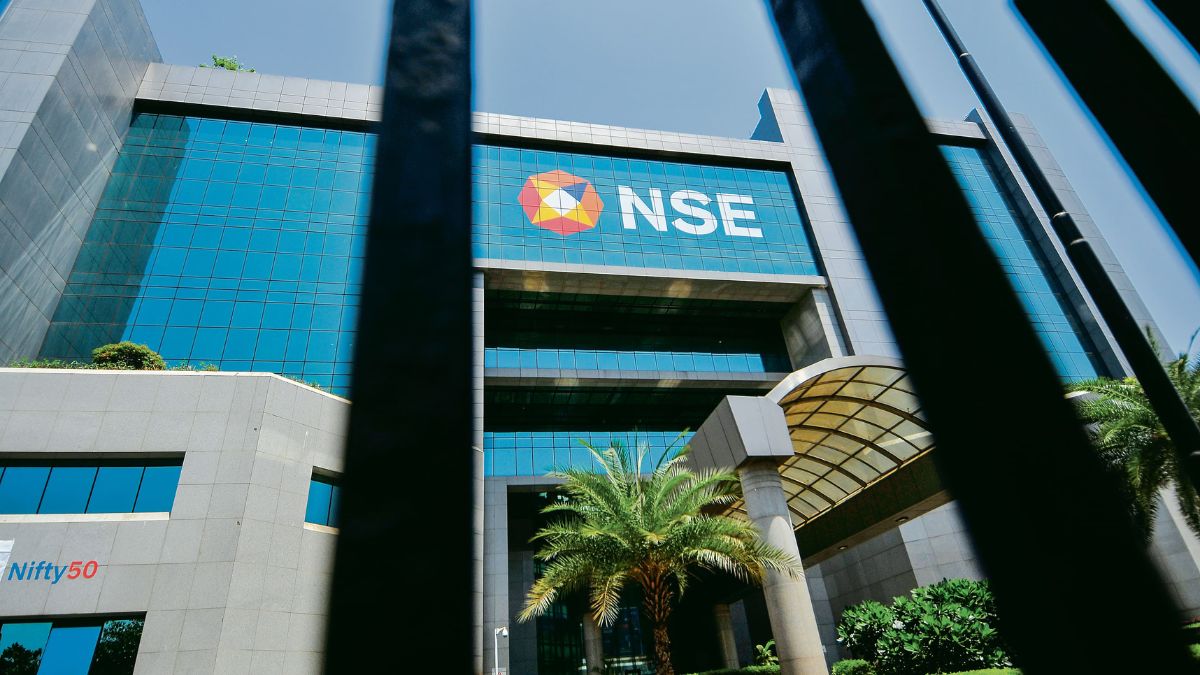
The National Stock Exchange (NSE) plans to appoint Srinivas Injeti as its new chairman, marking an important step for India’s financial markets. This appointment waits for approval from the Securities and Exchange Board of India (Sebi) and is expected to bring stability and clear direction to the exchange. Since the chairman’s seat has been empty since July 2024, choosing someone with Injeti’s experience could be a positive change for investors, businesses, and the capital market as a whole.
The NSE, India’s biggest stock exchange
Has been without a chairman for over a year, following the end of Girish Chandra Chaturvedi’s term in July 2024. According to Sebi rules, the chairperson must be chosen by the governing board from its public interest directors and then approved by Sebi. Injeti, who became a public interest director in early September, is now the main candidate for this role.
Srinivas Injeti is a retired IAS officer from the 1983 batch, with many years of experience in areas like corporate regulation, insolvency law, financial markets, and competition law. He has held significant positions, such as Secretary to the Government of India in financial regulatory departments, and was the first Chairperson of the International Financial Services Centres Authority (IFSCA), which oversees GIFT City, from 2020 to 2023. His work helped bring policy reforms and boost India’s financial reputation worldwide. This background equips Injeti well to lead NSE through both growth prospects and regulatory issues.
This appointment comes at an important moment for NSE
The exchange posted a 10% rise in consolidated profit after tax, reaching ₹2,924 crore in the first quarter of fiscal year 2026. However, revenue from operations dropped 17% to ₹4,032 crore, mainly due to a 14% fall in transaction charges, which are a major source of income. Despite these fluctuations, NSE remains dominant in India’s financial sector. Debt issuances raised ₹4.2 trillion, equity issuances ₹1 trillion, and equity IPOs ₹20,000 crore in the same quarter. Market share figures also show resilience: NSE holds 93.8% of the cash market, slightly down from before; equity options share dipped by 2.6%, and equity futures still lead with 99.8%.
With Injeti at the helm, investors and stakeholders can expect stronger regulatory compliance to keep up with changing standards, along with strategic moves towards innovation in trading technology and products. His experience with IFSCA could help NSE connect better with international financial hubs and draw global investors. He’s likely to focus on reforms that boost confidence among both big institutions and individual investors, aiming for a more stable market.
In summary
Appointing Srinivas Injeti as chairman signals a shift toward stronger leadership, financial stability, and innovation at NSE. His expertise should help the exchange navigate new challenges and seize fresh opportunities, reinforcing NSE’s key role in India’s capital markets. For investors, businesses, and regulators, this change holds promise for steady growth and better global competitiveness.
FAQs: NSE to Appoint Srinivas Injeti as Dynamic New Chairman
1) Why is “NSE to Appoint Srinivas Injeti as Dynamic New Chairman” being seen as such a major market development?
The news that NSE to Appoint Srinivas Injeti as Dynamic New Chairman is being viewed as a big confidence booster for India’s capital markets because the exchange has been operating without a chairman since July 2024. For a market institution as important as the National Stock Exchange, leadership clarity matters—not just symbolically, but strategically.
A strong chairman can influence governance standards, regulatory alignment, long-term planning, and market confidence. Investors, listed companies, brokers, institutions, and policymakers all watch such appointments closely because they often signal the future direction of the exchange.
What makes this especially important is timing. NSE is at a point where it must balance growth, innovation, compliance, global positioning, and market trust. So this is not just another board-level change—it feels like a reset moment for one of India’s most influential financial institutions.
2) Who is Srinivas Injeti, and why does “NSE to Appoint Srinivas Injeti as Dynamic New Chairman” sound so promising?
The reason the headline NSE to Appoint Srinivas Injeti as Dynamic New Chairman sounds so promising is because Srinivas Injeti brings a rare combination of administrative depth, regulatory understanding, and financial market relevance.
He is a retired IAS officer from the 1983 batch and has worked across several important areas such as:
- Corporate regulation
- Insolvency law
- Financial market governance
- Competition law
- Policy administration
What makes his profile stand out even more is that he served as the first Chairperson of the International Financial Services Centres Authority (IFSCA), the regulator that oversees GIFT City, India’s global financial hub initiative.
That kind of experience matters because today’s stock exchanges are no longer just trading venues—they are highly regulated financial ecosystems. A leader who understands both public policy and market systems can bring exactly the kind of balance NSE needs.
3) Why does “NSE to Appoint Srinivas Injeti as Dynamic New Chairman” matter so much after the chairman’s seat remained vacant?
The phrase NSE to Appoint Srinivas Injeti as Dynamic New Chairman matters deeply because the chairman’s seat at NSE has been vacant since July 2024, after the term of Girish Chandra Chaturvedi ended.
When such a crucial post remains empty for a long period, it can create concerns around:
- Long-term strategic direction
- Governance continuity
- Board leadership
- Regulatory communication
- Institutional confidence
Even if operations continue smoothly, the absence of a formal chairperson can leave a visible gap in top-level oversight and leadership signaling.
That’s why this appointment is being interpreted as more than routine succession—it feels like a much-needed stabilizing move. Markets tend to respond positively when uncertainty gets replaced with structure, and that’s exactly why this development has attracted attention.
4) How will “NSE to Appoint Srinivas Injeti as Dynamic New Chairman” impact investors emotionally and financially?
For many investors, the headline NSE to Appoint Srinivas Injeti as Dynamic New Chairman brings a sense of relief, reassurance, and renewed trust.
Let’s be honest—markets are not driven by numbers alone. They are also driven by confidence. When the leadership of a major exchange becomes clearer, investors often feel that the institution is better positioned to handle:
- Regulatory shifts
- Market volatility
- Governance concerns
- New product development
- Long-term growth planning
Financially, a strong chairman doesn’t directly move stock prices overnight, but leadership can influence the credibility and future readiness of the exchange. That matters to:
- Retail investors, who want trust and transparency
- Institutional investors, who look for governance quality
- Foreign investors, who closely watch market institutions
So yes, this appointment may feel administrative on the surface—but emotionally and structurally, it can have a meaningful impact.
5) What is the Sebi approval process behind “NSE to Appoint Srinivas Injeti as Dynamic New Chairman”?
The development NSE to Appoint Srinivas Injeti as Dynamic New Chairman is not fully official until it gets the required approval from Sebi.
Under Sebi rules, the process generally works like this:
- The governing board of NSE selects the chairperson
- The selection must come from among its public interest directors
- The appointment is then sent for Sebi approval
- Only after regulatory clearance does the appointment become formal
This is an important safeguard because NSE is not just a business entity—it is a systemically important market institution. Sebi’s role ensures that the appointment aligns with governance standards, regulatory expectations, and public market integrity.
So while Injeti is reportedly the leading choice, the final step is still regulatory approval—which adds both legitimacy and accountability to the process.
6) Why is “NSE to Appoint Srinivas Injeti as Dynamic New Chairman” being linked to stronger regulation and governance?
One of the biggest reasons NSE to Appoint Srinivas Injeti as Dynamic New Chairman is being welcomed positively is because of the expectation that he could bring stronger governance discipline and regulatory steadiness.
His background suggests he understands how institutions need to evolve without losing credibility. In today’s market environment, that matters enormously because stock exchanges must constantly navigate:
- New compliance norms
- Technology risk
- Market surveillance
- Investor protection standards
- Regulatory scrutiny
A chairman with experience in both government systems and financial oversight can help ensure that growth does not come at the cost of discipline.
For many stakeholders, that is exactly the kind of leadership NSE needs right now: calm, credible, and reform-minded.
7) How does “NSE to Appoint Srinivas Injeti as Dynamic New Chairman” connect with his IFSCA and GIFT City experience?
This is one of the most exciting parts of the story. The headline NSE to Appoint Srinivas Injeti as Dynamic New Chairman draws extra attention because of his previous role as the first Chairperson of IFSCA, the authority regulating GIFT City.
Why does that matter?
Because GIFT City represents India’s ambition to become a globally relevant financial hub. Leading that ecosystem required understanding:
- International finance
- Cross-border regulation
- Institutional credibility
- Financial innovation
- Global investor expectations
That experience could prove highly valuable for NSE as it looks to strengthen its international positioning, improve market sophistication, and potentially deepen its engagement with global investors.
In simple terms: he doesn’t just understand Indian bureaucracy—he also understands where India’s financial future is headed.
8) What does “NSE to Appoint Srinivas Injeti as Dynamic New Chairman” mean for NSE’s future growth strategy?
The phrase NSE to Appoint Srinivas Injeti as Dynamic New Chairman could signal a future where NSE focuses not only on preserving its dominance but also on modernizing and expanding intelligently.
A chairman with Injeti’s profile could potentially support priorities such as:
- Better regulatory alignment
- Product innovation
- Stronger governance frameworks
- Technology-driven market efficiency
- Global competitiveness
This is especially relevant because exchanges today compete not just on trading volume, but also on:
- Reliability
- Investor trust
- Speed and technology
- New asset and derivative products
- Institutional reputation
So this appointment could become a bridge between stability and ambition—which is exactly the kind of leadership mix major exchanges need.
9) Why is “NSE to Appoint Srinivas Injeti as Dynamic New Chairman” happening at such a critical financial moment?
Because the timing is impossible to ignore.
The story NSE to Appoint Srinivas Injeti as Dynamic New Chairman comes at a moment when NSE is showing strong profitability, but also facing important business and market shifts.
On one hand, NSE reported a 10% rise in consolidated profit after tax, reaching ₹2,924 crore in the first quarter of FY2026. That’s a strong signal of financial resilience.
On the other hand, revenue from operations declined 17% to ₹4,032 crore, largely due to a 14% fall in transaction charges—a key revenue source.
That means the exchange is financially powerful, but also navigating changes in income dynamics and market behavior. This is exactly when leadership matters most—not in crisis alone, but in periods of transition and recalibration.
10) What do the latest numbers reveal behind “NSE to Appoint Srinivas Injeti as Dynamic New Chairman”?
The financial backdrop behind NSE to Appoint Srinivas Injeti as Dynamic New Chairman tells a very interesting story: NSE remains incredibly strong, but it is also evolving.
Here are the standout numbers:
- Consolidated PAT rose 10% to ₹2,924 crore
- Revenue from operations fell 17% to ₹4,032 crore
- Transaction charges dropped 14%
- Debt issuances reached ₹4.2 trillion
- Equity issuances touched ₹1 trillion
- Equity IPOs stood at ₹20,000 crore
These figures show that even when some revenue lines soften, NSE remains at the center of India’s capital formation engine.
That’s why this appointment feels so important: the exchange is not weak—it is powerful, influential, and growing—but it now needs leadership that can help it adapt smartly to changing market economics.






Leave a Reply