
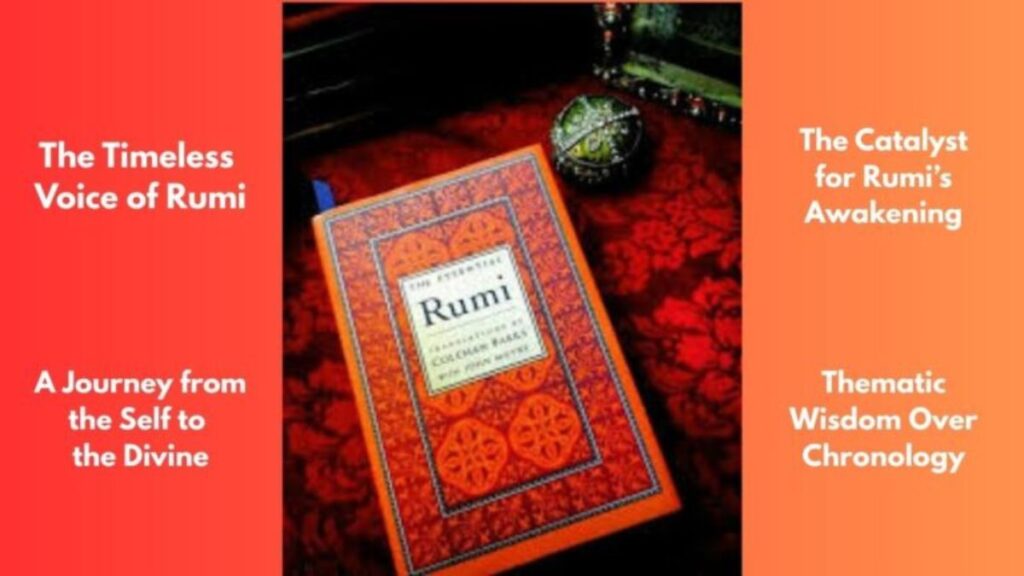
The Essential Rumi is more than a collection of poetry—it is a doorway into the timeless wisdom of the soul. In a world filled with noise, pressure, and endless searching, Rumi’s words arrive like a gentle whisper, reminding us of love, truth, and inner awakening. Written in the 13th century yet deeply relevant today, his verses explore the mysteries of the heart, the beauty of surrender, and the transformative power of divine love. Through the poetic translations of Coleman Barks, readers are invited on a profound spiritual journey—one that encourages reflection, healing, and a deeper connection with life’s hidden meaning and the infinite within.
Searching for meaning and a spiritual something to grab onto? The Essential Rumi is like a light in the dark—a book that feels as relevant now as ever. Coleman Barks put together this collection of poems and thoughts from Rumi, a 13th-century mystic from Persia (that’s around Afghanistan now). People are really into being mindful, healing emotionally, and growing as people, which is why Rumi’s words are hitting home for folks from all walks of life.
So, Who Was Rumi?
Rumi was a poet and thinker who was born way back in 1207. His stuff is all about wanting something more, a great love, getting close to others, and figuring things out. Rumi’s poems are known for being gorgeous and talking about love and wanting to feel part of something bigger.
Why are so many people reading Rumi today? Well, Coleman Barks made his teachings easy to read while keeping the deep stuff intact. It’s not just a book of poems; it’s like a guide for your soul, with thoughts on love, loss, letting go, who you are, feeling connected, being alone, being happy, and waking up.
Rumi’s Voice: Timeless
Rumi is one of those poets that sticks with you. His words from the 1200s still feel real today. The Essential Rumi, by Coleman Barks, takes Rumi’s best stuff and puts it together in a way that makes sense no matter who you are or what you believe. Barks didn’t just copy the words; he got to the heart of Rumi’s vibe.
How Rumi Saw Things: Self to the Divine
Rumi’s poems aren’t like boring religious texts. They’re full of feeling and talk about things everyone deals with. He wasn’t so into rules; more into the idea that the sacred is all around us. Rumi was all about the soul wanting to be one with something bigger, which he shows with things like wine, tunes, friendship, and places to hang out.
Ever heard this one? “You were born with wings, why prefer to crawl through life?” That’s Rumi in a nutshell. We’re all supposed to remember that we are special. The Essential Rumi talks about this a lot, comparing love to fire, being tipsy, and even being a little crazy. Rumi says to totally lose yourself and get back to what makes you, YOU.
Shams: The Guy Who Changed Everything
Shams of Tabriz was a big deal for Rumi. He was a mystic who became Rumi’s buddy. They were more than friends; they were like two souls becoming one. When Shams disappeared (maybe he was killed), Rumi started writing about his feelings. A lot of the love poems in The Essential Rumi are for Shams, not just as a person but as a reflection of something bigger.
When Rumi writes about Shams, he’s all over the place. He doesn’t stick to normal ways of writing; he just lets the words flow. He says, “Don’t be sad. When you lose something, it comes back in another way.” It’s about trusting in something greater, and it helped Rumi deal with losing Shams.
How the Book is Setup
Each part of the book has a little intro by Barks, which sets things up without telling you what to think. He wants you to feel the poems, not just think about them. This way, the book is both a guide and a work of art.
Love: Everyone Speaks This Language

Rumi thought love was the most important thing in the world. It didn’t matter if it was love for God, for another person, or just the feeling between people; he believed it all came from the same place. He famously said, “Gamble everything for love if you’re a real human being.”
This love isn’t quiet; it’s alive. Rumi says it’s like a fire that cleans your heart, a wind that shakes you up, and a party that sets your soul free.
What it All Means: Looking Closer
Rumi’s poems use a lot of metaphors. Wine means joy, a bar is where people meet, a flute is a soul wanting something, and fire is when you finally get it. Like this:
“Dance, when you’re broken open. Dance, if you’ve torn the bandage off. Dance in the middle of the fighting. Dance in your blood. Dance when you’re perfectly free.”
These aren’t just words; they’re keys. Metaphors are how the soul talks, and Rumi is fluent. He takes everyday things and uses them to show bigger truths.
Important People: Jesus, Moses, and Muhammad
Rumi includes stories of people like Jesus, Moses, and Muhammad, not to talk about religion but to point out important ideas. Jesus is about love, Moses is about searching, and Muhammad is about giving in to something bigger.
Rumi was Muslim, but he didn’t stick to just one belief. He said, “I belong to no religion. My religion is love. Every heart is my temple.”
Life Advice from Rumi
One of the best things about The Essential Rumi is that the guidance feels real. Rumi writes, “Give up wanting what other people have. That way you’re safe.” Or, “The wound is the place where the Light enters you.”
These lines are simple and powerful. They remind you that Rumi wanted you to change, not just think differently.
Happiness: It’s Okay to Laugh
Even though Rumi’s poems can be serious, many are also fun. He jokes and plays around. He thought happiness was part of being spiritual.
Like when he writes, “Why do you stay in prison when the door is so wide open?” or “Try not to resist the changes that come your way. Instead, let life live through you.” He says these things lightly, making you think without being too hard on yourself.
Being Real: It’s All Connected
Rumi didn’t think the body was a bad thing, like some religious folks do. He mixed being physical with being spiritual. His poems about love might feel personal, but they’re really about something bigger.
The Big Picture: Why Rumi Still Matters
With so much noise, anger, and worry in the world, Rumi’s voice is like a clear bell. His poems remind us where we come from and where we’re going. He wants us to be more human, more open, more real.
Like he writes:
“Don’t get lost in your pain, know that one day your pain will become your cure.”
“We have fallen into the place where everything is music.”
Whether you’re trying to figure things out, love poems, or just need some comfort, The Essential Rumi is a friend for life.
What It All Means:
The Essential Rumi tells us that what we see every day is just covering up something amazing. Each of us has a spark of something great inside, and with love and quiet, we can let it shine.
Rumi wants us to “die before you die,” meaning to let go of who we think we are and be reborn. This is a big idea in Sufism, where they think our ego keeps us from God. Rumi’s poems talk about the soul going back to where it came from, telling everyone to “come, whoever you are,” and join the party.
A Rumi quote that says it all:
“The wound is the place where the Light enters you.”
It’s not just for spiritual people; it’s for anyone who’s been hurt and wants to heal and find themselves.
Love and Life:
Rumi’s poems have lasted so long because he talks about love—not just romance, but love for something bigger. Rumi writes like he’s in love with everything, the One that shows up in every part of life.
We find that love inside us, not out there, and it shows how we’re all connected. His poems say that love and heartache are just showing us that we’re apart from God and want to be together again.
Rumi’s love is wild. It changes you and takes over. When he says:

“You were born with wings, why prefer to crawl through life?”
—He’s telling us to wake up and use our potential, to fly instead of just walking through life.
How Shams Woke Rumi Up
You can’t get Rumi without knowing about Shams of Tabriz. Shams was a traveler who had a big impact on Rumi’s life. Because of their friendship, Rumi had a big change of heart, which led to all the poems we read now.
Rumi’s relationship with Shams is both strange and special. It wasn’t just friends; it was something deeper. Shams was like a mirror where Rumi saw God, and when he disappeared, Rumi went inside himself and wrote poetry.
This relationship makes people think about:
Friendship in Sufism
Rumi and Shams’ relationship
How Rumi changed because of Shams
Rumi’s Teachings
Even though it comes from Islamic beliefs, The Essential Rumi goes beyond just one religion. People who are Christian, Buddhist, Hindu, or don’t believe in anything can still get something out of it. Rumi speaks to everyone. His poems don’t tell you what to believe; they make you think.
Some poems mention Jesus and Moses along with Muhammad, showing that Rumi liked wisdom no matter where it came from. Like this:
“The lamps are different, but the light is the same.”
This says that all religions have good things and helps people today who want peace between religions.
How to Live:
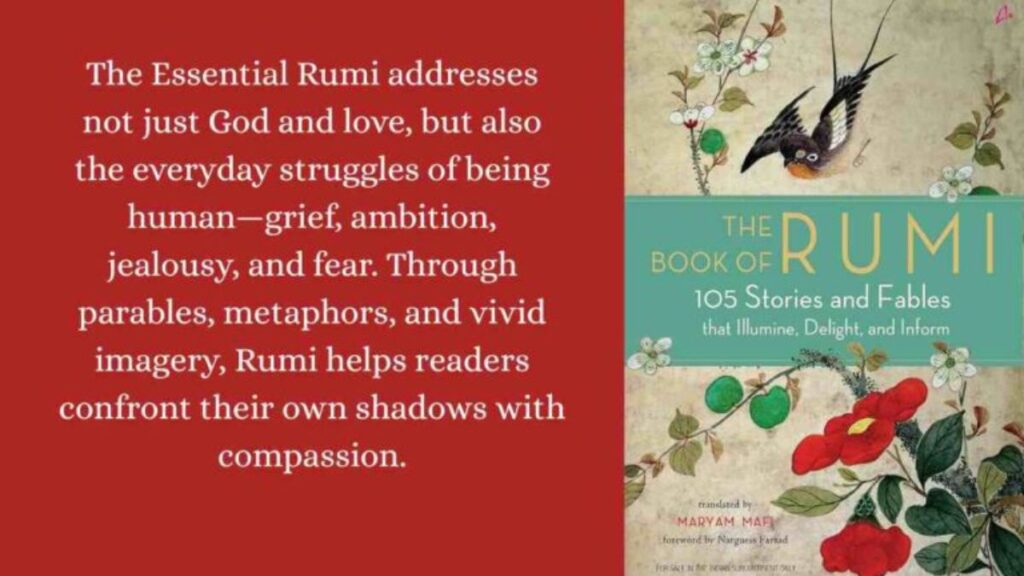
The Essential Rumi talks about God and love, but also the normal problems people face—sadness, wanting things, being jealous, and being scared. With stories and metaphors, Rumi helps us face our own problems with kindness.
Quiet:
Rumi always talks about how important it is to be quiet. In today’s loud world, that’s more important than ever. Rumi thought that real wisdom comes from listening inside, not just talking or thinking.
“Silence is the language of God. All else is poor translation.”
In Sufism, dancing around isn’t just dance; it’s like moving meditation. Being quiet isn’t just being empty; it’s being full of God. Rumi teaches us that God is in the spaces between the words.
How This Book Affects Today
Coleman Barks’ translation isn’t just good; it’s powerful. It brought Rumi to modern readers with words that still matter today. Each part of the book shows things that people are trying to do now:
Letting go
Being open
Finding God every day
Giving up your ego to be better
Rumi’s poems are used to help people feel better, at retreats, in therapy, and even at work. His words have become something everyone knows, offering wisdom in a world that needs it.
Famous Quotes:
Here are some Rumi quotes that get to the heart of The Essential Rumi:
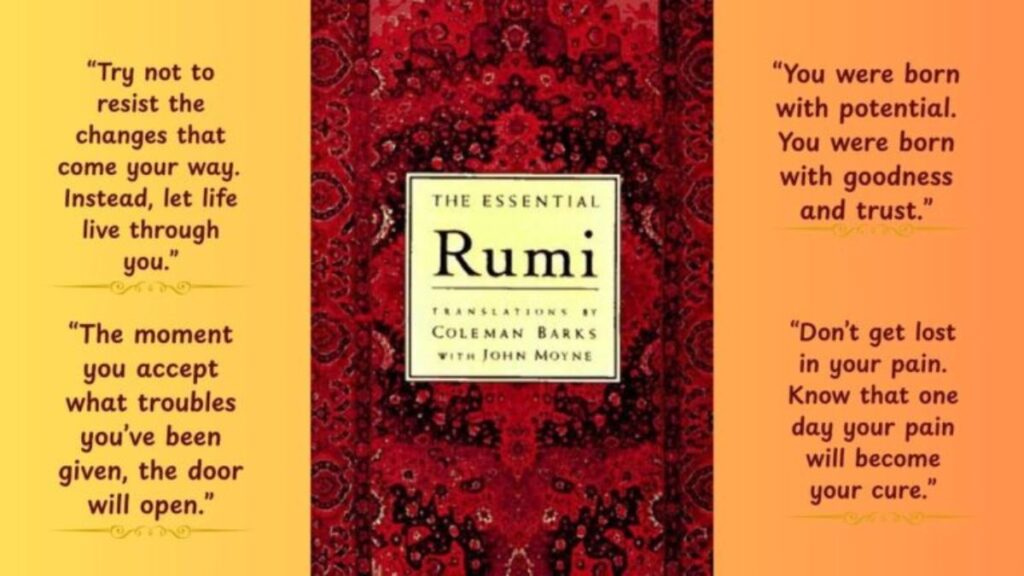
“Try not to resist the changes that come your way. Instead, let life live through you.”
“You were born with potential. You were born with goodness and trust.”
“Be like a tree and let the dead leaves drop.”
“Don’t get lost in your pain. Know that one day your pain will become your cure.”
“The moment you accept what troubles you’ve been given, the door will open.”
Why Rumi Still Matters
Rumi teaches us that we find God through love, not fear or strict rules. In a world where people are fighting over religion, Rumi shows us a different way: connecting through our hearts.
People use his work in therapy, meditation, and online, searching for meaning and waking up inside.
Final Thoughts:
The Essential Rumi isn’t just a book of poems; it’s a way of waking up. Rumi, through Coleman Barks, wants us to dance, let go, and remember that what’s beautiful is what we feel, not just what we believe.
Whether you want to heal, learn more, or just love the beauty of words, Rumi’s poems are like a friend and a guide.
“We are not a drop in the ocean. We are the entire ocean in a drop.”
Frequently Asked Questions about The Essential Rumi
Q1: Who was Jalaluddin Rumi?
Jalaluddin Rumi was a 13th-century Persian poet, theologian, and Sufi mystic who wrote about great love, spirituality, and feeling connected to something bigger.
Q2: What is The Essential Rumi?
The Essential Rumi, translated by Coleman Barks, is a collection of Rumi’s best poems that talk about love, spirituality, changing yourself, and feeling one with God.
Q3: Why is Rumi’s work still popular today?
Rumi’s poems still feel real because they talk about feelings that everyone has—love, sadness, happiness, and wanting something more—that people can connect with no matter where they’re from or what they believe.
Q4: How did Shams of Tabriz influence Rumi’s poetry?
Shams of Tabriz was Rumi’s friend who helped him on his spiritual journey. When Shams disappeared, it really affected Rumi and made him write a lot of passionate poems.
Q5: What topics does The Essential Rumi talk about?
The book includes topics like love, giving in, waking up, feeling peaceful, healing your heart, being happy, and feeling connected to something sacred.
Q6: Can someone who is new to spirituality read The Essential Rumi?
Yes. Coleman Barks’ translation makes Rumi’s poems easy to understand while still keeping the deep meaning and wisdom.
Q7: What do the metaphors in Rumi’s poetry mean?
Rumi uses things like wine, fire, music, and dance to show great love, spiritual joy, and the soul’s journey to find itself.
Q8: How do Rumi’s poems relate to today’s mindfulness practices?
Rumi’s teachings on being quiet, giving in, and being present are similar to today’s practices of mindfulness, meditation, and healing your heart.
Q9: Is Rumi’s message about a specific religion?
While it comes from Sufi Islam, Rumi’s message goes beyond religion. He talks about love, being together, and feeling a divine connection in everyone.
Q10: Why should I read The Essential Rumi today?
The book has wisdom that has lasted through time, comfort for your soul, and beautiful poems that make it a great friend for anyone wanting peace or meaning in their life.