
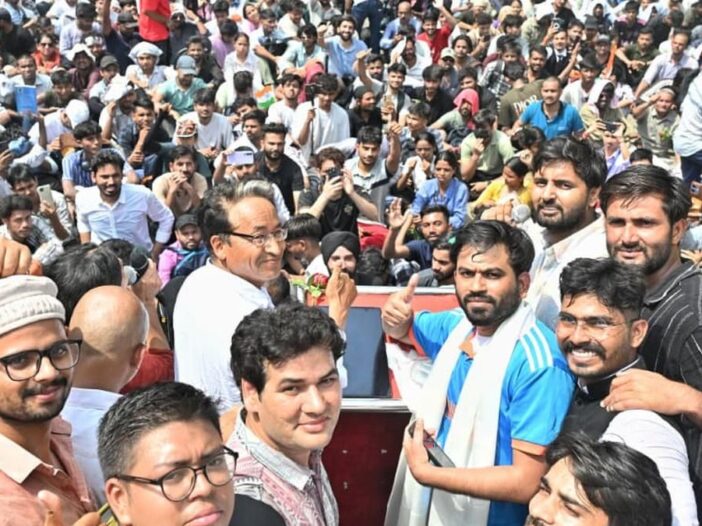
Cockroach Janta Party Protest proved one thing to every politician in India — students are done staying silent.
Thousands showed up at Jantar Mantar carrying books, flowers, and fury. They wore cockroach masks. They chanted for justice. They came from every corner of the country, united by one burning question: why does the system keep failing us?
Paper leaks. Shattered dreams. Zero accountability.
Sonam Wangchuk left Ladakh for this. A man flew in from America to lead this. Eight lakh signatures built this moment.
This was not just a protest. This was a generation finally saying — enough.
Thousands of students, young professionals, and concerned parents gathered at Jantar Mantar in New Delhi on Saturday, demanding accountability from Union Education Minister Dharmendra Pradhan. The youth-led Cockroach Janta Party (CJP) organized what became its first major street protest — and India’s most talked-about grassroots youth movement of 2025.
What Is the Cockroach Janta Party?
Born from a viral moment, the Cockroach Janta Party launched on May 16 after Chief Justice Surya Kant’s controversial “parasites and cockroaches” remark sparked massive online outrage. CJP founder Abhijeet Dipke turned the insult into a movement. Within hours, millions followed the satirical platform across social media.
However, CJP quickly evolved beyond satire. Students experiencing repeated examination failures, paper leak controversies, and institutional silence found a genuine voice through the platform.
Who Led the Historic Protest?
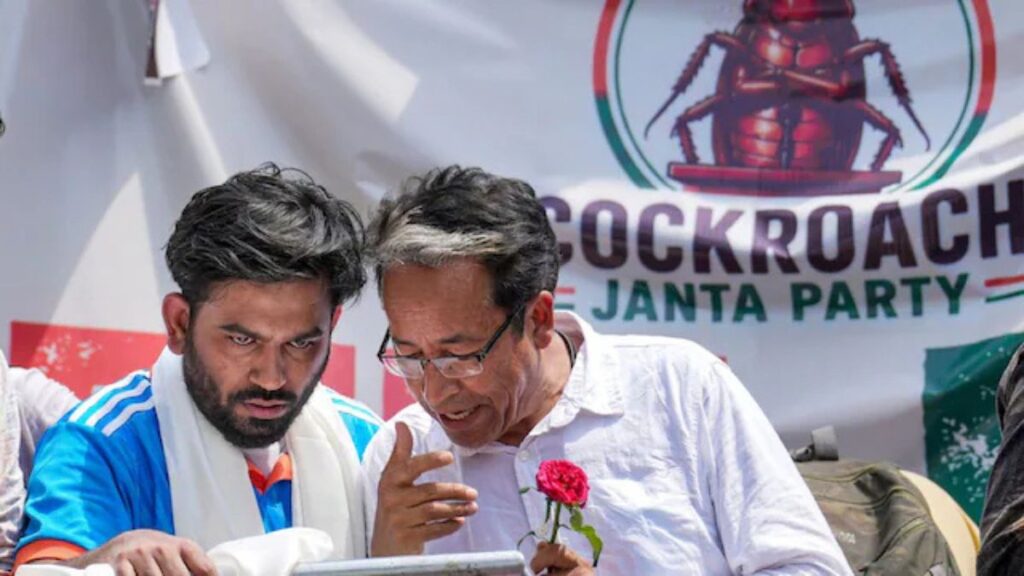
Dipke flew in from the United States — where he currently pursues higher education — specifically to lead the demonstration. Arriving at Indira Gandhi International Airport carrying a copy of B.R. Ambedkar’s autobiography, he immediately set a powerful symbolic tone.
Delhi Police officials met him at the airport and cleared him to proceed directly to Jantar Mantar. Before the gathering, Dipke urged supporters to welcome police personnel with flowers as a goodwill gesture. Throughout his speech, he emphasized peace, discipline, and constitutional action.
Why Students Are Demanding Pradhan’s Resignation
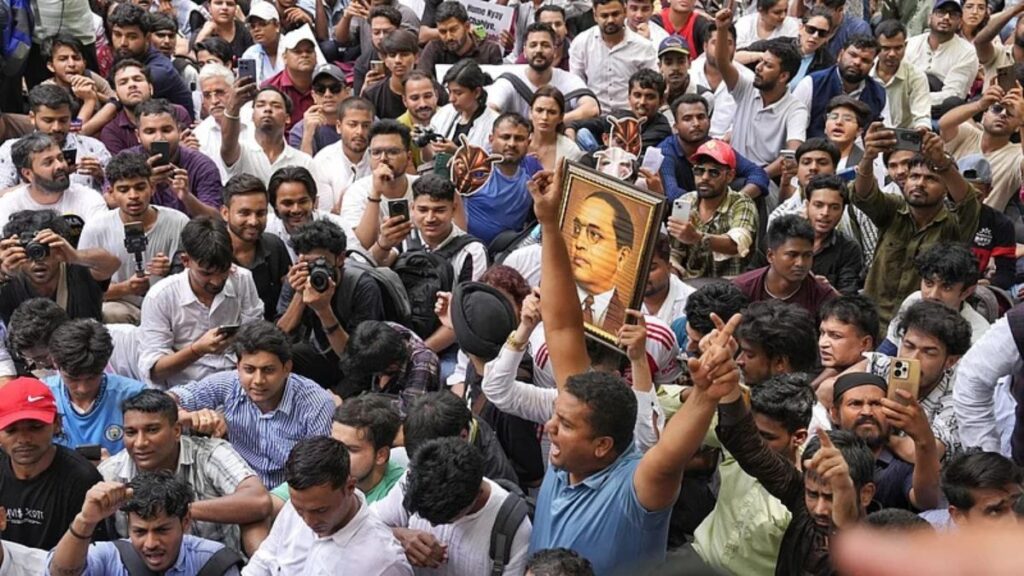
The protest centered on serious concerns affecting millions of young people across India. Specifically, demonstrators highlighted alleged irregularities in NEET-UG 2026, CUET, CBSE on-screen marking (OSM) evaluations, and SSC GD recruitment processes.
Many participants wore cockroach masks and carried the national flag alongside their books. School students attended alongside parents, reflecting how deeply examination controversies have shaken public trust. CJP’s petition demanding Pradhan’s resignation has already collected over 8 lakh signatures — a number that speaks volumes about widespread frustration.
Additionally, CPI(ML) Liberation General Secretary Dipankar Bhattacharya joined the protest, expressing solidarity with youth concerns about paper leaks, unemployment, and declining public education standards.
Sonam Wangchuk’s Powerful Show of Solidarity
Climate activist and education reform advocate Sonam Wangchuk travelled from Ladakh to stand beside the protesters. His presence significantly amplified the movement’s credibility and national visibility.
Wangchuk had previously stated he would join only if authorities took no action by June 5. True to his word, he arrived and spoke passionately about youth accountability in education. In an Instagram video, he said he personally verified the movement’s intentions beforehand. “I genuinely felt that they do not have any wrong intentions; they are highly patriotic,” Wangchuk stated. He further declared he would undertake a six-week fast if Dipke faced arrest — a powerful commitment that resonated widely.
How Delhi Police Managed the Demonstration
Authorities deployed over 1,000 police personnel across New Delhi’s key locations, including the airport and protest venue. Delhi Police granted the gathering a one-time exemption to hold the demonstration at Jantar Mantar.
Six individuals were detained as a precautionary measure after intelligence suggested possible tensions between rival groups. Officials confirmed the detentions prevented any confrontation. No major incidents occurred, and the protest concluded peacefully.
FIR Filed: What the Allegations Claim
Following the demonstration, authorities registered an FIR against CJP, with a complaint alleging foreign funding and activities against national interest. The complaint referenced CNN-News18 reporting linking overseas financial support to the protest.
Wangchuk directly addressed these concerns before joining. He said he spoke with Dipke specifically to confirm that no external forces influenced the movement. Despite the FIR, legal observers note that the protest received official police permission and remained entirely peaceful throughout.
What Happens Next for India’s Youth Movement?
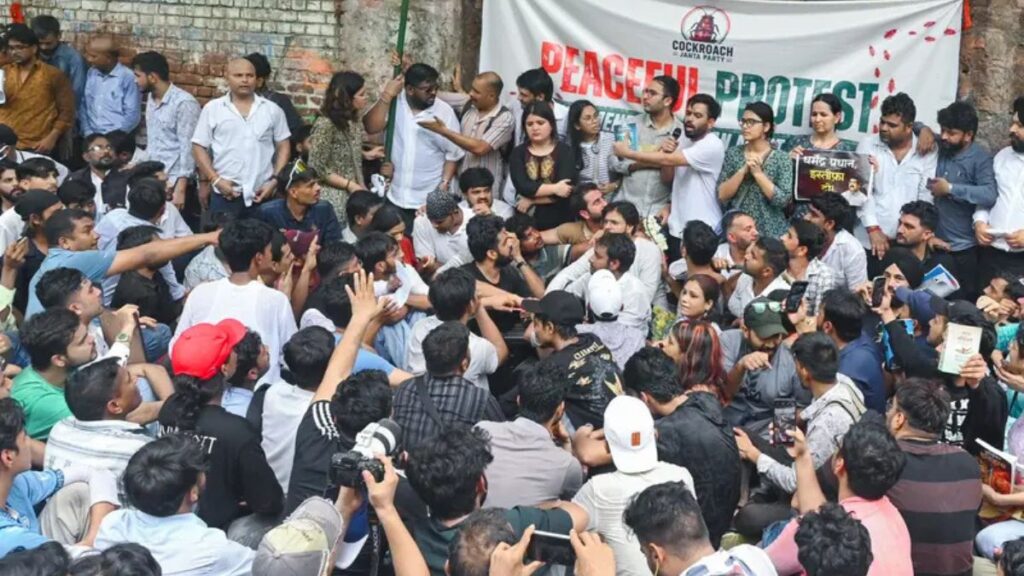
The Jantar Mantar protest marks a turning point. CJP has announced a formal leadership structure, appointing spokespersons Saurav Das, Vijeta Dahiya, and Ashutosh Ranka to coordinate future activities. The movement’s broader agenda includes political reforms, women’s representation, and greater institutional transparency.
For now, India’s youth have delivered a clear message — they demand accountability, transparency, and genuine reform in the examination systems shaping their futures. The Cockroach Janta Party has transformed an online joke into a national conversation. Whether authorities respond meaningfully remains the critical question ahead.
FAQ: Cockroach Janta Party Protest
Q 1: Why did the Cockroach Janta Party Protest attract thousands of students and parents at Jantar Mantar?
The Cockroach Janta Party Protest drew massive participation because it addressed concerns affecting millions of students across India. Protesters demanded accountability over alleged examination irregularities, paper leak controversies, recruitment delays, and evaluation issues in major exams such as NEET-UG, CUET, CBSE OSM, and SSC GD. Many participants felt the movement gave a voice to frustrations that had remained unanswered for years.
Q 2: Who led the Cockroach Janta Party Protest and what message did the organizers promote?
The Cockroach Janta Party Protest was led by founder Abhijeet Dipke, who traveled from the United States to participate in the demonstration. He emphasized peaceful, constitutional, and democratic methods of protest. Supporters were encouraged to maintain discipline, respect law enforcement, and focus on constructive demands for educational reforms and institutional accountability.
Q 3: Why is the Cockroach Janta Party Protest demanding the resignation of Education Minister Dharmendra Pradhan?
Participants in the Cockroach Janta Party Protest believe that repeated examination controversies and administrative failures have weakened public trust in India’s education system. Protesters argue that leadership accountability is necessary to restore confidence among students and parents. A petition linked to the movement reportedly gathered more than 8 lakh signatures supporting this demand.
Q 4: How did Sonam Wangchuk support the Cockroach Janta Party Protest?
The Cockroach Janta Party Protest gained national attention when education reform advocate and climate activist Sonam Wangchuk joined the demonstration. Wangchuk publicly expressed solidarity with students, stating that he had personally assessed the movement’s intentions and found them patriotic and genuine. His presence significantly boosted the visibility and credibility of the youth-led campaign.
Q 5: Was the Cockroach Janta Party Protest peaceful and how did Delhi Police handle the event?
Yes, the Cockroach Janta Party Protest remained peaceful throughout the day. Delhi Police granted permission for the demonstration at Jantar Mantar and deployed a large security presence to ensure public safety. Authorities also took precautionary measures to prevent potential clashes, and the event concluded without any major incidents or violence.
Q 6: What could be the long-term impact of the Cockroach Janta Party Protest on India’s youth movement?
The Cockroach Janta Party Protest may represent a significant moment in youth civic engagement. What began as a viral online movement evolved into a nationwide platform discussing education reforms, transparency, employment concerns, and institutional accountability. With a growing support base and a formal leadership structure, the movement has the potential to influence future public debates on education and governance in India.






Leave a Reply