
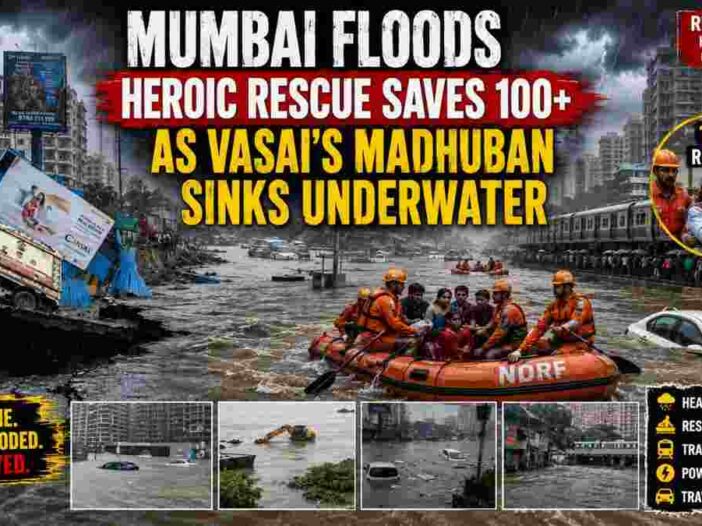
Mumbai Floods have once again brought the city to its knees, but amid the relentless rain and rising waters, extraordinary stories of courage are emerging. Imagine waking up to find your street transformed into a river, your home filling with water within minutes, and your only escape leading to the rooftop. That terrifying reality unfolded for hundreds of families in Vasai’s Madhuban locality as floodwaters rose faster than anyone expected. Yet, while fear gripped trapped residents, rescue teams refused to back down. Their daring overnight operation saved more than 100 lives, turning a night of panic into a powerful story of hope and resilience.
Heavy rain has turned Vasai’s Madhuban locality into a lake overnight, trapping families inside their own homes. Neck-deep water swallowed roads, shops, and ground-floor apartments across the area on Thursday, forcing residents to flee to terraces and upper floors just to stay safe. As a result, rescue teams worked through the night to pull dozens of stranded people from the flooded streets.
Water Rose Faster Than Residents Could React
Madhuban, located in Vasai East, bore the brunt of the downpour. Several pockets recorded floodwater levels reaching up to an adult’s throat, according to visuals shared widely online. Many ground-floor residents had no time to gather belongings before water surged into their homes. Consequently, entire families spent the night on rooftops, waiting for the water to recede.
Social media quickly filled with clips showing submerged roads and stranded vehicles. Meanwhile, local commuters described roads that once carried traffic now flowing like rivers.
Fire Brigade and NDRF Lead the Rescue
The Fire Brigade responded swiftly, deploying ropes and specialized gear to reach trapped residents. In Madhuban alone, emergency personnel rescued between 20 and 25 marooned citizens from the rising water.
The situation, however, extended well beyond one neighborhood. In nearby villages such as Mori and Sakwar, the National Disaster Response Force joined local civic teams and used inflatable boats to evacuate more than 100 people. Together, these coordinated efforts prevented what could have been a far more serious tragedy.
Transport Grinds to a Halt
Main roads linking Vasai, Virar, and Nalasopara became impassable, effectively cutting off routine travel. Because of the severe waterlogging, the Vasai-Virar Municipal Corporation suspended its bus services entirely, and local auto-rickshaws stopped operating as well.
Rail commuters weren’t spared either. Rainwater pooled on tracks near Nalasopara station, delaying Mumbai’s Western Line local trains by 15 to 20 minutes. For a city that depends heavily on its rail network, even a short delay ripples through thousands of daily commutes.
Power Cut as a Safety Measure
To prevent electrocution risks in deeply flooded neighborhoods, the electricity department proactively cut power supply to several areas. Officials confirmed that electricity will only be restored once water levels drop to safe thresholds. While inconvenient, this precaution likely prevented additional casualties.
IMD Issues Red Alert, Urges Caution
The India Meteorological Department has placed Mumbai, along with neighboring Palghar and Thane districts, under a Red to Orange Alert. Forecasters expect heavy to extremely heavy rainfall to continue, so authorities are urging residents to avoid stepping out unless absolutely necessary.
What Happens Next
For now, relief operations continue across Vasai’s worst-affected pockets. Rescue teams remain on standby, ready to respond as water levels shift. Meanwhile, residents are advised to keep emergency numbers handy, avoid unnecessary travel, and stay updated through official weather bulletins.
As Mumbai’s monsoon shows its most intense side yet, one thing is certain: swift coordination between fire crews, NDRF units, and civic authorities has already made the difference between chaos and controlled crisis management.
FAQ about Mumbai Floods: Incredible Rescue Saves 100+ Lives Fast
1: What caused the Mumbai Floods in Vasai’s Madhuban locality?
The Mumbai Floods were triggered by intense monsoon rainfall that rapidly submerged Vasai East’s Madhuban area. Water levels rose to neck-deep within hours, trapping families inside homes and forcing many to seek safety on rooftops until rescue teams arrived.
2: How many people were rescued during the Mumbai Floods?
During the Mumbai Floods, the Fire Brigade and NDRF safely rescued more than 100 people from flooded areas, including Madhuban, Mori, and Sakwar. Their swift response with boats and rescue equipment helped prevent major casualties despite severe flooding.
3: How did the Mumbai Floods affect transport services?
The Mumbai Floods severely disrupted daily travel by flooding roads across Vasai, Virar, and Nalasopara. Bus services were suspended, auto-rickshaws stopped operating, and Western Railway local trains experienced delays due to waterlogged tracks near Nalasopara station.
4: Why was electricity disconnected during the Mumbai Floods?
Authorities temporarily cut electricity during the Mumbai Floods to reduce the risk of electrocution in waterlogged neighborhoods. Power will be restored only after floodwaters recede and officials confirm that conditions are completely safe for residents.
5: What weather warning has been issued for the Mumbai Floods?
The India Meteorological Department has issued Red and Orange Alerts for Mumbai, Palghar, and Thane as heavy to extremely heavy rainfall is expected. Residents are advised to avoid unnecessary travel and follow official weather updates for safety.
6: What should residents do during the Mumbai Floods?
During the Mumbai Floods, residents should stay indoors whenever possible, keep emergency contacts accessible, avoid flooded roads, follow instructions from local authorities, and monitor official weather bulletins. Preparedness and timely updates can greatly improve safety during ongoing rescue and relief operations.





Leave a Reply