
Bengal Election 2026 didn’t just change a government — it broke a mother’s silence.
Imagine carrying the unbearable grief of losing your daughter to a brutal crime, then watching the very people meant to deliver justice scramble to hide the truth. Now imagine turning that grief into a ballot — and winning.
That’s exactly what happened in West Bengal. The rape and murder of a young doctor inside RG Kar Medical College didn’t just shock a nation. It quietly ignited a fury that no welfare scheme could extinguish. Women remembered. Women waited. And on counting day, women finally spoke.
The 2026 West Bengal Assembly election has delivered one of the most stunning political upsets in Indian history. For the first time since 2011, the Trinamool Congress is out of power — and the story of how it happened begins not on election day, but on August 9, 2024.
The Moment That Changed Everything
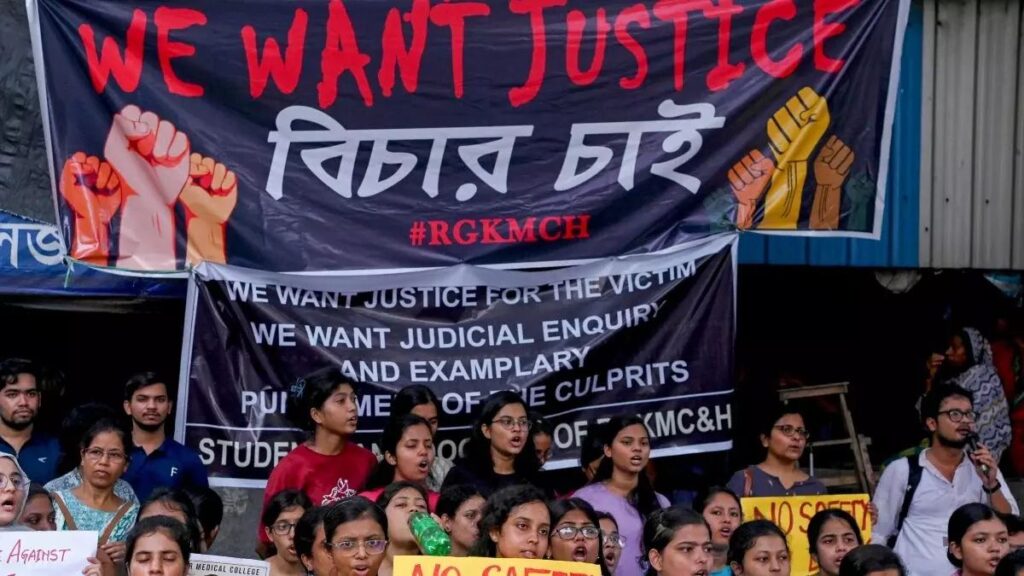
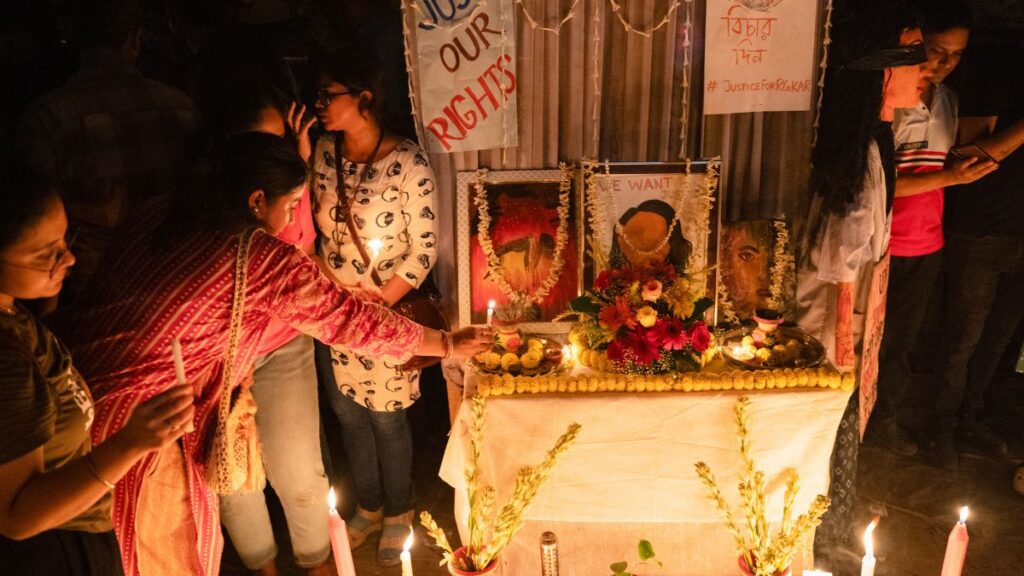
That night, a 31-year-old postgraduate trainee doctor was raped and murdered inside RG Kar Medical College in Kolkata. The crime shook Bengal to its core. However, what followed made things dramatically worse for the Mamata Banerjee government. Instead of swift accountability, the administration appeared to cover its tracks — initially attempting to pass the death off as suicide, hastily renovating the crime scene, and shielding the then-principal of RG Kar who was widely considered close to the Chief Minister.
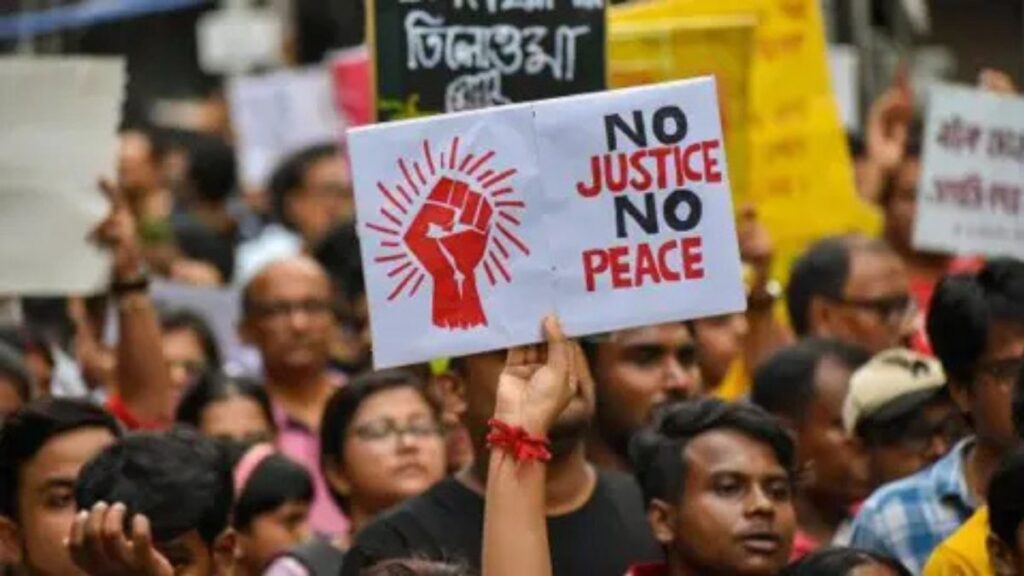
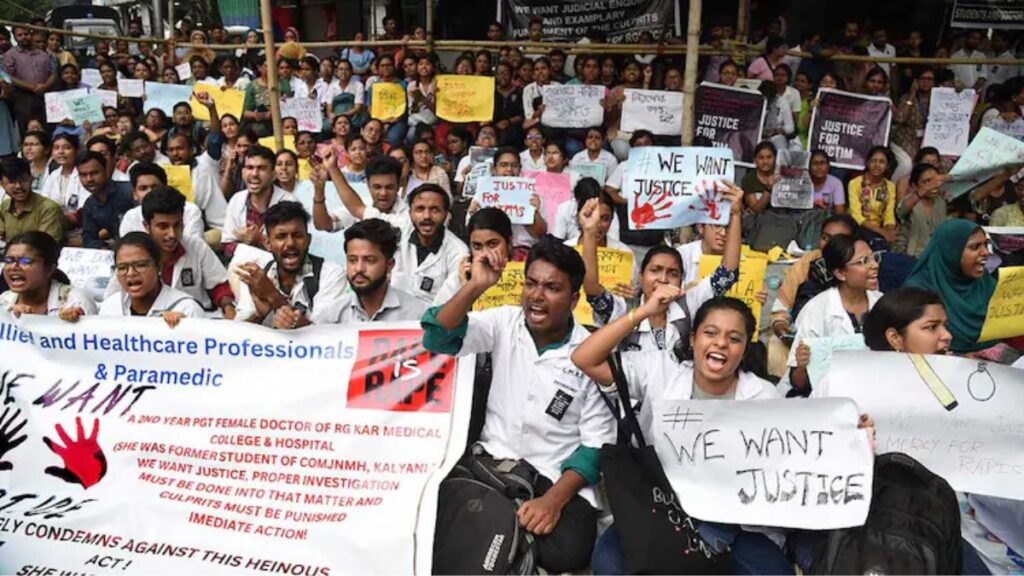
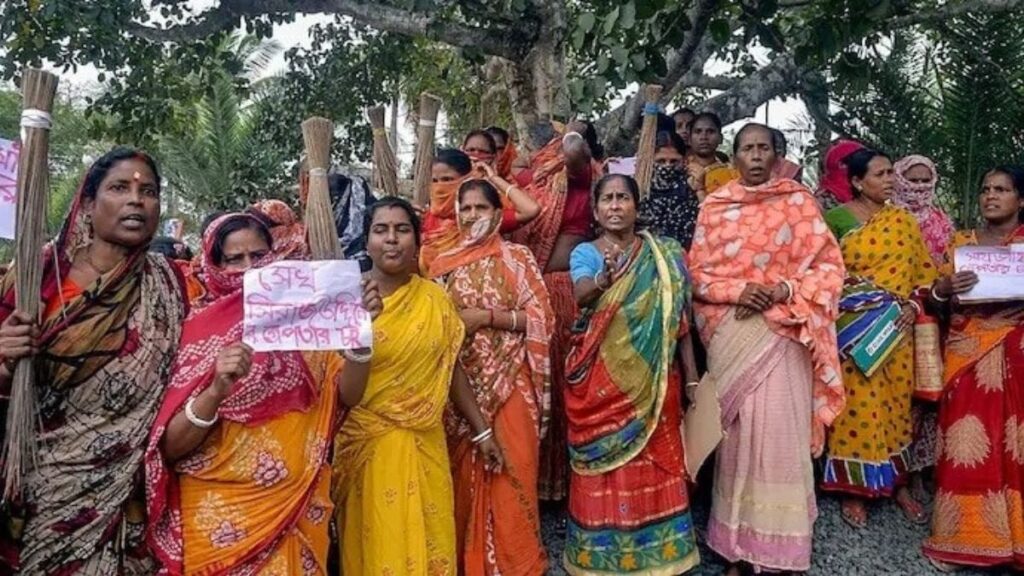
Women across Kolkata marched past midnight demanding justice. These protests were organic, raw, and fuelled by genuine anguish — and they signalled something the TMC would only fully understand two years later.
Why Women Voters Decided This Election
Of West Bengal’s 6.75 crore voters, nearly half — 3.44 crore — are women. Historically, this demographic had been Mamata’s most loyal base. In 2016, nearly 52% of the TMC’s vote share came from women voters alone. She had earned that loyalty carefully, through neighbourhood-level outreach, welfare schemes like Lakshmir Bhandar, Rupashree, and Kanyashree, and a political style that made women feel genuinely seen.
Therefore, when that same constituency turned away, the consequences were devastating.
The shift didn’t begin with RG Kar alone. Earlier in 2024, women in Sandeshkhali came forward with allegations of sexual assault and land grabbing by local TMC strongman Sheikh Shahjahan. Then, in 2025, the Kolkata Law College rape case emerged — with one of the accused linked to the Trinamool Chhatra Parishad. Together, these incidents dismantled the image Mamata had spent over a decade building.
Ratna Debnath: A Mother Who Became a Symbol
The BJP’s most powerful electoral decision was fielding Ratna Debnath — mother of the RG Kar victim — from Panihati, a TMC stronghold. Standing beside Prime Minister Modi at a rally, her presence communicated what no political speech could. It was grief transformed into a direct political challenge.
The symbolism proved devastatingly effective. Debnath secured a lead of over 20,000 votes, winning 56,167 votes against her TMC rival’s 35,704. As counting progressed, she was seen flashing a victory sign outside the counting centre — a moment that captured the emotional weight of the entire election cycle.
The Scale of TMC’s Defeat
The numbers tell a stark story. The TMC, which won 213 seats in 2021, is currently leading on just 75 seats. The BJP, meanwhile, is leading on 178 seats and has already won 25 — poised for a historic majority in a state it had long sought but never captured.
No amount of welfare spending could compensate for what voters perceived as a structural failure of governance. As journalist Parul Kulshrestha noted, many lifelong TMC supporters protested on the streets after RG Kar. The anger was not partisan — it was personal.
What This Result Truly Means
The 2026 Bengal election is ultimately a story about broken trust. Mamata Banerjee built her dominance by making women feel protected and valued. Consequently, when that promise collapsed under the weight of multiple, high-profile failures, the very voters who had made her invincible withdrew their support quietly — and decisively at the ballot box.
The same women who delivered her commanding majorities in 2016 and 2021 have now handed the BJP a historic victory. Bengal has changed — and the RG Kar case is where that change began.
Key Takeaways
- The RG Kar case became a defining emotional issue in Bengal politics.
- Women voters reportedly shifted significantly toward the BJP.
- Ratna Debnath emerged as a powerful political symbol.
- Sandeshkhali and other controversies weakened TMC’s image.
- BJP combined emotional narratives with strategic campaigning.
- Assam results further strengthened BJP’s eastern India momentum.
Frequently Asked Questions: Bengal Election 2026
What made Bengal Election 2026 different from all previous West Bengal elections?
Bengal Election 2026 was unlike any election in the state’s recent history because it ended Mamata Banerjee’s uninterrupted 15-year rule. The BJP crossed a majority on its own — something no party had achieved against the TMC since 2011. What made this shift extraordinary was that it was driven not by caste equations or economic dissatisfaction alone, but by a deep moral and emotional reckoning among women voters who had once been Mamata’s most loyal supporters.
How did the RG Kar case directly influence the Bengal Election 2026 outcome?
The RG Kar rape and murder of a young trainee doctor on August 9, 2024, became the emotional turning point of Bengal Election 2026. The crime itself was horrifying enough. However, the TMC government’s response — the alleged cover-up, the hasty renovation of the crime scene, and the protection of officials linked to the administration — converted grief into lasting political anger. Women who had marched past midnight demanding justice remembered exactly who governed Bengal when justice was delayed.
Why did women voters abandon Mamata Banerjee so decisively in Bengal Election 2026?
This is perhaps the most important question surrounding Bengal Election 2026. Mamata had built her political empire on women’s trust through schemes like Lakshmir Bhandar, Rupashree, and Kanyashree. Yet trust is not only transactional. When Sandeshkhali happened in early 2024, when RG Kar happened in August 2024, and when the Kolkata Law College rape case emerged in 2025, women across Bengal felt that the government they trusted with their safety had looked away. Cash transfers cannot repair a broken sense of security.
Who is Ratna Debnath and why does she matter so much to Bengal Election 2026?
Ratna Debnath is the mother of the RG Kar Medical College rape and murder victim. In Bengal Election 2026, the BJP fielded her from Panihati — a constituency that was considered a TMC stronghold. Her candidacy was not merely a political strategy. It was a deeply human statement. A grieving mother chose not to stay silent. Instead, she stepped into the arena, stood beside the Prime Minister, and asked voters a question no political slogan could frame as powerfully: do you feel safe in this Bengal? Voters in Panihati answered with a lead of over 20,000 votes in her favour.
What are the final seat numbers that define Bengal Election 2026?
Bengal Election 2026 produced a historic reversal of fortune. The TMC, which had won 213 seats in 2021, is now leading on just 75 seats with 9 already confirmed. The BJP, which had long struggled to break into Bengal, is leading on 178 seats with 25 already won. The numbers represent not just a political shift but a complete realignment of Bengali voter sentiment after years of accumulated grievances.
Could Mamata Banerjee have prevented this defeat before Bengal Election 2026 voting day?
Many political observers believe the decisive moment came long before Bengal Election 2026 polling day. The TMC’s initial mishandling of the RG Kar case, its slow response to Sandeshkhali, and its failure to distance itself credibly from accused individuals with party links all compounded into an image problem that welfare schemes alone could not solve. As surgeon and author Amit Thadhani wrote publicly, Mamata did not lose Bengal on election day — she lost it the day the RG Kar crime scene was reportedly tampered with.
How did the BJP successfully convert public anger into votes during Bengal Election 2026?
The BJP’s Bengal Election 2026 strategy operated on two levels simultaneously. At the symbolic level, fielding Ratna Debnath gave the party a face that no campaign advertisement could manufacture — authentic, grieving, and determined. At the ground level, Prime Minister Modi repeatedly invoked RG Kar at rallies across the state, framing the election as a referendum on women’s safety. Where the Left parties had led early street protests after the doctor’s murder, it was ultimately the BJP that translated that street energy into electoral results.
What does Bengal Election 2026 mean for the future of West Bengal’s women voters?
Bengal Election 2026 has permanently rewritten the assumption that women voters in the state are reliably committed to any single party. Described historically as silent voters who decide elections without declaring preferences publicly, Bengal’s women demonstrated in 2026 that their silence before polling day can mask a profound and considered political decision. Any future government in Bengal — BJP included — now understands that women’s safety is not a campaign topic. It is a governing responsibility with direct electoral consequences.
Was Bengal Election 2026 only about RG Kar or were there other factors?
RG Kar was the most emotionally resonant factor, but Bengal Election 2026 was shaped by a pattern rather than a single incident. Sandeshkhali in early 2024 planted the first seeds of doubt. RG Kar deepened the wound in August 2024. The Kolkata Law College rape case in 2025, involving an accused with alleged links to the Trinamool Chhatra Parishad, confirmed for many voters that the problem was structural rather than accidental. Additionally, the BJP-led Centre introduced a women’s reservation bill weeks before polling, giving the party another platform to position TMC as opposing women’s representation in governance.
What lasting lesson does Bengal Election 2026 leave for Indian politics?
Bengal Election 2026 teaches Indian politics something both simple and profound. Welfare schemes create gratitude, but safety creates loyalty. Mamata Banerjee understood the first truth better than almost any leader in modern India. However, she underestimated the second. When women across Bengal no longer felt that their state government would protect them, the financial benefits they received each month were not enough to hold their vote. The 2026 results will be studied for years as evidence that governance failures on women’s safety carry a political cost that no amount of direct benefit transfers can offset.