
India’s Teen Geniuses Are Making Global Headlines — And the World Is Finally Listening
What happens when a teenager refuses to look away? When a 14-year-old sees smoke and chooses action over silence? When three 16-year-olds watch a child drink contaminated water and decide enough? India’s youngest innovators are rewriting the rules — not in boardrooms, not in corporate labs, but in classrooms, village visits, and late-night research sessions. Vinisha Umashankar, Avyana Mehta, Vivaan Chhawchharia, and Ariana Agarwal didn’t wait for permission to change the world. They simply started. And the world took notice.
From Tamarind Seeds to Solar Carts: How Two Indian Student Innovations Are Changing the World
Three 16-year-olds from Rajasthan and a 14-year-old from Tamil Nadu prove that age is no barrier to solving the world’s most pressing problems — armed with curiosity, courage, and homegrown ideas.
Plas-Stick: The Earth Prize-Winning Innovation Born from a Rural Village Visit
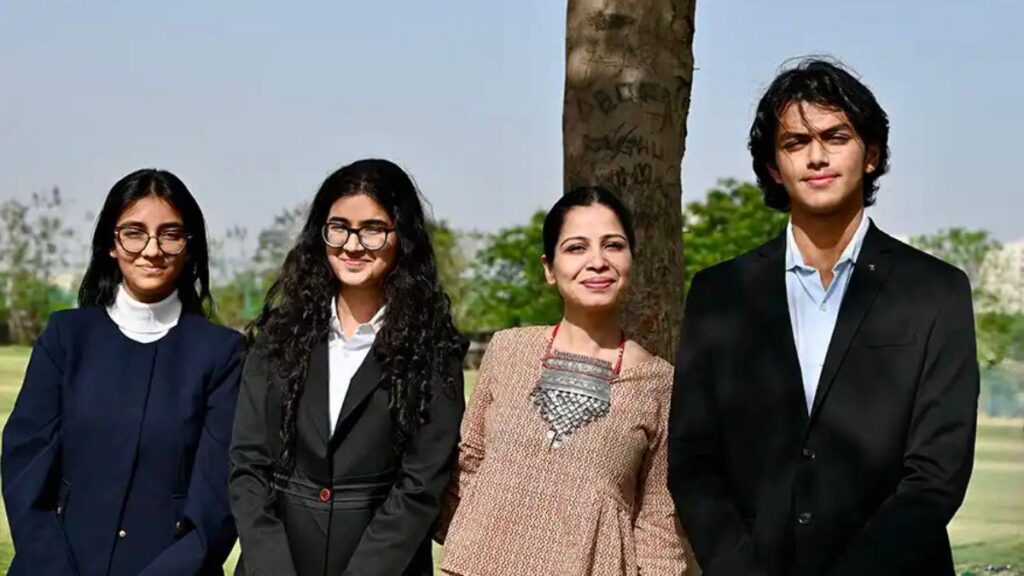
Avyana Mehta, Vivaan Chhawchharia & Ariana Agarwal
Age 16 · Rajasthan, India · Earth Prize 2026 Asia Winners
During a visit to a rural school in Rajasthan, three teenagers watched a child drink from a shared water container. That single moment — so ordinary, yet so charged with invisible risk — ignited everything. The child had no idea that microplastics might already be present in the water. Avyana Mehta, Vivaan Chhawchharia, and Ariana Agarwal did. And they refused to look away.
“We realised this was not merely a ‘science topic’, but an access problem. That sparked the idea of Plas-Stick.”— Team Plas-Stick
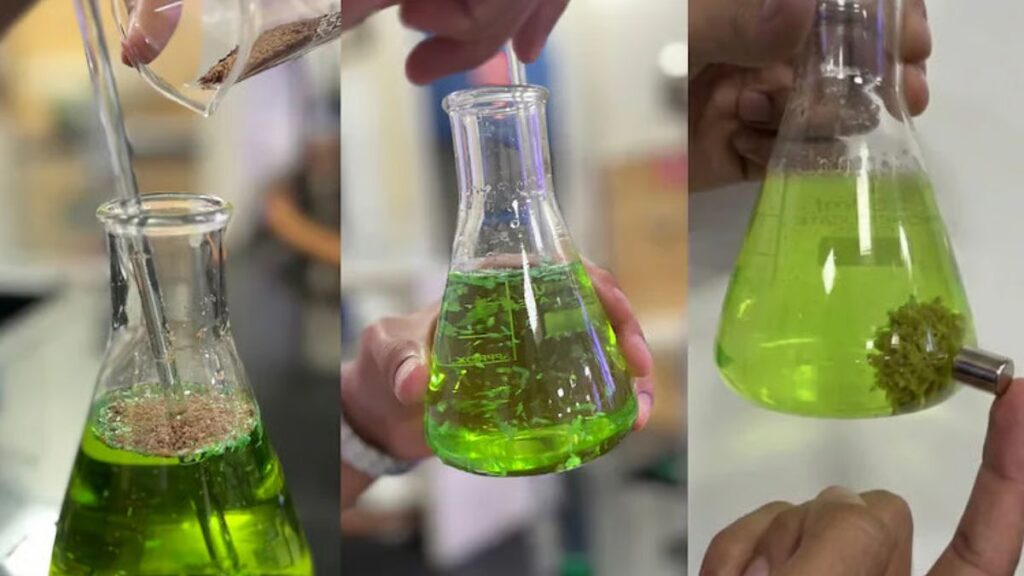
Together, the trio developed Plas-Stick — a biodegradable powder made from waste tamarind seeds. When stirred into water, the powder binds microplastic particles into visible clumps within 30 minutes. A simple handheld magnet then lifts the clumps out. No electricity. No expensive filters. No infrastructure required.
Why tamarind seeds?
The choice was deliberate, not accidental. The team needed a material that was cheap, locally available, and effective. Tamarind seeds — widely discarded as agricultural waste — turned out to possess natural binding properties. Once the students tested them, the seeds became the core of their entire solution.
Months of failure before a breakthrough
Building the first working version took three to four months of constant experimentation. The trio tested, failed, adjusted, and tried again — repeatedly. A pivotal breakthrough arrived when they cold-emailed a materials scientist and IIT graduate for mentorship. That guidance helped them understand whether the underlying chemistry was actually reliable. Eventually, their connection to IIT Guwahati resulted in a formal Letter of Endorsement from the Udgam Incubation Centre, certifying Plas-Stick as a credible innovation.
From six pilot sites to 8,000 people
Scaling the solution meant earning community trust first. The students began in Mahapura before expanding into Jhunjhunu and Churu districts. Local backing from the District Collector and the Education Minister proved transformative — once officials endorsed the project, schools opened their doors enthusiastically.
During each visit, students watched live demonstrations where microplastic clumps rose visibly from their own drinking water. Parents and teachers received clear explanations of how the powder worked and what happened to the recovered material afterward. Each school, in turn, became a reference point for the next.
How the prize money will be spent
- $7,000 annually for independent third-party microplastic validation across new geographies
- $9,000 to establish two decentralised micro-production hubs near deployment sites
- Remaining funds for training kits, multilingual instruction charts, neodymium magnets, and post-treatment systems
“The recognition matters enormously, but what it really means for us is that the next set of deployment sites is no longer hypothetical.”— Avyana, Vivaan & Ariana
The Solar Ironing Cart: A 14-Year-Old’s Answer to Charcoal, Smoke, and Deforestation
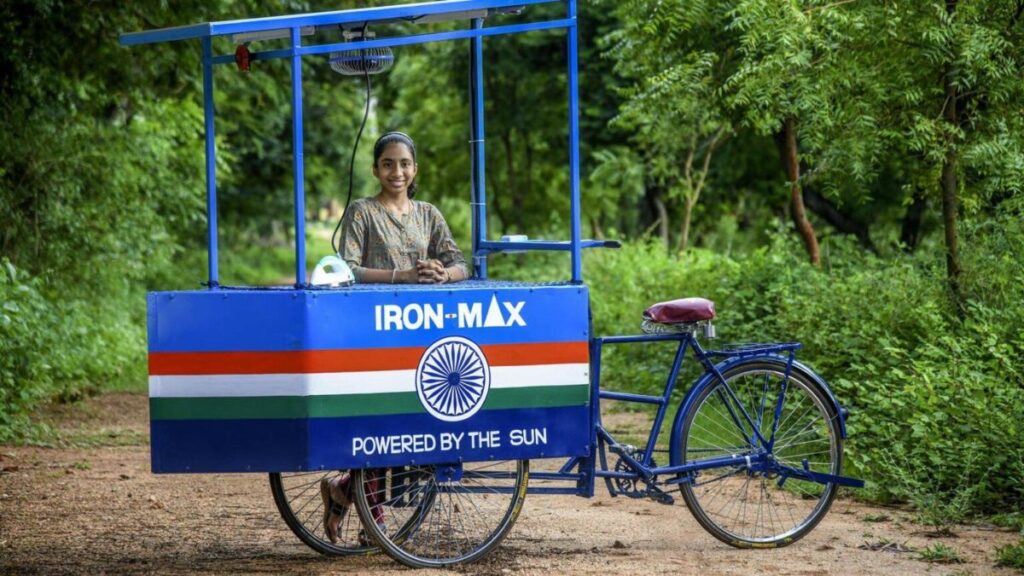
Vinisha Umashankar
Age 14 · Tiruvannamalai, Tamil Nadu · Earthshot Prize Finalist
Walking home from school one day, Vinisha Umashankar noticed a street vendor dumping charcoal into the garbage. Curious, she began researching charcoal’s environmental impact — and what she discovered shocked her. Charcoal ironing carts cause lung disease among vendors. Even more alarming, the production of charcoal drives large-scale deforestation every single year. That walk home sparked a clean-energy revolution.
“As the youngest finalist, I want to inspire students around the world to take a keen interest in science to innovate products and solutions for protecting our air, water and land.”— Vinisha Umashankar
How the solar cart works
Vinisha’s mobile ironing cart replaces dirty charcoal with clean solar energy. Five hours of sunlight powers the iron for six hours — a straightforward win for both the environment and the vendor. The design also adds remarkable practical value: coin-operated phone charging points and USB ports provide vendors with an additional income stream. Moreover, the cart’s mobility allows vendors to offer doorstep services rather than waiting at a fixed roadside spot.
In the absence of sunlight, the cart can run on pre-charged batteries, electricity, or a diesel-powered generator — ensuring consistent usability across weather conditions.
Impact across 15 UN Sustainable Development Goals
Vinisha’s innovation directly supports 13 of the 15 United Nations Sustainable Development Goals — a remarkable achievement for any solution, let alone one designed by a teenager. The cart addresses clean energy access, environmental health, economic empowerment for vendors with low income, and urban sustainability simultaneously.
A global platform, a viral message
Vinisha’s address to world leaders at COP26 went viral, generating over 5,000 articles across 6 continents and 93 global markets. Subsequently, she won the Youngsters Award at Nico Rosberg’s Greentech Festival, carried the Queen’s Baton as a relay bearer for the Commonwealth Games, and spoke at Arnold Schwarzenegger’s Climate Initiative World Summit.
Her plan is ambitious yet grounded: manufacture the solar ironing cart affordably in India, then export it across Asia, Africa, and every sun-rich region worldwide.
Key Takeaways: What Both Stories Share
Common threads of greatness
- Observation sparked everything. Both innovations began not in a lab, but in an ordinary moment of paying close attention to the world around them.
- Simplicity was a deliberate choice. Tamarind powder and solar panels — both solutions work without expensive infrastructure or technical expertise.
- Failure was part of the process. Neither solution emerged overnight. Months of testing, cold emails for guidance, and persistent refinement shaped every breakthrough.
- Community trust mattered as much as the idea itself. Grassroots outreach and local leadership buy-in proved essential for real-world adoption.
- Young age was never a limitation. A 14-year-old and three 16-year-olds each proved that meaningful environmental impact doesn’t wait for adulthood.
Clean Water Solar Energy Microplastic Removal Youth Innovation India Sustainability Environmental Science
What Their Stories Mean for the Next Generation
Both Vinisha and the Plas-Stick trio started with the same raw material: a problem they couldn’t ignore. Neither waited for government action or corporate funding to begin. Instead, they acted with the resources already available — discarded tamarind seeds, sunlight, curiosity, and persistence.
Their journeys also highlight something critical: the most impactful environmental solutions don’t always come from elite research institutions. Sometimes, they come from a child on the way home from school, or three teenagers visiting a village for an entirely different purpose. The observation that changes everything can happen anywhere.
Furthermore, both innovations demonstrate that designing for communities with limited resources isn’t a constraint — it’s a creative superpower. By choosing affordability and simplicity from the very beginning, these young inventors built solutions that can actually reach the people who need them most.
“Meaningful science should remain accessible to the communities that need it most.”— The story of Plas-Stick
India’s next generation of problem-solvers is not waiting to grow up. They are already here — testing in kitchens, cold-emailing scientists, knocking on school doors, and daring to ask: why does this have to stay broken?
The Earth Prize 2026 Global Winner will be selected by public vote on May 29, 2026. The competition is organised by The Earth Foundation, a nonprofit based in Geneva, Switzerland.
FAQs: India’s Teen Geniuses Are Making Global Headlines
Q1. Why are India’s Teen Geniuses Are Making Global Headlines right now, and what exactly did they invent?
India’s teen geniuses are making global headlines because two extraordinary innovations — born from simple everyday observations — have captured worldwide attention. Avyana Mehta, Vivaan Chhawchharia, and Ariana Agarwal, all aged 16, created Plas-Stick, a biodegradable powder made from discarded tamarind seeds that binds microplastics into visible clumps removable by a handheld magnet. Meanwhile, 14-year-old Vinisha Umashankar from Tamil Nadu designed a solar-powered ironing cart that eliminates the need for charcoal, protecting street vendors from lung disease while fighting deforestation. Neither invention required expensive labs or corporate funding — just sharp observation, persistence, and the courage to act. That combination is precisely why the world is paying attention.
Q2. How did India’s Teen Geniuses Are Making Global Headlines by winning one of the world’s most prestigious environmental awards?
The Earth Prize, organised by The Earth Foundation in Geneva, Switzerland, is one of the world’s largest environmental competitions for teenagers aged 13 to 19. It carries a total funding pool of $100,000 across seven global regions. The Plas-Stick team became the first Indian team ever to win this competition, claiming the Asia regional title and $12,500 in prize funding to expand their clean water solution. Their win was not simply academic — it was earned through months of real-world testing, IIT Guwahati endorsement, grassroots outreach across Rajasthan, and live demonstrations in rural schools. The award confirmed what many already saw: India’s teen geniuses are making global headlines not by chance, but by doing genuinely transformative work.
Q3. What makes Plas-Stick so powerful, and why are India’s Teen Geniuses Are Making Global Headlines with something as simple as tamarind seeds?
Tamarind seeds are agricultural waste — cheap, abundant, and widely discarded across India. Yet these three teenagers discovered that the seeds carry natural binding properties capable of clumping invisible microplastics into visible, extractable matter within just 30 minutes. The process is disarmingly simple: add the powder, stir, wait, and remove the clumps with a handheld magnet. No electricity, no filters, no technical expertise needed. That simplicity is the genius. Expensive water purification systems remain out of reach for millions of rural communities across India and the developing world. Plas-Stick sidesteps that barrier entirely, which is a large part of why India’s teen geniuses are making global headlines — they solved a high-tech problem with a low-cost, locally available material.
Q4. How did Vinisha Umashankar’s solar ironing cart prove that India’s Teen Geniuses Are Making Global Headlines through clean energy innovation?
Vinisha noticed a charcoal vendor on her way home from school and started asking questions that most people never think to ask. What she uncovered was striking: charcoal used in street ironing causes serious lung disease among vendors and contributes to large-scale deforestation every year. Her response was to design a solar-powered mobile ironing cart that generates six hours of ironing energy from just five hours of sunlight. The cart also includes built-in phone charging points for additional vendor income and works on batteries or electricity when sunlight is unavailable. Her address at COP26 went viral across 93 global markets. She went on to win the Greentech Festival Youngsters Award and carried the baton at the Commonwealth Games Queen’s Baton Relay. Each of those milestones explains why India’s teen geniuses are making global headlines in clean energy, not just environmental science.
Q5. What specific challenges did these young inventors face, and how do India’s Teen Geniuses Are Making Global Headlines despite starting with almost nothing?
Neither team had an easy path. The Plas-Stick trio spent three to four months testing, failing, adjusting, and starting over before achieving a working version. They cold-emailed a materials scientist and IIT graduate simply hoping for guidance — and that single act of courage unlocked the mentorship that made their solution scientifically credible. Community outreach across Rajasthan required rebuilding trust at every new school, explaining the process from scratch, and securing endorsement from district officials before schools would open their doors. Vinisha, similarly, had to transform a classroom observation into a globally recognised engineering solution entirely on her own terms. The fact that India’s teen geniuses are making global headlines despite these obstacles — without institutional backing at the start, without large budgets, and while balancing a full school curriculum — makes their achievements genuinely remarkable.
Q6. What does the future look like, and how will India’s Teen Geniuses Are Making Global Headlines continue to shape sustainability for the next generation?
The future is already in motion. The Plas-Stick team plans to expand from 8,000 users to nearly 40,000 by the end of 2026, with two decentralised production hubs, independent third-party validation across new geographies, and a larger 2027 expansion on the horizon. Avyana aims to work in environmental science and policy. Vivaan plans to merge finance with sustainable entrepreneurship. Ariana intends to work in green finance to help innovative solutions overcome the funding barriers that prevent them from scaling. Vinisha, meanwhile, plans to manufacture her solar ironing cart affordably in India and export it across Asia and Africa wherever sunlight is plentiful. These are not vague dreams — they are structured roadmaps built by teenagers who have already proven they deliver. India’s teen geniuses are making global headlines today, and the evidence strongly suggests they are only just getting started.