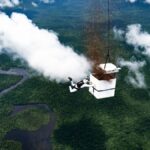
A Brazilian skydiver drops 100 million seeds into a dying forest — and the world finally looks up.
Not a government. Not a billion-dollar NGO. One man. One jump. One biodegradable container packed with the biological blueprint of an entire ecosystem.
Luigi Cani didn’t fall from the sky to make headlines. He fell to make the Amazon breathe again.
While politicians debate, forests disappear — quietly, ruthlessly, one acre at a time. However, this moment refused to be quiet. It forced the world to feel something most of us had conveniently stopped feeling: urgency.
Because some ideas don’t whisper. They freefall.
A single jump. Over 100 million seeds. And a planet paying attention.
When Brazilian skydiver Luigi Cani leaped from an aircraft over a deforested stretch of the Amazon, he carried more than adrenaline. He carried the weight of a dying forest — and the seeds to bring it back.
What Is the 100 Million Seeds Amazon Project?
After years of careful planning, Luigi Cani executed one of the most ambitious reforestation initiatives the world has ever seen. He jumped from an aircraft over a deforested region of the Amazon and released more than 100 million seeds from 27 native tree species using a specially designed biodegradable container.
The mission targeted degraded rainforest areas — regions where traditional reforestation struggles because of remoteness and sheer scale. Trucks and workers simply cannot reach these places efficiently. Therefore, reaching them from the air wasn’t just creative. It was necessary.
The result? A single act of environmental courage planted the biological foundation for an entire ecosystem to recover.
Why a Skydive? The Bold Strategy Behind the Mission
Critics immediately questioned the method. Drones, they argued, would be more efficient. Tractors cover more ground. So why a skydiver?
Because efficiency was never the only goal.
Attention is a resource too. A silent drone drop disappears into the news cycle before breakfast. However, a human falling from the sky to heal a dying rainforest forces the entire world to look up. That image, that story, travels across every language and every timezone. As a result, conversations start. Donations follow. Governments feel pressure to act.
Cani understood something that pure logistics misses: the Amazon’s greatest enemy isn’t just chainsaws. It’s indifference. And indifference, above all else, requires a spectacular intervention to break.
How the Seed Drop Actually Worked
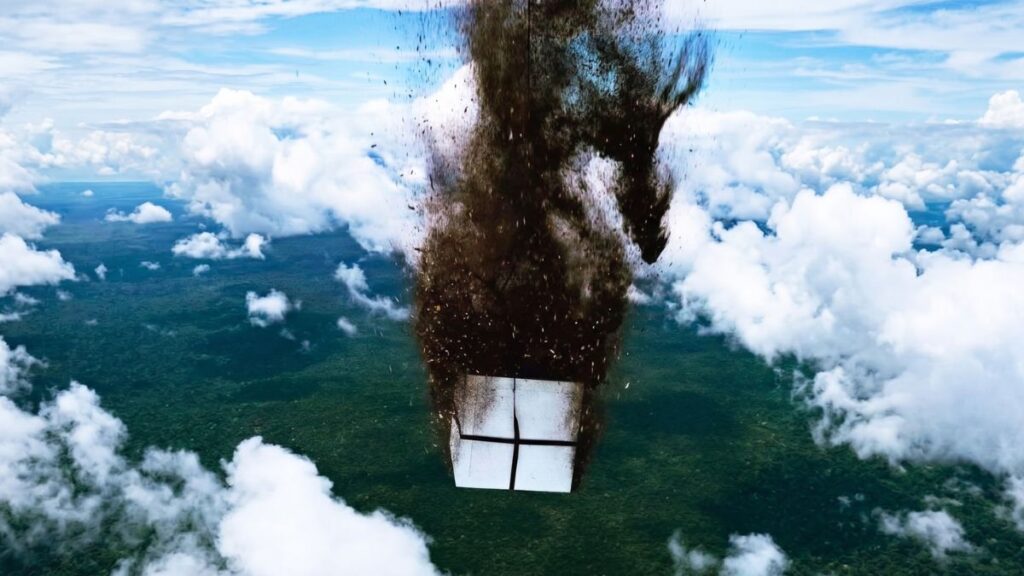
The project wasn’t just symbolic — it was scientifically grounded.
Cani’s team selected 27 native tree species, each chosen for its role in restoring biodiversity to degraded Amazon ecosystems. The seeds were packed into a biodegradable container, engineered specifically for aerial dispersal. Upon release during freefall, the container scattered seeds across a wide surface area that ground-based methods simply cannot cover at speed.
Meanwhile, the biodegradable design ensured no artificial debris entered the ecosystem. Every element of the delivery system was built to give nature a head start — and then disappear.
Traditional reforestation efforts in the Amazon face enormous logistical barriers. For example, reaching the most critically deforested zones often requires days of travel through dense jungle. By contrast, aerial seeding covers that same terrain in minutes. This approach doesn’t replace ground-level conservation — instead, it extends the reach of human effort into places no team on foot can realistically access.
Critics Called It a Stunt. They’re Missing the Point.
Online criticism was swift. Some called the project performative. Others questioned whether aerially dispersed seeds would even take root at meaningful rates. Furthermore, several commentators argued that the resources spent on production could have funded traditional reforestation directly.
These are fair questions. However, they frame the wrong problem.
Conservation science already has efficient methods. What it lacks is public urgency. Funding for environmental restoration tracks almost perfectly with public awareness — not with technical efficiency. Moreover, the most technically sound reforestation programme in the world produces zero results if governments cut its budget due to a lack of political pressure.
Supporters across social media described the mission as “a powerful symbol of hope for the planet’s future.” They’re not wrong. Symbols move people. People move money. Money moves mountains — or in this case, plants forests.
The question isn’t whether drones could scatter seeds more systematically. The question is: which approach makes the world care enough to fund the next thousand seed drops?
Why Bold Environmental Action Matters Now
The Amazon rainforest absorbs approximately 2 billion tonnes of carbon dioxide annually. However, ongoing deforestation has pushed significant portions of this ecosystem toward a tipping point — a threshold beyond which the forest cannot naturally recover without direct human intervention.
Time is genuinely short. Therefore, conservation efforts need two things working in parallel: scientific precision and cultural momentum.
Projects like Cani’s serve the second function. They generate the kind of global conversation that builds political will, attracts philanthropic investment, and inspires the next generation of environmental scientists, activists, and policymakers.
Additionally, every person who watches that footage and feels something — awe, hope, determination — is a potential advocate for the forest. Advocacy, at scale, is what has historically protected natural spaces. National parks exist because people rallied. Whaling bans passed because people mobilized. The Amazon’s survival likely depends on the same force.
Bold ideas aren’t a distraction from serious conservation. On the contrary, they are the engine that makes serious conservation possible.
Key Takeaways
- Luigi Cani released over 100 million seeds from 27 native Amazon tree species during a single skydive over a deforested region.
- The biodegradable delivery system was purpose-built for aerial dispersal, leaving no harmful residue in the ecosystem.
- Criticism about efficiency misses the point — the skydive’s purpose was to generate global attention alongside environmental action.
- Attention drives funding, and funding drives the large-scale conservation the Amazon urgently needs.
- Bold, visible environmental action creates cultural momentum that technical solutions alone cannot generate.
- The Amazon is approaching a critical tipping point — projects that blend innovation with impact are no longer optional. They are essential.
The Amazon doesn’t just need seeds. It needs the world to care enough to plant them. One skydiver just made that a little harder to ignore.
Frequently Asked Questions
Q 1: Why did a Brazilian skydiver drop 100 million seeds over the Amazon instead of using drones or machines?
When a Brazilian skydiver drops 100 million seeds from the sky, the immediate reaction from most people is a simple question: why not just use a drone?
The answer cuts deeper than logistics.
Drones are efficient. Tractors cover ground. Helicopters are precise. However, none of them make the evening news in 140 countries. None of them stop a teenager mid-scroll and make them feel something real about a forest they have never visited. None of them generate the kind of global conversation that pressures governments, attracts philanthropic funding, and shifts public opinion at scale.
Luigi Cani’s skydive was never purely a seed delivery system. It was a communication strategy wrapped inside an environmental mission. The freefall was the message: this planet is worth throwing yourself toward.
Conservation science has no shortage of efficient methods. What it consistently lacks is public urgency. Cani understood that attention is itself a resource — arguably the most valuable one in modern conservation. By combining a visually stunning act with a scientifically grounded reforestation effort, the project achieved something a silent drone fleet never could. It made the Amazon’s crisis personal, visible, and impossible to scroll past.
The seeds were real. The science was sound. And the spectacle was entirely intentional.
Q 2: What actually happened when a Brazilian skydiver drops 100 million seeds — did they survive and grow?
This is the question that matters most, and it deserves an honest answer.
When a Brazilian skydiver drops 100 million seeds across a deforested stretch of the Amazon, the seeds do not all germinate. That was never the expectation. Nature has always operated on the principle of abundance — a single tree produces thousands of seeds each season precisely because the survival rate is low and variable. Aerial seeding follows the same logic.
Luigi Cani’s team selected 27 native tree species specifically suited to Amazon soil conditions and capable of germinating without the controlled environment of a nursery. The seeds were packed into a biodegradable container designed to scatter them across a wide surface area during freefall, leaving no synthetic debris in the ecosystem.
Even a modest germination rate across 100 million seeds produces a meaningful number of living trees. Furthermore, native species seeded into degraded land create the biological scaffolding that supports the return of insects, birds, and mammals — which in turn spread more seeds naturally. The project does not need every seed to survive. It needs enough of them to start a chain reaction.
Early environmental responses were positive. Supporters described the initiative as one of the most creative reforestation strategies applied to the Amazon in recent years. The scientific community noted that aerial seeding, while not new, rarely receives the attention needed to fund it at meaningful scale — which is precisely what this project changed.
Q 3: How does a Brazilian skydiver dropping 100 million seeds actually help fight Amazon deforestation long term?
A single jump cannot reverse decades of deforestation. Anyone who claims otherwise is overstating the science. However, dismissing the project on those grounds misunderstands what it was designed to do.
When a Brazilian skydiver drops 100 million seeds into degraded Amazon land, the immediate ecological effect is the introduction of native species into an area where natural regeneration has stalled. Deforested zones often lose their seed banks — the layer of dormant seeds in the soil that allows forests to regrow after disturbance. Without active reseeding, these areas can remain barren for decades, gradually hardening into land unsuitable for forest recovery at all.
The long-term value works on two levels simultaneously.
First, on the ground: native seeds from 27 species begin competing for sunlight and water. Some survive. Those that do anchor the soil, create shade, attract wildlife, and produce their own seeds within years. The forest does not regrow in a straight line — it regrows in waves, each generation creating better conditions for the next.
Second, in public consciousness: the project generated coverage across dozens of countries and sparked renewed international discussion about Amazon conservation funding. Several environmental organisations reported increased donation inquiries in the weeks following the jump. Political visibility for reforestation initiatives tends to translate, over time, into protected land and increased government investment.
Bold action and patient science are not opposites. One creates the conditions for the other to work.
Q 4: Why do so many people feel emotionally moved when a Brazilian skydiver drops 100 million seeds — what does this project really represent?
There is something about watching a human being fall through the sky with seeds in their hands that bypasses argument entirely and lands somewhere much deeper.
When a Brazilian skydiver drops 100 million seeds over a dying forest, most people watching are not thinking about germination rates or carbon sequestration statistics. They are thinking: someone cared enough to do something extraordinary. Someone looked at a problem too large for most of us to touch and decided to fall toward it anyway.
That emotional response is not naive. It is, in fact, the engine of every major conservation victory in modern history. The campaigns that saved large marine reserves did not win on data alone. The movements that protected old-growth forests were not fuelled purely by scientific papers. They succeeded because people felt something — and feeling something is what transforms a passive observer into an active participant.
Supporters online called the project a symbol of hope for the planet’s future. That language is worth taking seriously. Hope is not a soft or secondary value in conservation. It is a precondition for action. People who have lost hope for a forest do not protect it, fund it, or vote for the politicians who will.
Cani’s jump gave a global audience permission to believe that individual acts of courage still matter. In a time when environmental news is overwhelmingly focused on loss and failure, that permission is genuinely rare — and genuinely powerful.
Q 5: What were the biggest criticisms when a Brazilian skydiver drops 100 million seeds, and are any of them valid?
The criticism arrived quickly, as it always does when an environmental initiative blends spectacle with substance.
When a Brazilian skydiver drops 100 million seeds in front of a global audience, sceptics raised several pointed objections. Some argued the entire enterprise was a PR campaign dressed as science. Others calculated that the production cost — filming, aircraft, equipment, logistics — could have funded traditional planting programmes covering more trees per dollar. A third group questioned whether aerially dispersed seeds achieve meaningful germination rates compared to nursery-grown saplings planted by hand.
These concerns deserve a fair hearing rather than dismissal.
On the PR question: yes, the project was partly designed for maximum visibility. That is not a flaw in its design — it is a feature. Conservation without public support collapses within a budget cycle. The visibility was deliberate and it worked. However, the seeds were real, the species were scientifically selected, and the biodegradable delivery system was purpose-engineered for the ecosystem. The performance and the science coexisted.
On cost efficiency: the comparison assumes that money spent on production was diverted from direct planting. In reality, projects that generate global media coverage typically attract new funding that would not have existed otherwise. The net effect on total conservation investment can be significantly positive.
On germination rates: this is the most legitimate technical concern, and ongoing monitoring of the seeded area will matter. Aerial seeding is not a perfect method. Nevertheless, for remote and inaccessible deforested zones, it remains one of the few practical options available.
Valid questions. Incomplete objections. The full picture is considerably more encouraging than the critics suggest.
Q 6: What can ordinary people do after seeing a Brazilian skydiver drop 100 million seeds — how do you turn inspiration into real impact?
Watching a Brazilian skydiver drop 100 million seeds over the Amazon produces a specific kind of feeling: the sudden, uncomfortable awareness that the planet needs more than admiration. It needs participation.
The gap between being moved and doing something meaningful is where most environmental momentum dies. Closing that gap does not require a skydiving licence or a private aircraft. It requires directing the energy of that moment toward something concrete and sustained.
The most direct path is financial support for organisations working on Amazon reforestation and land protection. Funding is the primary constraint on most conservation programmes — not expertise, not willingness, not even land access. Money determines scale. Even modest recurring contributions, pooled across thousands of newly motivated donors, compound into genuine ecological impact over time.
Beyond donation, advocacy carries significant weight. Contacting elected representatives about deforestation policy, supporting businesses with verified sustainable supply chains, and reducing personal consumption of products linked to Amazon land clearing all reduce the demand side of the deforestation equation.
Sharing the story matters too. Media attention for the Amazon is not guaranteed. Every person who introduces this project to someone new extends its reach and keeps the conversation alive beyond the initial news cycle. Awareness is the raw material from which political will is eventually shaped.
Finally, and perhaps most importantly: stay engaged rather than allowing the inspiration to fade. The Amazon does not need the world’s attention for one news cycle. It needs sustained, consistent pressure from people who refused to move on.
One skydiver fell toward the problem. The question the project ultimately asks every viewer is simple — in whatever way you are able, will you?