The Sacred Role of the Father in Sanatan Dharm: What if your father was never just a man — but a living god walking beside you?
Long before Father’s Day existed, Sanatan Dharm already knew this truth. While the world pauses once a year to honor fathers with gifts and cards, ancient Hindu wisdom has revered them every single day — as protectors, spiritual guides, and divine anchors of the universe itself.
Your father didn’t just give you life. He gave you identity, lineage, and a sacred path to walk.
That changes everything about how we should honor him.
Today, on Father’s Day 2026, millions of people across the world exchange gifts, post heartfelt tributes, and celebrate the men who shaped their lives. However, long before greeting cards and social media, Sanatan Dharm had already enshrined the father as a living manifestation of the divine.
This ancient wisdom offers something far deeper than a single day of gratitude. It reveals fatherhood as a cosmic responsibility — one that connects children to righteousness, lineage, and spiritual truth.
What Does “Pitru Devo Bhava” Actually Mean?
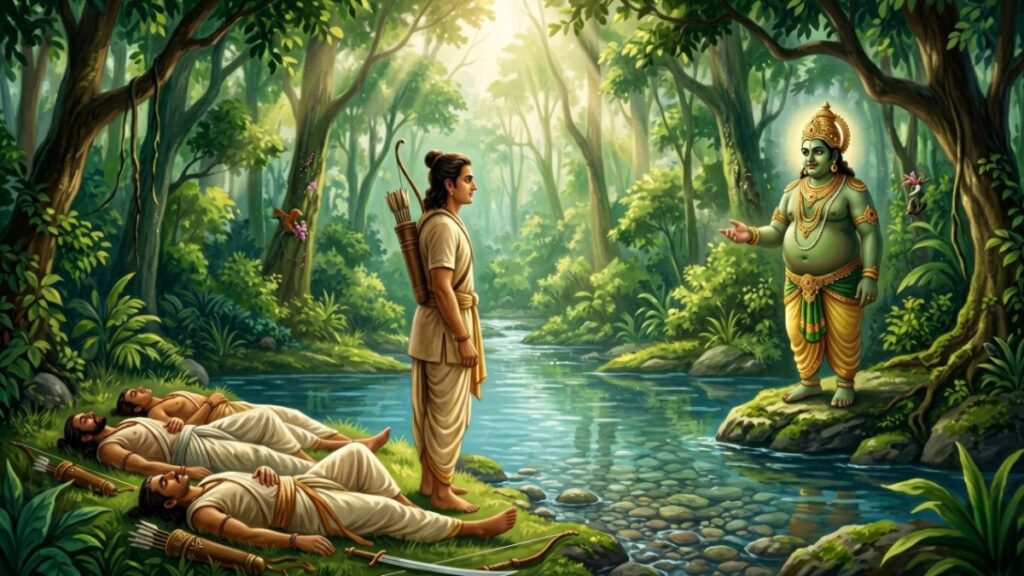
The celebrated teaching from the Taittiriya Upanishad declares:
“Matr Devo Bhava, Pitr Devo Bhava” — Let the mother be your god; let the father be your god.
This verse does not call for literal worship of parents. Instead, it recognizes them as visible expressions of divine grace on earth. Since parents give us life, shape our values, and guide our earliest steps, Sanatan Dharm treats them with the reverence reserved for the sacred.
The Padma Puran takes this even further:
“Pita dharmah, pita svargah, pita hi paramam tapah” — The father is righteousness, the father is heaven, and the father is the highest spiritual discipline.
When we please our father, say the scriptures, all the gods in the cosmos are pleased.
The Five Fathers: Understanding Panch Pita
One of Sanatan Dharm’s most profound insights is that fatherhood extends far beyond biology. Chanakya Niti describes the Panch Pita — five individuals who deserve the reverence of a father:
- Janita — the biological father who gives life
- Upaneta — the initiator who introduces a child to the Vedic path
- Vidya-Data — the teacher who imparts knowledge and moral formation
- Anna-Data — the provider who offers food and sustenance
- Bhaya-Trata — the protector who guards from harm and danger
This teaching is revolutionary in its inclusivity. Every mentor, guardian, teacher, and protector in a child’s life carries fatherly significance. Recognizing these five fathers means honoring every hand that helped raise us.
Why Is the Father Called a Child’s Second Guru?
In Sanatan tradition, the mother is revered as the first Guru, while the father holds the sacred position of the second Guru. His most profound act of spiritual fatherhood occurs during the Upanayan Sanskar, the sacred-thread ceremony, where he transmits the Gayatri Mantra to his child.
Through this initiation, the father gives the child a spiritual birth. He introduces four foundational pillars into the child’s life:
- Dharma — the laws of righteousness and moral duty
- Samskara — sacred rituals and cultural values
- Kuldevta — the family’s traditional deity and ancestral worship
- Gotra — the ancient Vedic lineage that connects the child to cosmic roots
Moreover, the Manusmriti places the father even above the teacher in terms of respect, declaring: “Acharya dasamam pituh” — the father is ten times more respected than the Guru.
Pitra Rin: The Sacred Debt We All Owe
Every child inherits far more than genetics from their parents. According to the Shatapath Brahman, every person is born with three sacred debts:
- Deva Rin — debt to the gods, repaid through ritual and devotion
- Rishi Rin — debt to the sages, repaid through study and learning
- Pitra Rin — debt to the ancestors and father, repaid through dharmic living
This Pitra Rin is never fully repaid. However, Hindu Dharm prescribes pathways of honor: caring for parents in old age, living with integrity, and performing sacred rites like Tarpana and Shraaddh after their passing. These rituals are not mere tradition — they are acts of love that transcend physical death.
The Lesson of Shravan Kumar: Service as the Highest Worship
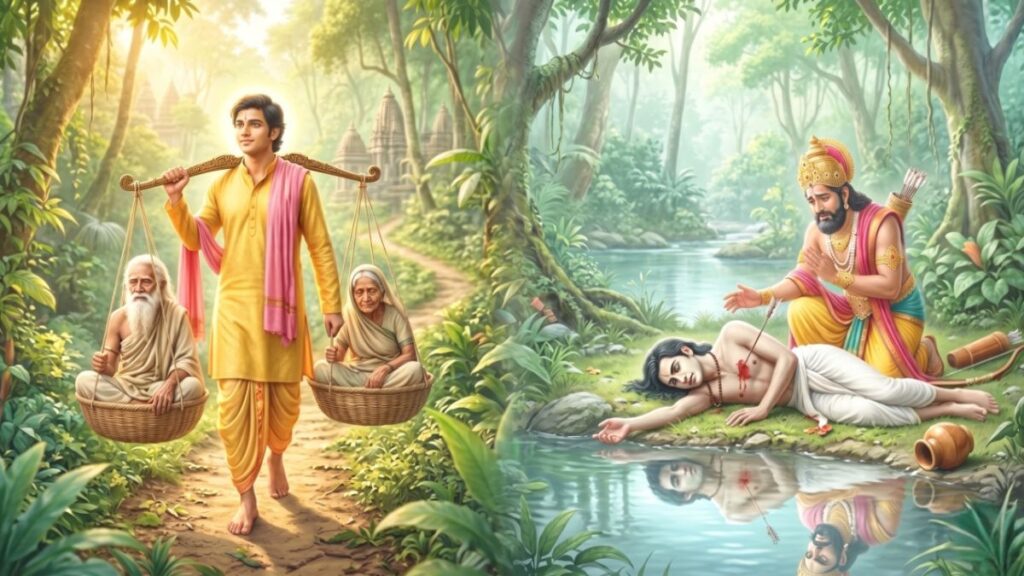
No story captures a son’s sacred duty more powerfully than that of Shravan Kumar, whose devotion appears in the Ramayan. Shravan carried his blind parents on his shoulders across pilgrimage sites, seeking nothing in return. His only thought, even as he lay dying from an accidental arrow, was the thirst of his waiting parents.
His story teaches what the Shanti Parva of the Mahabharat also declares: “When the father is pleased, all the gods in the cosmos are pleased.” We need not search far for the divine. By serving and honoring our fathers, we touch the sacred itself.
Father’s Day Through the Lens of Hindu Wisdom
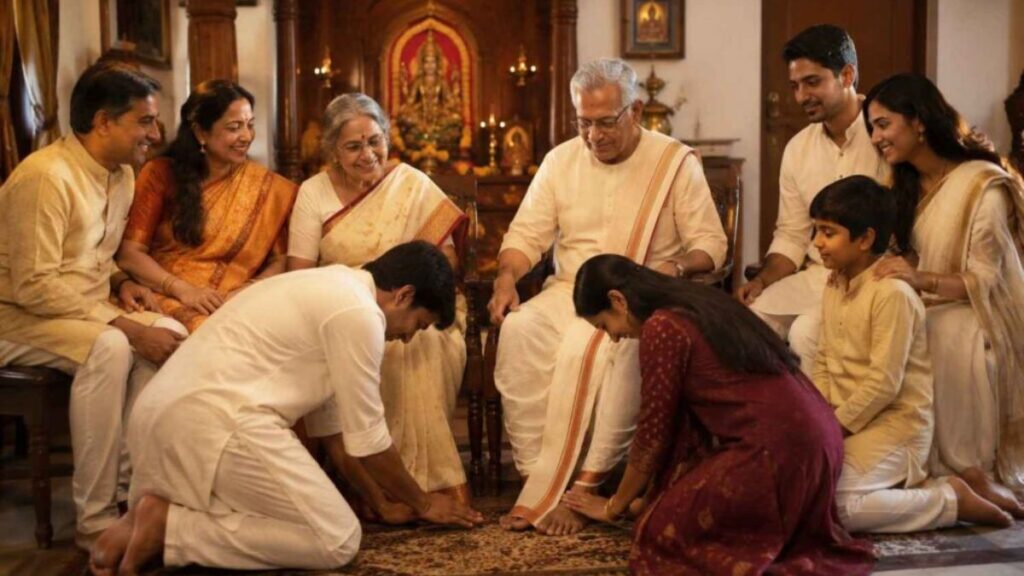
Viewed through Sanatan Dharm, Father’s Day becomes something beautifully deeper. It is not merely a celebration of a living parent — it becomes an occasion to honor an entire lineage of fathers and forefathers whose sacrifices made our lives possible.
True gratitude lives not only in gifts. It lives in how we carry forward the values our fathers strove to instill: truthfulness, courage, compassion, self-discipline, and devotion to duty.
This Father’s Day, let the ancient wisdom of Pitru Devo Bhava inspire not just a day of celebration, but a lifelong practice of reverence, service, and gratitude — exactly as Sanatan Dharm has always intended.
Frequently Asked Questions
1. What Makes The Sacred Role of the Father in Sanatan Dharm Different From Western Father’s Day Traditions?
Western Father’s Day celebrates the father for one day each year through gifts and gestures. The Sacred Role of the Father in Sanatan Dharm, however, treats fatherhood as a living spiritual practice observed every single day. Sanatan Dharm places the father at the same level of reverence as the divine, declaring through the Taittiriya Upanishad that the father is to be honored as God. This is not seasonal gratitude — it is a lifelong dharmic duty rooted in cosmic wisdom thousands of years old.
2. Who Exactly Qualifies as a Father According to The Sacred Role of the Father in Sanatan Dharm?
The Sacred Role of the Father in Sanatan Dharm beautifully expands the meaning of fatherhood beyond biology. According to Chanakya Niti, five individuals deserve paternal reverence: the biological father who gives life, the spiritual initiator who opens the Vedic path, the teacher who shapes moral character, the provider who offers food and sustenance, and the protector who guards from harm. This means every mentor, guardian, and guide who shaped your life carries the dignity of a father in the eyes of Sanatan wisdom.
3. Why Is The Sacred Role of the Father in Sanatan Dharm Connected to Spiritual Debt Called Pitra Rin?
The Sacred Role of the Father in Sanatan Dharm teaches that every child is born with a sacred obligation called Pitra Rin, meaning the debt owed to one’s father and ancestors. According to the Shatapath Brahman, this debt cannot be fully repaid with money or material gifts. It is honored through dharmic living, integrity, caring for parents in old age, and performing sacred rituals like Tarpana and Shraaddh. Every good action a child performs in life quietly repays this timeless spiritual debt.
4. How Does The Sacred Role of the Father in Sanatan Dharm Explain the Father as a Spiritual Teacher?
The Sacred Role of the Father in Sanatan Dharm recognizes the father as the child’s second Guru, after the mother. His highest spiritual act occurs during the Upanayan Sanskar, where he personally transmits the sacred Gayatri Mantra to his child, granting them spiritual rebirth. Through this ceremony, the father connects the child to Dharma, to ancestral lineage, to family deity, and to the Vedic tradition. He does not merely raise a child — he initiates a soul.
5. What Powerful Life Lesson Does The Sacred Role of the Father in Sanatan Dharm Draw From the Story of Shravan Kumar?
The Sacred Role of the Father in Sanatan Dharm holds the story of Shravan Kumar as the ultimate example of a child’s duty. Shravan carried his blind parents on his shoulders across holy pilgrimage sites, asking nothing in return. Even in his dying moments, his only concern was his parents’ thirst. His story teaches that serving one’s parents is not a burden but the highest form of worship, what the scriptures call Paramam Tapah. True devotion to God begins at home, in the simple and selfless care of those who gave us life.
6. How Can Understanding The Sacred Role of the Father in Sanatan Dharm Transform the Way We Celebrate Father’s Day Today?
Understanding the Sacred Role of the Father in Sanatan Dharm shifts Father’s Day from a commercial occasion into a moment of genuine spiritual reflection. Rather than limiting gratitude to one day, Sanatan wisdom invites us to honor our fathers through how we live, the values we carry, and the integrity we demonstrate every day. Caring for a living father, remembering a departed one through prayer, and passing ancestral wisdom to the next generation are all acts of celebration the scriptures deeply encourage. Real gratitude is not wrapped in a gift box — it is lived every single day.