
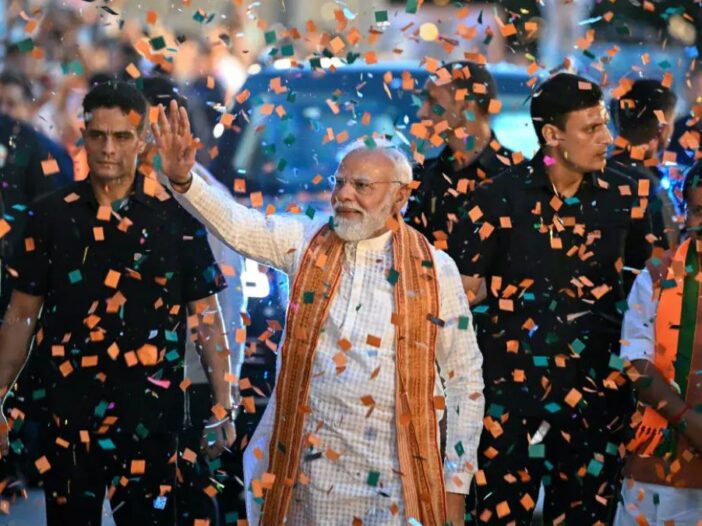
West Bengal Election 2026 has rewritten India’s political story in a way few imagined possible. The fall of Mamata Banerjee in her own stronghold and the BJP’s historic rise in Bengal have left supporters emotional, critics stunned, and the entire nation watching closely. At the same time, Tamil Nadu witnessed another political shock as actor Vijay transformed cinematic popularity into massive electoral success, challenging MK Stalin’s long-standing dominance. These results are more than election numbers; they reflect changing voter emotions, rising expectations, and a new political generation demanding transformation. India is not just witnessing a power shift — it is witnessing the beginning of a completely new political era.
West Bengal Election 2026: When the Unthinkable Finally Happened
West Bengal Election 2026 didn’t just change a government — it shattered an era. For fifteen years, Mamata Banerjee felt untouchable, unbreakable, and unmovable. Millions believed no force could ever uproot her from Bengal’s soil. Then Monday arrived — and everything collapsed in a single day. Across Tamil Nadu, MK Stalin faced his own devastating reckoning. Two giants, two thrones, two crushing defeats. The political earthquakes of May 4, 2026, left an entire nation speechless. So what really happened? And more importantly — can these fallen titans ever reclaim what they have lost?
Two giants of Indian regional politics have been defeated in their own backyards. However, the real question isn’t whether they fell — it’s whether they can rise again.
The Historic Fall of Two Political Titans
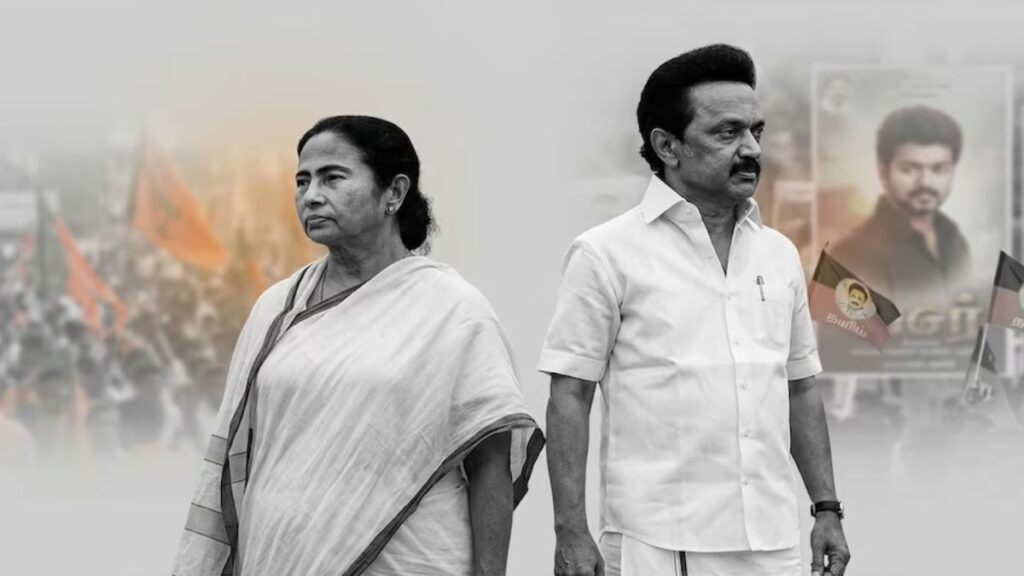
Monday, May 4, 2026, will go down as one of the most transformative days in modern Indian political history. Two of the country’s most formidable regional leaders — Mamata Banerjee of West Bengal and MK Stalin of Tamil Nadu — suffered stunning defeats in their own strongholds.
For years, both leaders appeared unbeatable. Consequently, their collapse has sent shockwaves through India’s opposition landscape. The BJP claimed West Bengal with a historic 206 seats out of 294, while actor-turned-politician Vijay’s Tamilaga Vettri Kazhagam emerged as Tamil Nadu’s single-largest party with 108 seats — a spectacular political debut that few had predicted.
Mamata Banerjee: Beaten but Not Broken
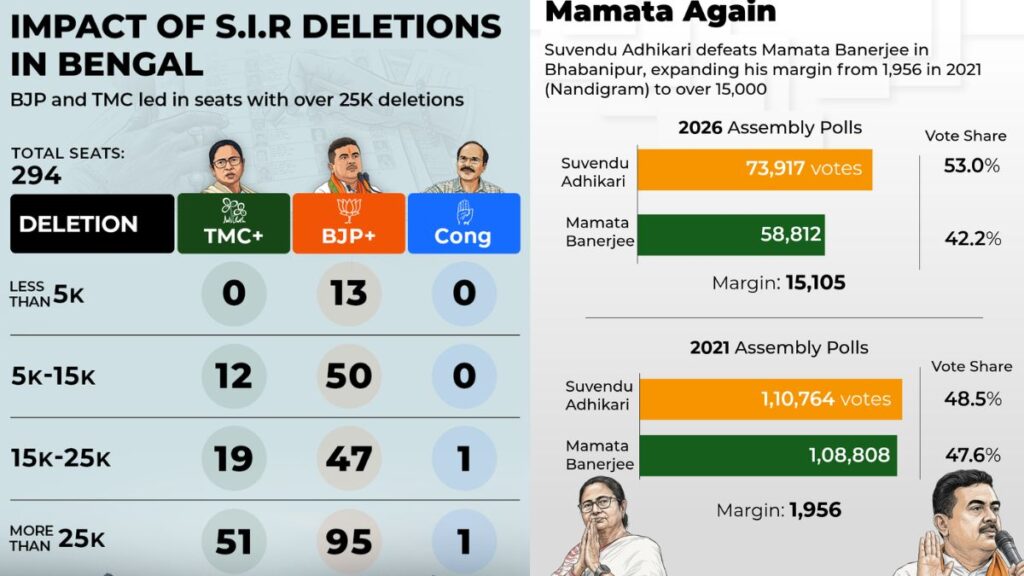
Mamata Banerjee’s defeat is deeply personal. She lost her Bhabanipur stronghold to BJP’s Suvendu Adhikari — her former lieutenant — by over 15,000 votes. This is her second consecutive personal defeat, following the Nandigram loss in 2021. Nevertheless, she has vowed to “bounce back.”
Her immediate challenge, therefore, is twofold. First, she must prevent her party from fracturing, stopping defections before they become a flood. Second, and more critically, she must prove she can fight the BJP without the protection of the chief minister’s chair and government machinery.
Mamata is widely regarded as India’s toughest street-level political fighter. However, fighting from opposition is an entirely different battlefield. Without institutional power, her effectiveness is genuinely uncertain — and that uncertainty is precisely what her rivals are counting on.
MK Stalin: The Shock No One Saw Coming
Unlike Mamata’s gradual decline, Stalin’s defeat arrived without warning. Through three consecutive elections — 2019, 2021, and 2024 — the DMK had swept Tamil Nadu almost completely. Therefore, Monday’s reversal is doubly shocking because there were no visible warning signs.
Actor Vijay’s magnetic appeal, his deep emotional connection to Tamil cinema culture, and his promise of fresh governance ultimately proved more powerful than the DMK’s institutional strength. Furthermore, Vijay cleverly positioned himself as the torchbearer of the original Dravidian ideology, invoking Periyar and other founding figures to connect with voters on a cultural and emotional level.
Stalin now faces a challenge unlike any before. He must recalibrate his party’s strategy against a rival who has never governed and carries no political baggage — which, paradoxically, makes Vijay even harder to attack.
What the BJP’s Victory Really Means
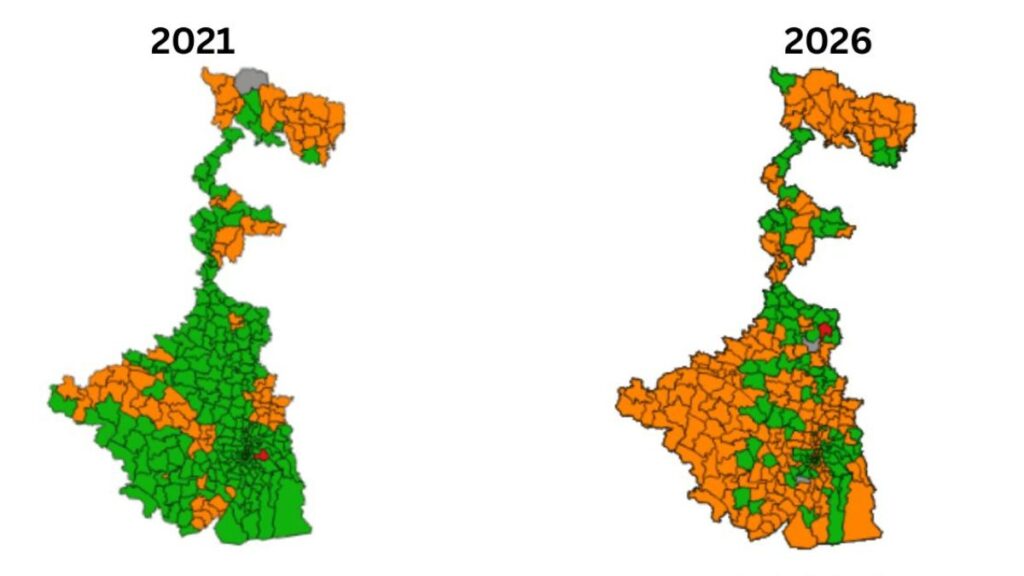
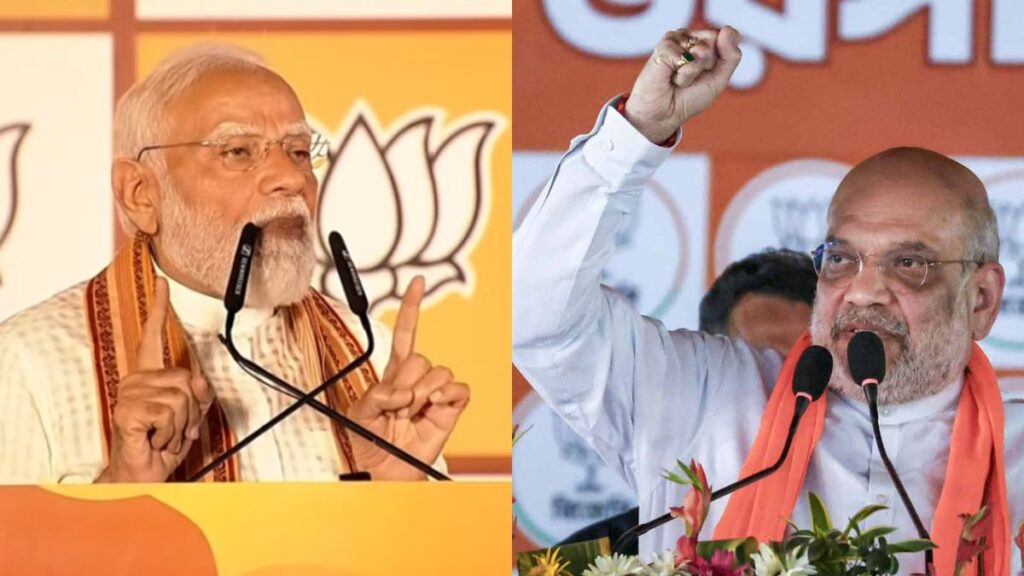
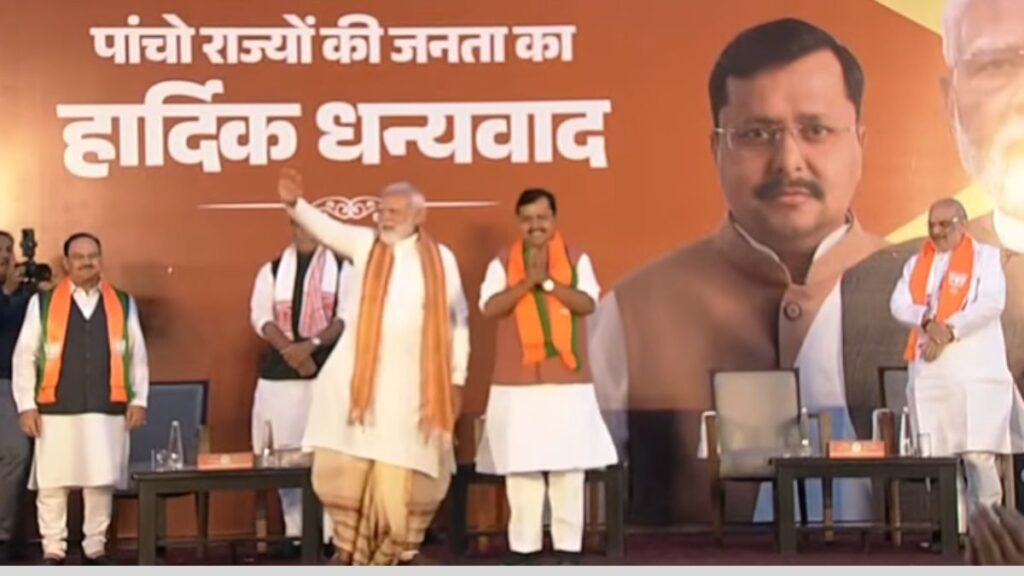
For the BJP, West Bengal’s capture represents near-complete dominance of eastern India. The party now controls virtually the entire eastern corridor, with Jharkhand remaining the sole exception. PM Modi’s victory speech — calling for “badlav, not badla” (change, not revenge) — signalled a deliberate attempt to project statesmanship alongside strength.
Notably, the 2026 West Bengal election was remarkable for zero political violence deaths during both voting phases, a dramatic contrast to 24 deaths recorded in 2021. The Election Commission’s firm oversight clearly made a measurable difference.
In the south, however, the BJP still struggles. The party was routed in both Kerala and Tamil Nadu, meaning the saffron wave remains geographically incomplete.
Key Takeaways
- The BJP has achieved its first-ever West Bengal government, winning 206 of 294 seats
- Mamata Banerjee lost Bhabanipur personally, yet has pledged to continue as opposition leader
- Actor Vijay’s TVK won 108 seats in Tamil Nadu in a stunning political debut
- MK Stalin faces an unprecedented challenge against an entirely new kind of rival
- The BJP’s southern expansion remains stalled despite historic eastern gains
- The 2026 Bengal election recorded zero violence deaths — a historic first
Both Mamata and Stalin are seasoned survivors. History, moreover, shows that Indian politics rarely ends a career with a single defeat. The real story of 2026 is not just who fell — it is whether these two fighters can redefine themselves powerfully enough to matter in the battles ahead.
Frequently Asked Questions About West Bengal Election 2026
What actually happened in the West Bengal Election 2026 that shocked the entire nation?
The West Bengal Election 2026 delivered one of the most stunning political upsets in Indian democratic history. The BJP won 206 out of 294 seats, crossing the majority mark of 148 comfortably and forming the state’s first-ever saffron government. The ruling Trinamool Congress, which had dominated Bengal politics since 2011, collapsed to just 81 seats. What made this result even more emotionally charged was Mamata Banerjee’s personal defeat in her own Bhabanipur constituency, a seat she had held as her political identity for years. Voters across Bengal sent a message that no fortress is truly unbreakable when public sentiment shifts decisively.
How did Mamata Banerjee lose her own seat during the West Bengal Election 2026?
Mamata Banerjee lost the Bhabanipur constituency to BJP’s Suvendu Adhikari by a margin of over 15,000 votes. What makes this particularly painful is that Adhikari was once her most trusted lieutenant before switching sides to the BJP. This was actually her second consecutive personal defeat, following her unexpected loss in Nandigram during the 2021 elections. For someone who built her entire political identity around Bengal’s streets and people, losing her home seat twice is both a personal and symbolic blow that even her strongest supporters find difficult to process emotionally.
Was the West Bengal Election 2026 truly free and fair, or were there controversies?
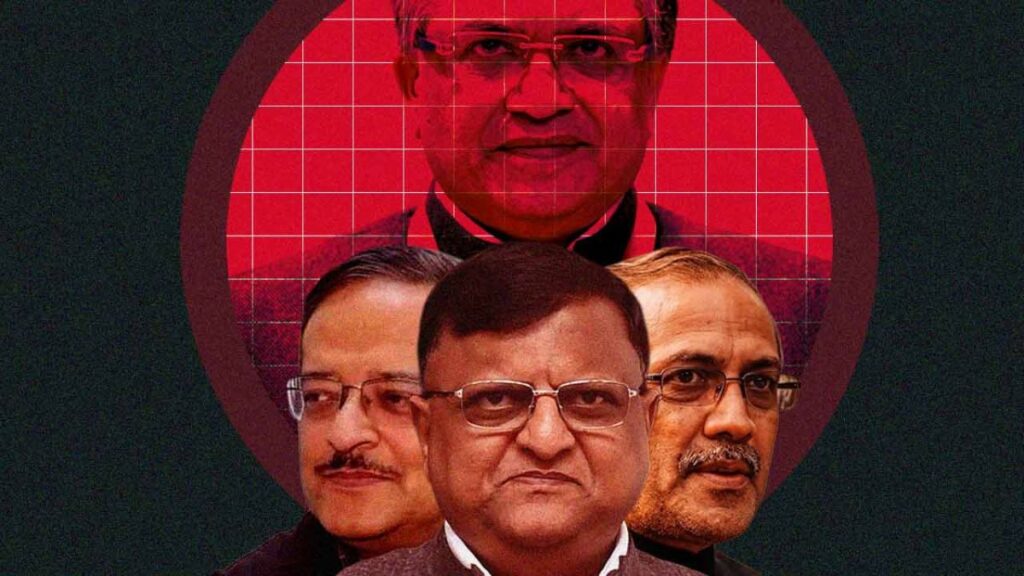
The West Bengal Election 2026 was notably remarkable for something that had never happened before in the state’s modern electoral history. For the first time, not a single person died due to political violence during either the campaigning period or the two voting phases. Compare this to 2021, when 24 people lost their lives, and the contrast becomes genuinely extraordinary. Voter turnout crossed 90 percent in both phases, which reflects strong public confidence in the process. The Election Commission deployed three key officials who overhauled police administration, replaced officers, and built what many described as an iron wall around the counting process. While the Trinamool alleged irregularities in voter roll deletions under the Special Intensive Revision process, courts and the Commission defended the exercise as legitimate.
What role did the deletion of 90 lakh voters play in the West Bengal Election 2026 outcome?
One of the most debated aspects of the West Bengal Election 2026 was the Special Intensive Revision process, under which approximately 90 lakh names were deleted from electoral rolls. The Trinamool Congress alleged that these deletions specifically targeted their support base and were politically motivated. The BJP, on the other hand, defended the exercise as a necessary cleanup of duplicate entries and names of deceased voters. Whether these deletions influenced the final margin remains a matter of fierce political debate. What is clear, however, is that the final result was a landslide that went far beyond any numerical adjustment that roll revision could explain on its own.
Who are the most emotionally significant winners from the West Bengal Election 2026?
Beyond the party numbers, the West Bengal Election 2026 produced some deeply human stories that moved people across the country. Ratna Debnath, the mother of the RG Kar Medical College rape and murder victim whose case had shaken Bengal’s conscience, won from Panihati on a BJP ticket. Her victory carried enormous emotional weight for families who felt justice had been denied for too long. Additionally, Kalita Majhi, a domestic worker earning just 2,500 rupees a month, won for the BJP from the Ausgram constituency, proving that this election was not just about elite politics but about ordinary people reclaiming their voice in a state where they had long felt silenced.
What does PM Modi’s victory speech reveal about BJP’s plans after the West Bengal Election 2026?
Prime Minister Narendra Modi addressed supporters at BJP headquarters following the West Bengal Election 2026 results and chose his words with deliberate care. He invoked both Rabindranath Tagore and Syama Prasad Mookerjee, connecting the victory to Bengal’s intellectual and nationalist heritage simultaneously. His phrase “badlav, not badla,” meaning change and not revenge, was a clear signal aimed at preventing post-election violence and positioning the BJP as a responsible governing force rather than a vindictive one. He also promised that the Ayushman Bharat health scheme would be cleared in the new government’s very first cabinet meeting, a tangible commitment to ordinary citizens who had been excluded from the scheme during the Trinamool years.
When will the new government be sworn in following the West Bengal Election 2026?
The BJP announced that the oath-taking ceremony for the new West Bengal government will be held on May 9, 2026. The date was chosen to coincide with Rabindra Jayanti, the birth anniversary of Rabindranath Tagore. This choice of date is rich with symbolism, connecting the new political era to Bengal’s greatest cultural icon and signalling that the BJP wants to position its governance as rooted in Bengal’s own proud identity rather than being perceived as an outside force imposing alien values on the state.
Can Mamata Banerjee genuinely make a political comeback after the West Bengal Election 2026?
History in Indian politics suggests that writing off any leader after a single defeat, even a dramatic one, is almost always premature. Mamata Banerjee is widely considered one of the most resilient street fighters in Indian politics today. She has faced setbacks before and rebuilt. However, the challenge she now faces is genuinely different from anything before. Without the chief minister’s chair, without government machinery, and without institutional protection, fighting the BJP requires a different kind of political energy. Her immediate priority will be holding her party together, preventing defections, and proving that she remains a relevant and powerful opposition voice. Whether she succeeds will depend on how quickly she adapts to this fundamentally changed political reality.
How does the West Bengal Election 2026 change the national opposition landscape?
The West Bengal Election 2026 removes one of the BJP’s strongest regional counterweights from the governing equation. Mamata Banerjee had long served as one of the most vocal and effective critics of the central government, giving the opposition a sharp and fearless voice that even the BJP’s leadership took seriously. With her now in opposition within her own state, the national opposition loses a platform it had grown accustomed to using. Meanwhile, MK Stalin’s defeat in Tamil Nadu adds another blow to opposition confidence. Together, these results suggest the BJP’s political machine is operating at a level of sophistication and reach that the opposition has not yet found an answer to.
What does the West Bengal Election 2026 mean for the future of Indian democracy and regional politics?
The West Bengal Election 2026 marks something genuinely historic in the story of Indian federalism. For decades, Bengal was considered impenetrable territory for the BJP, governed first by the Left for 34 years and then by Mamata’s Trinamool for 15. The BJP’s breakthrough proves that no state is beyond political transformation when public sentiment, organizational strength, and electoral management align. For regional parties across India, this result serves as a sobering reminder that dominance must be earned continuously and that voters, when given a genuinely free and fair opportunity to express themselves, will surprise even the most confident incumbents. The real test now is whether the BJP governs Bengal well enough to hold what it has won.






Leave a Reply