
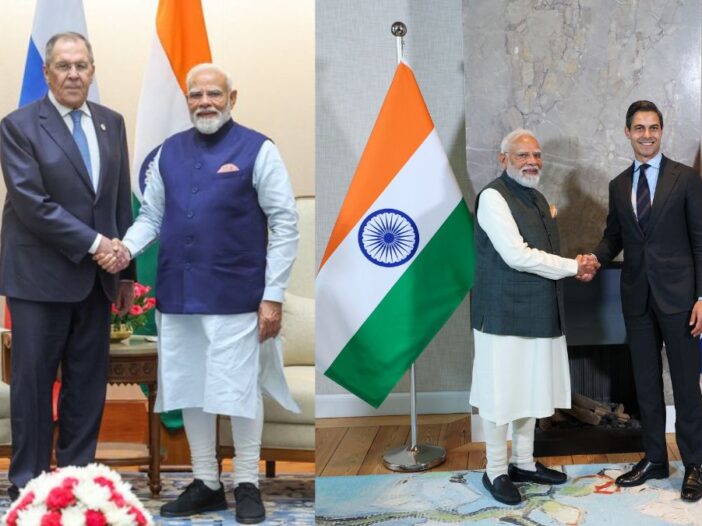
India-Netherlands Strategic Partnership just rewrote the rules of global diplomacy — and the world is paying close attention. Imagine ancient Chola Copper Plates, stolen from Tamil soil over a century ago, finally returning home. Picture India’s first advanced semiconductor factory rising in Gujarat, powered by Dutch precision. Envision clean water flowing through drought-stricken regions, guided by Netherlands engineering genius. This is not a dream. This happened on May 16–17, 2026, when PM Modi’s historic Netherlands visit transformed a friendly relationship into a powerful Strategic Partnership — one that will shape India’s future for decades to come.
Prime Minister Narendra Modi’s two-day official visit to the Netherlands on May 16–17, 2026, marked a defining moment in India’s diplomatic journey. Far more than a routine state visit, this trip transformed India-Netherlands relations into a full Strategic Partnership — a milestone backed by dozens of signed agreements, landmark cultural returns, and bold cooperation across technology, water, defence, and green energy.
If you want to understand exactly what changed, what was signed, and why it matters for India’s future, this guide covers everything.
The Big Picture: Why This Visit Matters
Most diplomatic visits produce joint statements and photo opportunities. However, this visit produced something far more substantial — a structured five-year roadmap covering nine major cooperation pillars, from semiconductors to maritime corridors.
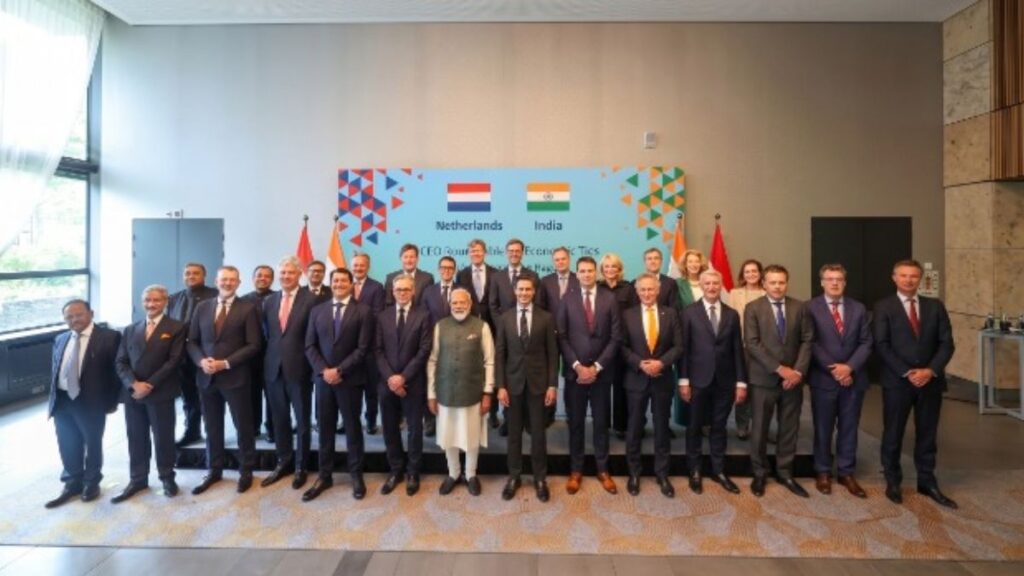
PM Modi met with Dutch King Willem Alexander and Queen Maxima at the Royal Palace Huis ten Bosch. Later, he held both restricted and delegation-level talks with Prime Minister Rob Jetten. Together, the two leaders reviewed decades of shared history and then committed to a bold new future.
The talks took place against a backdrop of rising global tensions, semiconductor supply chain pressures, and Europe’s search for reliable strategic partners. India, with its scale, skilled workforce, and democratic values, fits precisely what the Netherlands and broader Europe seek.
Elevation to a Transformative Strategic Partnership
The most consequential outcome of this visit was the decision to elevate bilateral relations to a Strategic Partnership.
Both leaders adopted a Strategic Partnership Roadmap (2026–2030) covering structured cooperation across:
- Political dialogue and foreign ministry-level annual meetings
- Trade, investment, and joint ventures
- Defence and security cooperation
- Emerging technologies including semiconductors, AI, and quantum systems
- Water management and climate resilience
- Sustainable energy and green hydrogen
- Health, agriculture, and food systems
- Education, culture, and people-to-people ties
This roadmap is not aspirational language. Instead, it includes specific mechanisms, joint working groups, and timelines. Both sides committed to annual Foreign Minister-level reviews to track progress.
Chola Copper Plates: A Priceless Return Home
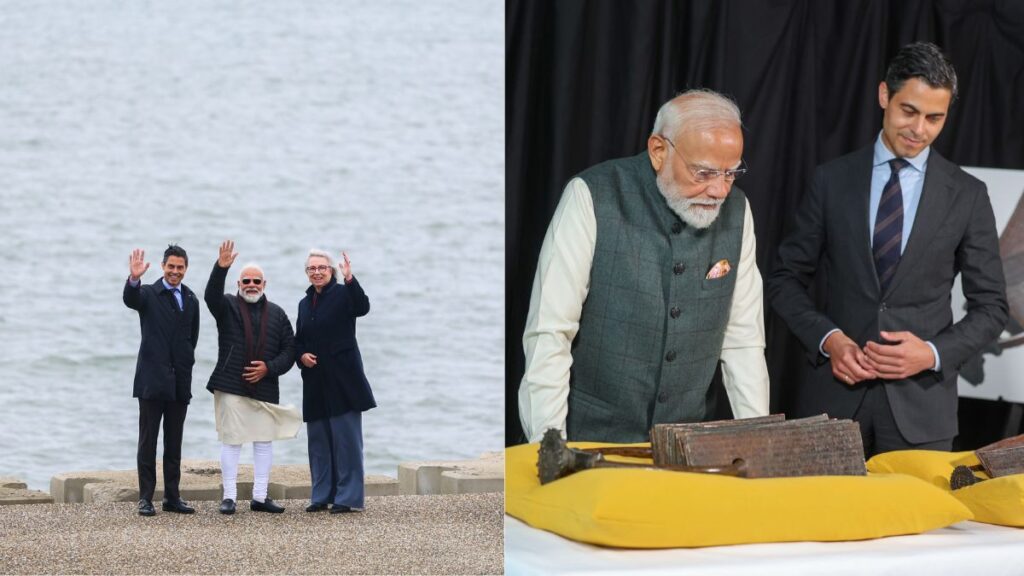
One moment stood above all others for its emotional weight. In the presence of both Prime Ministers, Leiden University Library formally returned the 11th-century Chola Copper Plates to the Government of India.
These are not ordinary artifacts. The collection comprises 21 large plates and 3 smaller plates — royal charters issued by Chola kings during the 11th century CE. Written in both Tamil and Sanskrit, these plates document the gifting of Anaimangalam village to a Buddhist monastery called Chulamanivarma-vihara in Nagapattinam, Tamil Nadu.
Their return carries deep civilizational significance. For Tamil Nadu and for India broadly, these copper plates represent living proof of a maritime, spiritual, and administrative tradition stretching over a thousand years. Their homecoming resonated far beyond diplomatic protocol.
Both Prime Ministers underscored that the restitution of cultural artifacts represents a shared commitment — and both nations agreed to continue cooperating on future returns.
ASML–Tata Electronics: India’s Semiconductor Future Begins
Perhaps the most strategically significant business agreement signed during this visit was the partnership between ASML and Tata Electronics.
ASML is the world’s only manufacturer of extreme ultraviolet (EUV) lithography machines — the tools that make advanced semiconductor chips possible. Without ASML machines, no cutting-edge chip can be produced anywhere on earth.
The two companies agreed to partner for India’s first front-end semiconductor fabrication plant (FAB) in Dholera, Gujarat. This agreement signals that India is no longer just an assembly or packaging destination in the semiconductor supply chain. Instead, the country is building genuine front-end manufacturing capability.
Additionally, both leaders welcomed:
- A new MoU on Semiconductors and Related Emerging Technology covering investment, research, and talent exchange
- A Memorandum of Cooperation between Eindhoven University of Technology, University of Twente, and six Indian institutions — IISc Bangalore, IIT Bombay, IIT Delhi, IIT Gandhinagar, IIT Guwahati, and IIT Madras — creating a semiconductor “brain bridge”
- Connection of the Dutch Semicon Competence Centre to India’s Semiconductor Mission (ISM)
- Continuation of the Indo-Dutch Semicon Online School into its next phase
Together, these steps build a comprehensive ecosystem — not just a single factory.
Water Management: Afsluitdijk, Kalpasar, and a Centre of Excellence
Both Prime Ministers visited the Afsluitdijk, the Netherlands’ iconic 32-kilometre dam and causeway that protects large parts of the country from the North Sea. The structure stands as a global benchmark in flood control, land reclamation, and freshwater management.
The visit highlighted a compelling parallel. India’s Kalpasar Project in Gujarat aims to build a freshwater reservoir across the Gulf of Khambhat, incorporating tidal power generation, irrigation infrastructure, and transportation links. The scale and ambition mirror what the Netherlands achieved with the Afsluitdijk.
To move cooperation forward, both sides signed a Letter of Intent between India’s Ministry of Jal Shakti and the Netherlands’ Ministry of Infrastructure and Water Management for technical cooperation on Kalpasar.
Beyond Kalpasar, India and the Netherlands announced the establishment of a Centre of Excellence on Water at IIT Delhi under the Ministry of Jal Shakti. This centre will support the Namami Gange Mission, urban water management plans, delta management, and wastewater reuse programs.
Ongoing joint programs in Uttar Pradesh, Maharashtra, West Bengal, Tamil Nadu, and Kerala also received recognition — confirming that water cooperation has already produced measurable results across India.
Defence and Cyber Security: Deepening the Shield
Defence cooperation received substantial new structure during this visit.
Both leaders signed a Letter of Intent on Defence Cooperation covering:
- Regular interaction between Ministries of Defence
- Staff-level talks and information exchange
- Research, innovation, and training activities
- Exploration of a Defence Industrial Roadmap involving co-development, technology transfer, and joint production
The two countries also agreed to explore a Mutual Logistic Support Agreement to institutionalize support during training exercises.
On cyber security, both sides signed a Letter of Intent on Enhanced Collaboration in Cyberspace. This agreement covers closer coordination in multilateral forums, joint efforts against cyber threats and cybercrime, and capacity building.
The 8th session of the Indo-Dutch Online Cyber School was also completed — reflecting sustained commitment to building shared digital security expertise.
Prime Minister Jetten strongly condemned the April 2025 terrorist attack in Pahalgam, Jammu & Kashmir, expressing the Netherlands’ full solidarity with India in countering terrorism. Both leaders called for zero tolerance on terrorism, pressed for disruption of terrorist financing networks, and supported India’s push for a UN Comprehensive Convention on International Terrorism (CCIT).
Green Hydrogen, Renewable Energy, and the Circular Economy
Both nations launched an India-Netherlands Roadmap on the Development of Green Hydrogen — one of the most forward-looking outcomes of the summit.
India holds vast potential for green hydrogen production. The Netherlands, meanwhile, needs reliable green hydrogen supplies for its own energy transition goals. The roadmap creates a structured framework connecting both needs.
Additional energy cooperation measures include:
- Establishment of a Joint Working Group on Renewable Energy covering solar energy, green hydrogen, storage, and investment facilitation
- Renewal of the Joint Statement of Intent on Capacity Building for Energy Transition between NITI Aayog and the Netherlands
- Welcoming the Netherlands into the Global Biofuel Alliance launched during India’s G20 presidency
- A new MoU between the University of Groningen and 19 IITs for academic cooperation in renewable energy
- A PhD Fellowship Programme on Hydrogen between India’s Department of Science and Technology and the University of Groningen
On circular economy, both sides acknowledged India’s presidency of the World Circular Economy Forum (WCEF) 2026 as an opportunity to deepen cooperation in industrial circularity, waste management, and sustainable urban systems.
Agriculture, Health, and Education: Building Human Capital
Agriculture
India and the Netherlands share a rich agricultural partnership. During this visit, both leaders welcomed:
- Continued growth of Dutch companies in protected cultivation, food processing, dairy, and poultry sectors in India
- Progress on Centers of Excellence in agri-sectors promoting greenhouse technology and sustainable farming
- Establishment of an Indo-Dutch Centre of Excellence on Training in Dairy at the Centre of Excellence for Animal Husbandry in Bengaluru
- A Joint Declaration between the Ministry of Fisheries, Animal Husbandry and Dairying and the Dutch Ministry of Agriculture
- An MoU between Naktuinbouw and India’s National Horticulture Board for establishing Clean Plant Centres
- An MoU between NVWA and FSSAI on food safety standards
Health
On the health front, both leaders renewed the MoU on Healthcare and Public Health and announced a Letter of Intent between RIVM (Netherlands) and ICMR (India) covering infectious diseases, vector-borne diseases, and disease surveillance under a One Health framework.
The first Joint Working Group meeting on pharmaceuticals and medical devices will convene in 2026 to identify specific collaboration opportunities.
Education
Both countries signed a MoU on Higher Education between their respective Education Ministries. Additionally, both leaders welcomed institutional collaborations between University of Groningen and Nalanda University, Delft University of Technology and Mumbai Metropolitan Regional Development Authority, and Vrije Universiteit Amsterdam and IIT Roorkee, among others.
India-EU Free Trade Agreement: A Historic Economic Unlock
Both Prime Ministers expressed strong support for the India-EU Free Trade Agreement, negotiations for which concluded in January 2026.
This FTA brings India and the European Union — the world’s second and fourth largest economies — into a comprehensive trade partnership. The Netherlands, as a gateway to Europe via Rotterdam, stands to play a central role in facilitating Indian exports across the continent.
Both leaders also welcomed the simultaneous signing of an India-EU Security and Defence Partnership, covering maritime security, cyber, counterterrorism, and defence industrial collaboration.
The Netherlands confirmed its decision to join the Indo-Pacific Oceans Initiative (IPOI) and co-lead its Capacity Building and Resource Sharing pillar alongside Germany and the European Union — a significant expansion of strategic alignment.
People-to-People Ties, Culture, and Migration
Both nations acknowledged the Indian diaspora in the Netherlands as a vital bridge between the two societies. To facilitate smoother movement, both sides signed an MoU on Migration and Mobility.
Cultural cooperation also received a major boost. Both leaders appreciated the Amrita Sher-Gil exhibition at the Drents Museum and looked forward to a reciprocal display of Van Gogh and other Dutch artworks at India’s National Gallery of Modern Art.
The MoU between the National Maritime Museum of Amsterdam and India’s Ministry of Ports, Shipping and Waterways for the National Maritime Heritage Complex in Lothal, Gujarat, also received formal welcome. This complex will celebrate India’s ancient maritime heritage alongside its modern port ambitions.
Key Agreements Signed: A Quick Summary
| Agreement | Parties Involved |
|---|---|
| ASML–Tata Electronics semiconductor partnership | ASML (Netherlands) + Tata Electronics (India) |
| MoU on Semiconductors and Emerging Technology | India + Netherlands |
| Letter of Intent on Kalpasar technical cooperation | Ministry of Jal Shakti + Netherlands Water Ministry |
| Centre of Excellence on Water at IIT Delhi | Ministry of Jal Shakti + Netherlands |
| Letter of Intent on Defence Cooperation | Ministries of Defence |
| Letter of Intent on Cyberspace Cooperation | Security agencies |
| India-Netherlands Green Hydrogen Roadmap | Both governments |
| MoU on Critical Minerals | Both governments |
| MoU on Higher Education | Education Ministries |
| MoU on Migration and Mobility | Both governments |
| MoU on Renewable Energy (Joint Working Group) | Both governments |
| MoU on Healthcare and Public Health (renewed) | Health Ministries |
| RIVM–ICMR Letter of Intent | Public health institutions |
| NVWA–FSSAI MoU on food safety | Food safety authorities |
| Naktuinbouw–National Horticulture Board MoU | Agricultural bodies |
| National Maritime Museum Amsterdam–India MoU | Maritime Ministry |
| Agreement on Mutual Administrative Assistance in Customs | Customs authorities |
| MoU University of Groningen + 19 IITs | Universities |
| Semiconductor brain bridge MoU | Eindhoven/Twente + 6 IITs |
What This Means Going Forward
PM Modi’s Netherlands visit delivers several lasting outcomes that extend well beyond May 2026.
For India’s technology ambitions, the ASML–Tata partnership and the semiconductor academic bridge create a foundation for genuine domestic chip manufacturing. India no longer relies entirely on importing finished chips. Instead, the country is now building the expertise to produce them.
For water security, the Kalpasar partnership with Dutch hydraulic engineering expertise could reshape freshwater availability in Gujarat and potentially offer a replicable model for other Indian coastal states.
For clean energy, the green hydrogen roadmap creates a viable export corridor connecting India’s renewable production potential with European demand — potentially generating both energy security and economic opportunity.
For defence, structured engagement with a NATO member on defence industrial cooperation gives India another reliable European partner as global security architectures evolve.
For culture, the return of the Chola Copper Plates signals a new era of restitution. Other nations holding Indian heritage objects may face growing pressure to follow the Netherlands’ example.
For the broader India-Europe relationship, the India-EU FTA combined with this deepened bilateral partnership places India firmly inside Europe’s trusted partner network — a position that carries enormous long-term trade and investment implications.
Final Thought
PM Modi’s Netherlands visit stands out not for its scale alone, but for its substance. Governments sign statements every day. Far fewer governments sign 20-plus concrete agreements covering semiconductors, hydrogen, water infrastructure, defence, culture, agriculture, and education in a single visit.
The Strategic Partnership Roadmap (2026–2030) gives this relationship a defined direction and built-in accountability. Annual ministerial reviews will ensure both sides stay on track.
For India, the Netherlands offers world-class expertise in water management, semiconductor technology, and sustainable logistics. For the Netherlands and Europe, India offers scale, growth, a skilled workforce, and a democratic partner committed to a rules-based international order.
This partnership, therefore, benefits both nations genuinely — and its outcomes will shape trade, technology, and diplomacy across the decade ahead.
Frequently Asked Questions About the India-Netherlands Strategic Partnership
What exactly is the India-Netherlands Strategic Partnership and why does it matter so much right now?
The India-Netherlands Strategic Partnership is a formally elevated diplomatic relationship announced during PM Modi’s visit to the Netherlands on May 16–17, 2026. It matters enormously because it transforms what was previously a productive but ordinary bilateral relationship into a structured, accountable, five-year commitment covering nine major cooperation areas. At a time when global supply chains are fracturing, semiconductor access is becoming a national security issue, and clean energy transitions demand massive investment, having a trusted European partner with world-class technical expertise is genuinely valuable for India. For the Netherlands, India offers the scale, talent, and democratic reliability that Europe desperately needs in uncertain times. This is not simply a ceremonial upgrade. It comes with a signed roadmap, joint working groups, annual ministerial reviews, and dozens of concrete agreements that create real accountability on both sides.
How will the India-Netherlands Strategic Partnership actually benefit ordinary Indian citizens in their daily lives?
This is the question most people instinctively ask, and the answer is more direct than you might expect. The water management cooperation will improve flood resilience and freshwater availability in states like Gujarat, Uttar Pradesh, Maharashtra, West Bengal, Tamil Nadu, and Kerala, where joint programs are already running. The semiconductor partnership will eventually create high-skill manufacturing jobs in Dholera and related ecosystems. Agricultural cooperation through Dutch-supported Centers of Excellence is already helping smallholder farmers use less water and fewer chemicals while achieving higher productivity. The Green Hydrogen Roadmap will support India’s clean energy transition, potentially reducing dependence on imported fossil fuels. The food safety MoU between NVWA and FSSAI will improve the quality standards of food reaching Indian consumers. Individually each agreement addresses a specific challenge. Together they form a comprehensive development picture that touches farming communities, technology workers, coastal populations, and urban households alike.
What makes the India-Netherlands Strategic Partnership semiconductor deal with ASML and Tata Electronics genuinely historic?
ASML is not simply another technology company. It is the only company in the world capable of manufacturing extreme ultraviolet lithography machines, without which advanced semiconductors physically cannot be produced anywhere on earth. Every advanced chip made globally, whether by TSMC, Samsung, or Intel, requires an ASML machine. The partnership between ASML and Tata Electronics for India’s first front-end semiconductor fabrication facility in Dholera, Gujarat, therefore represents a qualitative leap, not just another investment announcement. India has historically been limited to chip packaging and assembly. This partnership places India at the beginning of the chip manufacturing process itself. Combined with the semiconductor brain bridge connecting Eindhoven University of Technology and University of Twente with IISc Bangalore, IIT Bombay, IIT Delhi, IIT Gandhinagar, IIT Guwahati, and IIT Madras, the India-Netherlands Strategic Partnership is building both the physical infrastructure and the human talent pipeline simultaneously. That combination rarely happens together, and it is what makes this genuinely transformational.
Why did the return of the Chola Copper Plates become such an emotional highlight of the India-Netherlands Strategic Partnership summit?
Because artifacts carry memories that no diplomatic document can fully capture. The Chola Copper Plates are 11th-century royal charters issued by Chola kings, written in Tamil and Sanskrit, documenting the gifting of Anaimangalam village to a Buddhist monastery in Nagapattinam, Tamil Nadu. They are not decorative objects. They are primary evidence of a living, sophisticated civilization that maintained royal administration, religious patronage, and international maritime connections over a thousand years ago. For Tamil Nadu and for India broadly, seeing these plates returned from Leiden University Library in the presence of both Prime Ministers carried an emotional weight that transcends politics. Every Indian who has felt the quiet frustration of knowing that pieces of their civilizational heritage sit in foreign institutions felt something genuine in that moment. The India-Netherlands Strategic Partnership commitment to continuing restitution cooperation means this return is a beginning, not an isolated gesture.
How does the India-Netherlands Strategic Partnership on water management compare to what India is already doing independently?
India already runs significant water programs, including the Namami Gange Mission, the Swachh Bharat Mission, and various state-level river management initiatives. What the India-Netherlands Strategic Partnership adds is Dutch technical expertise accumulated over centuries of survival in a country where large portions of the land lie below sea level. The Netherlands has no choice but to be brilliant at water management, and that existential necessity produced engineering knowledge that India can now directly access. The Kalpasar Project partnership is the clearest example. India’s ambition to build a freshwater reservoir across the Gulf of Khambhat, integrating tidal power, irrigation, and transportation, mirrors the scale and logic of the Afsluitdijk, which PM Modi visited personally. The new Centre of Excellence on Water at IIT Delhi will institutionalize this knowledge transfer so that Dutch expertise does not remain dependent on bilateral goodwill but gets embedded into Indian academic and engineering capacity permanently.
What does the India-Netherlands Strategic Partnership mean for India’s clean energy and green hydrogen ambitions specifically?
The India-Netherlands Green Hydrogen Roadmap launched during this visit creates something that did not previously exist: a structured export corridor connecting India’s renewable energy potential with European demand. India receives exceptional solar irradiation, has ambitious renewable energy targets, and holds significant competitive advantages in green hydrogen production costs. The Netherlands needs reliable green hydrogen supplies and has the port infrastructure at Rotterdam to receive and distribute it across Europe. The India-Netherlands Strategic Partnership essentially draws a line connecting these complementary strengths. Beyond hydrogen, cooperation covers innovative solar energy, battery storage, bioenergy, circular feedstocks, and sustainable mobility infrastructure including zero-emission vehicles and smart charging networks. The PhD Fellowship Programme on Hydrogen between India’s Department of Science and Technology and the University of Groningen ensures that India is simultaneously building the scientific expertise to lead in this field, not just supply raw clean energy to European markets.
How does the India-Netherlands Strategic Partnership strengthen India’s position in the ongoing India-EU Free Trade Agreement?
The timing here is significant and deliberate. Negotiations for the India-EU Free Trade Agreement concluded in January 2026, just months before this visit. The Netherlands is one of Europe’s most influential economies and serves as a primary gateway to the European market through Rotterdam, the continent’s largest port. By deepening its strategic relationship with the Netherlands specifically, India gains a powerful advocate within the EU system and a proven logistics corridor for Indian exports reaching European consumers. Both Prime Ministers explicitly called for early implementation of the India-EU FTA during their discussions. Additionally, the India-Netherlands Strategic Partnership framework on startups and innovation, including digital soft-landing programmes and joint participation in trade and innovation missions, creates practical on-ramps for Indian companies entering European markets and Dutch companies scaling operations in India. The strategic partnership and the trade agreement reinforce each other in ways that multiply the benefit of both.
What progress has the India-Netherlands Strategic Partnership made on defence cooperation and how significant is it really?
Defence cooperation within the India-Netherlands Strategic Partnership is carefully constructed rather than headline-grabbing. The Letter of Intent on Defence Cooperation establishes structured joint interactions between Ministries of Defence, staff-level talks, information exchanges, and research collaboration. More ambitiously, both sides committed to exploring a Defence Industrial Roadmap involving co-development, technology transfer, and joint ventures for co-production. For India, adding a NATO member with sophisticated defence industry capabilities to its strategic partner network has real value, particularly as India works to build its domestic defence manufacturing sector under the broader Make in India initiative. The exploration of a Mutual Logistic Support Agreement would further institutionalize military cooperation. The Netherlands joining the Indo-Pacific Oceans Initiative and co-leading its Capacity Building and Resource Sharing pillar alongside Germany and the EU also signals a meaningful European shift toward engagement in India’s strategic neighbourhood.
How will young Indians and students specifically benefit from the India-Netherlands Strategic Partnership education and research agreements?
The education agreements within the India-Netherlands Strategic Partnership are genuinely exciting for students and researchers. The semiconductor brain bridge connecting Dutch universities with six premier Indian institutions creates funded pathways for collaboration that did not exist before. The MoU on Higher Education between both countries’ Education Ministries opens new avenues for institutional partnerships beyond the handful already active. The PhD Fellowship Programme on Hydrogen between the Department of Science and Technology and the University of Groningen creates specific doctoral research opportunities in a field where India urgently needs world-class expertise. The Indo-Dutch Education and Academic Network provides a platform for expanding these connections further. For a young Indian student interested in semiconductors, quantum computing, water engineering, green hydrogen, or agricultural technology, the India-Netherlands Strategic Partnership has created a significantly richer landscape of international academic opportunity than existed just twelve months ago.
What is the India-Netherlands Strategic Partnership roadmap for 2026 to 2030 and how will its success actually be measured?
The Strategic Partnership Roadmap covering 2026 to 2030 is unusually specific for a diplomatic document. It commits both sides to annual Foreign Minister-level meetings to review progress, regular Head of Government interactions, and structured joint working groups across every major cooperation sector. Success will be measured through concrete deliverables: whether the Dholera semiconductor facility progresses, whether Kalpasar cooperation produces tangible engineering outcomes, whether bilateral trade grows through the Joint Trade and Investment Committee mechanism, whether the Green Hydrogen Roadmap produces actual export flows, and whether the joint academic programs generate research publications and commercial applications. The Fast Track Mechanism for investment facilitation provides a specific channel for resolving business environment issues quickly. By building accountability mechanisms into the roadmap itself rather than leaving outcomes to goodwill alone, the India-Netherlands Strategic Partnership is structured to produce measurable results rather than simply aspirational language. Both governments have staked considerable political capital on this framework, which itself creates incentive for genuine follow-through.





Leave a Reply