
PM Modi’s UAE Visit: Where Diplomacy Meets Courage in a Region on Fire
PM Modi’s UAE visit was never just a scheduled stop on a diplomatic calendar. It was a statement. As West Asia burns with tension and global energy markets tremble, India’s Prime Minister stepped onto Emirati soil with purpose, warmth, and unwavering resolve. Fighter jets roared overhead. A nation welcomed him like family. And behind closed doors, two leaders spoke the words the world desperately needed to hear — peace, partnership, and solidarity. This visit carries weight far beyond handshakes and signed agreements. It carries hope.
Prime Minister Narendra Modi arrived in Abu Dhabi on Friday, delivering a powerful message of solidarity to the United Arab Emirates during one of the region’s most turbulent periods. His visit marks the opening leg of a five-nation diplomatic tour that will also cover the Netherlands, Sweden, Norway, and Italy.
A Warm Welcome With Strategic Weight
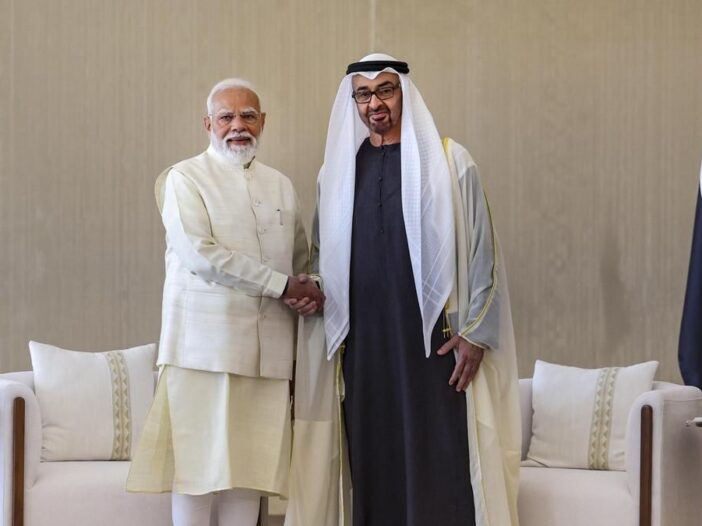
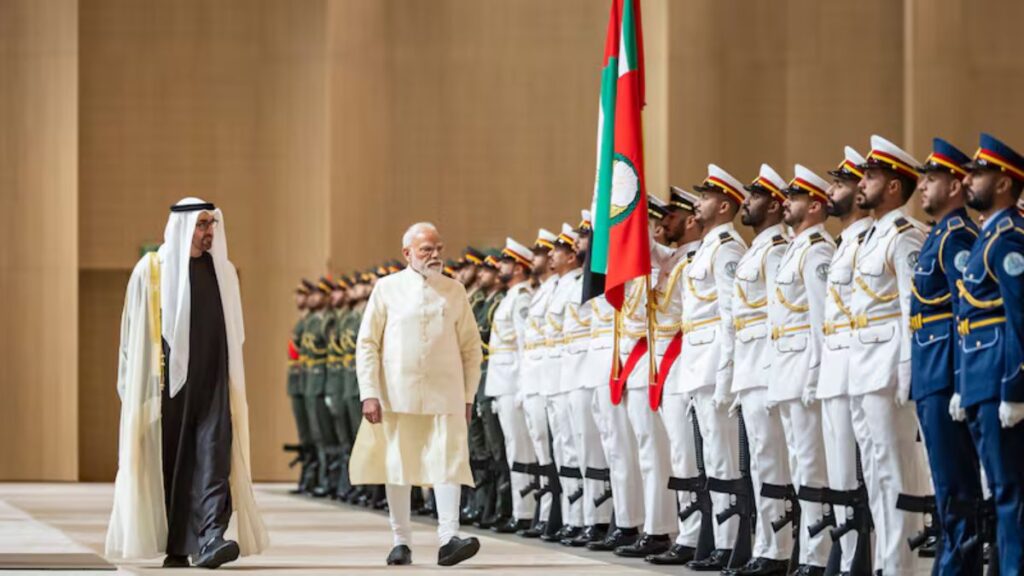
UAE President Sheikh Mohammed bin Zayed Al Nahyan personally welcomed Modi at an official reception ceremony complete with a guard of honour. Moreover, UAE Air Force F-16 fighter jets escorted the Prime Minister’s aircraft as it entered Emirati airspace — a gesture Modi called “a matter of pride for the people of India.”
Describing the UAE as his “second home,” Modi expressed deep gratitude for the warmth extended to him and to the approximately four million Indian residents living across the Emirates.
India Condemns Attacks on the UAE
During high-level delegation talks, Modi delivered an unambiguous condemnation of attacks targeting the UAE amid the ongoing Iran conflict. “The way the UAE has been targeted is unacceptable in any way,” he stated firmly.
He also praised President Sheikh Mohamed’s leadership under pressure. The restraint, courage, and wisdom the UAE leadership has shown during this difficult period, Modi noted, deserve high commendation.
Energy Security Takes Centre Stage
A central theme of the discussions was energy security. The closure of the Strait of Hormuz has created significant global anxiety over oil supplies and maritime trade routes. Both leaders acknowledged the serious economic consequences rippling outward from the conflict.
During the meeting, India and the UAE signed two major cooperation agreements with Indian energy companies. These deals focused on strategic petroleum reserves, long-term liquefied petroleum gas (LPG) supply, and broader defence cooperation. Additionally, Modi stressed that keeping the Strait of Hormuz “free, open, and safe” remains an absolute priority for both nations.
UAE Minister of State for International Cooperation Reem Al Hashimy noted that energy supplies are being compromised worldwide because the waterway has effectively been placed under threat. She added that household-level economic pain from this disruption will feature prominently in ongoing bilateral conversations.
Deepening a Strategic Partnership
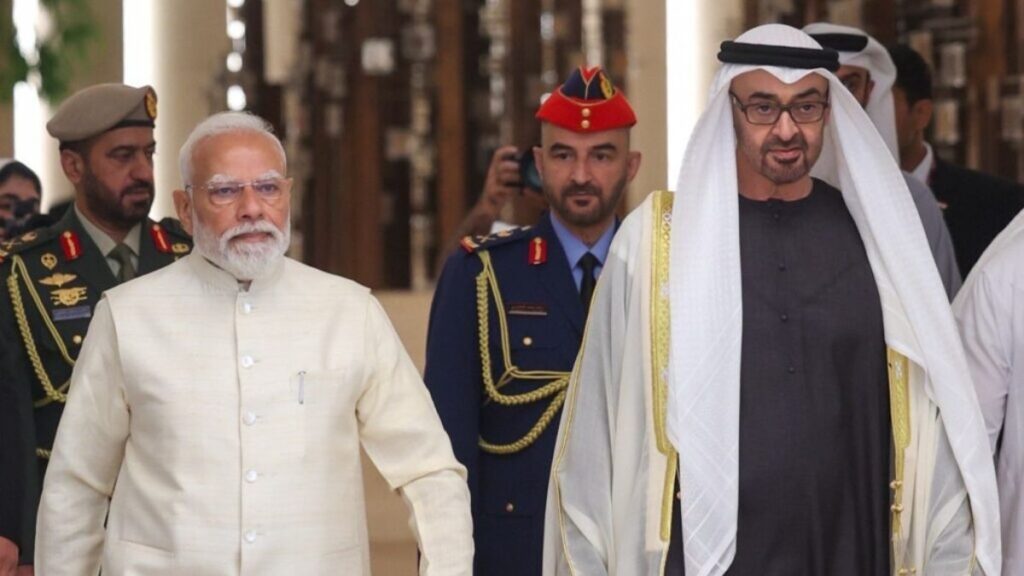
Beyond energy, the two leaders reviewed wide-ranging cooperation across technology, artificial intelligence, food security, space, and investment. Modi noted that both countries had agreed during President Sheikh Mohamed’s January visit to New Delhi to “qualitatively upgrade” bilateral cooperation. Remarkable progress, he said, has already been achieved across sectors in a very short period.
Furthermore, Modi underlined that the importance of the India-UAE Comprehensive Strategic Partnership has grown significantly given current regional realities. “In the current situation, the importance of the India-UAE strategic partnership has increased manifold,” he stated.
India’s Commitment to Diplomacy and Regional Peace
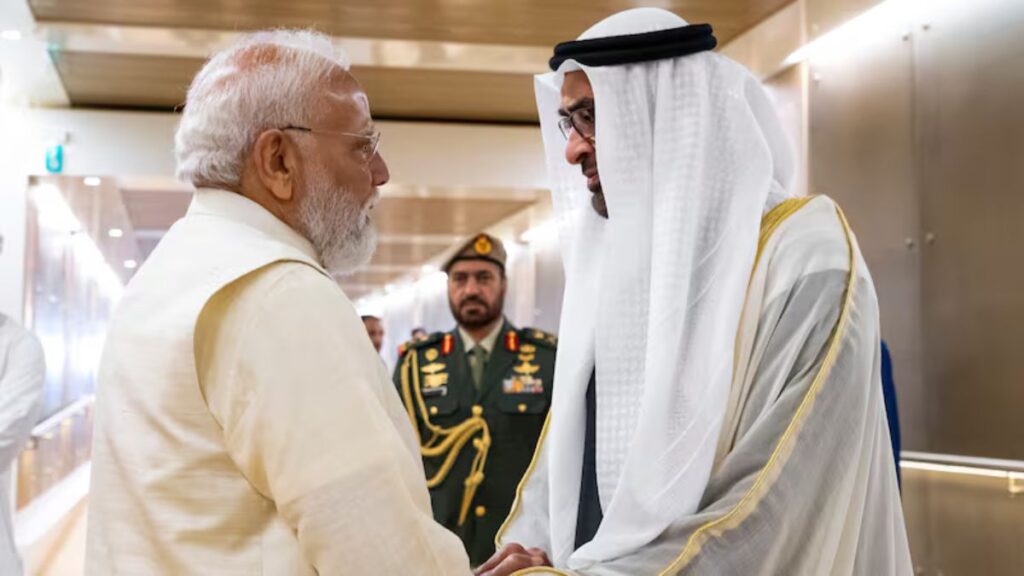
Throughout the talks, Modi consistently emphasised India’s preference for dialogue over conflict. “India has always prioritised dialogue and diplomacy for solving problems,” he said, reiterating New Delhi’s readiness to support any effort aimed at restoring regional stability.
He also expressed heartfelt gratitude to the UAE government and the Royal Family for their care toward the Indian community during these difficult times — “treating them like members of their own family,” as he described it.
What This Visit Signals
Modi’s UAE stop is far more than a diplomatic courtesy call. It sends a clear signal that India intends to remain an active, constructive force in West Asian affairs at a moment of serious regional instability.
As the world watches energy markets with growing concern, India’s engagement with the UAE reinforces a partnership built on genuine mutual interest — one that now carries strategic urgency well beyond trade and tourism.
The visit is expected to further strengthen the India-UAE Comprehensive Strategic Partnership and promote long-term stability for both nations.
Frequently Asked Questions: PM Modi’s UAE Visit
What was the main purpose of PM Modi’s UAE Visit and why does it matter right now?
PM Modi’s UAE Visit was not a routine diplomatic stop. It carried genuine urgency. The ongoing conflict in West Asia has disrupted energy supplies, threatened maritime trade routes, and created economic anxiety across the globe. Modi travelled to Abu Dhabi specifically to reaffirm India’s solidarity with the UAE, sign critical energy cooperation agreements, and send a clear message that India stands firmly beside its strategic partner during one of the most turbulent periods the region has seen in years.
What agreements did India and the UAE actually sign during PM Modi’s UAE Visit?
During PM Modi’s UAE Visit, both countries signed two major cooperation agreements focused on strategic petroleum reserves and long-term liquefied petroleum gas supply. A defence cooperation agreement was also part of the signed package. These deals are not symbolic gestures. They directly address India’s energy security needs at a time when global oil markets face serious disruption due to the closure of the Strait of Hormuz and the ongoing Iran conflict.
Why did PM Modi strongly condemn attacks on the UAE during his UAE Visit?
During PM Modi’s UAE Visit, he made it absolutely clear that the targeting of the UAE is unacceptable under any circumstances. His condemnation reflected both moral solidarity and strategic alignment. The UAE hosts approximately four million Indian residents, making it home to India’s largest expatriate community. Any threat to the UAE directly affects millions of Indian families, and Modi’s strong words were as much about protecting those people as they were about reinforcing the bilateral partnership.
How did the UAE welcome PM Modi during his UAE Visit and what made it so special?
The welcome extended during PM Modi’s UAE Visit was genuinely extraordinary. UAE Air Force F-16 fighter jets escorted the Prime Minister’s aircraft as it entered Emirati airspace. President Sheikh Mohammed bin Zayed Al Nahyan personally received him with a ceremonial guard of honour, and national anthems of both countries were played. Modi described the fighter jet escort as a matter of pride for every Indian. He called the UAE his second home, and the warmth visible throughout the visit reflected a relationship built on decades of deep trust and genuine friendship.
What did PM Modi say about the Strait of Hormuz during his UAE Visit and why does it concern ordinary people?
During PM Modi’s UAE Visit, he emphasised that keeping the Strait of Hormuz free, open, and safe is a top priority. This matters deeply to ordinary people because the Strait of Hormuz is one of the most critical oil transit routes in the entire world. When that waterway faces disruption, fuel prices rise, household energy costs climb, and supply chains across Asia and Europe feel the pressure. India imports a significant portion of its energy from the Gulf region, so any threat to that corridor directly touches the daily lives of millions of Indian families.
How does PM Modi’s UAE Visit strengthen India’s energy security for the long term?
PM Modi’s UAE Visit produced concrete outcomes on energy security. The agreements on strategic petroleum reserves mean India will have stronger buffers against sudden supply shocks. The long-term LPG supply deal ensures Indian households continue receiving cooking gas even during periods of geopolitical instability. Beyond the immediate agreements, the visit deepened institutional relationships between Indian and Emirati energy companies, laying the foundation for expanded cooperation in oil, gas, and potentially clean energy sectors in the years ahead.
What did PM Modi say about the Indian community living in the UAE during his UAE Visit?
One of the most genuinely moving moments during PM Modi’s UAE Visit came when he expressed heartfelt gratitude to the UAE government and the Royal Family for caring for the Indian community during difficult times. He said the UAE leadership treated Indian residents like members of their own family. For millions of Indian workers, professionals, and families living in the Emirates, those words carried real emotional weight. They reflected the deep human connection that sits at the heart of the India-UAE relationship, well beyond trade figures and diplomatic formalities.
Is PM Modi’s UAE Visit part of a larger diplomatic mission and what comes next?
Yes. PM Modi’s UAE Visit is the opening chapter of a significant five-nation diplomatic tour. After Abu Dhabi, the Prime Minister will travel to the Netherlands, Sweden, Norway, and Italy. The overall tour signals that India is actively engaging with both its Gulf partners and European allies during a period of serious global uncertainty. Each stop carries its own strategic agenda, but the UAE visit set the tone by demonstrating India’s commitment to energy security, regional peace, and the protection of its citizens living abroad.
What does PM Modi’s UAE Visit mean for the future of the India-UAE Comprehensive Strategic Partnership?
PM Modi’s UAE Visit marks a genuinely significant moment in the evolution of the India-UAE Comprehensive Strategic Partnership. Both leaders acknowledged that the importance of this partnership has grown considerably given current regional realities. Modi noted that remarkable progress had already been achieved following President Sheikh Mohamed’s visit to New Delhi in January. The two nations are now deepening collaboration across energy, technology, artificial intelligence, food security, space, and investment. The visit confirmed that this relationship is no longer simply transactional. It has matured into a genuine strategic alliance built on shared values, mutual interest, and long-term vision.






Leave a Reply