
Twisha Sharma Death Case — a name that should have meant success, beauty, and a bright future. Instead, it has become a heartbreaking symbol of silence, suffering, and a system that failed a woman who desperately cried for help.
She called her mother. She sent messages begging to come home. She wrote, “I am trapped.” Yet nobody reached her in time.
Twisha was 33, accomplished, and full of life. Five months into her marriage, she was gone.
This is not just a news story. This is a mother’s nightmare, a family’s unbearable grief — and a question every one of us must face.
A promising life. A devastating end. The death of Twisha Sharma, a 33-year-old former beauty queen and MBA graduate, has shaken India and sparked urgent questions about domestic safety, dowry harassment, and accountability within the justice system.
Who Was Twisha Sharma?

Twisha Sharma was far more than a title winner. Crowned Miss Pune in 2012, she built a multifaceted career spanning marketing, communications, and regional cinema. She appeared in the Telugu film Mugguru Monagallu and collaborated with major brands including Dove and L’Oréal.
Academically accomplished, she held a BBA from Savitribai Phule Pune University and later completed an MBA from Narsee Monjee Institute of Management Studies. Before her marriage, she worked as a Marketing Manager in Mumbai and later served as a Communications and Onboarding Manager at a German educational institute.
Friends and colleagues remember her as vibrant, driven, and full of promise.
A Marriage That Turned Tragic
Twisha met Bhopal-based lawyer Samarth Singh through a dating app in 2024. The couple married in December 2025. However, within weeks of the wedding, her family says the happiness faded.
Just five months later, on May 12, 2026, authorities found Twisha dead at her marital home in Bhopal’s Katara Hills. The post-mortem report cited “antemortem hanging by ligature” and noted multiple injuries on her body.
Her family immediately alleged mental harassment, dowry-related coercion, and emotional abuse.
Heartbreaking Messages Reveal Her Pain
Perhaps the most devastating evidence comes from Twisha’s own words. WhatsApp messages recovered during the investigation paint a picture of a woman in deep distress.
In one message to a friend, she wrote: “I am trapped bro. Bas tu mat phasna.”
To her mother, she pleaded: “Please come and pick me up from here tomorrow.”
On May 9, just three days before her death, she described humiliation and psychological torment in a series of messages. Her family had reportedly booked return tickets for May 15 — but she never made it home.
Her brother, Harshit Sharma, stated that Twisha called her mother shortly before her death, describing ongoing abuse. The call disconnected abruptly when her husband entered the room. When the family called back, they learned she was “not breathing.”
Husband Absconding, Investigation Under Fire

Authorities have issued a lookout circular against Samarth Singh, fearing he may flee the country. Six special police teams are actively working to trace him, and police have announced a reward of ₹10,000 for information leading to his capture. A Bhopal court has already rejected his anticipatory bail application.
Meanwhile, serious lapses have emerged in the investigation. Critically, the belt allegedly used in the hanging was never presented to doctors during the post-mortem examination. As a result, forensic experts could not compare ligature marks against the suspected instrument — a gap Twisha’s family believes deliberately weakened the evidence.
Her father, Navnidhi Sharma, stated that even filing an FIR proved difficult. The family ultimately hired a lawyer from Delhi to navigate a system they describe as resistant and politically shielded.
The Other Side: Mother-In-Law Responds
Twisha’s mother-in-law, Giribala Singh, a retired judge, has denied all allegations. She claims Twisha struggled with mental health challenges, including anxiety and depression, and asserts the family tried to help her. Singh also challenged the interpretation of recovered messages and demanded investigation into financial records, CCTV footage, and call logs.
Family Demands Justice — And a Fresh Investigation
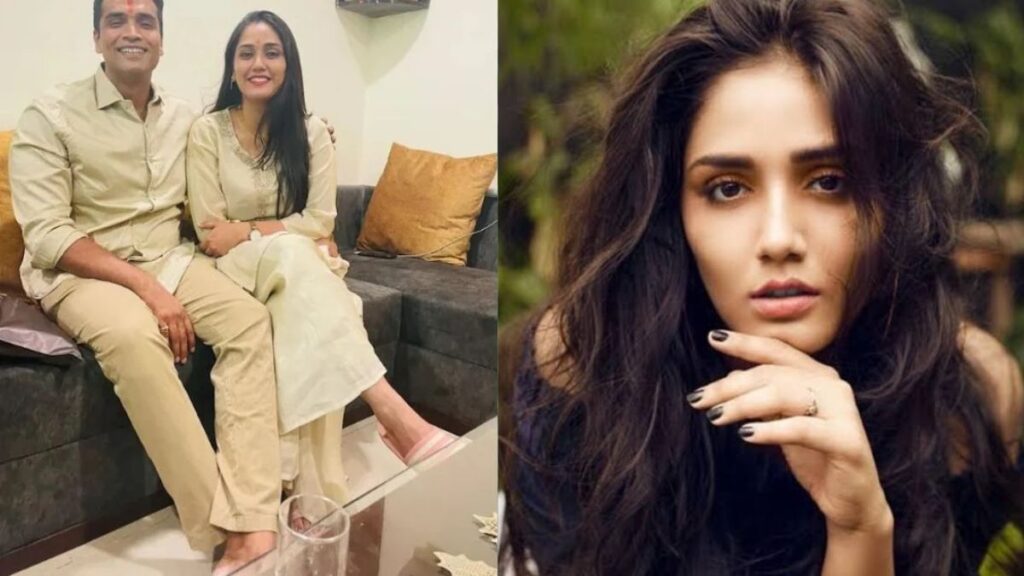
Twisha’s family has formally demanded a fresh post-mortem at AIIMS Delhi, a court-monitored investigation, and transfer of the case to an independent agency. A six-member Special Investigation Team has been formed.
The case continues under allegations of dowry harassment and abetment to suicide.
Twisha Sharma deserved safety, dignity, and a future. Her death must not become another statistic. Justice demands answers — and her family refuses to stop asking for them.
Frequently Asked Questions: Twisha Sharma Death Case
What exactly happened in the Twisha Sharma death case, and why is it making national headlines?
The Twisha Sharma death case involves the sudden and deeply disturbing death of a 33-year-old former beauty queen, MBA graduate, and regional film actress who was found dead at her marital home in Bhopal just five months after her wedding. Her family alleges continuous mental harassment, dowry-related pressure, and emotional abuse by her husband and in-laws. The case has captured national attention because it raises urgent questions about domestic safety, accountability in the justice system, and the vulnerability of educated, accomplished women within marriage.
Who was Twisha Sharma before the Twisha Sharma death case changed everything?
Before the Twisha Sharma death case brought her story to the world under tragic circumstances, Twisha was a remarkable woman living a full and ambitious life. She won the Miss Pune title in 2012, appeared in the Telugu film Mugguru Monagallu, and collaborated with brands including Dove and L’Oreal. Academically, she held a BBA from Savitribai Phule Pune University and completed an MBA from Narsee Monjee Institute of Management Studies. She worked as a Marketing Manager in Mumbai and later as a Communications and Onboarding Manager at a German educational institute. People who knew her remember a certified yoga trainer, a Vipassana meditation practitioner, and a woman who was genuinely building something meaningful with her life.
What do the WhatsApp messages reveal about what Twisha Sharma was going through before her death?
The messages recovered in the Twisha Sharma death case are heartbreaking in the most honest sense of the word. In her own words, Twisha told a close friend, “I am trapped bro. Bas tu mat phasna.” To her mother, she wrote desperately, “Please come and pick me up from here tomorrow.” Just three days before her death, on May 9, she sent a series of anguished messages describing humiliation and emotional torment she felt she could no longer endure. These were not vague complaints. These were the cries of a woman who wanted to come home and believed leaving was still possible. Her family had even booked return tickets for May 15. She never reached that date.
Why has the investigation into the Twisha Sharma death case come under such serious criticism?
The investigation into the Twisha Sharma death case has faced heavy scrutiny for one particularly alarming reason. The belt allegedly used in the hanging was never presented to doctors during the post-mortem examination. Because of this critical oversight, forensic experts could not compare the ligature marks found on her body with the suspected instrument. That single lapse potentially destroyed a crucial piece of evidence. Beyond that, her father stated that even registering the FIR proved enormously difficult. The family ultimately had to hire a lawyer from Delhi because they found no adequate legal support locally. They have publicly described fighting against what they call a politically shielded system.
Where is Samarth Singh now, and what legal action has been taken in the Twisha Sharma death case?
Samarth Singh, Twisha’s husband, remains at large as of the latest updates in the Twisha Sharma death case. Authorities have issued a lookout circular against him and are also seeking suspension of his passport to prevent him from leaving the country. Six special police teams have been formed specifically to trace and arrest him, and a reward of Rs 10,000 has been announced for anyone providing information that leads to his capture. A Bhopal court has already rejected his anticipatory bail application. A six-member Special Investigation Team has also been formed to lead the broader probe.
What does the Twisha Sharma death case reveal about the deeper problem of dowry harassment in India today?
The Twisha Sharma death case is not an isolated tragedy. It reflects a pattern that continues to claim lives across India, regardless of a woman’s education, professional success, or social standing. Twisha held advanced degrees, had built a respected career, and was a public figure in her own right. Yet none of that shielded her from alleged financial coercion, including pressure to open joint accounts and transfer shares into her husband’s name. Her case powerfully illustrates that dowry harassment does not discriminate based on accomplishment. It also raises a harder question that this nation must honestly confront: if even accomplished, connected, educated women cannot find safety within marriage, what does that say about the systems meant to protect everyone?
What is Twisha Sharma’s family demanding, and what outcome do they hope the Twisha Sharma death case will achieve?
Twisha’s family has made three clear and specific demands in the Twisha Sharma death case. First, they want a fresh post-mortem examination conducted at AIIMS Delhi, believing the original examination was compromised. Second, they are calling for a court-monitored investigation to ensure accountability and independence. Third, they want the case transferred to an independent agency, away from what they describe as local administrative interference. Beyond legal outcomes, her parents are fighting for something harder to legislate: they want their daughter’s story to matter, to be heard, and to prevent another family from enduring what they are living through right now.
What was the last known communication before the events central to the Twisha Sharma death case unfolded?
According to Twisha’s brother Harshit Sharma, she called her mother at approximately 10:05 pm on the night of May 12. During that call, she described the harassment she was experiencing. Her father also confirmed he had spoken with her for nearly half an hour earlier that same evening. The call with her mother disconnected abruptly when her husband reportedly entered the room. When the family called back, they were eventually informed that Twisha was not breathing. That phone call, and its sudden silence, has become one of the most painful details in the entire Twisha Sharma death case, because it shows how close she was to being heard one last time.